Commercial Roof Capital Planning in Quincy, MA
Snowmelt passing beneath a detached wall termination can make a proposed field recover incomplete before its new covering is installed. Commercial roof capital planning in Quincy, MA, should identify that receiving detail along with the layers a renewal option retains. We examine the assembly and physical failure, then compare the construction each intervention restores. A repair allowance and a replacement allowance can describe fundamentally different tasks. The owner needs those differences visible before selecting the renewal boundary or arranging work around occupied use.
Quincy prepares for winter storms and flooding. We relate those concerns to the requested roof's exposed connections and drainage, distinguishing prompt waterproofing from wider reconstruction supported by the findings. Planning should begin with actual material and component condition. It can then connect the supported scope to equipment changes and operating intervals, rather than assign a renewal date from the apparent age of the visible surface.
Specify the construction under each option
Repair, restoration, recover and replacement can retain different insulation, roofing and receiving components. We identify those layers and the condition needed to keep them in service. The comparison should describe removal, attachment, support and reconstructed flashings under each approach. Two options that finish with similar visible material can still leave different assemblies underneath. An owner comparing them should not have to infer those construction differences from the covering name.
Commercial replacement planning describes removal and final receiving work where damage or project requirements support that approach. Recover assessment examines retention suitability along with the revised roof height and interfaces. An added layer can change curb clearance, outlet relationships and perimeter geometry. Those related tasks need to remain in the option, so a field-only description does not omit reconstruction required to make the final assembly useful.
Where coating restoration is proposed, receiving compatibility and condition need examination alongside preparation and damaged details. The new finish does not restore unsuitable wet boards below it. We describe which layers remain and the physical findings supporting that retention. This makes the scope comparable to removal without treating a changed surface as the entire renewal decision.
Separate the active opening from distributed damage
A bounded opening above occupied equipment can require immediate repair while another area supports a later planned reconstruction. We examine both the roof condition and affected use before assigning priority. Closing an entry detail can protect the building without representing full restoration of every compromised layer. The planning comparison should identify the permanent work still needed and why, keeping temporary protection distinguishable from the completed assembly.
Roof asset management connects those components with previous intervention and current condition. A recurring symptom should be examined against the task already performed. Another defect may have developed, a receiving condition may remain unresolved or the earlier repair may need reconstruction. Those are different planning decisions. The recommended next scope follows the physical finding rather than automatically repeating the previous treatment or expanding it to whole-roof removal.
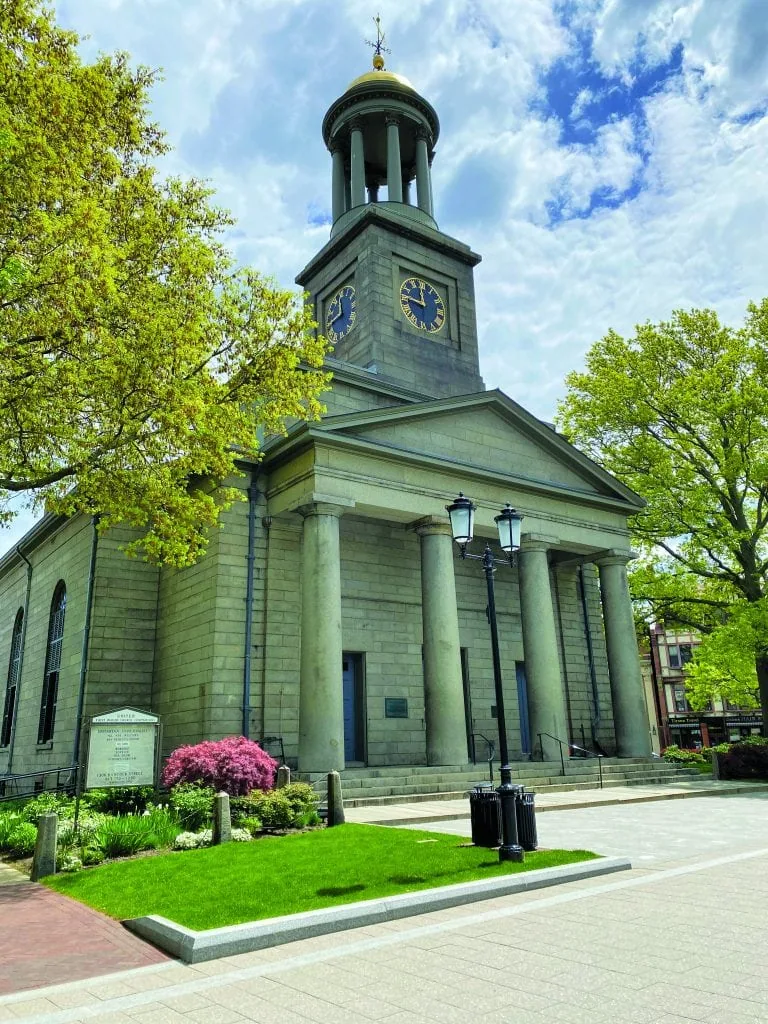
Quincy Center combines civic facilities with downtown offices and retail. For requested work in Quincy Center, access and occupied-room arrangements need examination at the individual property. A roof zone above public circulation can need protection different from a zone above stock or office equipment. The component requirement remains part of the decision while the operating use establishes the work interval needed for it.
Include the interface that the next project changes
Planned equipment replacement can change a roof renewal scope even if the field material is still useful. We examine supports, penetration dimensions and the final geometry with the proposed roof height in view. A curb scheduled for alteration should not be treated as an unchanged receiving component. The relevant mechanical or support task needs an appropriate sequence before final flashing. Planning the renewed field without that interface can leave a completed surface requiring immediate disturbance.
A tenant change can also introduce different discharge or indoor conditions. We assess material contact and air or thermal relationships where they affect the proposed assembly. The owner should understand the roof interfaces required for that use, not assume a standard field material resolves every operating interface. Technician routes and outlet access also belong in the final arrangement where repeated contact or obstruction would recreate damage after renewal.
The option should identify which tasks can be completed locally and which findings support a broader construction boundary. A bounded equipment connection can suit targeted work on a sound assembly. Distributed unsuitable material can provide a different reason for removal. The physical basis should remain explicit enough to compare the options through what each retains and restores.
Resolve the concealed question before committing retention
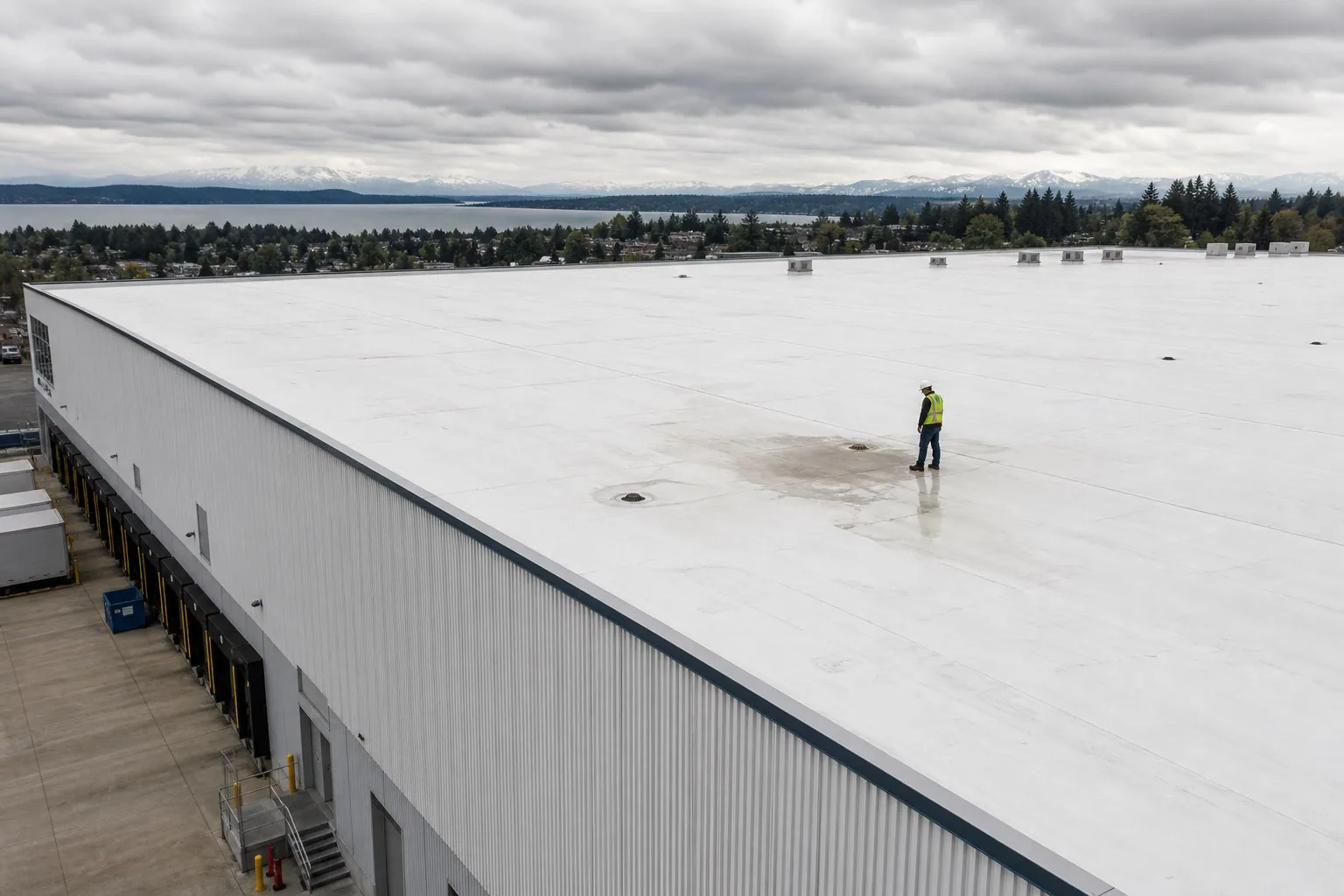
Roof due-diligence surveys can establish the assembly questions affecting an acquisition or planned renewal. We examine available material information and accessible condition, then identify closer investigation where concealed layers change the choice. A new-looking sheet may retain earlier construction beneath it. The receiving support and moisture findings should be understood before that assembly is treated as suitable for another retention-based intervention.
Randolph has the Turner Free Library and community and school facilities. For a requested asset with collection or classroom use, investigation and later removal need suitable interior arrangements. We assess the affected roof area and construction task with the property representatives. The protection interval should correspond to the actual opening required, including the detail work that must be completed when it closes.
An unresolved concealed condition should prompt a specific examination tied to the option. The owner needs to know whether the next check establishes insulation suitability, receiving support or another relevant component. That task is more useful than a broad aging-roof label. Once the physical question is resolved, removal and retention can be compared through the assembly present rather than an assumption attached to its appearance.
Plan a stage that completes the selected construction
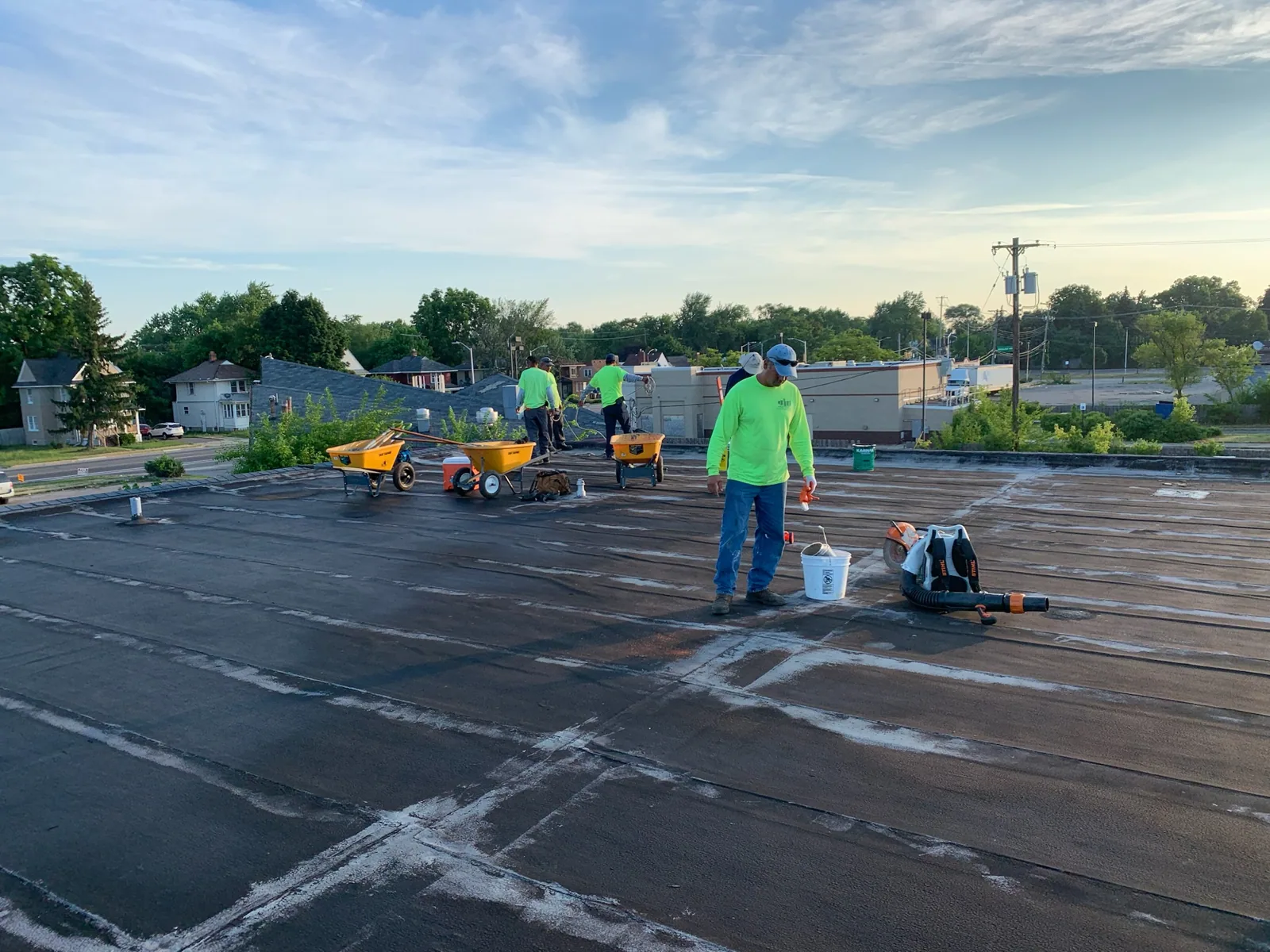
Occupied-building roof renewal connects the selected scope with rooms, circulation and equipment operating intervals. We define removal boundaries using suitable application conditions and the effort needed to secure every relevant connection. A smaller zone dense with curbs or walls can require more closure work than a larger open field. The useful stage is the area whose receiving tasks and waterproofing can finish coherently within the available interval.
The capital comparison should retain those execution differences alongside the material scope. Necessary drainage needs to remain usable through the sequence, and temporary divisions should not direct water into an unfinished detail. After completion, outlets and vulnerable connections should remain accessible for upkeep and inspection. The owner receives a comparison of complete assemblies and practical construction exposure, with component repair and recurring maintenance identified as different later tasks.
Commercial Roofing Questions
What should distinguish a recover allowance from replacement?
Describe the layers retained or removed and the receiving condition supporting each option. Attachment, insulation, support and reconstructed connections also belong in the comparison. Added construction height can require changes at curbs or outlets. We identify those tasks so the owner can compare complete assemblies rather than assume a common new surface means the two scopes are equivalent.
Can a local repair precede a wider renewal decision?
A bounded opening can need prompt intervention while investigation establishes the broader assembly requirement. We distinguish temporary protection, permanent detail repair and remaining damaged-layer work. The owner should understand what the first intervention restores and what still needs assessment. That separation lets immediate waterproofing proceed with a defined task without being mistaken for completion of the whole supported renewal scope.
How should planned equipment work enter the roof comparison?
Assess the changed support, penetration and final geometry with the proposed roofing height. Another task may need to finish before flashing closes around it. We identify that interface and suitable sequence in the option. A field renewal should not exclude receiving construction that the equipment project will alter immediately after installation.
What makes an operating interval useful for planning?
The selected construction must be capable of reaching a secure endpoint within it. We assess interior protection, equipment coordination and detail effort alongside suitable application conditions. Daily area follows those tasks rather than room availability alone. The comparison should connect the occupied arrangement with the actual assembly being restored and the drainage needed during its stages.