Modified Bitumen Roofing in Quincy, MA
Ice retreating from a granulated cap sheet can expose a split that remained hidden beneath the winter accumulation. On a Quincy, MA, modified bitumen roof, we examine that split in relation to the laps, underlying plies and movement at nearby details. Layered waterproofing gives the assessment more than one surface to consider. We also look for worn granules, exposed reinforcement and transitions where movement has separated previously bonded material. An intact lower layer may change the immediate leak response, but it does not make a damaged upper sheet suitable to ignore through another wet season.
We install and repair modified bitumen assemblies using methods suited to the selected product and the building. SBS and APP materials have different modification characteristics, with installation requirements that vary by system. The practical comparison includes flexibility, reinforcement, bonding and flashing methods. Owners considering a layered construction can also compare built-up roofing assemblies where the roof's use and renewal scope make that approach relevant.
Follow the opening through the layers
A raised cap-sheet lap can admit water into a path that is not apparent at the nearest ceiling stain. We examine the lap length, its ends and any earlier repair before deciding how much material to remove. The supporting plies deserve attention as well. Water can travel between layers or remain in insulation below them. A repair that bonds only the upper edge may leave the underlying condition untouched.
At a split or puncture, we determine whether the surrounding material provides a sound repair area. The repair method must suit the assembly, including compatible primers, membranes or bonding materials. Granules and surface aging can affect preparation. We examine the transition beyond the obvious defect so a new repair does not finish on a weak adjacent lap. The scope follows the actual connection, not the apparent size of the stain or opening.
Choose the application with the property
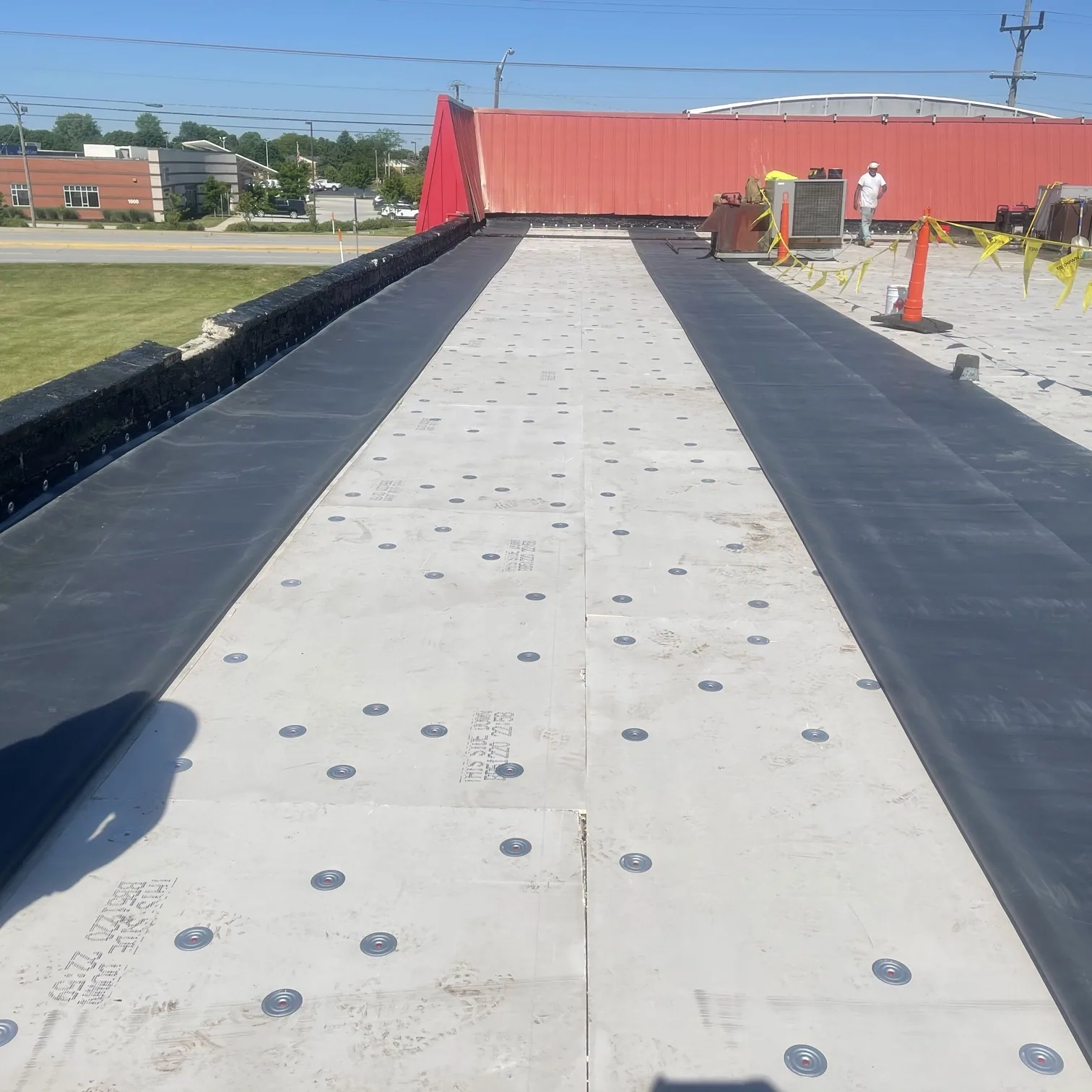
An occupied building with combustible construction or sensitive rooftop equipment requires a deliberate assessment of application methods. Some modified bitumen products use heat application; others use compatible adhesives or self-adhered construction. We select the method within the system's requirements and account for the surrounding conditions. Heat, fumes, drying time and receiving-surface preparation can affect both the construction and the building's operating plan.
Wollaston's neighborhood commercial areas include older, smaller-scale retail along its principal business streets. A renewal above an occupied storefront needs controlled exposure and attention to adjoining construction. During roof work over active tenants, we define the day's removal area by what can be completed and closed appropriately. The application choice should fit that boundary. A faster field installation does not resolve a difficult wall junction that still needs time and clear working access.
Read blisters before cutting
A blister can result from separation between layers, trapped air or moisture, and its significance depends on the assembly and condition. We examine its location, surface integrity and relationship to traffic or seams. Cutting into it without an appropriate repair plan can create a water entry point where none existed. A blister beside an active crack or a repeatedly walked path presents a different repair priority from a stable isolated raised area.
We also assess whether moisture extends beyond the visible blister. Selective openings and suitable survey methods can help establish the condition of insulation and retained plies. Moisture-pattern investigation provides useful direction when conditions suit the technique, with physical checks used to resolve uncertain areas. Wet material beneath a layered roof needs a removal decision. Adding another cap sheet over that condition can conceal a defect while preserving its effect on the assembly.
Give meltwater an exit
Quincy's preparedness concerns include blizzards and nor'easters. On a low-slope bituminous roof, thawing accumulation tests drain sumps, parapet connections and any channel where debris obstructs flow. We examine those details together with the field laps. A blocked outlet can leave a small flashing defect under water for longer than it would be during free drainage. Clearing the obstruction and repairing the connection are related tasks, not substitutes for one another.
Quincy Point includes school uses at Point Webster and Clifford Marshall, alongside its neighborhood streets and commercial routes. A roof protecting instructional or occupied support space needs a clear division between immediate water-entry repairs and larger drainage correction. We assess the actual area above the reported problem and the outlet serving it. For work in Quincy Point, the building's layout determines the repair sequence while the physical roof condition determines the renewal boundary.
Retain only serviceable construction
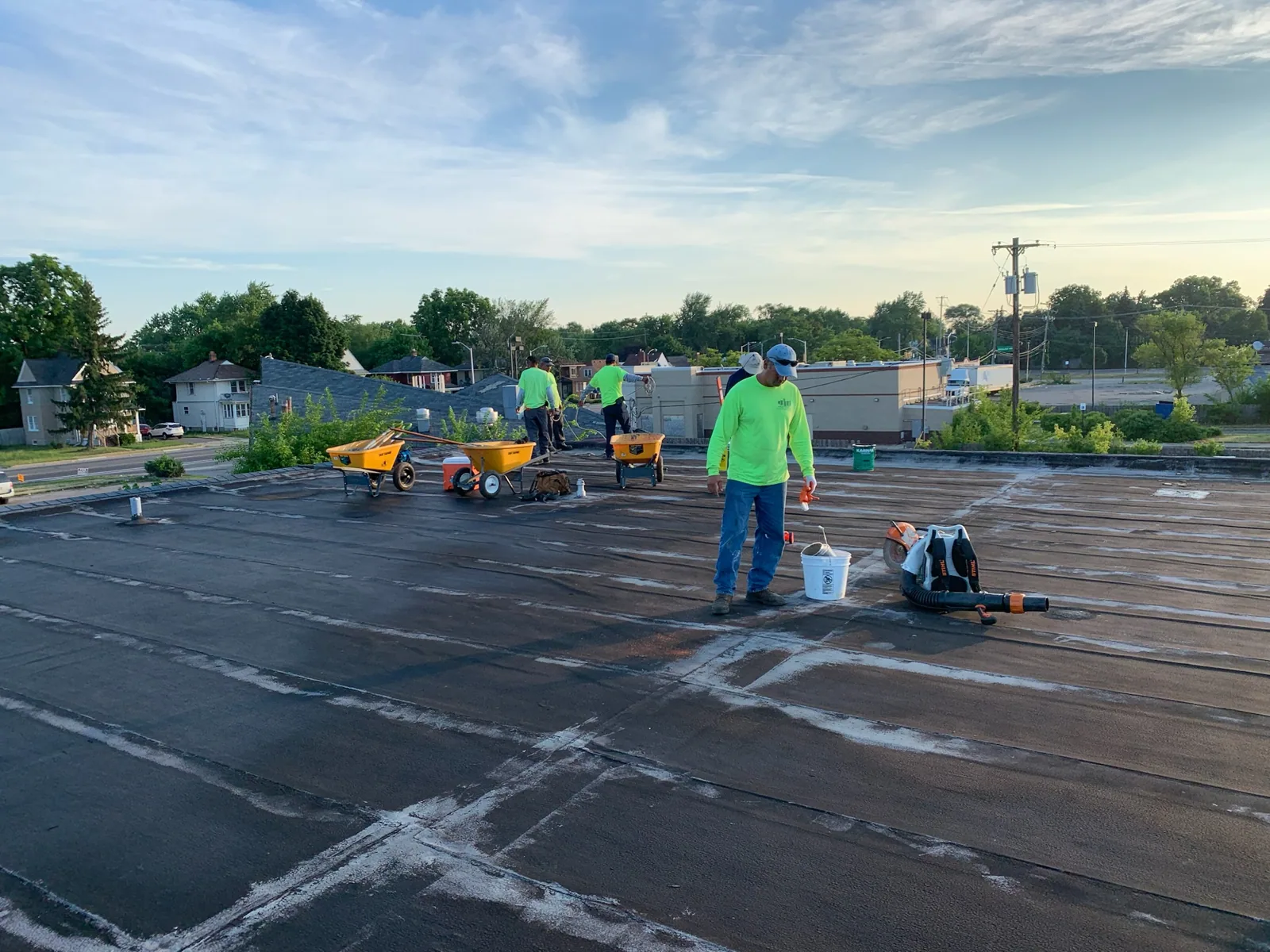
An existing layered roof may contain previous recover work and localized repairs that complicate removal. We investigate the assembly before defining what can remain. Deck condition, moisture, attachment and applicable requirements affect that decision. A new cap over loose or saturated construction is not equivalent to a new assembly over sound support. The owner needs those differences made explicit when comparing scopes.
Modified bitumen may be compared with an EPDM rubber membrane where a different joining method or weight is relevant. We assess geometry, equipment density, traffic and flashing requirements rather than selecting solely by the number of plies. If the retained construction has reached its repair threshold, complete roof replacement can include insulation and drainage improvements that isolated patching would leave behind. Renewal is most useful when it corrects the failure mechanism as well as the visible surface.
Termination heights need checking before insulation is increased. A raised roof plane can reduce the distance available for reliable curb and wall flashing. We compare those dimensions with the selected detail, then decide whether equipment or vertical connections need modification. This is a practical scope issue. It prevents a well-installed field membrane from finishing at a vulnerable transition because the receiving geometry was assessed too late.
Commercial Roofing Questions
Can a split cap sheet be repaired without removing all the plies?
A local repair can be appropriate where the underlying construction is dry, attached and serviceable. We examine the split and adjacent laps before determining whether the repair can terminate on sound material. Moisture or damage extending below the upper sheet changes the removal boundary. The objective is to restore the full affected connection, not merely conceal the visible crack.
Do all modified bitumen installations require open-flame work?
Application methods vary by product and assembly. We can assess compatible adhesive or self-adhered options where suitable, alongside any heat-applied approach being considered. Receiving-surface condition, weather and building exposure remain relevant with every method. The recommendation should identify a complete installation suitable for the occupied property rather than assume that changing one application method resolves every constraint.
Should every blister be cut out before winter?
The blister's condition and position determine priority. We assess whether its surface is intact, whether it affects seams or traffic and whether surrounding moisture indicates a wider problem. An unnecessary opening can introduce a new repair liability. A damaged blister in a vulnerable location may warrant a defined repair, while other areas can be evaluated within the roof's remaining service assessment.
How should we compare a new cap sheet with replacement?
Compare what remains beneath each proposal. A cap-sheet scope may retain insulation, lower plies and existing drainage geometry, while replacement can remove defective material and correct those conditions. We examine moisture, attachment and the receiving surface before presenting the alternatives. The owner can then compare actual retained components and operating exposure rather than treating both options as equivalent new roofing.