Commercial Roof Leak Investigation and Repair in Quincy, MA
Nor’easter gusts drive rain against curb flashing from angles that a calm shower does not test. A recurring leak in Quincy, MA, therefore deserves comparison with the weather that produces it before another repair allowance is spent at the same roof detail. We examine the rain pattern, wind exposure, equipment operation and nearby drainage. That comparison helps direct investigation toward the connections most likely to be admitting water without restricting the inspection to the latest ceiling symptom.
Commercial Roofing Quincy traces active commercial roof leaks and repairs the confirmed entry detail. We also assess the assembly affected below it. A wet interior can require immediate protection, but the permanent repair depends on understanding how water reached the occupied space. Urgent roof protection can stabilize an exposed area while safe access and weather permit the investigation to continue.
Match the event to the opening
A leak during thawing snow suggests a different exposure from one triggered by a running air-conditioning unit. We ask which rooms become wet, how soon after rain the water appears and whether the same condition occurs during equipment use. Photos and timing can narrow the investigation. An intermittent leak should be described by its trigger, not only by the last date it happened.
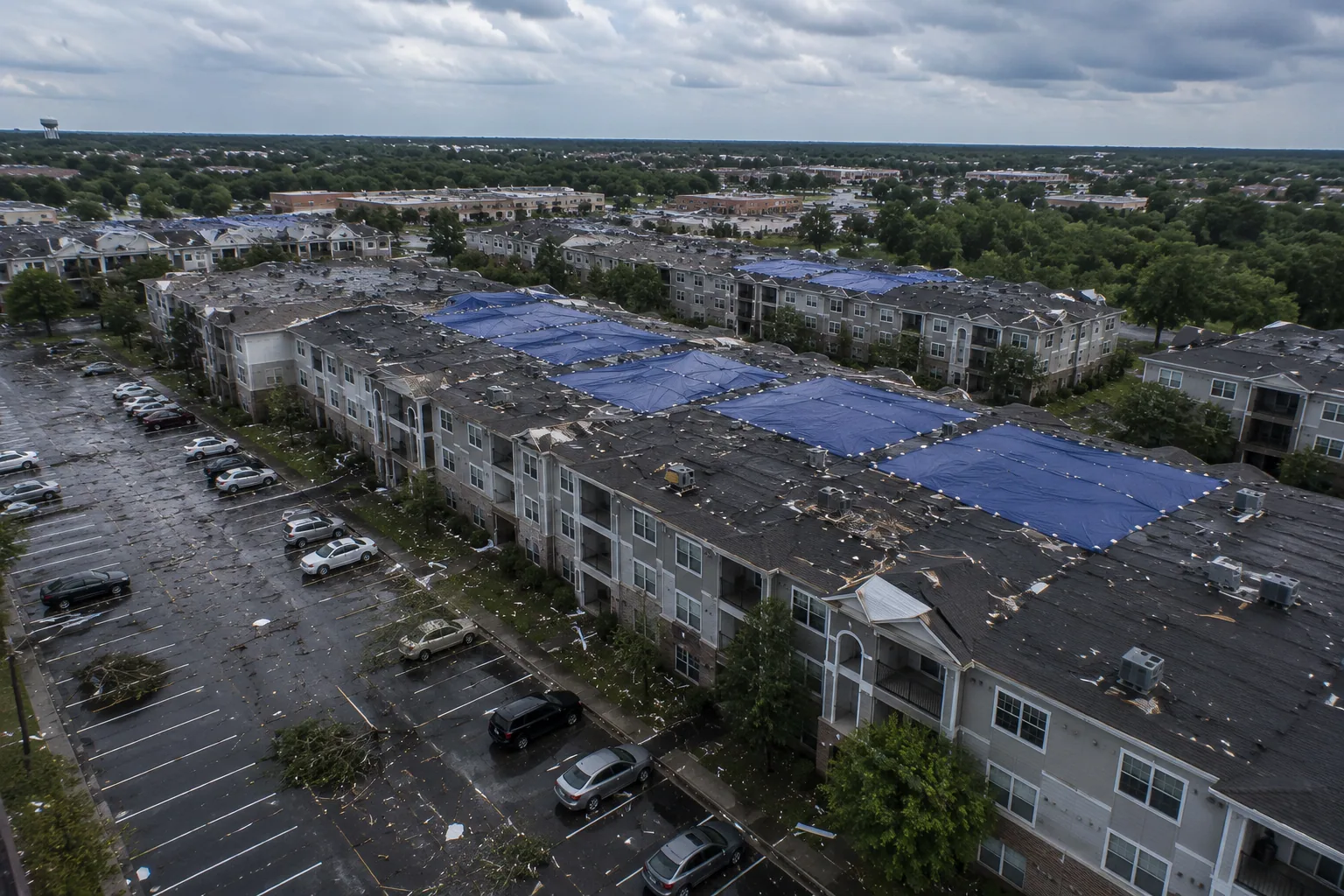
Quincy prepares for nor'easters, flooding and blizzards. At the roof, those conditions can create wind-driven wetting, drainage backup or prolonged meltwater contact with a defective connection. We inspect the relevant details and compare them with the event history. Water associated with plumbing, condensation or mechanical drainage may require another trade’s involvement. Where those possibilities remain, we identify the next test instead of treating a surface patch as proof that the roof was responsible.
Follow the connected details
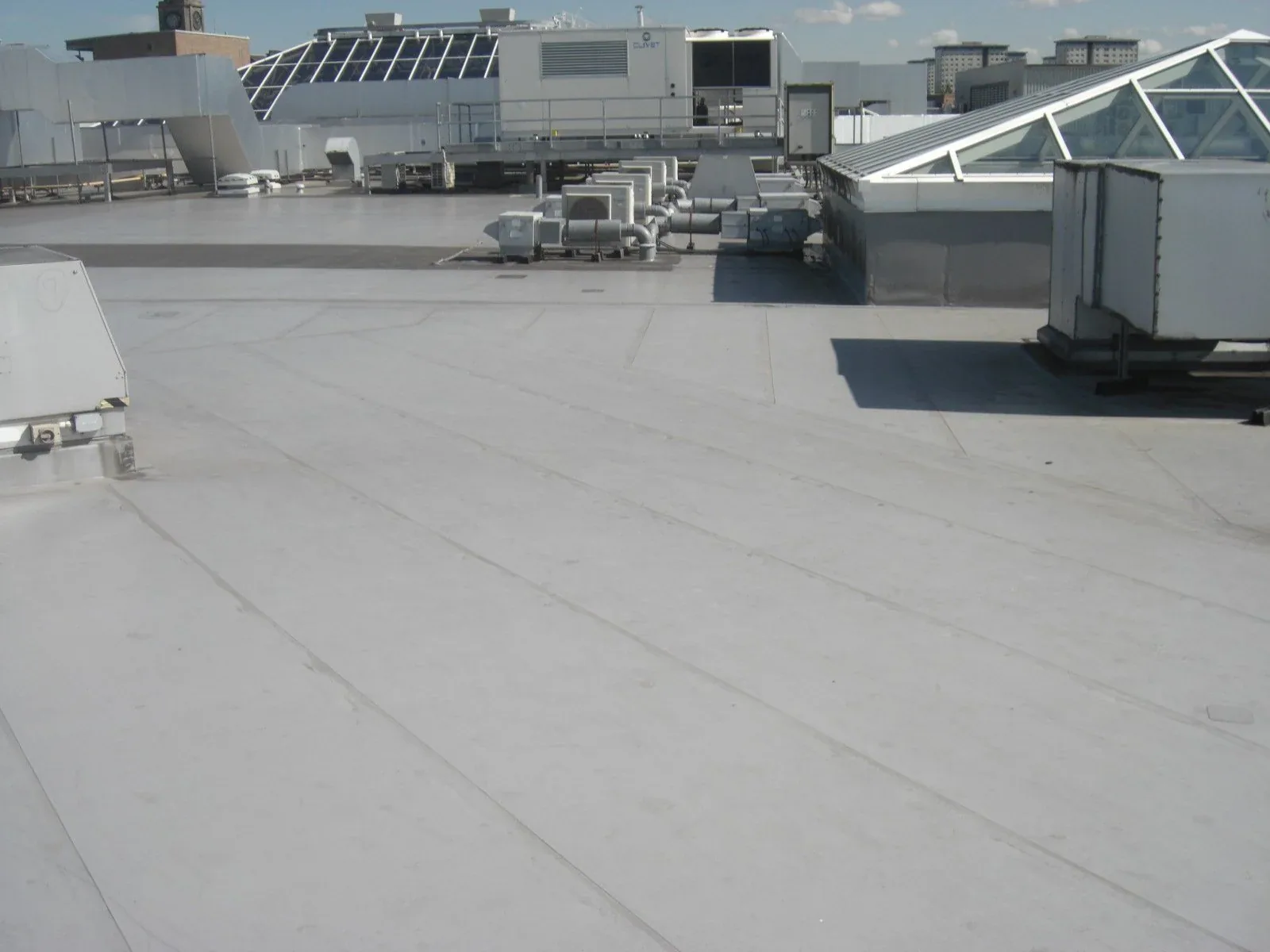
A leak path can run through a perimeter termination, along a deck flute or beneath insulation before reaching an interior opening. We examine nearby seams, wall transitions, penetrations and outlets as connected parts of the assembly. A separated curb corner may be obvious; a loose termination concealed beneath counterflashing may take closer access. The investigation boundary expands where the construction and wetting pattern justify it.
Wollaston’s commercial corridors include neighborhood businesses along Beale Street, Hancock Street and Newport Avenue. For a leak above an occupied storefront, we coordinate roof access with the manager and protect the trading area during investigation. The assessment may need work at a concealed flashing transition rather than a patch in the open field. We explain the suspected detail and what needs to be opened before removing material, especially where the connection crosses into an adjoining wall assembly.
Test a bounded area
Controlled water testing can help isolate a detail when safe conditions and the building arrangement permit it. We stage the test so one area is evaluated at a time, with someone observing the interior and a way to stop the water promptly. Flooding a large roof area can obscure the path and introduce unnecessary exposure. Testing should create a useful comparison, not reproduce the full burden of a storm.
Some leaks require selective openings to examine the construction or confirm moisture beneath a suspect detail. Thermal moisture screening can help identify areas worth investigating, but direct examination remains important where the signal is unclear or the roof is unsuitable for the method. We close test openings with compatible materials. The manager should understand what the investigation established, which areas were not accessible and what further access would resolve a remaining uncertainty.
Rebuild the entry connection
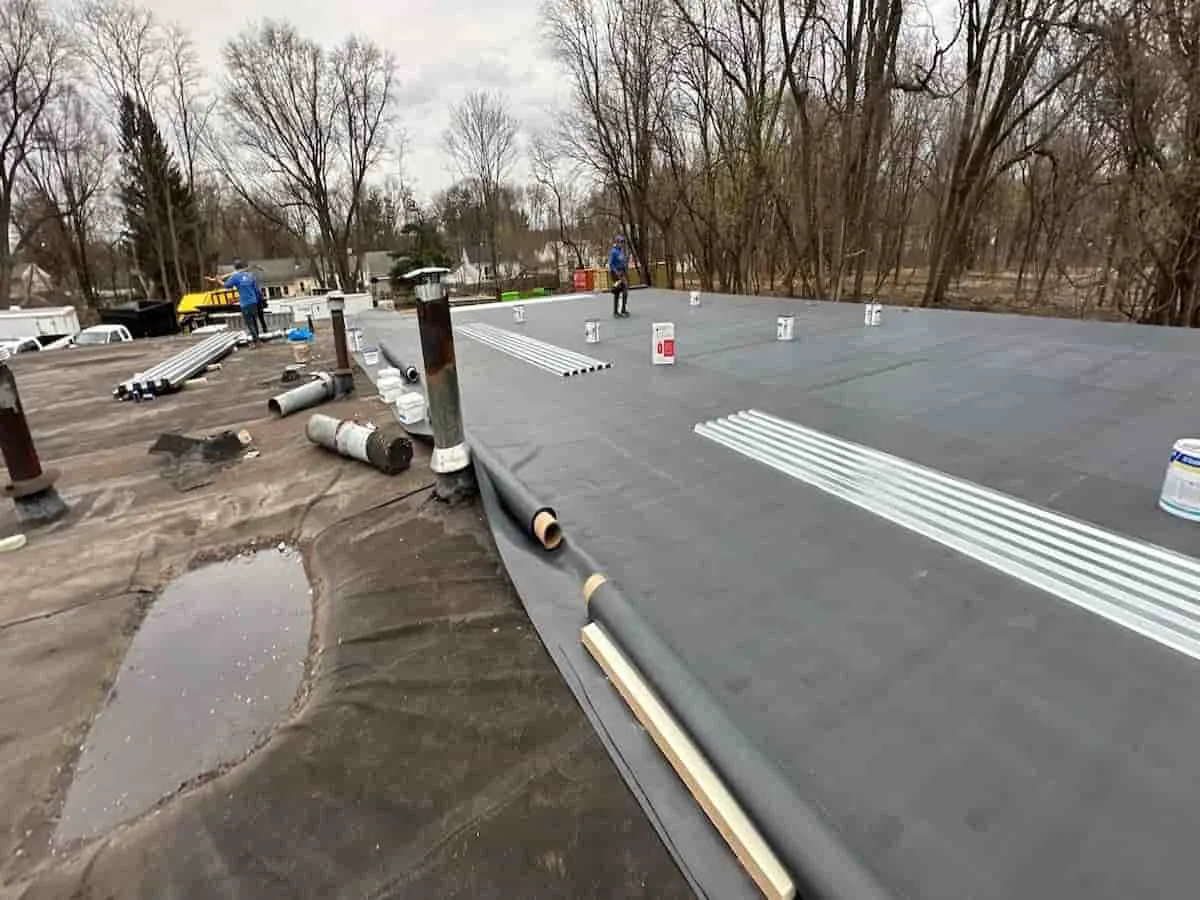
Once the entry point is established, we remove failed or unsuitable repair material and prepare the surrounding substrate for the required connection. A leak at a pipe penetration can involve movement, seal failure and a poorly supported pipe; the repair needs to address those relationships. At a drain, the clamping connection and membrane approach may require rebuilding. The repair method follows the defect rather than the shape of the interior stain.
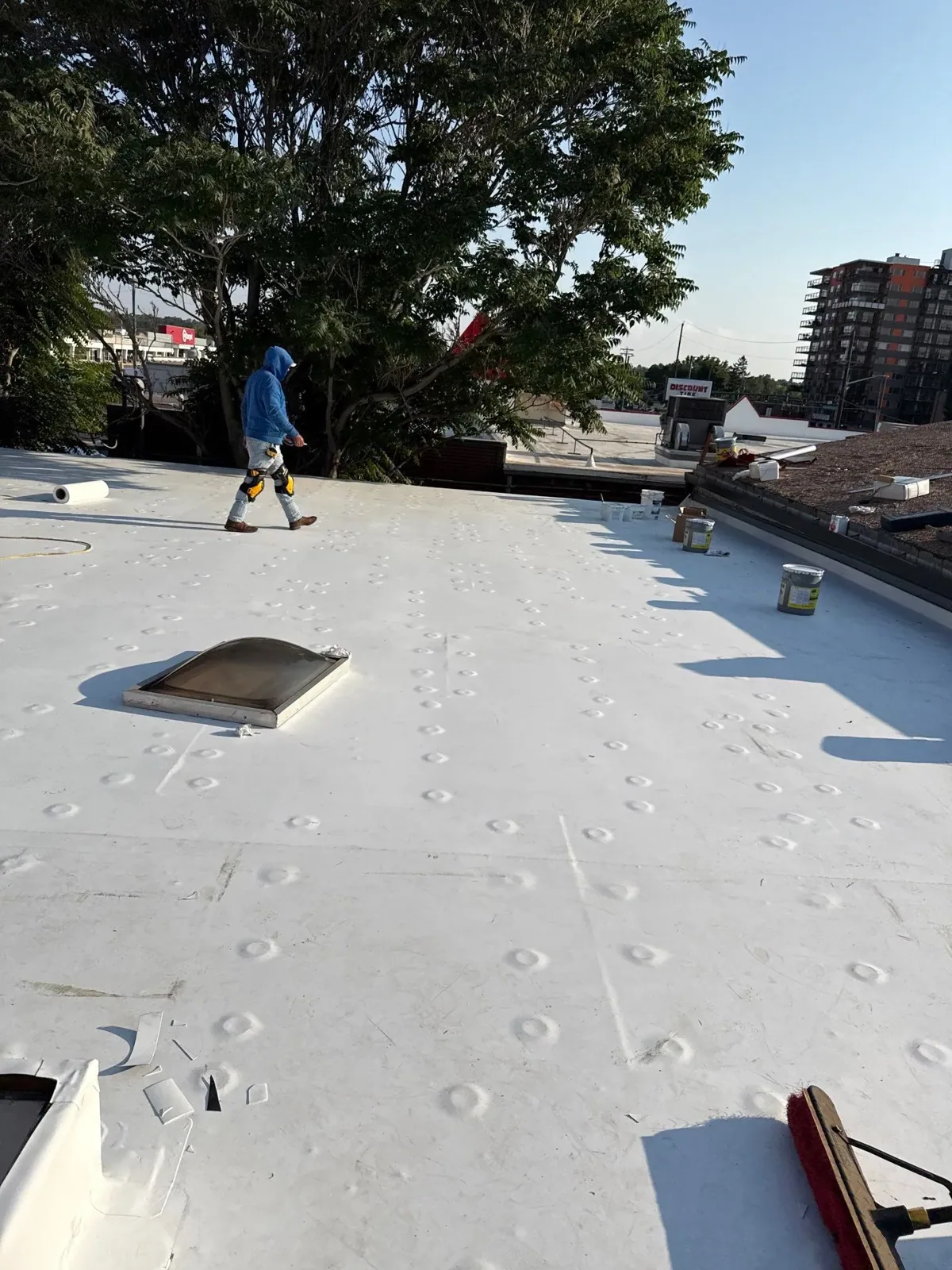
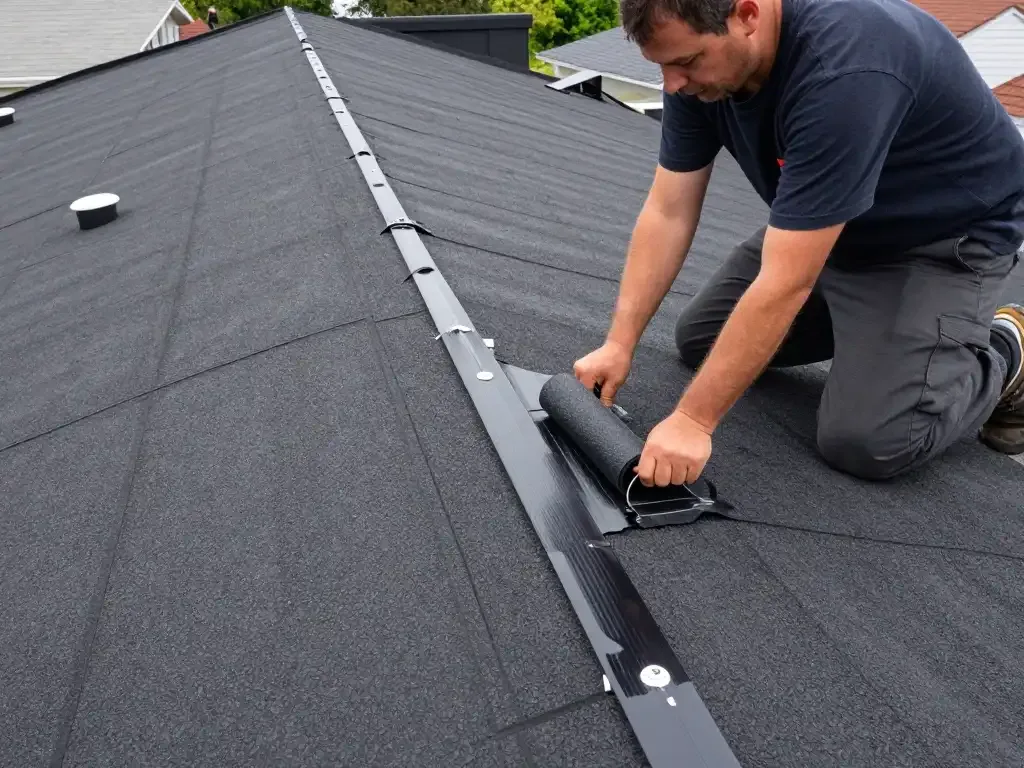
TPO membrane repairs need sound, properly prepared material for a reliable weld, while other systems use their own compatible joining methods. We evaluate aged surfaces and earlier treatments before selecting the repair perimeter. Where a broader group of defects becomes evident, a planned roof repair scope can address them separately from the immediate leak. That separates the confirmed water entry from additional condition work without leaving either undefined.
Assess the wet assembly
Stopping entry does not remove water already held beneath the membrane. We examine whether affected insulation or decking needs removal and identify signs that require further investigation. Interior finishes may also need drying and assessment by the appropriate restoration trades. The roofing and interior work have different completion tests. A dry-looking ceiling immediately after repair is encouraging, but it is not a substitute for evaluating wet concealed materials.
West Quincy has restaurants, café and pub uses, plus food-court and private gathering spaces. On a roof above food-service operations, falling water can affect occupied dining or preparation areas while exhaust and intake equipment complicate access. We plan the roof investigation and closure with those operations in mind. For assets in West Quincy, the repair priority should distinguish immediate interior exposure from the longer work needed to restore the affected roof build-up.
Compare the next weather
The next comparable rain or thaw provides an opportunity to assess the completed repair under the original exposure. We identify the repaired detail and ask the manager to track the earlier interior observation points. Continued water can mean a second entry path, retained moisture or an unresolved connection. We investigate the pattern rather than adding another treatment without a reason. That makes follow-up a condition comparison instead of a repeat purchase of the same patch.
For a roof with recurring leaks across several areas, the repair history also informs the renewal decision. A serviceable assembly with one failed detail deserves a focused response; widespread wet insulation and deteriorating connections may require more extensive work. We explain where the current leak falls within that distinction. The owner can then judge immediate protection and the next repair threshold separately, using the observed assembly condition and the impact on occupied rooms.
Commercial Roofing Questions
Why does the leak return only during rain from one direction?
That pattern can point toward a wind-exposed wall, counterflashing or curb connection, although inspection is needed to identify the actual entry. We compare the affected room with nearby roof and wall details and use targeted testing where suitable. The repair recommendation should explain that connection. Repeating a field patch without examining directional exposure can leave the trigger unchanged.
Can we keep operating beneath an intermittent drip?
Protect people and equipment from the affected area first, and involve qualified electrical help if water reaches energized equipment. We assess the roof opening and the risk of continued entry as soon as access is safe. Temporary protection may be appropriate while the permanent detail is investigated. The manager should also arrange assessment of wet interior materials rather than allowing an occasional drip to remain an indefinite operating condition.
Will finding one opening explain all the wet rooms?
Several rooms can share a water path, but multiple entries can also exist. We compare timing, roof elevations and concealed construction before treating the first defect as the whole scope. Separate wetting patterns deserve separate investigation. Follow-up during comparable weather helps determine whether the repair addressed every active entry affecting the building.
What should our staff record before the next storm?
Mark the affected interior areas and retain photographs showing the extent of wetting, then record rainfall timing, wind direction if known and equipment operation. Staff should stay away from unsafe roof access and wet electrical areas. We use those observations to focus the roof investigation. Clear event timing is more useful than applying another uncoordinated repair product before the assembly can be examined.