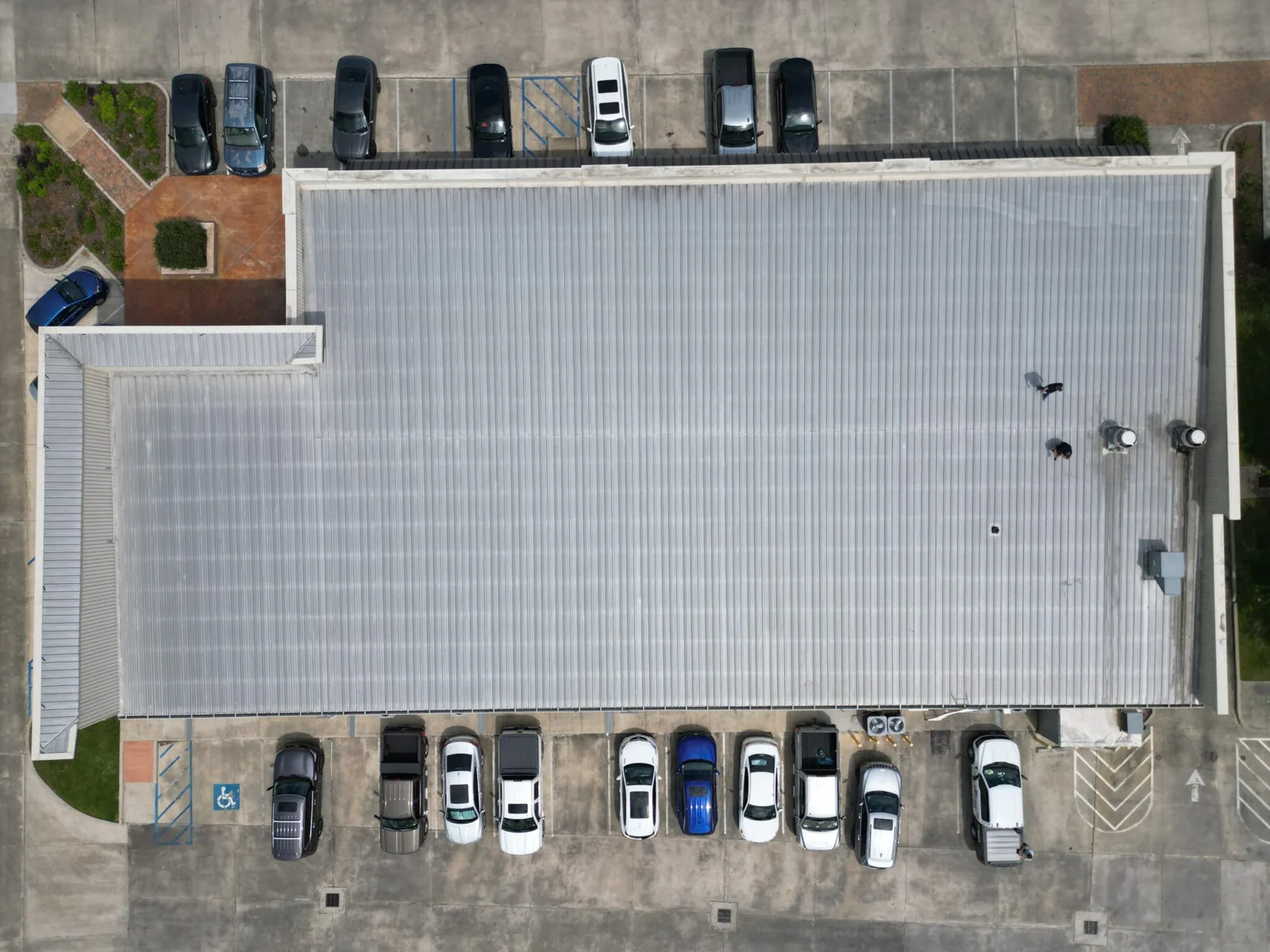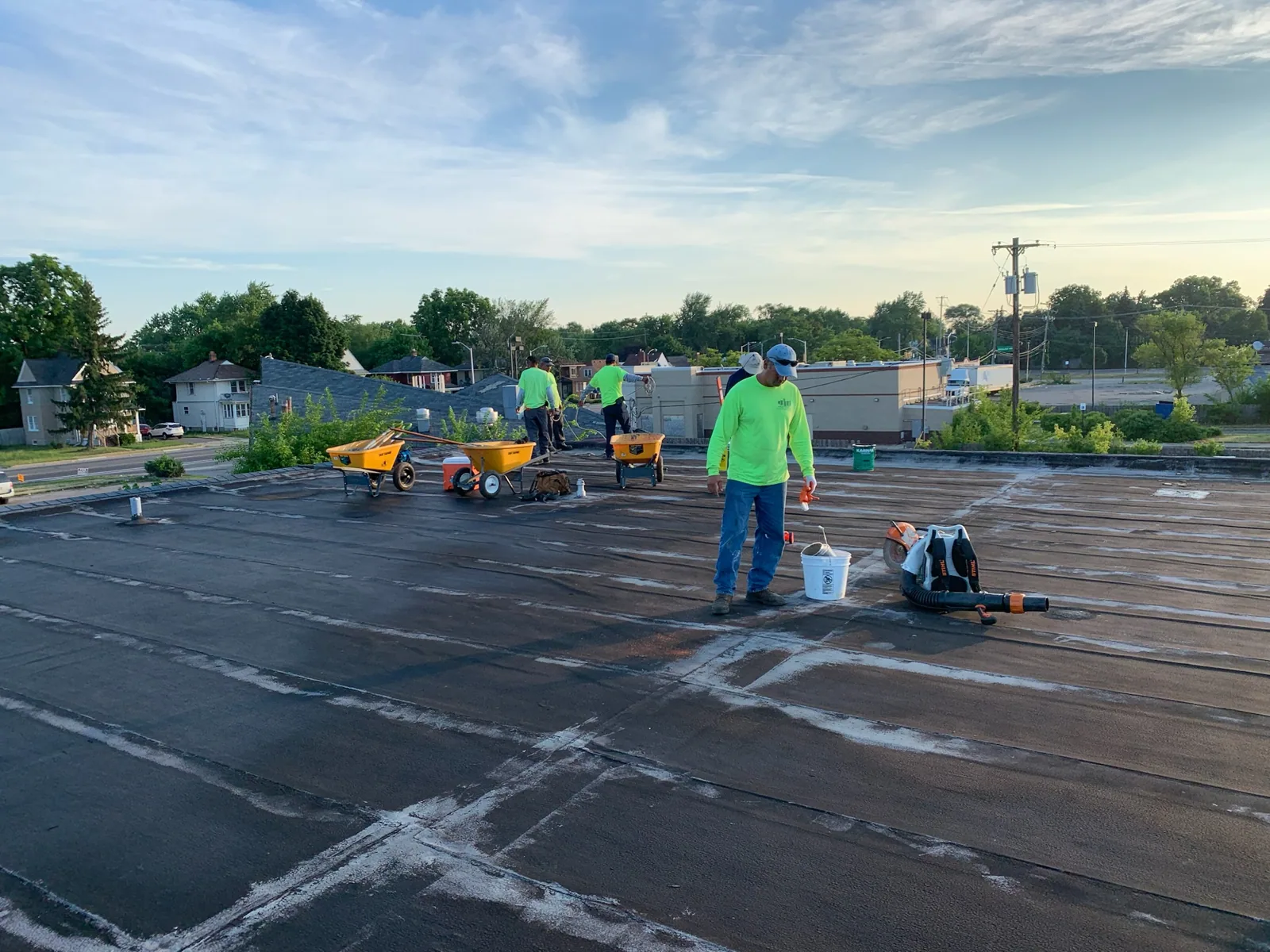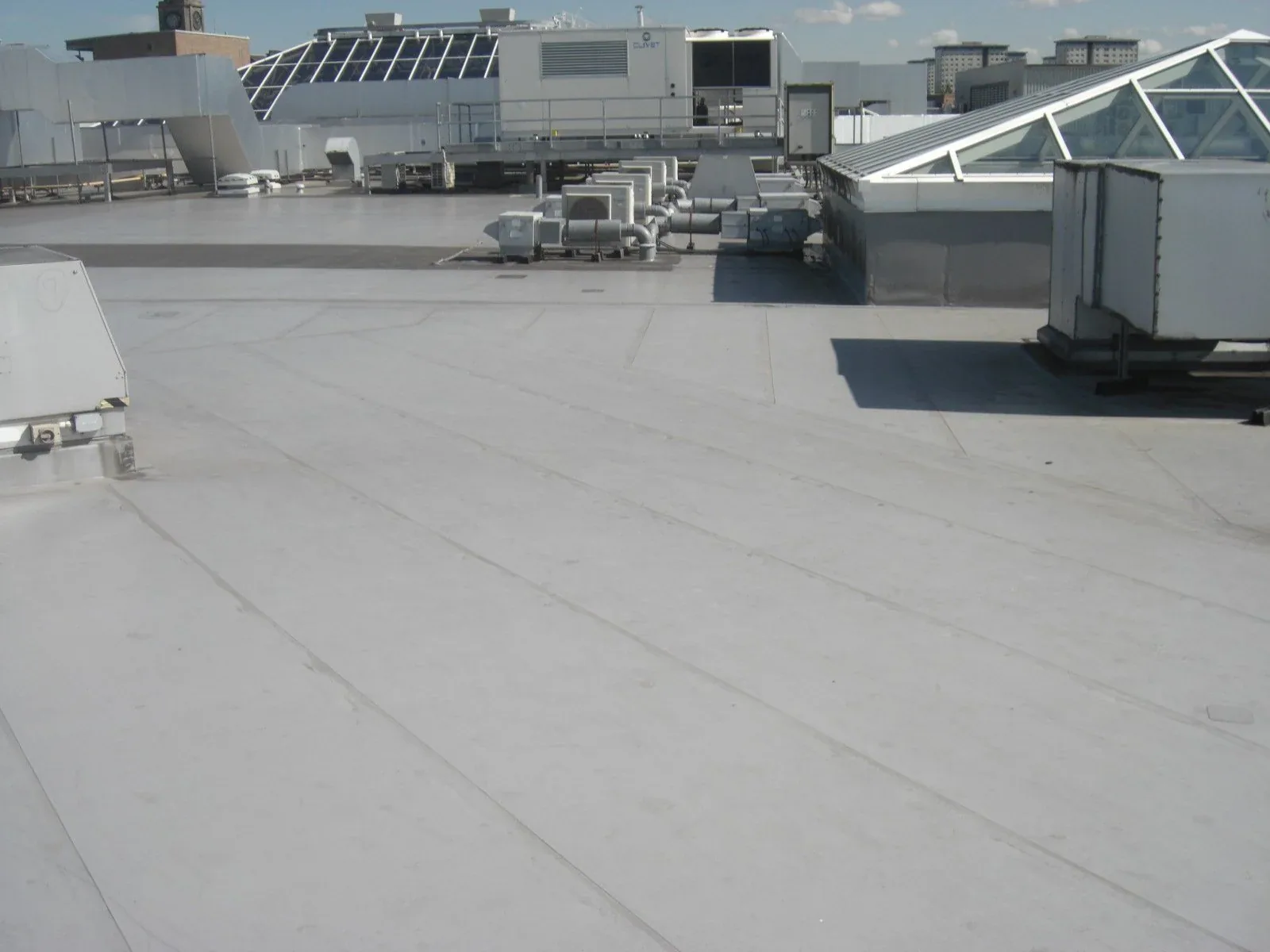
Commercial Roof Recover and Overlay in Quincy, MA
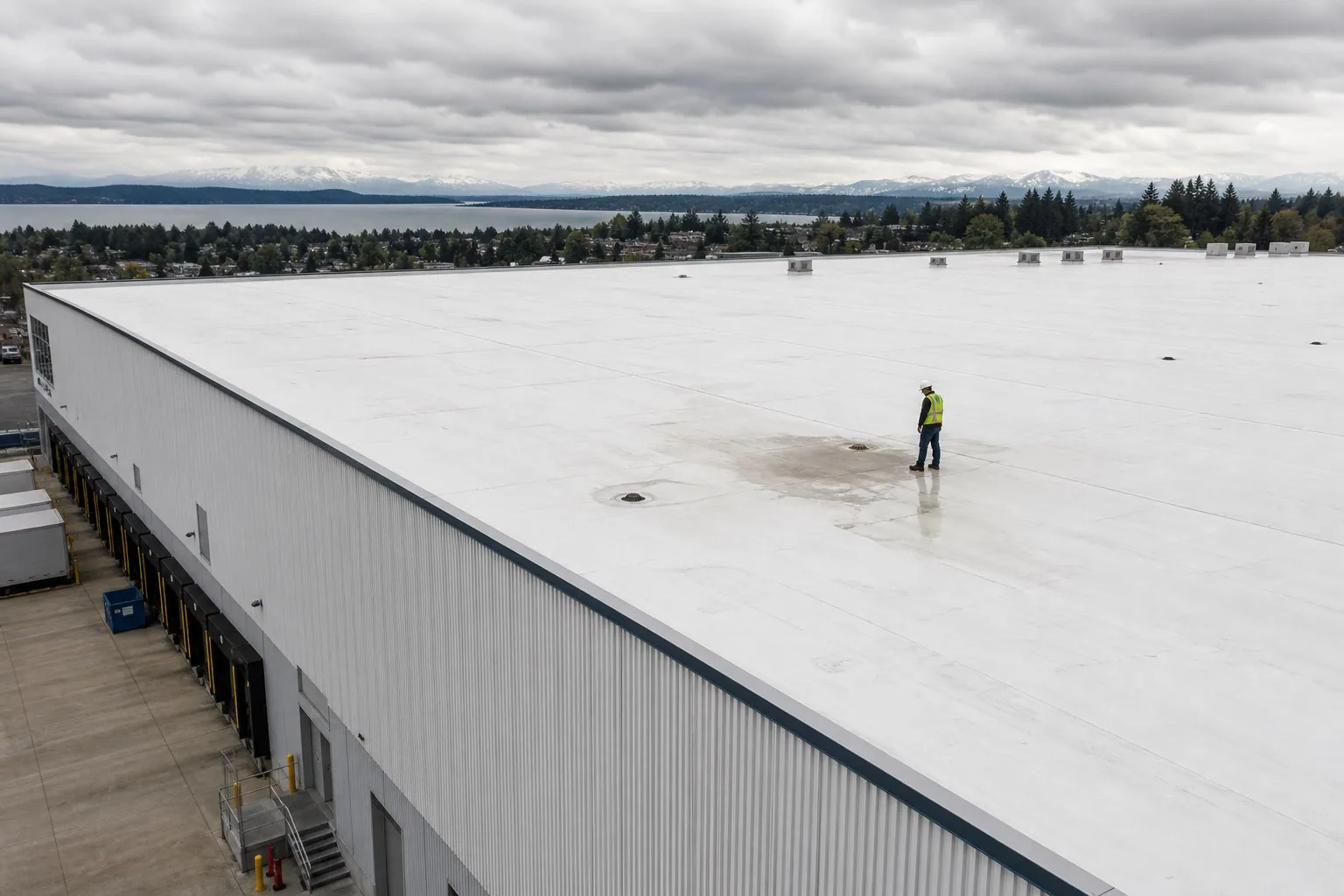
Summer heating followed by winter contraction tests every layer a recover leaves beneath the new roof. For an occupied property in Quincy, MA, the decision is therefore less about covering visible wear than establishing whether the retained assembly can provide a stable, dry foundation. We examine that foundation before recommending an overlay. A serviceable deck and suitable insulation may hold useful remaining service; wet layers, weak attachment or inadequate flashing height can make retention an unsuitable choice.
Commercial Roofing Quincy evaluates recover eligibility, removes materials that cannot stay and installs the new assembly where existing conditions and project requirements permit. The investigation connects physical roof findings to a defined retention decision. The owner should know which layers remain, what has been tested and where removal is still necessary before comparing recover and replacement proposals.
Retention has conditions
A recover depends on more than the number of existing roof layers. We examine deck condition, load implications, membrane compatibility, attachment and the assembly’s moisture distribution. Applicable code and project design requirements also affect whether another roof covering can be added. The building permit history can help establish earlier work, but openings may still be needed where the actual construction differs from the available record. We resolve that difference at the roof.
An old membrane with scattered surface cracking may behave differently beneath a new covering than a roof with broad areas of loose insulation or trapped water. A recover should not conceal the second condition. We identify localized removal areas and assess how they meet retained construction. Where deterioration prevents a sound retention strategy, removing the existing assembly gives the project a different starting point. The two options deserve comparable scopes, including the same drainage and equipment concerns.
Locate what must leave
Water within insulation may travel beyond the original leak and remain after the interior has dried. We compare moisture indications with core openings and accessible construction details to set removal boundaries. A dry surface is not enough to establish dry insulation. Suitable infrared investigation with confirmation can inform that comparison, while assembly type and weather determine whether the thermal results are useful.
The retained material needs examination at representative locations, including suspect areas near drains, equipment and earlier patches. We evaluate layer thickness and substrate condition at the same openings, then close them with compatible repairs. A wet pocket can sometimes be removed and rebuilt without stripping a whole roof area. That decision changes when moisture is extensive, distributed through multiple layers or associated with deteriorated decking. The recover recommendation should state the basis for the boundary rather than treat every isolated opening as representative of the entire property.
Added height changes details
New insulation and cover board raise the finished roof surface. Existing curb flashings, door thresholds and wall terminations may then have too little height to keep water out. Drains can become stranded below an awkward transition or above a new low point. We measure those relationships before ordering the overlay materials. A detail that functions on the existing roof may need rebuilding when the assembly becomes thicker.
At Wollaston’s neighborhood commercial properties, older small-scale retail buildings coexist with civic and residential uses. An occupied storefront makes the consequences of a failed threshold or shared-wall termination immediate. We assess adjoining roof elevations, parapet interfaces and access points individually. Where additional insulation can improve drainage, the proposal must also identify outlet work and transition treatment so the new surface does not direct water toward a previously dry doorway.
Prove the fastening path
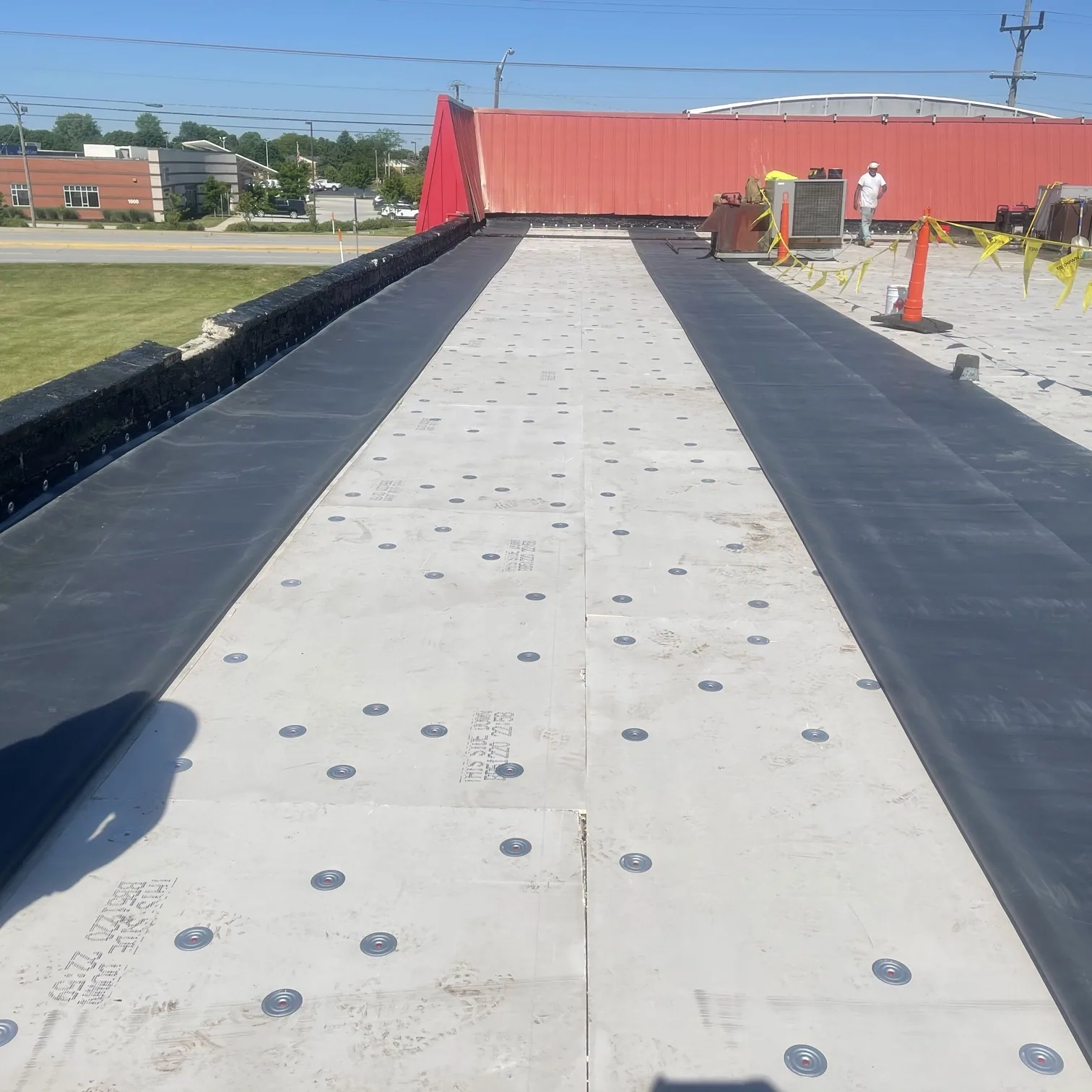
A new membrane cannot rely on loose materials below it to resist movement. We determine how the proposed attachment reaches a suitable substrate, whether mechanically fastened, adhered or otherwise designed for the assembly. Fastener length alone does not resolve deck suitability. Pull testing, substrate preparation and adhesion evaluation may be needed, depending on the chosen construction. The fastening path has to survive beyond the visible surface.
For an EPDM recover assembly, separation materials and attachment depend on the condition and compatibility of retained layers. For a thermoplastic option, seam welding also needs a stable installation surface and appropriate details at transitions. We compare the complete assembly rather than selecting solely by membrane thickness. Wet insulation, crumbling cover board or poorly attached earlier construction can affect both options. Material compatibility also matters where existing bituminous products or service-area contamination could interfere with the new system.
Keep the operating advantage real
Keeping suitable roof layers can reduce the amount of tear-off above occupied rooms, but localized demolition and detail reconstruction still create exposure. We identify where removal occurs and how those openings will be protected before work starts. Recovering an occupied roof also requires safe material loading, equipment coordination and control of debris. The retained roof is useful temporary protection only where it remains intact and the work does not compromise its water path.
West Quincy has dining uses that include restaurants, a café, pub and food court. On a food-service roof, exhaust operation and discharge compatibility can affect recover preparation and the daily sequence. We plan around the actual equipment and intake locations. Adhesives, removal work near ventilation and access across customer areas deserve attention even when the main field stays covered. A recover should offer a defined construction advantage, not an assumption that building operations will remain unaffected.
Compare future access
Every retained layer becomes part of the next maintenance and renewal decision. We describe the completed build-up and the areas rebuilt during the recover so future inspections can interpret it correctly. Equipment additions should not introduce penetrations without compatible flashing. The manager also needs practical access routes that reduce repeated traffic across vulnerable details. Retention holds value only while the resulting assembly remains maintainable.
The recover proposal should distinguish existing defects being corrected from conditions remaining in place. That allows a useful comparison with replacement, including drainage geometry, inspection access and the extent of concealed construction retained. We discuss those limits against the expected property use rather than promising a particular service life. A planned tenant change or equipment installation can alter the decision if it will soon disturb the same roof area.
Commercial Roofing Questions
Does an overlay remove the need to address a low area?
Retaining the earlier roof does not correct its slope automatically. We examine the low area and determine whether tapered insulation, drain adjustments or removal of distorted materials can establish a better water path. Added thickness must remain compatible with curbs and wall details. A proposal should identify the drainage correction explicitly rather than leave it as an expected benefit of the new membrane.
Can one wet corner rule out recovering the whole roof?
A confined wet area may be removed separately where testing supports that boundary and the remaining construction is suitable. We consider why that corner became wet and whether similar details exist elsewhere. Broad moisture, a compromised deck or interconnected damage can change the recommendation. Confirmation at the boundary matters as much as finding the initial wet material.
How should we compare a recover bid with a tear-off bid?
Request matching decisions on outlets, curb height, damaged insulation and equipment work, then compare what each option retains. We separate those scope differences in our assessment. A recover that leaves deteriorated details unresolved is not equivalent to replacement that rebuilds them. The amount of retained construction should be clear enough to inform the next renewal decision.
Will future repairs require opening both roof coverings?
Some repairs remain at the new surface; others need access to retained layers or the deck. We keep an assembly record identifying the layer sequence and rebuilt areas, which helps determine the correct investigation depth later. Future rooftop work should use details suited to the completed build-up. Repeated unexplained leakage warrants investigating below the upper membrane instead of adding surface patches indefinitely.