Commercial Roofing in Weymouth, MA
Weymouth's commercial needs extend from the Route 3A Bridge Street corridor and Bicknell Square in North Weymouth to other town properties with different access and operating schedules. A planning study at Bridge Street and Bicknell Square addressed local businesses, traffic safety and waterfront connections; proposed improvements should not be confused with completed work. Roof work begins with current property conditions. We inspect the assembly, trace reported water, evaluate drains and edge details, and confirm who controls access. The owner receives a scope that separates urgent protection, permanent repair and longer-term renewal rather than one broad allowance for a whole town.
Separate Today's Site From Future Plans
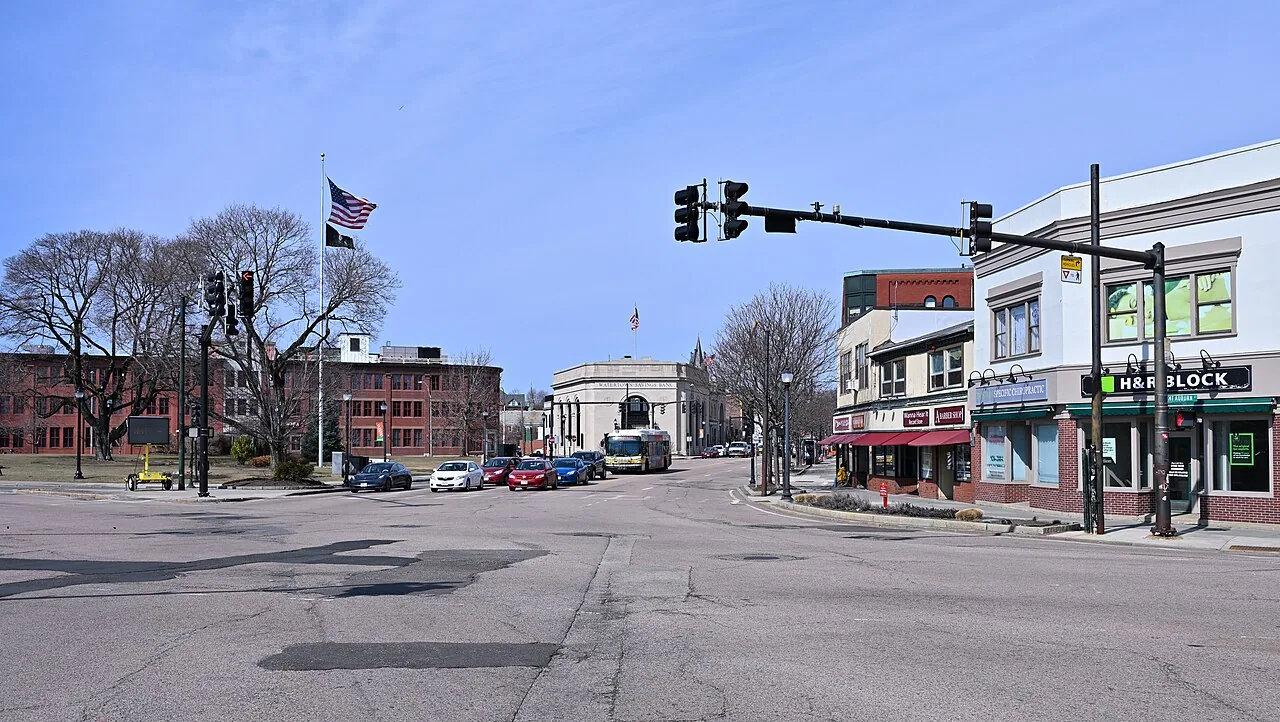
North Weymouth's Bridge Street is the Route 3A corridor, and Bicknell Square functions as its commercial hub. Elsewhere, Jackson Square has redevelopment-linked water, sewer and streetscape proposals. Union Point's master plan concerns redevelopment of the former South Weymouth Naval Air Station, but planned commercial space is not evidence of completed buildings. These distinctions matter when an asset manager sets a roof scope. We inspect existing roofs and confirm current access, occupancy and building use instead of assuming a project has been built or a street improvement is ready.
A business operating today may need customer access preserved while a crew stages material, and an existing industrial or office building may have equipment to keep running. We agree on a delivery route and work boundary with the property representative. A nearby North Weymouth property or Rockland asset can share a scheduled review day, but each roof condition belongs to its own record.
Trace the Defect Above the Interior
An interior leak report can start at a ceiling stain, a wet wall or a drip near equipment. Water may travel beneath the roof surface or along the deck before appearing there. We inspect likely entry details above and around the report, including field seams, penetrations, curb flashing, parapets, drains and scuppers. We also check the area around prior patches for separation or soft material. If moisture could extend past a visible defect, a survey or selective opening can determine whether the roof needs a local repair or broader removal.
For a property with tenants, a leak that affects one suite may require immediate interior protection even while its roof-side source is being traced. We note the affected use, the water path under review and any area we could not inspect safely. A drone may document a broad membrane field, but close examination remains important around flashing and edges. We state which observations are confirmed and which need further testing, then explain how the next check changes the repair decision.
Check Roof Discharge After Heavy Weather
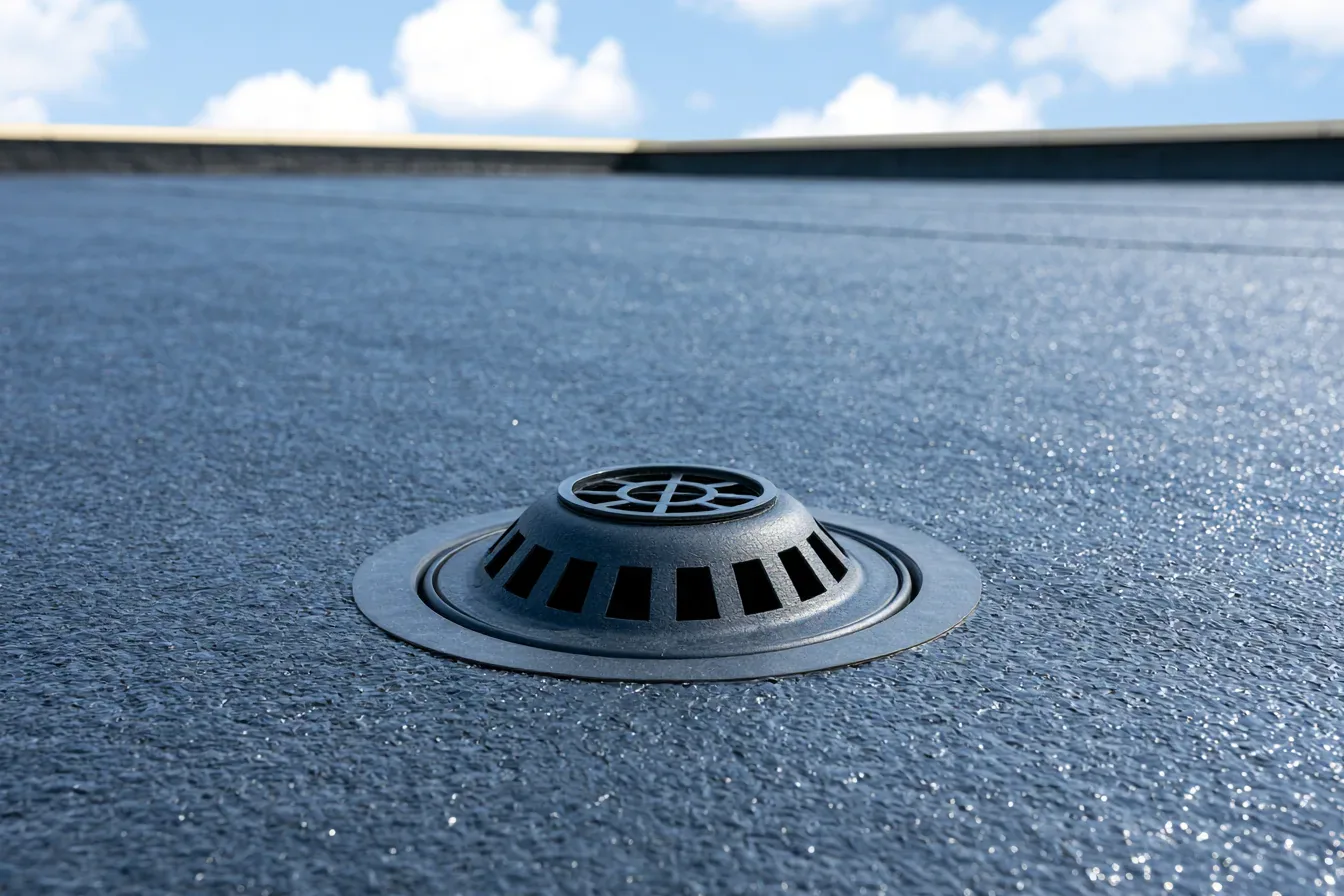
Quincy Emergency Management prepares for hurricanes, blizzards, nor'easters and flooding in the regional area. These preparedness concerns do not establish a weather event or roof impact at a specific Weymouth building. They do support keeping roof drainage in the maintenance record. We inspect the outlet, strainer, overflow path and membrane around each drain. If water is held near a wall or equipment curb, we check the slope and transitions feeding that low area. A blocked strainer may need cleaning; a damaged bowl or depressed deck can require different work.
Edge restraint is also worth checking before the next weather period. We look at coping, metal laps, termination bars and fasteners for movement. If wind or water damage is reported afterward, we compare the new condition with prior photos and separate it from older wear. The owner receives a record of what changed and what work is needed to protect the building. Our drain and scupper work addresses a confirmed outlet issue, while any suspected moisture beneath the membrane is handled as a separate investigation.
Match a Repair to the Installed Layer
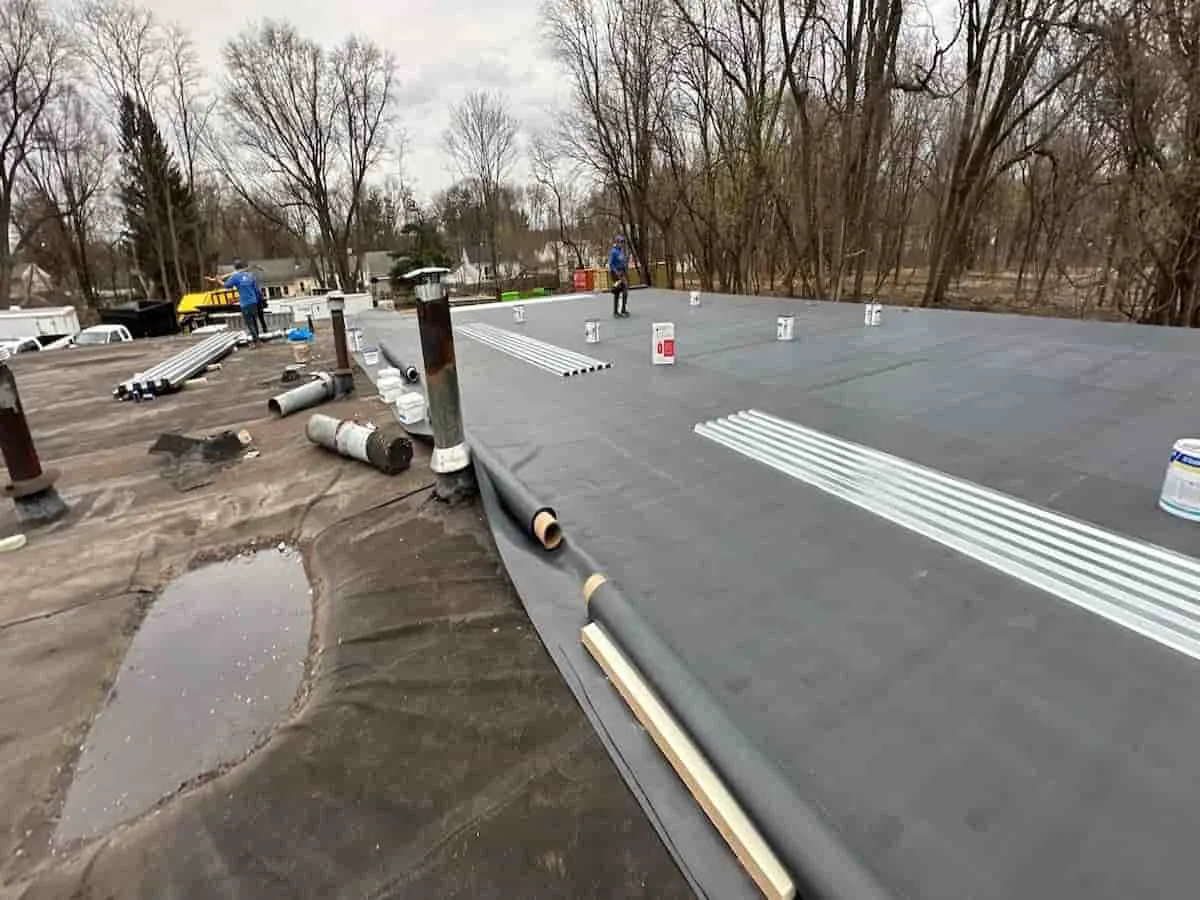
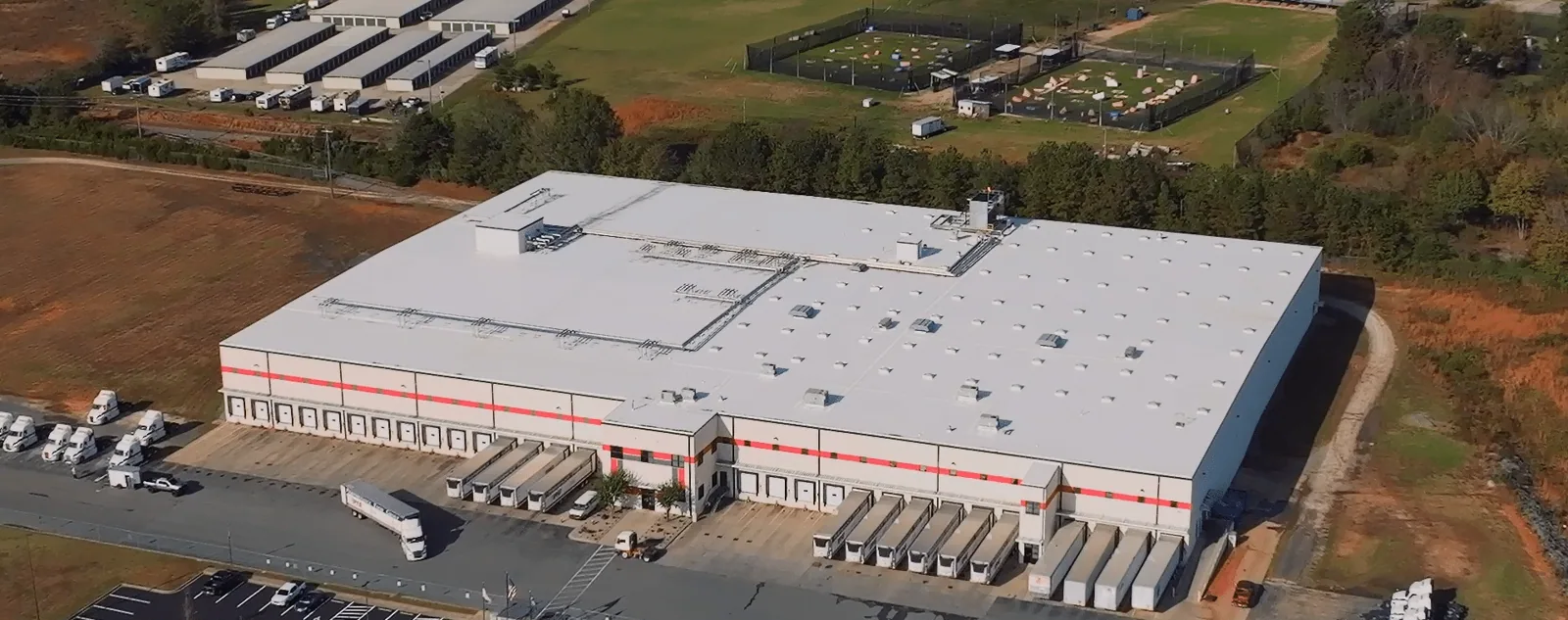
We identify whether a Weymouth roof is single-ply, built-up, modified bitumen, metal, foam or coated before choosing repair materials. A thermoplastic seam may need heat welding, while EPDM requires a compatible splice and flashing method. Metal panel repairs depend on connection and movement. We check substrate stability and moisture at the repair edge; a patch over weak insulation or a moving joint will not address the underlying issue. When previous work has separated, we examine the material interface and determine what preparation the next repair requires.
A recover can be considered if the current layers are dry and stable, the finished height works at drains and edges, and the project requirements allow retention. Tear-off exposes the deck and permits correction below the membrane, but it broadens the area that must be secured and protected. Owners can compare repair service with a replacement scope after the existing assembly has been documented. A modified bitumen system has its own layer and surfacing considerations. The recommendation follows the roof condition, not redevelopment plans nearby.
Plan Access Around the Occupied Building
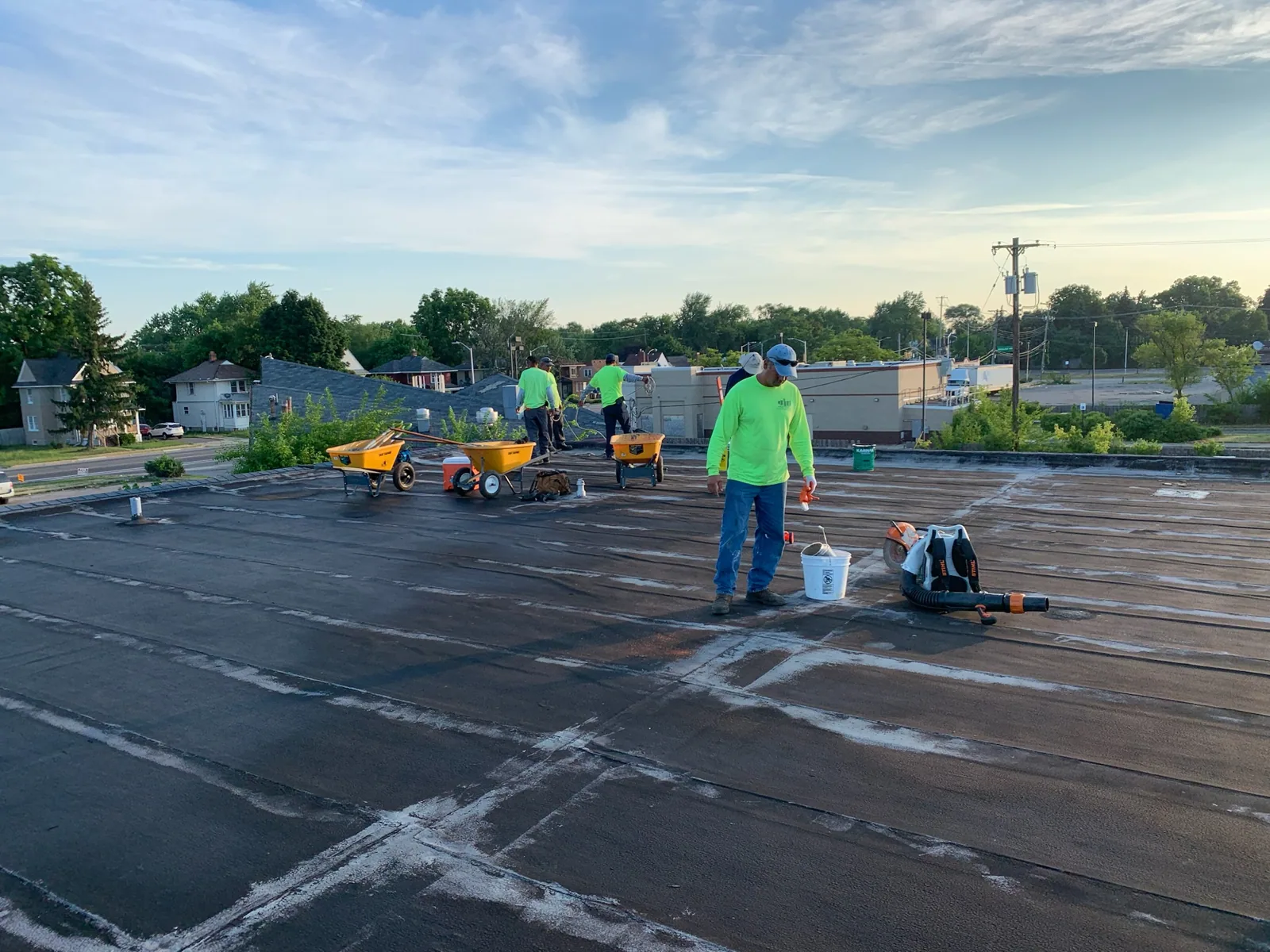
Work on an occupied Weymouth property requires a clear route from staging to the roof and a plan for rooms below. We ask which entrances stay open, how tenants receive notice and whether a mechanical unit needs shutdown or restart by a technician. Replacement is divided into sections that can be made secure before the crew advances. Material deliveries, debris removal and weather protection have to fit the site's daily use. The property manager should know what area is affected and when the boundary moves.
When water is active, around-the-clock response can begin with temporary protection and an initial inspection when rooftop access is safe. Permanent repair follows after the defect is understood. A maintenance visit can check drains, seams, edge metal and prior work before another leak occurs. If the property is part of a larger group, a condition report provides a repeatable baseline. We tie the service sequence to the property schedule instead of promising an interruption-free project.
Bring Confirmed Findings to the Budget Review
Roof decisions become easier to compare when photos, defect locations, prior repairs and open questions are recorded by roof area. We label the installed system and describe whether each issue is active, repaired or still under investigation. A later inspection can return to a drain, seam or penetration and determine whether the condition changed. This helps an owner set service priority without counting a suspected moisture pattern as confirmed damage or treating one building as a model for the rest of the town.
We can carry confirmed conditions into a capital plan or a multi-property schedule. A building with active water over an occupied space may come before an older but dry roof, while another roof may need testing before replacement funding is set. Share the existing plans and repair history for the property, and we will identify whether the next step is correction, moisture confirmation or a larger renewal scope.
Commercial Roofing Questions
Is planned Union Point commercial space ready for roofing?
A master plan describes future redevelopment, not completed buildings. We assess the structures and site access that exist when service is requested.
Are Bridge Street improvements already complete?
The planning study addresses traffic safety and waterfront connections, but it does not confirm completion of each proposal. We verify current street and site conditions before scheduling material access.
What should a Weymouth owner do after a leak?
Protect sensitive interior space if needed and record the room, time and operating effect. We then inspect the likely roof path and distinguish temporary measures from the permanent repair.
Can two Weymouth buildings share a roof plan?
They can share inspection categories and scheduling, but not an assumed condition. We create a separate assembly record and scope for each property.