Commercial Roof Condition Reports in Quincy, MA
Wet insulation found beside an opened curb changes the roof decision even if a photograph shows only a narrow flashing defect. A commercial roof condition report in Quincy, MA, should connect those separate findings to the assembly and construction required. We examine accessible components and identify closer checks where concealed condition affects the recommendation. The report distinguishes the entry connection from damaged receiving layers. That distinction lets the owner compare a waterproofing repair with the additional removal needed to restore useful construction.
Quincy prepares for flooding and nor'easters. We relate that exposure to the requested roof's water routes and vulnerable interfaces, while describing condition established at the individual property. A photograph is evidence of the feature it shows, not a complete assessment of every retained component. Our inspections, repairs and renewal recommendations connect visible details with material and scope decisions, allowing the owner to understand what the proposed intervention actually restores.

Locate the finding within its assembly
A roof can contain different systems or receiving layers across its footprint. We identify the relevant area before assigning a shared condition description. The report should distinguish field membrane, insulation information, attachment and detail construction where they affect the decision. A recent-looking finish may retain earlier layers below it. Those components belong in the assessment when moisture or suitability changes what can remain under a repair or renewal.
Hands-on roof inspection establishes the accessible field, perimeter and equipment findings. We describe the connection inspected and the material condition observed rather than label an entire roof defective from one isolated detail. Conversely, a useful field surface should not conceal an open transition. The recommendation follows the actual components found, with the area and receiving boundary clear enough to distinguish local work from a broader supported scope.
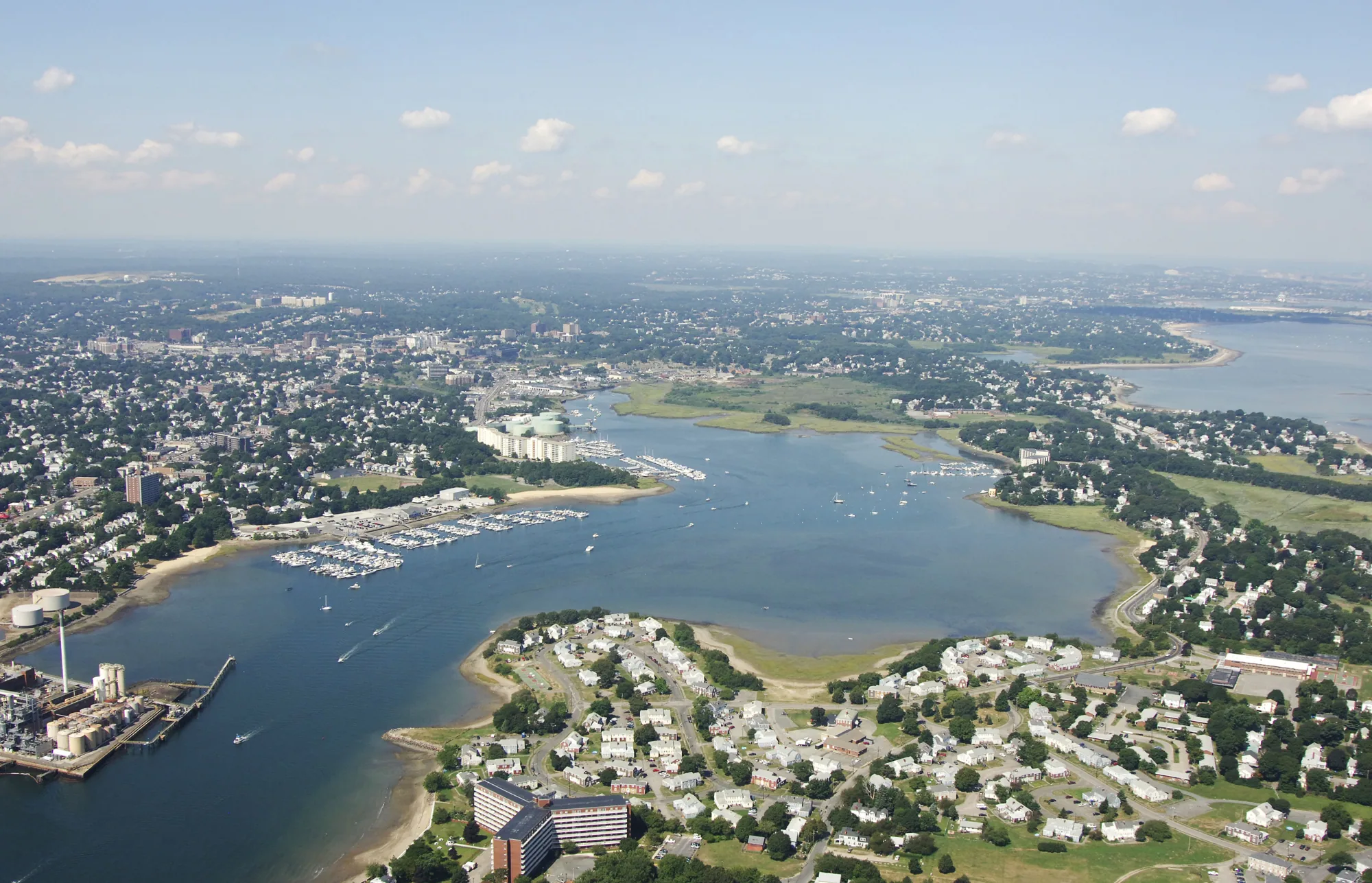
Quincy Point includes the Town River and Fore River setting and connects toward Braintree. For requested work in Quincy Point, the property layout and individual roof areas need identification during the examination. A useful location description points to the assessed component on that roof. The report should not substitute a neighborhood name for the assembly and specific connection that support the recommendation.
Show the connection and its receiving edge
A close photograph can show an open seam or separated termination, while a wider view establishes its relationship to a wall, unit or outlet. We connect those observations in the component description. The owner needs to understand where the water boundary is interrupted and what surrounding construction receives the repair. A tightly cropped defect alone can omit the support or geometry contributing to failure. Photographs should help explain the assembly relationship rather than replace its examination.
At an outlet, the report can distinguish debris, damaged flashing and the surrounding low area. At equipment, it can identify support, clearance and material contact relevant to the roof. We describe the physical task each finding supports. Clearing an obstruction, raising a receiving connection and removing wet layers are different decisions, even where photographs place them near one another. The scope should retain those differences instead of combining them into a broad maintenance instruction.
Where surface preparation or joining method matters, we identify the installed material and useful receiving condition. A familiar covering name alone does not establish a compatible repair. Previous treatments or local residue can change the preparation needed. The photographed feature should be connected to the construction selected, with final continuity and the receiving boundary described in terms the owner can compare.
Distinguish indications from established material condition
Infrared moisture investigation can direct closer examination under suitable assembly and weather conditions. A thermal pattern does not itself identify every layer or define a complete removal boundary. We explain the physical checks used where they affect the recommendation and describe the condition established. Wet insulation, deteriorated support and an open membrane connection can represent separate findings with different restoration tasks.
Where an area is inaccessible or the receiving construction remains concealed, the next examination should be tied to a decision. The report can identify whether a check establishes insulation suitability, support condition or the final boundary around damaged material. That specific task is more useful than a broad uncertain-roof statement. The owner can arrange appropriate access before a retention or removal choice depends on an unexamined component.
Wollaston's older small-scale commercial areas include retail activity. A requested roof over attached shop space can need assessment of actual adjoining wall and equipment connections. We examine the assembly present rather than assign a roof condition from the architecture. The report should explain the receiving interface, occupied exposure and closer investigation relevant to the individual roof task.
Connect the repair boundary to the finding
A bounded defect on sound receiving construction can support targeted work, while distributed unsuitable layers can provide a reason for wider reconstruction. We describe that basis in the recommendation. A local repair should identify compatible preparation and final closure; a broader scope should identify removal, insulation, support and rebuilt details. The owner can then compare complete interventions rather than treat every damaged-roof description as the same construction requirement.
Roof due-diligence work uses those component findings for acquisition or renovation decisions. A new surface can retain damaged receiving material if the option is not fully described. We identify the layers remaining and the condition supporting retention. Changed roof height also needs its relationship to outlets, curbs and walls assessed. Those interfaces should stay in the recommended scope instead of being omitted because most of the field looks serviceable.
Warranty and system review can identify installed-material requirements relevant to compatible repair or planned alteration. A condition finding and a coverage term are different matters. We connect the physical work to the actual system, without treating warranty paperwork as proof that every component is sound. The owner should understand both the construction requiring repair and the relevant system information for performing it.
Describe the exposure behind the work priority
An active opening above sensitive use can need prompt attention even if its surface area is small. Another region may contain wider deterioration supporting planned renewal. We assess the physical condition and occupied exposure together, explaining the component behind each priority. Room protection, intake arrangements and equipment intervals should be connected to the actual removal and closure. A recommendation based only on visible area leaves those construction and operating differences unresolved.
Roof asset tracking can compare later findings with completed component work. The description should distinguish temporary protection, permanent waterproofing and underlying restoration. A cleared outlet and rebuilt flashing are different completions. If a symptom returns, the next assessment can examine its pathway against what was actually restored, rather than assume every recurrence needs the same surface treatment or that all prior work has failed.
Commercial Roofing Questions
What should accompany a photograph of an open roof connection?
Identify the component, receiving material and relationship to surrounding construction. A close view can show the gap while a wider view explains the wall, unit or outlet interface. We connect those observations to the proposed task. The useful scope describes what must be prepared or rebuilt rather than treating the image alone as a complete repair instruction.
How should a report describe concealed moisture findings?
Distinguish the initial indication from the material condition established by appropriate examination. We identify wet or unsuitable layers and their relationship to the entry connection. The recommendation should explain the receiving and removal boundary supported by those findings. A mapped pattern or surface appearance should not be treated as a full assembly assessment without the relevant physical checks.
Can one isolated detail establish that the whole roof needs renewal?
Assess the surrounding material and retained assembly before expanding the scope. A bounded defect can support local reconstruction where receiving construction is suitable. Distributed damage can provide a different basis for wider work. We describe the components and extent established, allowing the owner to compare interventions without turning one photograph into an automatic whole-roof conclusion.
What makes a later condition comparison useful?
Relate the new pathway and component finding to the actual work previously completed. Temporary protection, detail reconstruction and wet-layer removal have different functions. We keep those tasks distinguishable so a recurring symptom can be investigated against the retained assembly. The owner can then identify the next supported repair rather than repeat a broad maintenance label.