EPDM Roofing in Quincy, MA
Cold-weather movement becomes a roof problem where an EPDM sheet pulls against a poorly supported curb or an aging perimeter connection. On a Quincy, MA, building, that tension deserves attention before meltwater tests the detail. We assess the rubber field, bonded seams and the places where movement is restrained. A flexible membrane can still have a failing connection. The owner needs to know whether a local repair will restore that connection or whether deterioration beneath it requires a wider renewal scope.
Quincy's preparedness priorities include blizzards and nor'easters. We relate that exposure to outlets, changes of plane and the condition of retained insulation rather than judging a rubber roof by surface color alone. Installation method also matters. Fully adhered, mechanically attached and ballasted arrangements place different demands on the structure and details. We compare the actual assembly before selecting a recover over retained roofing or removing material for a new installation.
Separate field flexibility from joint condition
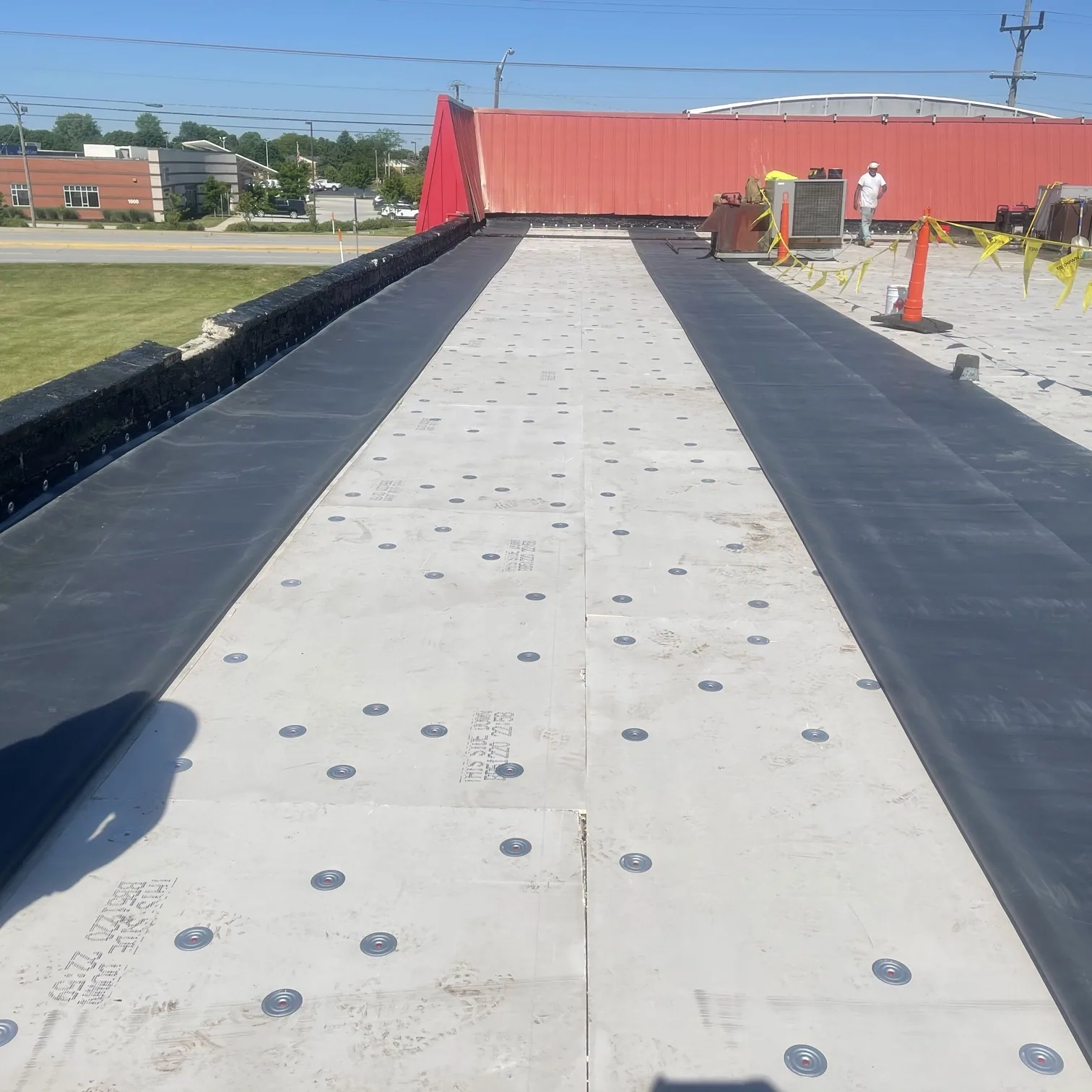
A sound stretch of rubber beside an open lap suggests a joint problem, not necessarily a failed field membrane. EPDM seams and many flashing connections rely on compatible primers, tapes or adhesives and careful surface preparation. Dirt, moisture and aged materials can interfere with the bond. We examine the full affected lap, its ends and adjacent detailing before setting the repair boundary. Sealing only the most visible opening can leave another weak section waiting for the next prolonged wet period.
We clean and prepare sound material, use suitable components and complete the repair in conditions appropriate to their application. A patch should extend beyond damaged sheet into a usable connection area. The surrounding membrane needs enough integrity to retain that bond. Where the field has become badly deteriorated or the underlying material remains wet, a surface patch can be the wrong repair threshold. The assessment should explain that distinction in physical terms.
An incompatible previous sealant can complicate the repair even where the rubber remains flexible. We identify the material at the damaged connection and determine whether it can be removed without compromising the sheet. A suitable transition may require replacing the affected flashing rather than applying another layer of sealant. The repair should leave a connection that can be examined and maintained, with its edges clear of contamination and unnecessary build-up.
Match attachment to the building
Crown Colony's office park is part of South Quincy's commercial stock. On an office roof, equipment access, the condition of the deck and occupant protection influence the choice between attachment arrangements. An adhered installation requires a suitable receiving surface and compatible bonding materials. A mechanically attached assembly depends on appropriate deck fastening and layout. A ballasted approach adds structural loading and requires controls at edges and penetrations. Those choices are not interchangeable line items.
We evaluate the current construction and any proposed increase in roof weight before retaining or adding ballast. Stone or pavers can also conceal debris, damaged sheet and obstructed flow routes. A roof walk needs access to the areas that matter. For office-building roof work, the proposal should connect the chosen assembly with deck capacity, maintenance access and protection of occupied space rather than selecting an installation solely because it avoids visible fasteners.
Give movement a workable connection
A curb corner with stretched flashing can indicate that the sheet is being asked to bridge a movement problem it cannot accommodate. We inspect the roof-to-wall transition, termination and securement near penetrations. Attachment that restrains the membrane at the appropriate location helps prevent movement in the field from pulling directly on the vertical connection. The detail must fit the actual curb geometry. Excessively tight material and poorly supported corners require different corrections from a simple puncture.
Pipe flashings, expansion joints and equipment supports receive separate attention because their movement differs from the surrounding roof. A component that rocks during servicing can repeatedly stress the repair. We connect equipment support and curb corrections with the waterproofing work where that movement is contributing to failure. A secure support is useful only if the water boundary remains continuous around it.
Inspect the low areas after thaw
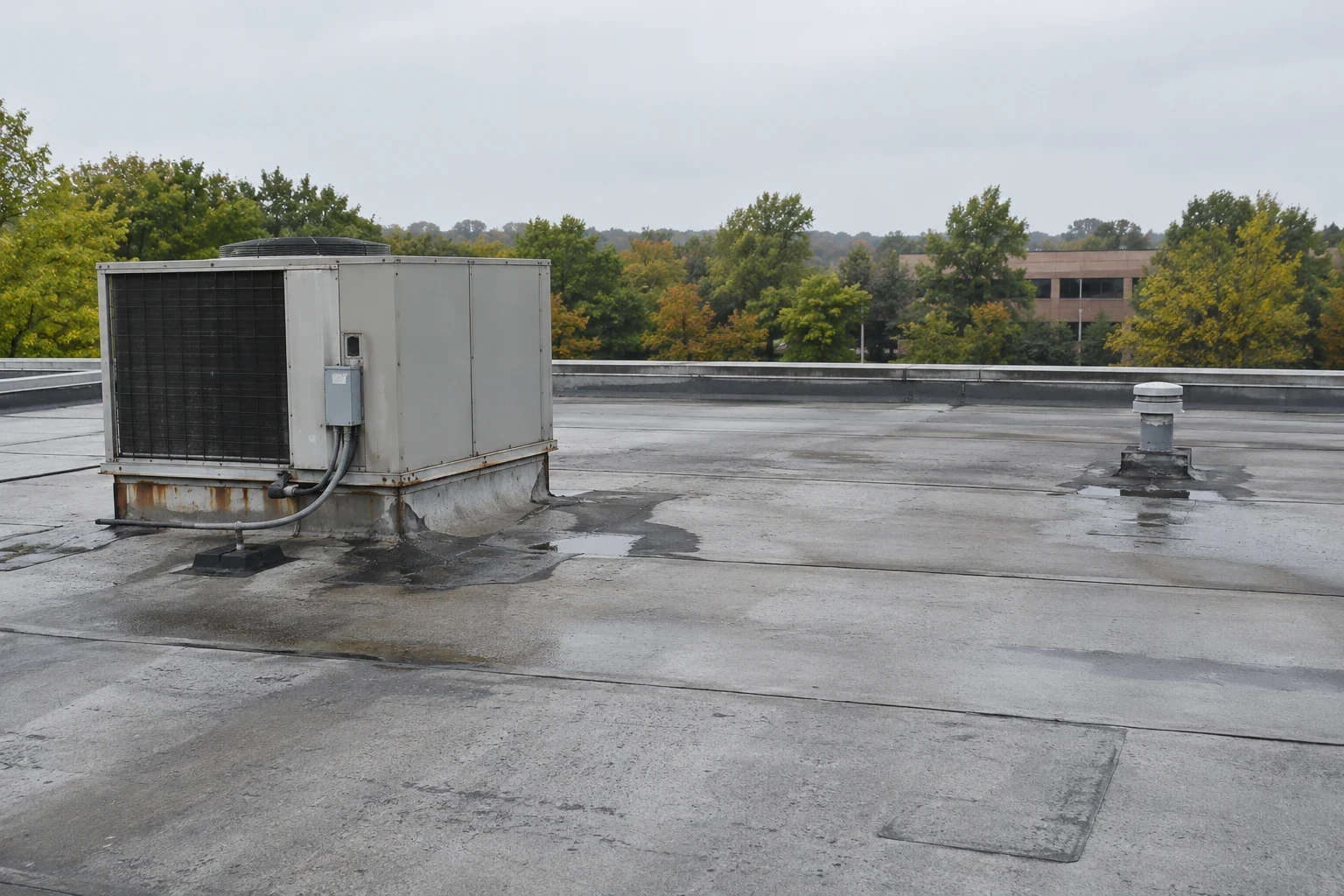
Water held behind a debris ridge can prolong exposure at a bonded seam even after snow has disappeared elsewhere. We examine the outlet route, drain flashing and changes in roof elevation together. A low area that repeatedly fills needs more than cleaning if the geometry continues to retain water. Tapered insulation or drain work may belong in the next renewal scope. Immediate repairs should still address active entry points while the larger correction is evaluated.
North Quincy combines commercial activity along Hancock Street with institutional uses that include its high school. Roof decisions for those uses need to account for winter access and uninterrupted interior activity. We identify whether the wet area is above a service room, occupied room or circulation route before sequencing investigation. In North Quincy, a drainage correction should be assessed against the actual building layout, not against a general assumption that all nearby roofs share the same water exposure.
Compare what the assembly retains
Wet insulation beneath rubber changes the retained value of the existing roof. We investigate soft areas and suspicious moisture patterns before recommending a new surface over them. Deck deterioration, loose boards or moisture trapped between layers can require removal. Dry, stable construction may support a more limited scope. We distinguish those conditions so the owner can compare repair, recover and replacement without treating all retained layers as equivalent.
Alternative systems bring different joining methods and detailing requirements. Heat-welded TPO construction may suit one renewal, while modified bitumen assemblies offer another approach to layered waterproofing. We compare suitability for roof geometry, traffic, attachment and operating exposure. Material preference should follow that assessment. Repair quantity, insulation condition and access difficulty can influence the scope more directly than the name printed on a roll of membrane.
Commercial Roofing Questions
Does a loose EPDM lap require removal of the whole roof?
A limited bond failure can be repaired where the surrounding sheet remains sound and the assembly below is dry. We examine the affected lap beyond the visible opening and establish a clean, compatible bonding area. Distributed failures or deteriorated membrane support a broader investigation. The repair decision should follow the extent and cause of separation, not the appearance of one raised edge.
Can ballast stay in place while we investigate a leak?
The relevant inspection area needs to be exposed. We move ballast carefully where necessary to examine sheet damage, seams and outlet connections, then consider whether the material can be returned appropriately. Leaving the suspected entry point covered limits the assessment. Structural loading and the safe handling of removed material also belong in the work plan.
How do we protect EPDM beside regularly serviced equipment?
Compatible walk protection can reduce wear along a defined route, but it should not trap water or conceal failing flashing. We examine the access path, sharp contacts and the stability of equipment supports before selecting protection. A technician should have a workable route to the service position. Repairing abrasion without addressing repeated contact leaves the same problem active.
Should black membrane color decide whether we replace it?
Color is a limited basis for that decision. We assess membrane integrity, joints, drainage, insulation and the building's thermal requirements. A sound rubber assembly may have useful remaining service even where a reflective alternative is being considered. The comparison should include the proposed roof construction and operating conditions, with no energy outcome assumed from appearance alone.