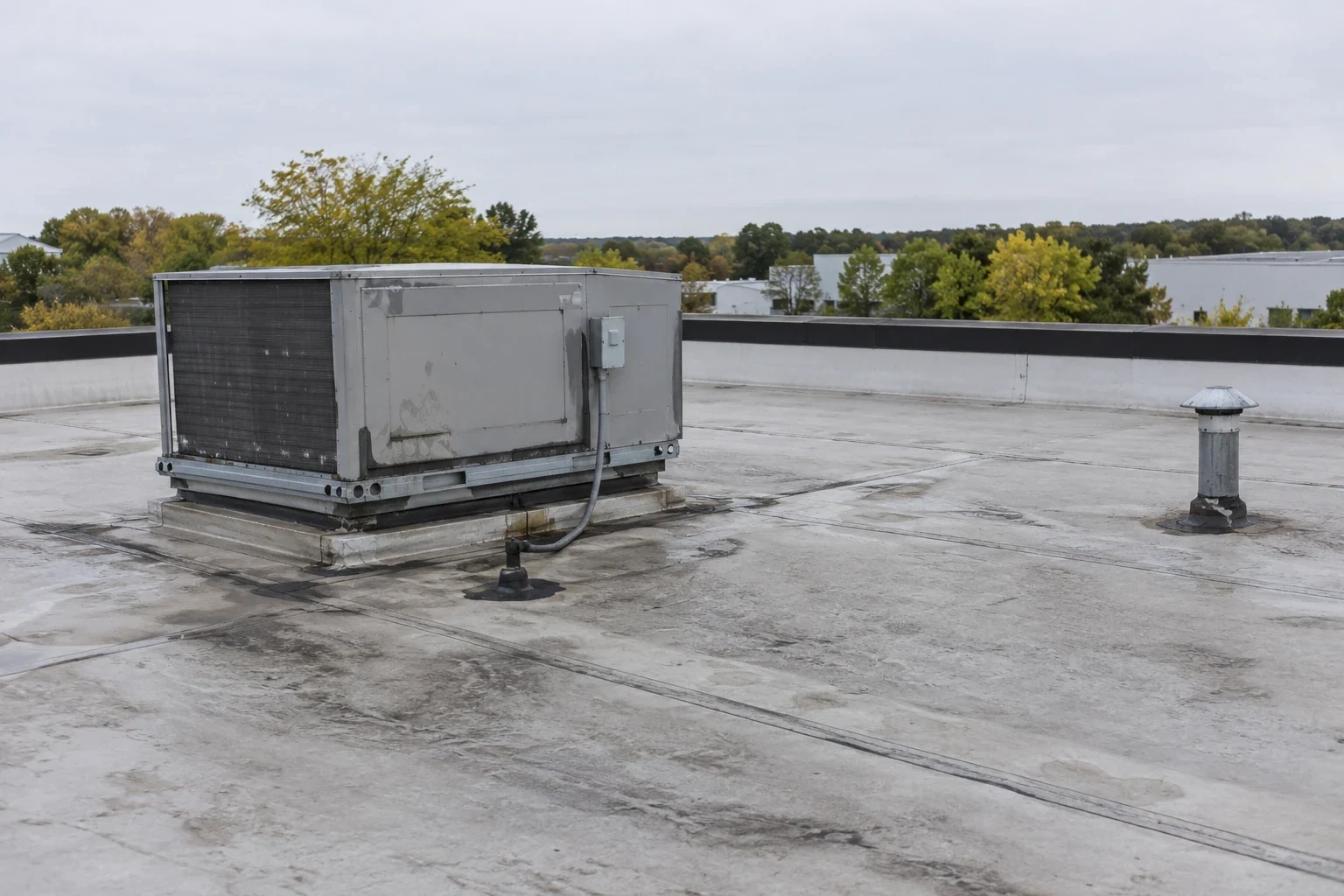
Emergency Commercial Roof Repair in Quincy, MA
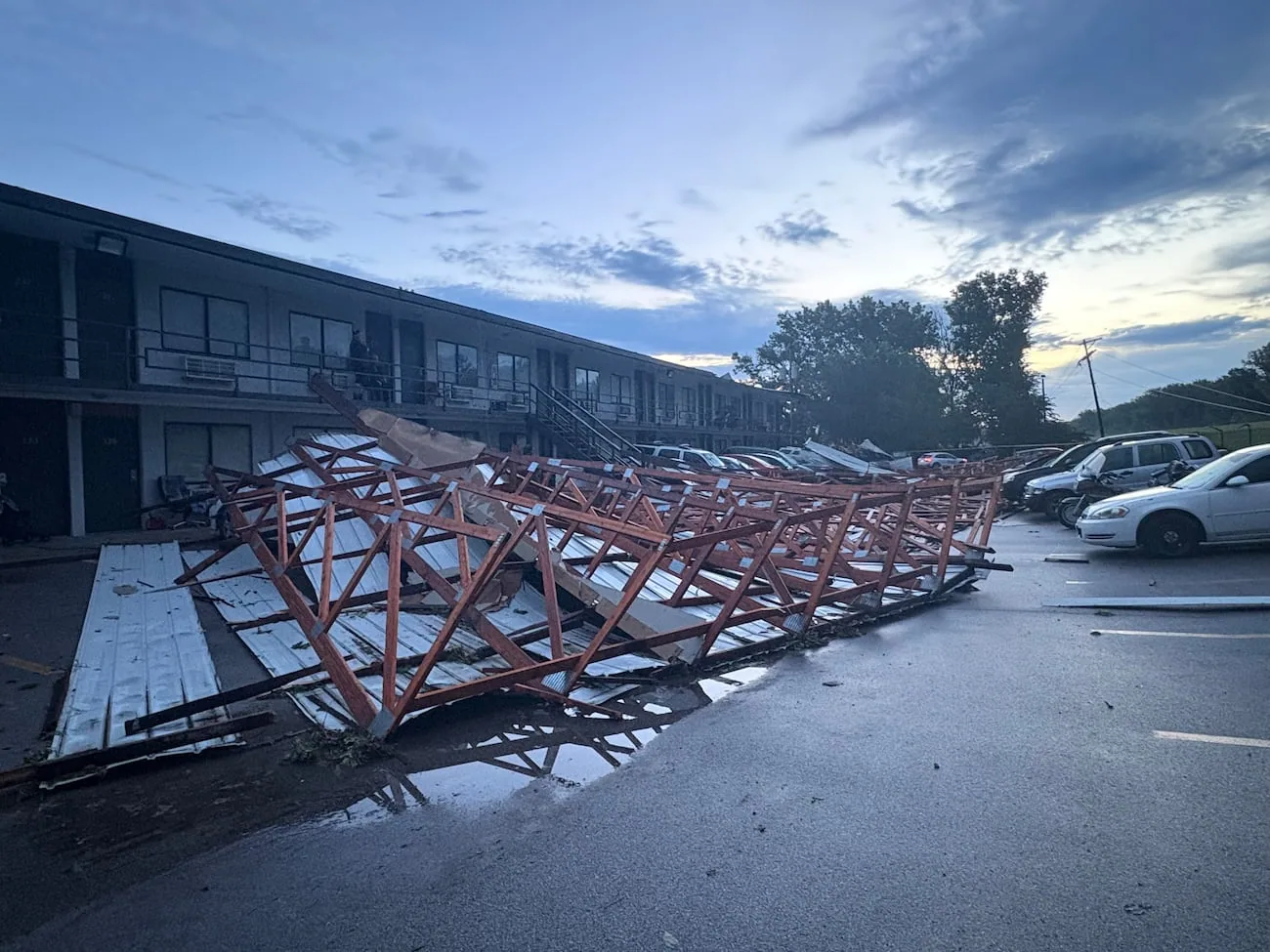
Storm damage that leaves insulation exposed changes the roof decision from scheduled repair to immediate building protection. Quincy, MA, plans for hurricanes and nor'easters, and a damaged roof can face more wind or rain before permanent reconstruction is practical. We assess the exposure, establish what can be reached safely and select temporary protection that suits the actual opening. The first objective is to limit additional water entry without creating another hazard on the building.
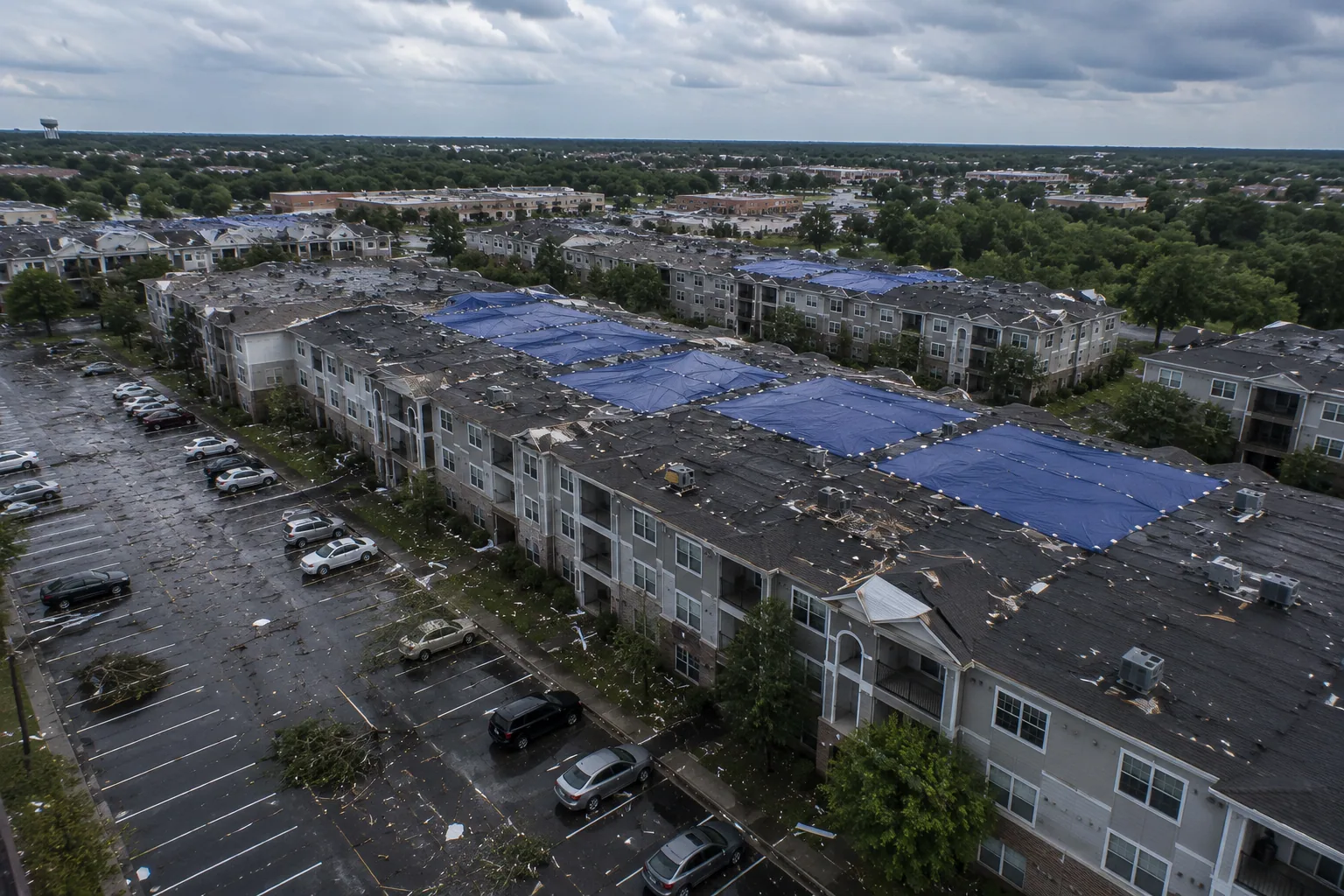
Emergency response focuses first on temporary membrane closure, tarping or another dry-in method appropriate to the roof and conditions. Safe access and weather determine what work can proceed. The immediate goal is to limit water entry while preserving a clear record of the opening and the protection installed. For the asset manager, the urgent decision is which occupied rooms need protection now and which roof areas can be secured before a complete damage assessment follows.
Identify the active exposure
Loose sheet material, an open curb flashing and water backing up at a blocked outlet require different first actions. We gather the building location, access arrangement and description of the damage before assessing the roof. Interior observations help identify active exposure, especially where water is reaching equipment or occupied space. Photos taken from a safe location can inform that assessment. Staff should not climb onto a storm-damaged roof to obtain them.
For a property with multiple roof levels, we identify which area is leaking and whether upper drainage can affect lower openings. The condition may require tracing an active leak, removing an accessible obstruction or securing a damaged assembly. Structural concerns require the appropriate qualified assessment before roof work continues. Visible sagging, unstable equipment or damaged access should be reported promptly so the response can account for those conditions rather than treating every emergency as a membrane defect.
Choose a workable dry-in
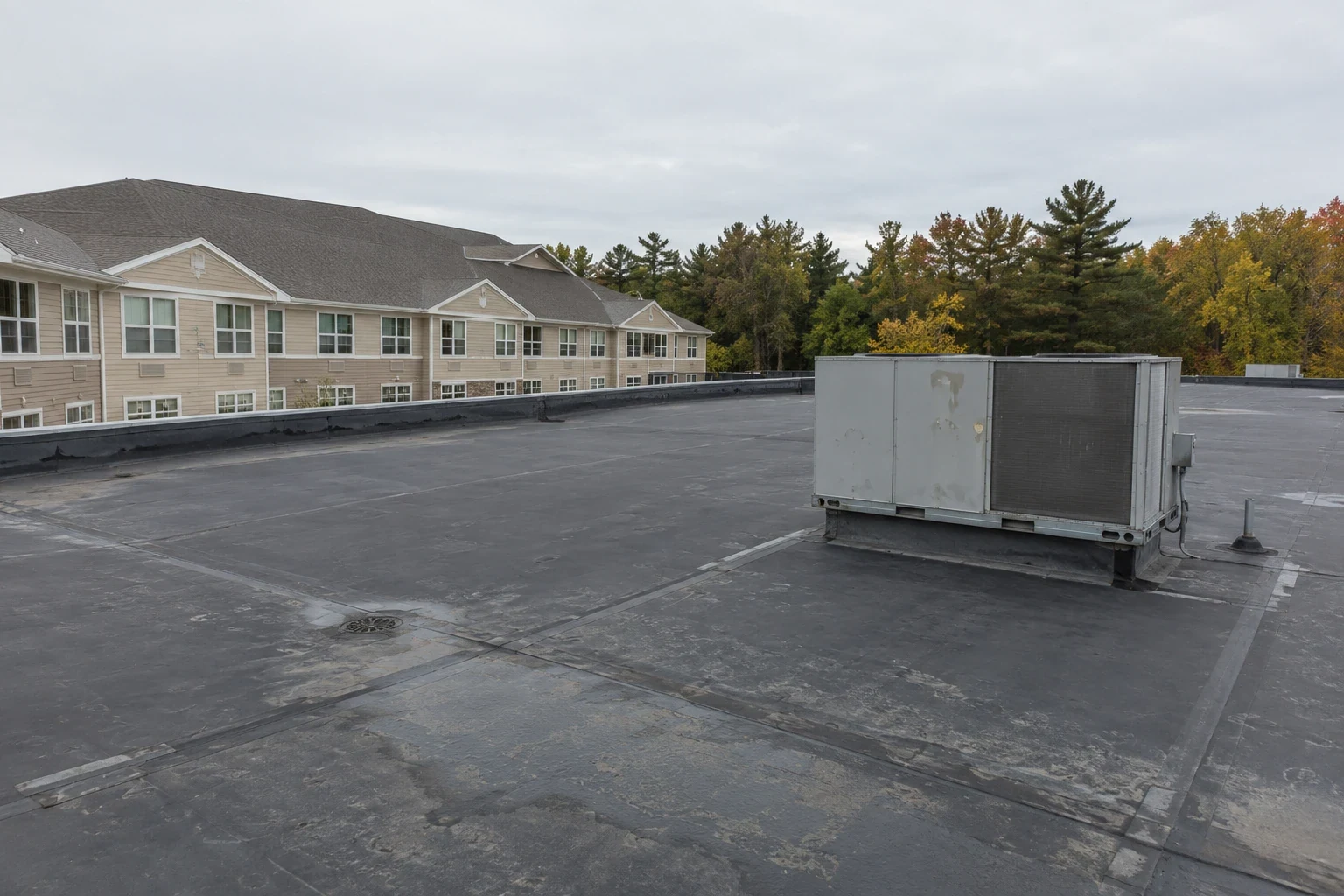
A temporary closure must connect to something sound. Loose, saturated or contaminated materials may prevent a patch from adhering, and a tarp cannot simply be laid over a low-slope roof and expected to withstand the next weather. We evaluate the available substrate, water path and securement method. The protection should keep drainage working and avoid directing runoff into another roof opening or an occupied entrance below.
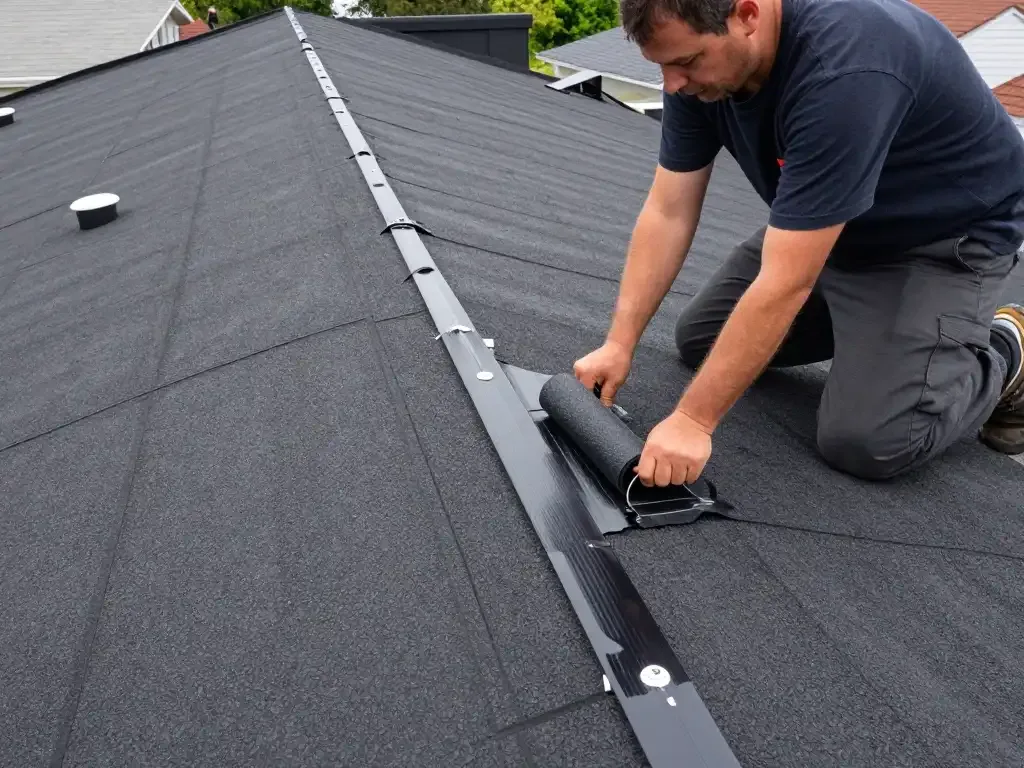
A short-term membrane repair may be suitable for a confined opening where compatible material and conditions allow a reliable connection. More extensive damage may need sectional dry-in and later removal of compromised layers. We explain which protection is temporary and what would need rebuilding. Wind-related assembly damage can extend beyond the visibly displaced covering, making subsequent inspection important even after the exposed area has been closed.
Respect the access limit
High winds, lightning, ice or instability can make rooftop work unsafe. Urgency does not remove those limits. We assess whether a crew can reach and work at the opening, and we coordinate feasible interior protection while conditions prevent exterior work. A temporary closure should be planned for the conditions in which it can actually be installed, not based on the expectation that the storm will stop at a convenient point.
Ice around a drain can prolong water contact while also making the approach hazardous. We evaluate snow and ice damage with attention to safe access and the assembly beneath it. Unreviewed snow removal or chopping at frozen membrane can create additional punctures. Where a manager suspects excessive loading or structural distress, qualified structural evaluation takes priority. Clearing an outlet and assessing the roof’s ability to carry a load are different decisions.
Separate people from the opening
Water entering an occupied room requires immediate control of the affected space. We coordinate with the manager on access, protection of contents and the roof response. Electrical equipment exposed to water needs qualified electrical attention, and unstable ceiling materials need appropriate assessment. Containment should avoid spreading the hazard into a circulation route. The interior operation and exterior dry-in proceed as connected tasks with different responsibilities.
Marina Bay includes assisted living, offices and restaurant properties. In a care setting, roof work above resident areas needs coordination with occupied-room arrangements and ventilation, while a restaurant may need to protect food preparation and dining operations. We establish those requirements with the property contact. A closed roof opening can still leave wet interior materials requiring attention before the affected space returns to normal use.
Define the permanent repair
Temporary weather protection gives the building a more stable starting point for the next assessment. We examine the extent of damaged membrane, wet insulation, attachment and any deck concerns once access allows a fuller inspection. The permanent scope may be limited to a detail or extend across a damaged roof area. It should account for the cause of failure and adjoining construction that must support the repair.
Braintree contributes office and industrial parks to the regional building stock. For a warehouse with exposed roofing, material protection and the position of stored goods can affect the response sequence, but the permanent assembly still needs a suitable deck and drainage path. We distinguish the emergency measures from planned reconstruction of failed details so the owner can see what has been stabilized and what remains a construction decision.
Keep the temporary area under review
A temporary closure needs monitoring until permanent work is complete. We identify the protected area and any installation limits that affect its use, then discuss further checks after changing weather. Loose temporary materials, renewed wetting or a changed interior symptom deserve prompt reassessment. The manager should also control unrelated rooftop activity near the closure so equipment service does not disturb the protection before it is replaced.
Photos and the damage description help establish the condition found during response and the work performed. They also support communication with restoration trades and an insurer where the owner pursues a claim. We preserve the distinction between observed damage and conclusions requiring further evaluation. Emergency protection should lead to a defined next action: a repair inspection, moisture investigation or replacement design, depending on what remains beneath the closure.
Commercial Roofing Questions
Can a tarp protect a damaged low-slope roof during continuing wind?
The opening and substrate determine whether suitable tarp securement can be installed safely. We compare tarping with other temporary dry-in methods rather than assuming one approach fits every damaged roof. A loose covering can obstruct drains or become another wind hazard. If conditions prevent safe installation, we coordinate feasible protection of the affected interior until exterior work can proceed.
Should our maintenance staff move damaged roof material?
Keep staff away from unstable or wind-blown materials and unsafe roof access. Tell us where material is loose and whether it threatens an entrance, equipment or adjoining property. We evaluate safe removal or securement as part of the response. Handling damaged sheet material without the right access and controls can increase exposure and create a fall or struck-by hazard.
How do we know the emergency closure is ready for permanent work?
A follow-up examination establishes the affected assembly and what needs removal before reconstruction. Temporary protection may cover wet insulation or damaged attachment that could not be fully assessed during the storm. We identify the remaining work and any further testing required. The closure’s appearance alone should not determine whether the permanent repair can proceed over the materials beneath it.
What information speeds the first assessment for a managed property?
Provide the building contact, safe access details, affected roof level and rooms, plus the timing of water entry and any visible storm damage. Identify electrical exposure or structural concerns immediately. Available roof drawings and equipment locations can also help. We use that information to direct the response while the property manager protects occupants and coordinates the trades needed inside.