KEE Roofing in Quincy, MA
Seasonal temperature changes put a reinforced KEE membrane's flexibility and welded transitions to work long after the installation crew leaves. For a Quincy, MA, property, the specification should connect those characteristics with the roof's actual exposure rather than treat a membrane designation as a complete performance decision. We examine the formulation, supporting construction and details at equipment. The water boundary depends on that combination. A specialized sheet cannot correct an undersized flashing height or insulation that has already become saturated.
In PVC KEE systems, ketone ethylene ester is a solid polymer used as a plasticizer within the membrane. Products and installation requirements vary by manufacturer. We assess the selected system rather than assuming all materials bearing the designation share identical properties. Quincy identifies both winter storms and hurricanes among its preparedness concerns. Those exposures make sound transitions and recoverable drainage important alongside chemical compatibility. A comparison with PVC roof membranes should address the particular material and assembly proposed.
Identify what reaches the sheet
A discharge stain beside equipment is a reason to investigate the contact, not to specify a more specialized membrane without further assessment. We identify oils, exhaust residue or other material reaching the roof and consider the concentration and frequency of that exposure. Suitability depends on the selected product's requirements. Drainage and housekeeping also matter because a compatible membrane may still be difficult to repair where contaminants accumulate.
South Hingham's commercial uses include offices and food businesses, with Venus Wafers and Yankee Trader among the area's named activities. Food-related operations can present roof decisions involving exhaust, refrigeration and service traffic, depending on the individual building. We examine those conditions directly. For manufacturing roof work, material compatibility should accompany equipment-interface assessment and protection of activities beneath the roof. The operating use helps define the questions; the roof examination defines the construction.
Support corners without bridging voids
A reinforced sheet can resist some demands on the field while still needing carefully formed corners and penetrations. We examine how the membrane changes direction and where accessory flashing joins it. Unsupported gaps, abrupt changes in elevation and tight corners can concentrate stress. A wider repair is sometimes necessary to provide a sound receiving area rather than placing a small patch over a distorted connection. The detail should accommodate the actual shape of the roof.
Curbs deserve particular attention after equipment replacement. A new unit may leave changed clearances, unused openings or fasteners close to the flashing. We assess the support and termination before completing the membrane connection. A compatible accessory is only part of the solution. The assembly beneath it must hold its shape, and the connection must remain accessible for inspection. Compressible or damaged boards around a curb can undermine even careful surface workmanship.
Test the existing connection area
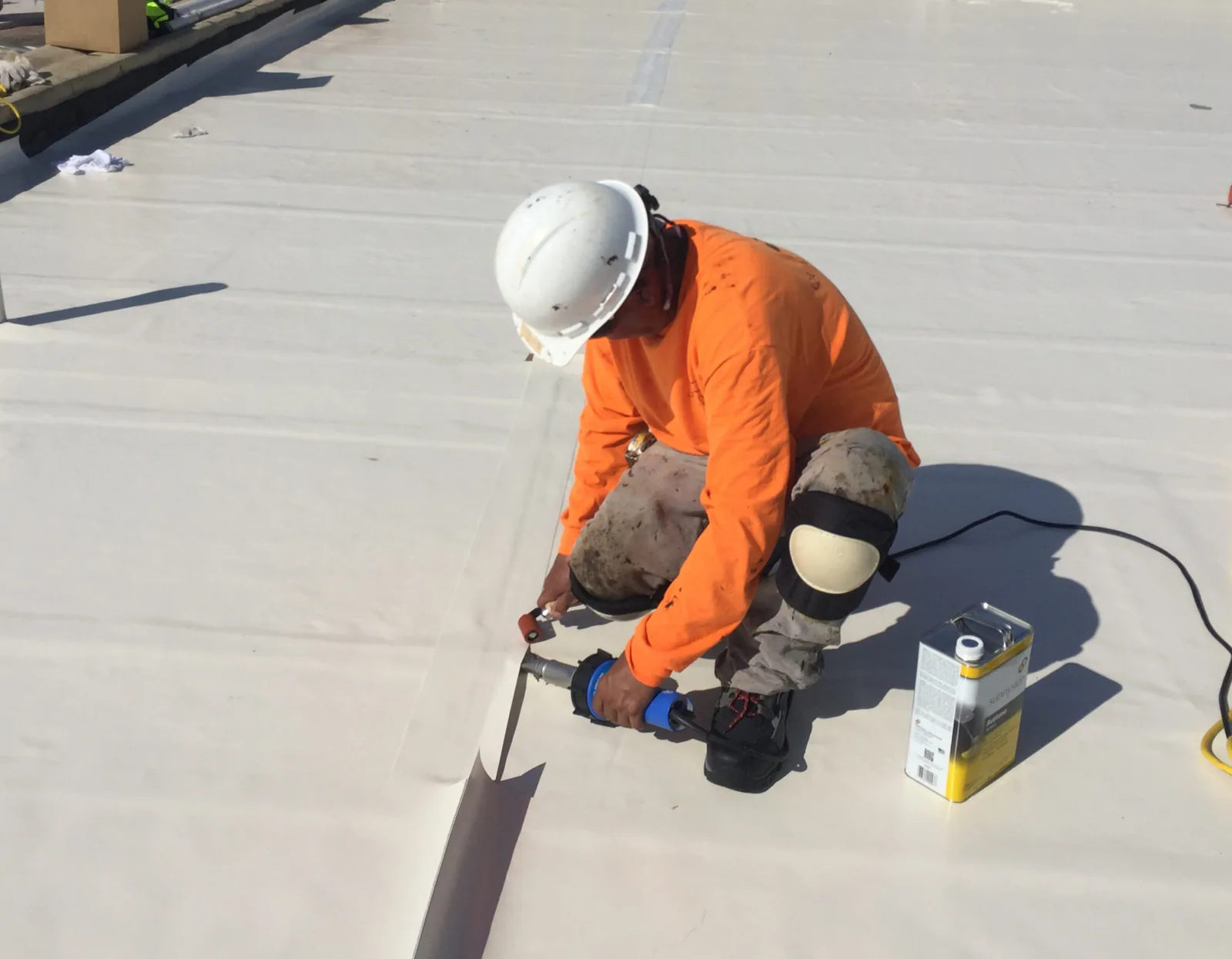
An old patch with lifted corners can conceal contamination or a poor original weld. We examine adjacent material before deciding whether the patch can be removed and replaced locally. Preparation, welding conditions and the condition of the aged sheet influence the repair. We use suitable components and evaluate the resulting connection rather than assuming that heat alone makes unlike materials compatible. The selected system's repair method needs to fit what is actually present.
Where an open lap admits water, the investigation also addresses the supporting assembly. Our repairs to separated roof seams distinguish a bounded connection defect from wet insulation or wider deterioration. A new welded surface can close an entry point while leaving moisture damage beneath it unresolved. We explain both findings so the asset manager can place the immediate leak work and the eventual renewal on different, defensible schedules when appropriate.
Drainage influences remaining service
A water-holding depression around an outlet subjects the adjacent construction to longer wet periods than the higher field. Debris and winter ice can extend that exposure. We examine drain elevation, insulation slope and the condition of the connection into the outlet. A replacement provides an opportunity to correct geometry, but the correction needs to be specified before the new roof plane is established. Leaving the same depression can preserve the reason repairs were repeatedly needed.
Marina Bay includes offices, restaurants and assisted living alongside residential development. For an occupied asset in that setting, water entry above a care room and water entry above a service space carry different operating consequences. We connect the investigation sequence to those uses while assessing each roof area on its physical condition. An appropriately timed infrared survey can help locate areas needing closer investigation, with selective checks used to establish the condition below the membrane.
Compare the installed construction
Removal limits and retained insulation can change a proposal more substantially than switching the membrane designation. We assess the deck, moisture condition, attachment and required separation before comparing a KEE assembly with another option. The comparison includes perimeter details and penetrations because those areas often require construction different from the field. A proposal that describes only the sheet leaves too much of the renewal decision unresolved.
For properties in South Hingham, equipment servicing and current tenant uses help establish the appropriate exposure questions. We then examine repairability and maintenance access alongside alternatives such as a TPO membrane assembly. A sound decision identifies what the chosen construction improves, what existing components can remain and what needs replacement. It should also explain any changes to discharge control or equipment support needed to keep the new roof from inheriting a preventable failure.
Installation conditions can affect the renewal sequence. We assess whether the receiving surface is dry, whether bonding materials can be applied within their requirements and whether the day's open construction can be closed before rain arrives. A complex equipment zone may take longer to finish than an equal area of unobstructed field. That difference should determine the removal boundary and crew sequence. The roof's geometry therefore influences timing as directly as the material delivery, especially where occupied rooms remain beneath the work.
Commercial Roofing Questions
Does KEE automatically solve chemical exposure problems?
Product suitability still needs to be checked against the actual contact. We identify the material reaching the roof and assess the selected membrane's requirements before recommending it. Concentrated discharge, persistent contamination and incompatible accessories may need separate corrections. Material selection should work with those corrections, rather than substitute for controlling an avoidable rooftop spill or exhaust problem.
Can we repair KEE without knowing the original product?
Identification is an early assessment task. We examine available installation information and the existing sheet before selecting compatible repair materials and methods. A repair should not depend on an assumed resemblance to another membrane. Where the product or connection cannot be established adequately, the repair boundary may need to include a more deliberate replacement transition.
Why does a reinforced membrane need protection beside equipment?
Reinforcement does not eliminate puncture or abrasion from concentrated contact. We assess service routes, sharp edges and moving supports, then specify suitable protection without obstructing drainage. Flashing corners also need adequate clearance. The aim is to keep necessary equipment access from repeatedly damaging a connection that otherwise has useful remaining service.
What should distinguish KEE from a less specialized replacement option?
Compare the documented assembly requirements, relevant exposure resistance, detail methods and repair suitability for the actual property. Then compare removal, insulation and attachment scopes on the same basis. A different material designation is meaningful only when its characteristics answer a building need. We explain that need and any operating changes that remain necessary after installation.