Commercial Roofing in Braintree, MA
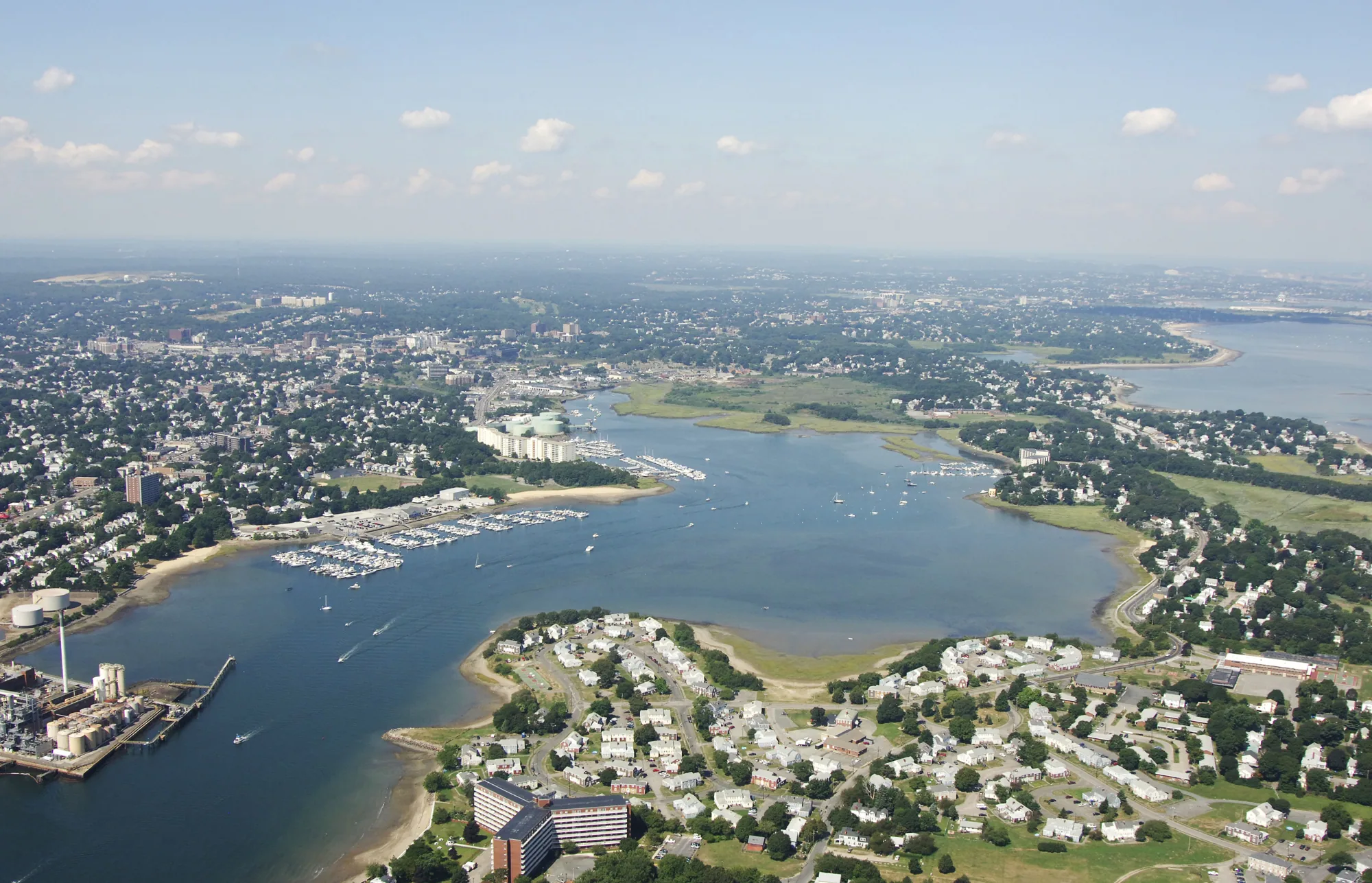
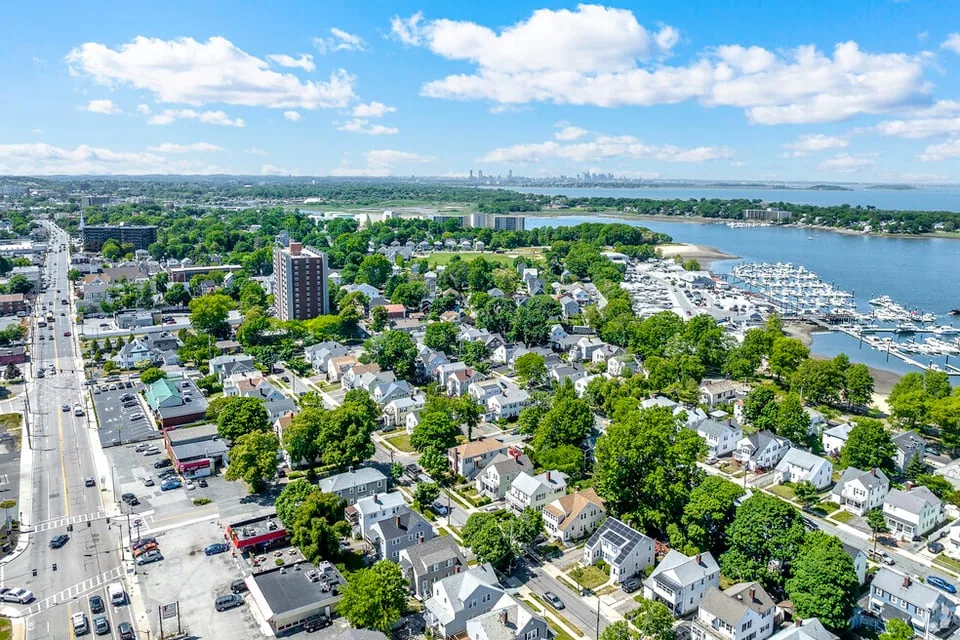
Braintree sits where I-93 and Route 3 meet, with office and industrial parks, regional retail and school buildings in its commercial mix. Each property calls for its own roof baseline. We identify the installed assembly, map any active leak, review drains and edges, and record where rooftop equipment changes the work. The result is a practical choice: repair a defined defect, test for concealed moisture or schedule broader renewal. Access and daily use matter too. A retail delivery route, an industrial loading area and a school entrance cannot be treated as the same work zone.
The Property Type Changes the Sequence
Braintree's business parks and retail stock create different demands below the roof. An office building may have controlled entry, conference schedules and centralized mechanical equipment. A distribution or industrial site may need loading and vehicle circulation maintained. Thayer Academy and Archbishop Williams High School are among the private educational properties in the municipality, alongside public schools. For school work, we coordinate around building use, interior protection and any schedule that limits access. Those facts guide planning; they do not reveal the roof construction at a particular property.
Before work is priced, we ask who approves access, which rooms need protection and whether operations continue during the project. We note any lift, crane or staging need and verify where materials can enter the site. An owner with properties in Quincy Point or South Quincy may use comparable condition categories across both municipalities, but the roof findings and access plan remain specific to Braintree.
Check the Water Path at Each Outlet
Before a weather window, we review strainers, drain bowls, scuppers, overflows and the slope leading toward them. Water retained near a penetration can keep a seam wet; blocked discharge can leave ponding across a larger area. We inspect the membrane and outlet together, then identify whether the condition is debris, damaged flashing, a low area or concealed material that needs investigation. A roof-zone record of outlets and low points makes a later comparison more useful when access is safe. Cleaning a strainer is also logged separately from rebuilding its membrane connection.
After a reported leak, the ceiling mark gives us a starting point rather than a final repair boundary. Water can follow a deck or insulation joint before appearing inside. We compare the room location with roof curbs, laps, penetrations and drain paths. If the insulation feels soft or readings suggest a wider pattern, a survey or selective opening may be needed. This approach is more useful than coating over the visible area without learning whether the water source remains active.
Stage Work Around Regional Retail
South Shore Plaza is part of Braintree's regional retail building stock. Its presence helps describe the municipality's retail role; it does not make the plaza the service-area target or establish any building's roof type. For retail properties, we confirm delivery periods, customer entrances and loading rules before materials move. If a lift or crane needs a setup area, the property team reviews the location and circulation effect. Interior protection should account for occupied sales or service areas beneath the active work boundary.
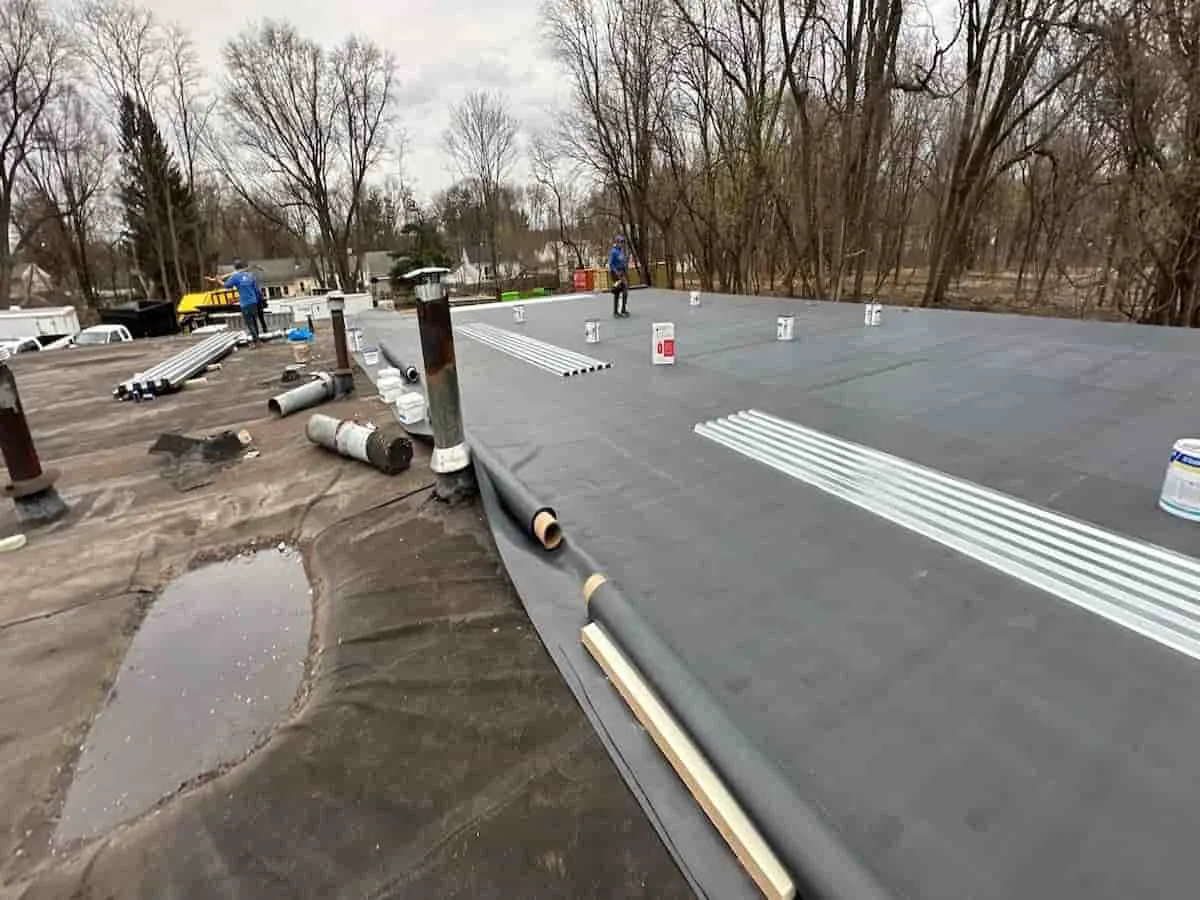
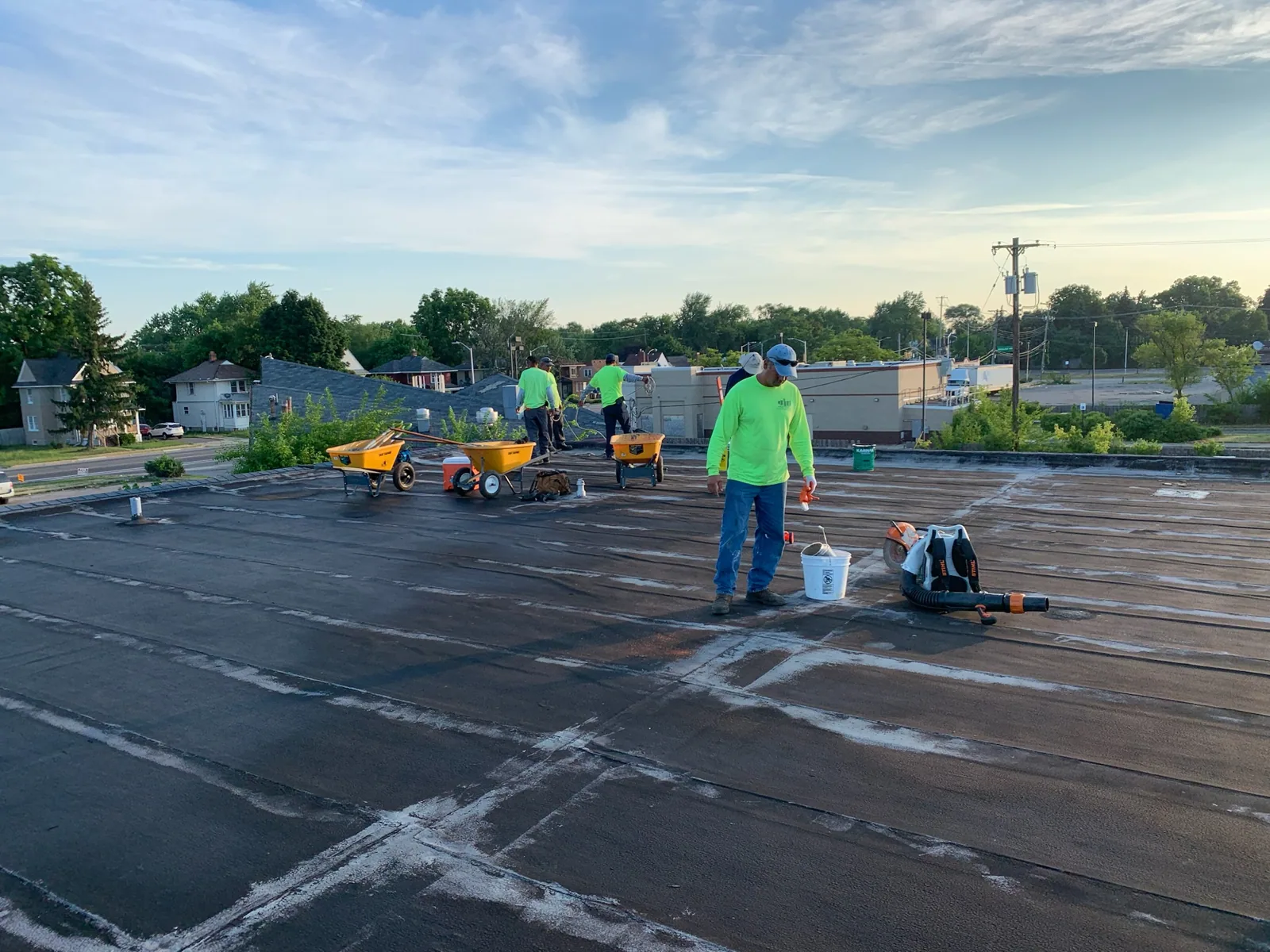
Replacement carries a different operating impact from a local repair because removal exposes insulation and deck. We sequence the work so each section can be secured and made weather-tight before the crew advances. A focused repair may need only a short access window, while a broad roof renewal can require several coordinated deliveries. When rooftop equipment must be shut down, a qualified mechanical contact handles that work. Clear roles allow a manager to compare the practical demands of repair, recover and tear-off before choosing the capital window.
Set the Threshold Before Choosing a System
A small puncture on a sound membrane can support a local repair. Repeated seam movement, wet insulation or failing edge metal may change the decision. We inspect beyond the reported defect and check the surrounding attachment, flashing and substrate. Repair products must match the installed membrane or metal assembly. A previous patch that has lifted can signal poor preparation, movement or moisture below it. We identify the failure mechanism before recommending another application.
The inspection also records how much of the field can be reached without moving equipment or interrupting service. Around roof units, we check curb flashing, the path technicians use and any conduit support that crosses the membrane. A curb can be intact while a nearby penetration is open, so we label each connection rather than describe the whole equipment area as one defect. At drains, we look for debris, damaged clamping rings and membrane stress around the bowl. This distinction affects both scope and follow-up: a cleaned outlet may need monitoring, while a compromised connection needs a compatible repair. If the building has repeated leak reports, we compare dates and locations to see whether water follows one detail or appears across separate roof sections. The owner can then decide whether another local repair, a moisture investigation or a system-wide review is justified.
A recover retains layers only when they are dry and stable, the final height works at transitions, and project requirements allow it. Tear-off provides access to the deck but requires more temporary protection below. We compare commercial repair with replacement work against the findings. If the roof is TPO, seam welding and penetration details deserve system-specific review; a different surface uses another method. The owner sees which decision follows from the existing roof instead of a generic material preference.
Keep the Condition Record in the Budget
A condition report should identify roof areas, current defects, past repairs and items that need confirmation. We connect photos to roof-zone labels and describe the observation in terms of its effect on drainage, interior use or remaining service. Later reviews can return to the same seam or outlet and show what changed. This makes the report useful for acquisitions, annual budgeting and maintenance scheduling without claiming to see concealed layers through a surface inspection.
For a group of Braintree properties, the owner can use a capital plan and a multi-site program to rank service needs. Preventive maintenance can clear debris, inspect edge details and record emerging defects before they become active leaks. The service order should reflect interior consequence and roof condition, not just building age. We can help compare repair, further investigation and renewal windows so the asset manager can place each building on a workable sequence.
Commercial Roofing Questions
Does Braintree's highway crossroads affect roof service?
It informs regional access, but the property still sets loading, parking and staging rules. We confirm the approved route and delivery window before crews or material arrive. A site review confirms those logistics before roof work is scheduled.
How do you approach a leak over a retail area?
We locate the interior effect, protect the active space and inspect the roof above plus nearby seams, curbs and drains. The repair boundary follows the assembly, not only the stain. We define protection and access before reopening the area, then confirm the likely roof-side source.
Can an industrial roof be renewed in phases?
Often, if each section can be safely isolated, secured and weather-protected. Loading, equipment access and the condition of the deck influence the phase size and sequence.
What confirms that a recover will work?
The existing layers must be sufficiently dry and stable, the final height must fit at edges and penetrations, and project requirements must permit retention. We inspect those conditions before making a recommendation.