Planned Commercial Roof Repair in Quincy, MA
Freezing nights can turn a small separation at a roof detail into repeated wetting of the same insulation. For Quincy, MA, property managers, a planned repair needs to interrupt that cycle while the surrounding assembly still has useful service. We examine the failed connection, the material beneath it and the load or movement that caused the opening. Closing the surface is only part of the decision. The repair must remain compatible with a roof that will continue moving through seasonal temperature changes.
Commercial Roofing Quincy repairs membranes, seams, flashing and other commercial roof details with a defined boundary and appropriate preparation. We distinguish a maintainable defect from widespread deterioration. Where water is currently entering the building, active leak investigation may establish an immediate priority before the larger planned scope proceeds. That keeps localized repair work connected to the condition of the occupied asset.
Read the failed connection
A split near a curb corner, an open lap in the field and a puncture along a service path can look similarly small while requiring different work. We examine the materials and how they are attached, then test accessible surrounding seams and flashing. A repair should extend onto sound material with enough room for the required connection. Patching a crack across a loose or contaminated substrate can leave the same movement acting beneath the new material.
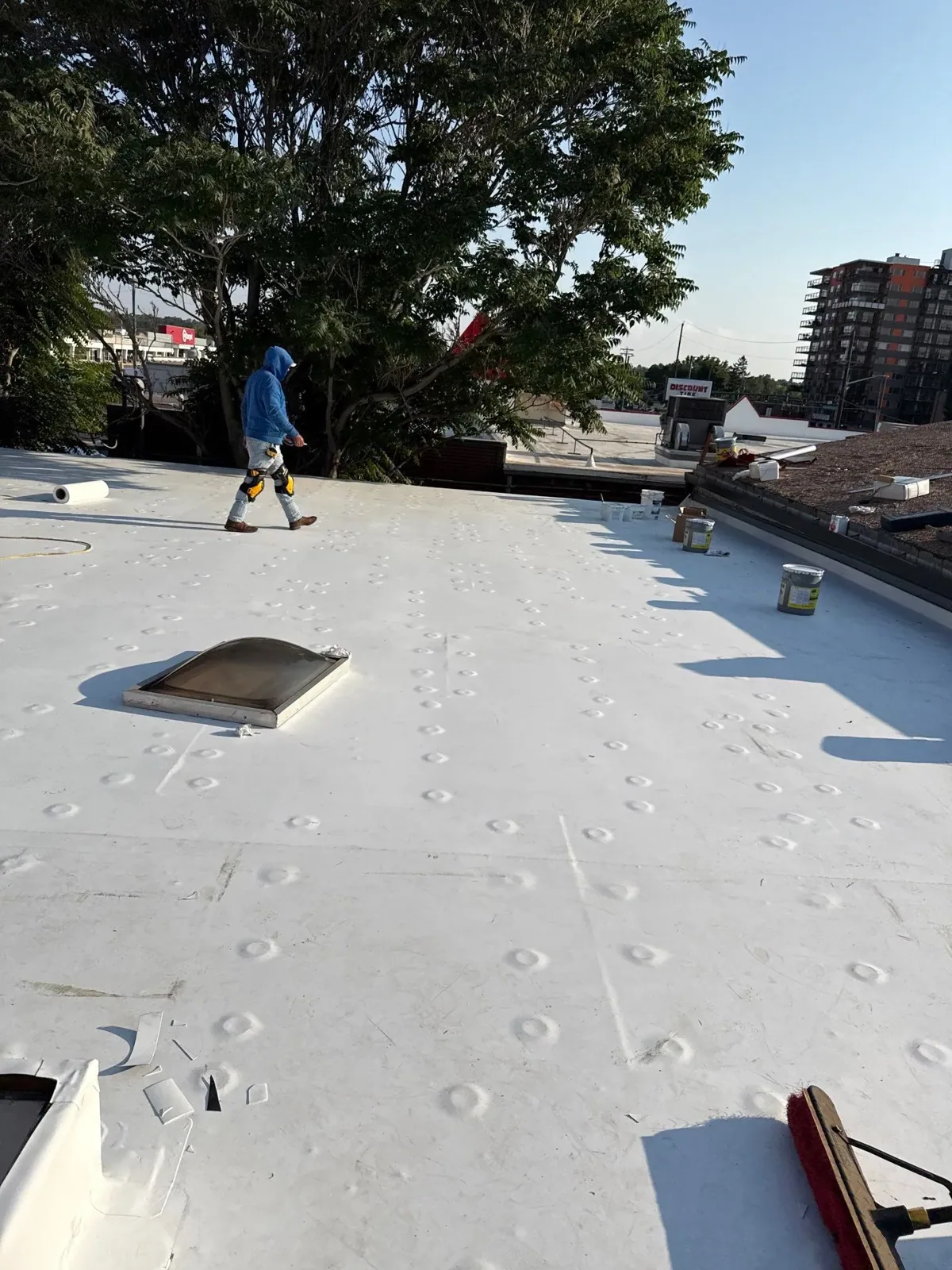
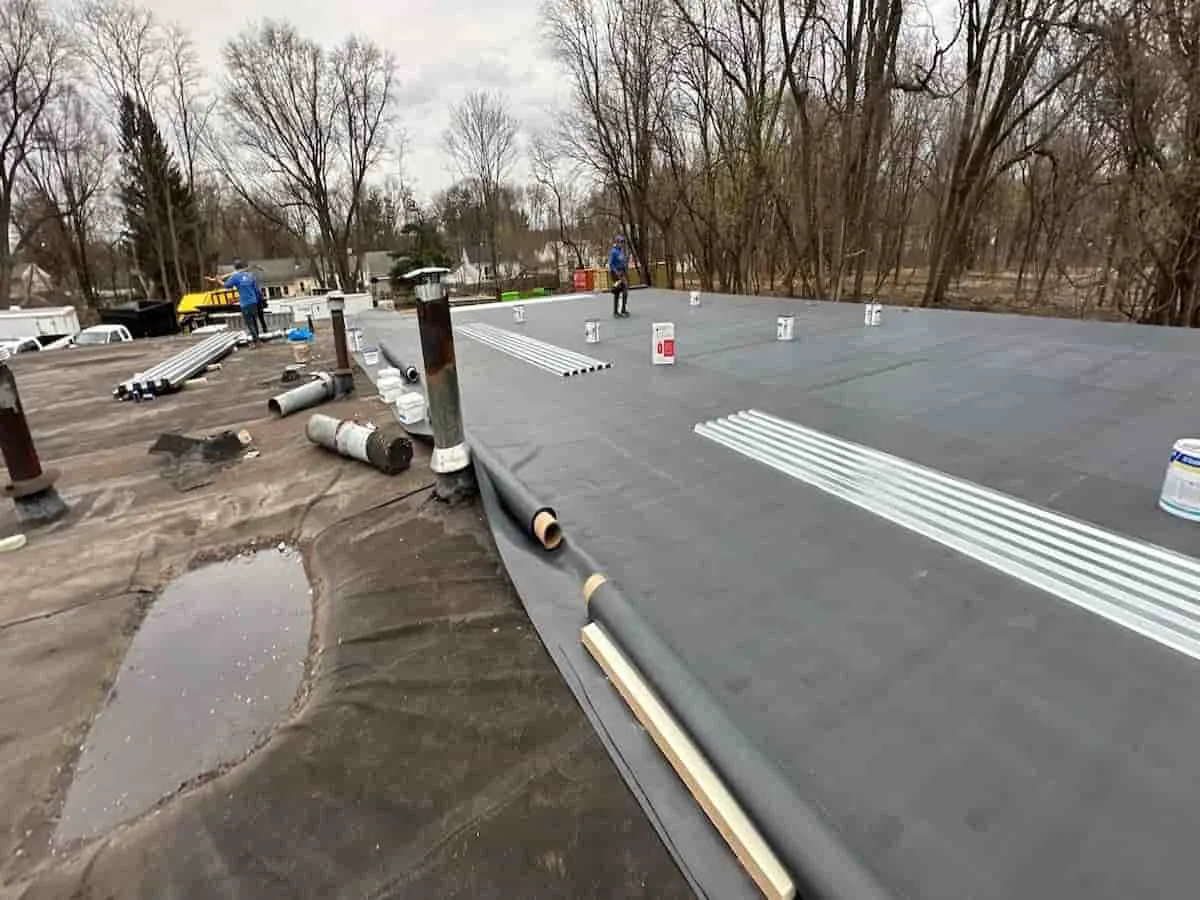
The original system matters. Weldable thermoplastic sheet, rubber membrane and asphalt-based roofing need different preparation and joining methods. We identify the existing membrane before choosing repair products. Earlier incompatible coatings or mastics may need removal, and some aged surfaces require additional evaluation before a reliable connection can be made. We describe those preparation needs with the repair scope rather than assuming that a visually matching patch will bond to every earlier treatment.
Extend onto sound material
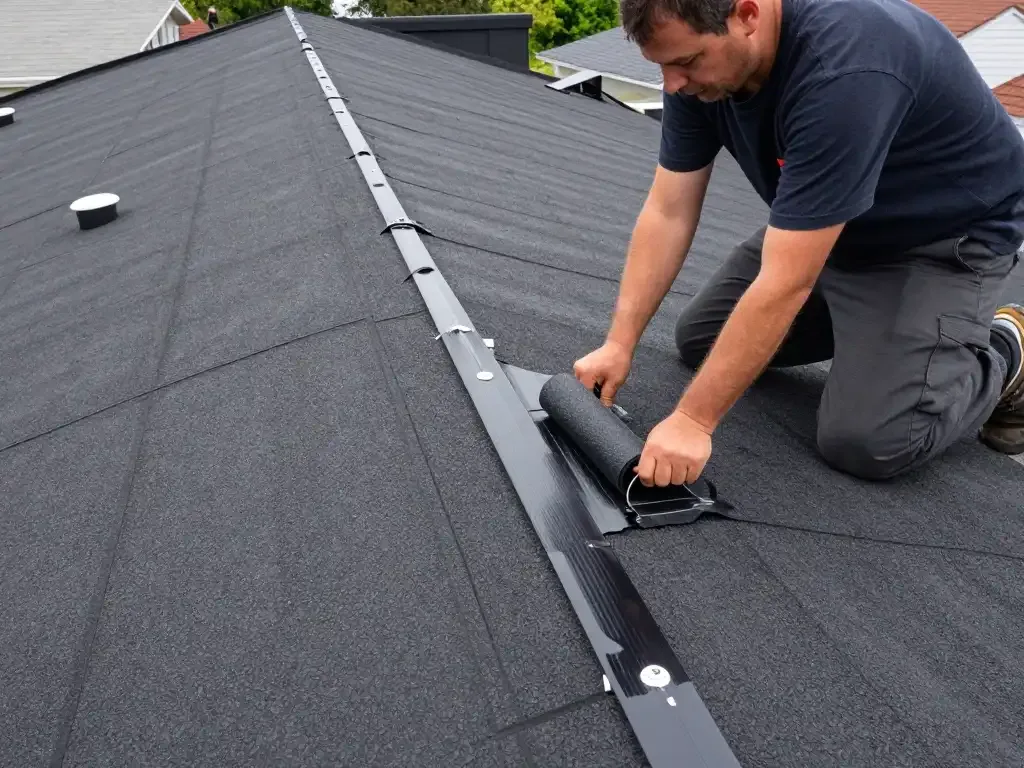
At a failed seam, the visible opening may be shorter than the poorly bonded area. We examine the accessible lap beyond the leak point and identify the extent that needs rebuilding. Thermoplastic repairs need suitable welding conditions and sound, properly prepared material. Rubber systems rely on the correct primer, tape or adhesive details for the specific product. Asphalt-based repairs require compatible reinforcement and methods suited to their construction. The joining method follows the roof.
Modified bitumen repair may involve more than treating the upper surface when lower plies have separated or moisture has entered between layers. We inspect the repair perimeter for a stable tie-in. The same principle applies at a membrane transition near a wall: the new work should not end at a weak adjoining seam simply because that boundary produces a smaller patch. A clear repair threshold keeps the scope limited without making it incomplete.
Release the movement
Flashing can fail because its material is worn, but also because a curb, wall or penetration moves differently from the roof field. A tightly stretched corner may split again unless the detail accommodates that movement. We inspect securement, termination and available height, not just the exposed tear. Mechanical equipment and pipes must also be properly supported so maintenance activity does not pull the flashing out of shape.
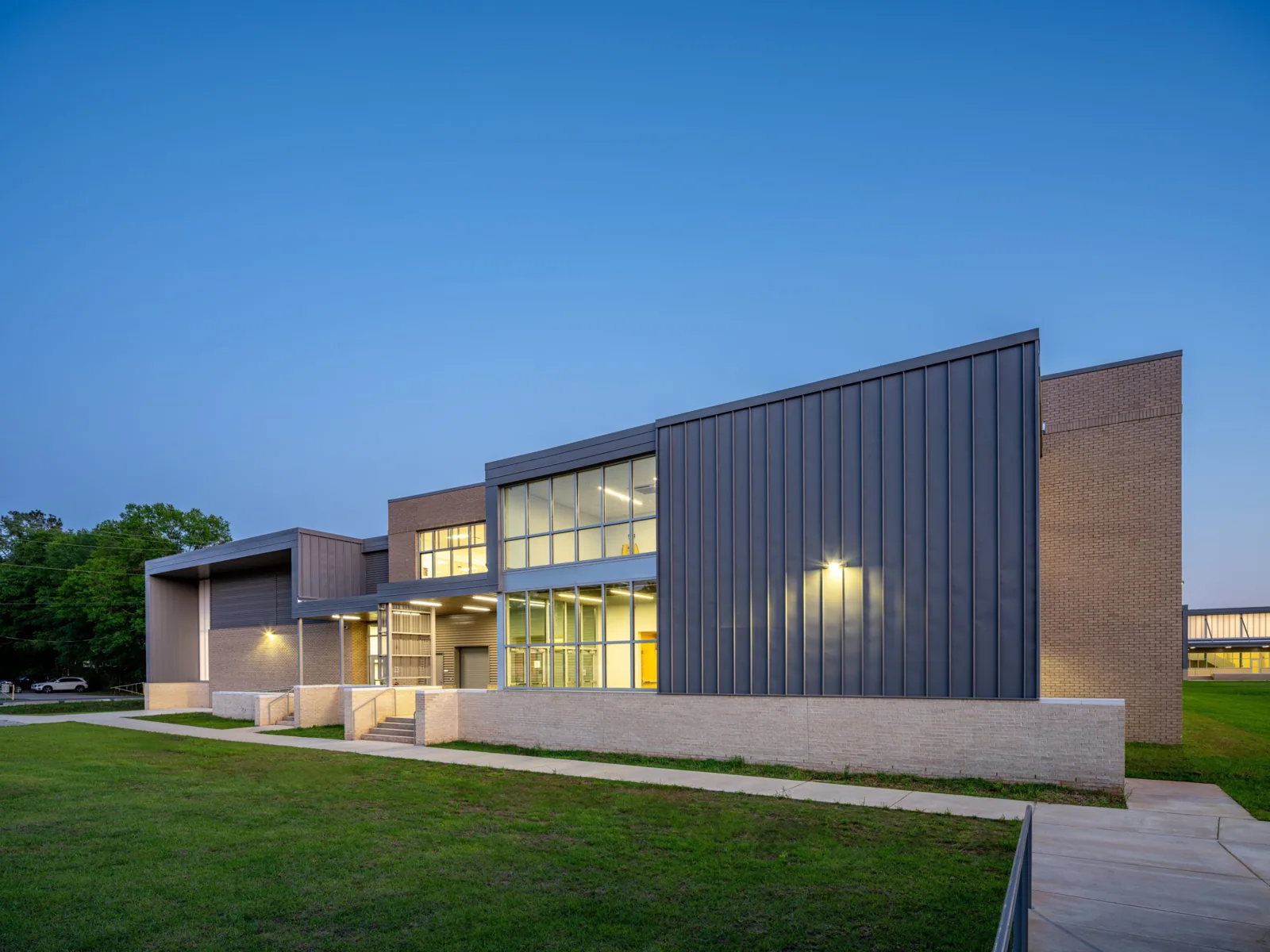
North Quincy includes school buildings near Hancock Street and West Squantum Street. On an occupied educational property, repairing a failed wall or curb transition requires coordination with interior use as well as the roof connection. An assembly inspection determines which details are present at the individual building. We plan the opening, removal and closure so dust, debris and temporary exposure do not undermine the benefit of a narrowly focused repair.
Correct the repeated wetting
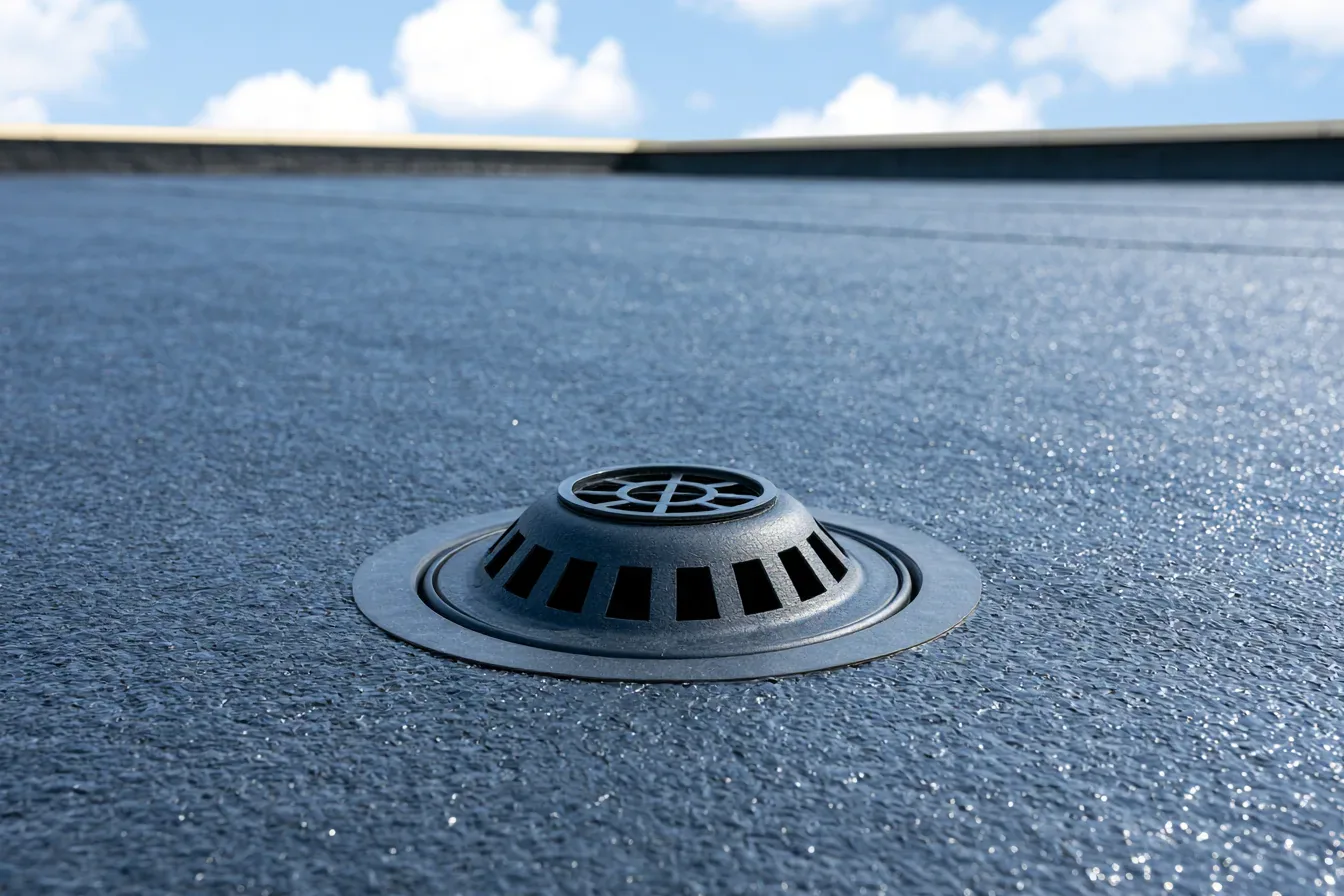
Debris at a drain can prolong water contact with a seam that would otherwise shed rain quickly. A damaged strainer, raised drain flange or sagging substrate may have a similar effect. We examine the water path around the repair and identify an obstruction or geometry problem that needs separate attention. Repairing the membrane without addressing repeated ponding can leave the new connection under the earlier exposure.
Drain and scupper work is included where the outlet detail itself contributes to the defect. A low area farther from an outlet may need a broader drainage assessment. Wet insulation beneath the failed detail must also be evaluated before closing the repair; retaining it can compromise the substrate and conceal deterioration. Where structural sagging is suspected, the roofing scope needs the appropriate structural assessment rather than an attempt to disguise the depression with extra patch material.
Protect the working room
Repair preparation often requires a dry substrate and enough uninterrupted time to complete the connection. Wind, precipitation and cold can narrow that opportunity or change the permitted installation method. We match the work window to the materials and the exposure at the building. Local blizzard and nor'easter preparedness makes winter access a practical consideration in Quincy, especially where ice prevents safe inspection or delays drying of a wet detail.
Quincy Point has public-school properties alongside its neighborhood road network. For roof work above teaching space, the repair sequence may need to protect outdoor-air intakes and avoid a busy entrance below the work. We define those constraints with the manager. A small scope can still require interior precautions, access control and mechanical coordination; its size does not eliminate the need to manage the exposed area.
Keep the boundary visible
A completed repair gives the manager a specific area to evaluate during subsequent weather and maintenance visits. We photograph the defect, the work and relevant adjacent conditions, then identify any items outside the repair scope that remain priorities. This is useful where a roof contains several ages of patchwork. A repair record should distinguish the new connection from older treatments so later inspection can tell whether deterioration is recurring in the same detail or developing elsewhere.
The decision to repair also needs a stopping point. Repeated failures across unrelated details, widespread moisture or deteriorated material beyond a workable tie-in can shift the recommendation toward renewal. We explain that change using the roof’s condition rather than presenting every additional patch as equal remaining value. For a serviceable surrounding assembly, a targeted repair can preserve useful construction and let the owner schedule broader work with a clearer understanding of its urgency.
Commercial Roofing Questions
Can we combine several small defects into one repair visit?
Combining compatible work can reduce repeated access arrangements, but we first separate urgent openings from defects that can wait for suitable weather. Each repair still needs its own preparation and connection method. We group the work by roof area and installation conditions, then identify what remains outside the scope. A common visit should not turn distinct defects into one undifferentiated treatment.
Why would a repair extend beyond the visible split?
Sound adjoining material is needed for a durable tie-in. We may find a loose lap, contamination or deteriorated insulation beyond the opening, which changes the workable repair boundary. The scope should explain that extension. A wider repair is justified by the condition it addresses, not simply by the area that is easiest to cover.
What happens if the existing membrane cannot accept another patch?
We evaluate whether a limited section can be removed and rebuilt to reach suitable construction. Widespread brittle material, failed attachment or moisture may make that strategy impractical. In that case, we explain the affected area’s renewal requirement and any interim protection needed. Repeated applications over an unsuitable surface can consume the repair allowance without resolving the underlying connection.
How will we tell whether the defect is returning?
Compare the repaired detail and interior observations after relevant weather. We identify the area in the repair record and distinguish any remaining conditions nearby. Continued wetting warrants further investigation instead of assuming the new patch failed or that the roof is now settled. Follow-up should evaluate both the repaired connection and other possible water paths.