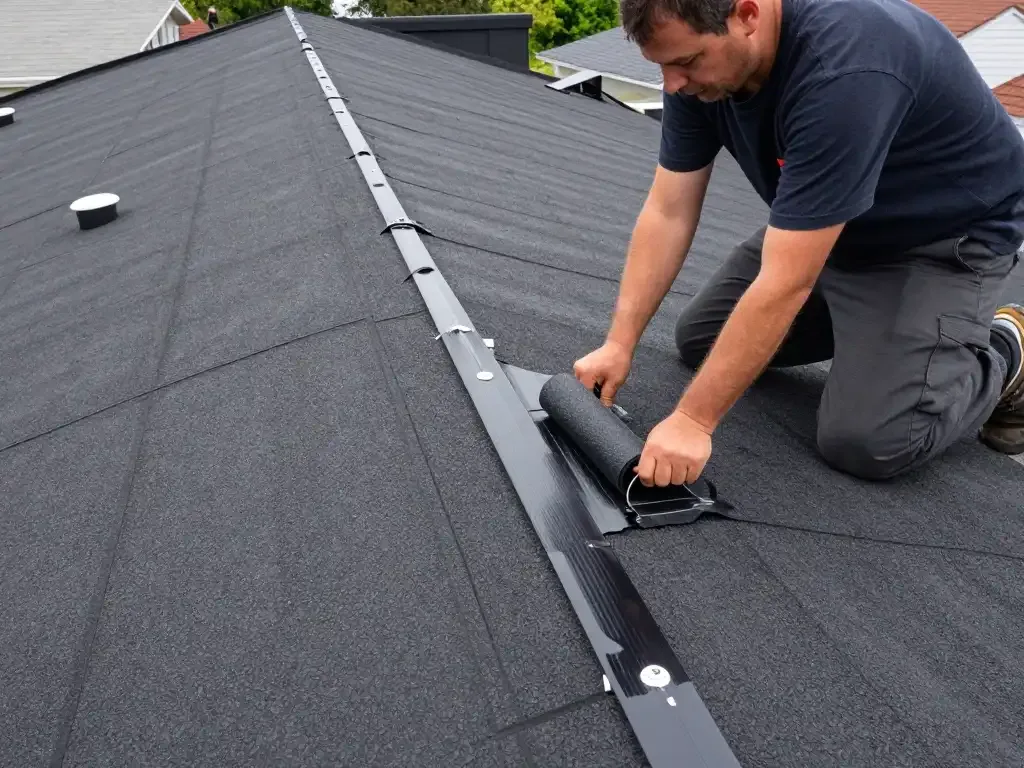
Commercial Roof Seam Failure Repair in Quincy, MA
A joint that opens beside a fixed support during repeated temperature changes can require a different repair from an isolated poorly prepared lap. Commercial seam-failure work in Quincy, MA, should identify that difference before another strip is applied. We examine the membrane, joining method, local stress and construction receiving the repair. The opening may be bounded, but movement or unsuitable material can affect the finished connection beyond it. A compatible surface patch is useful only where the assembly can support that approach.
Quincy's preparedness includes winter storms. We connect the requested roof's weather exposure to its actual joints, attachment and drainage rather than assume every open seam has the same cause. We inspect and repair commercial roofing, identifying the construction needed to restore the joint and any layers affected by admitted water. The owner's operating interval follows those tasks. A new-looking strip should not conceal an unresolved support or receiving condition beneath the repair.
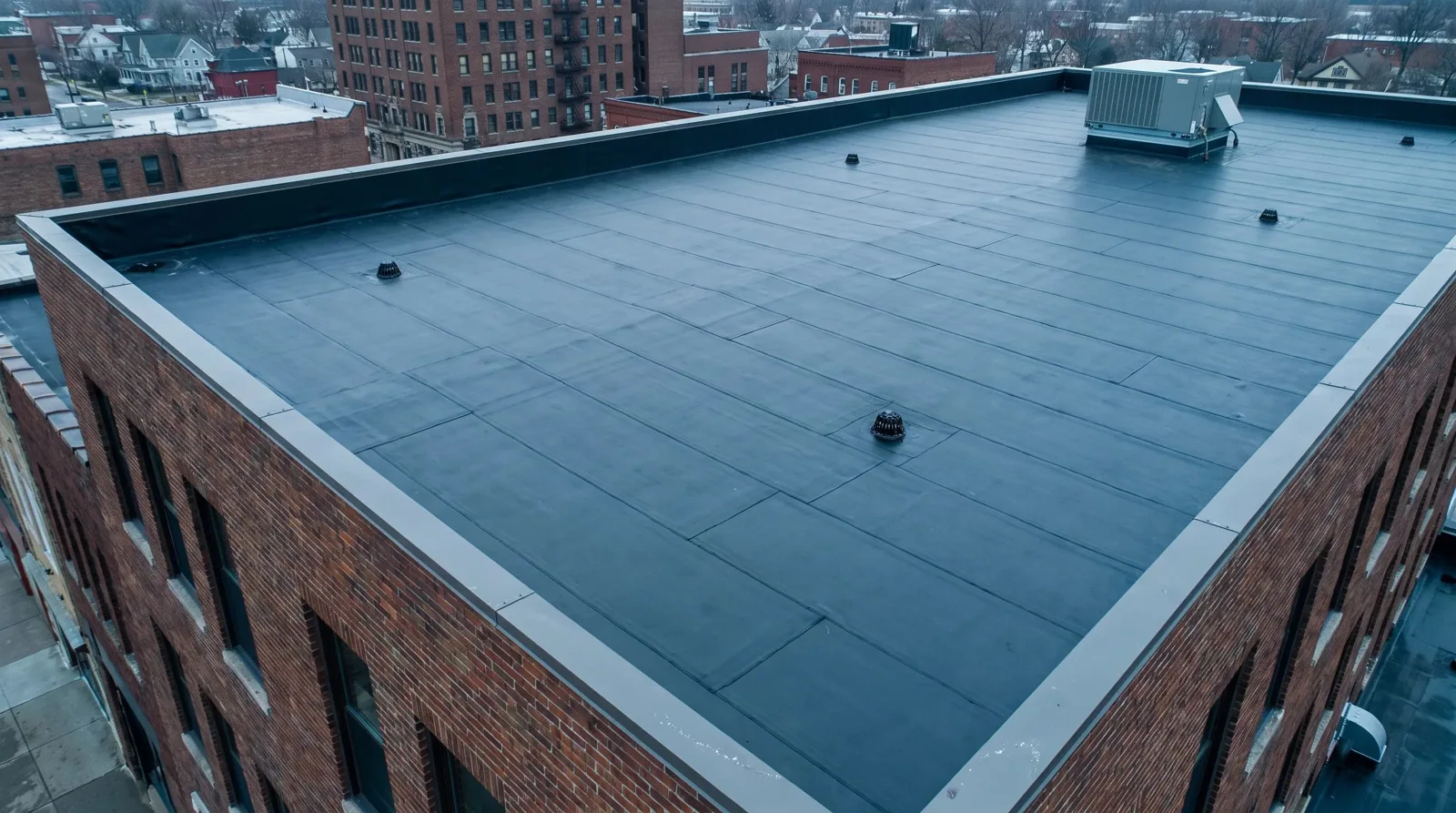
Identify how the installed joint is formed
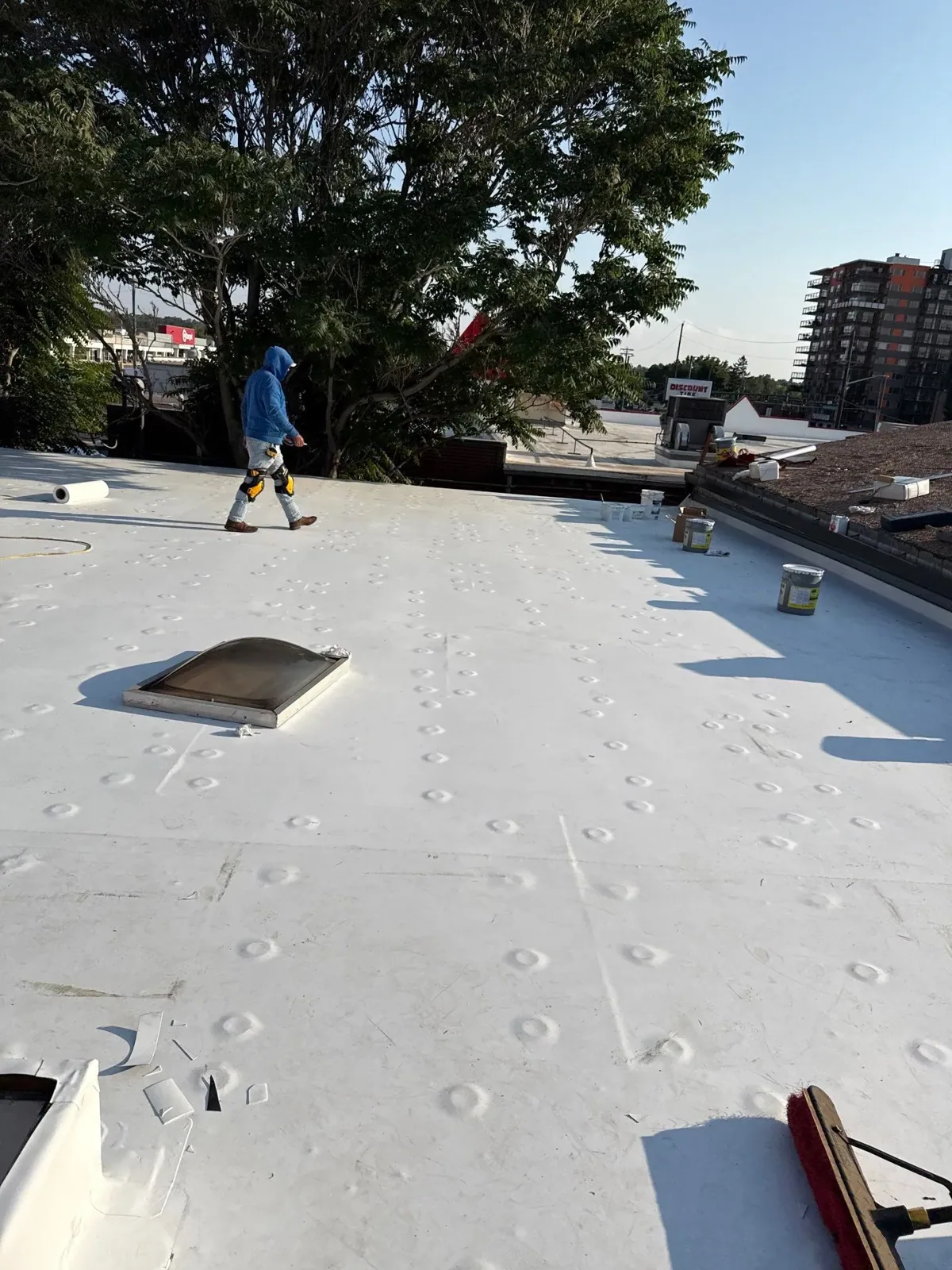
A welded thermoplastic seam, a prepared adhered joint and a lap in a multi-layer assembly require different examination and repair methods. We identify the installed materials before selecting preparation or closure. Surface contamination, previous treatments and deterioration can change the receiving condition. A method suitable for one membrane does not automatically form a sound connection on another. The proposed work should address the joint present instead of prescribing a familiar strip without that assessment.
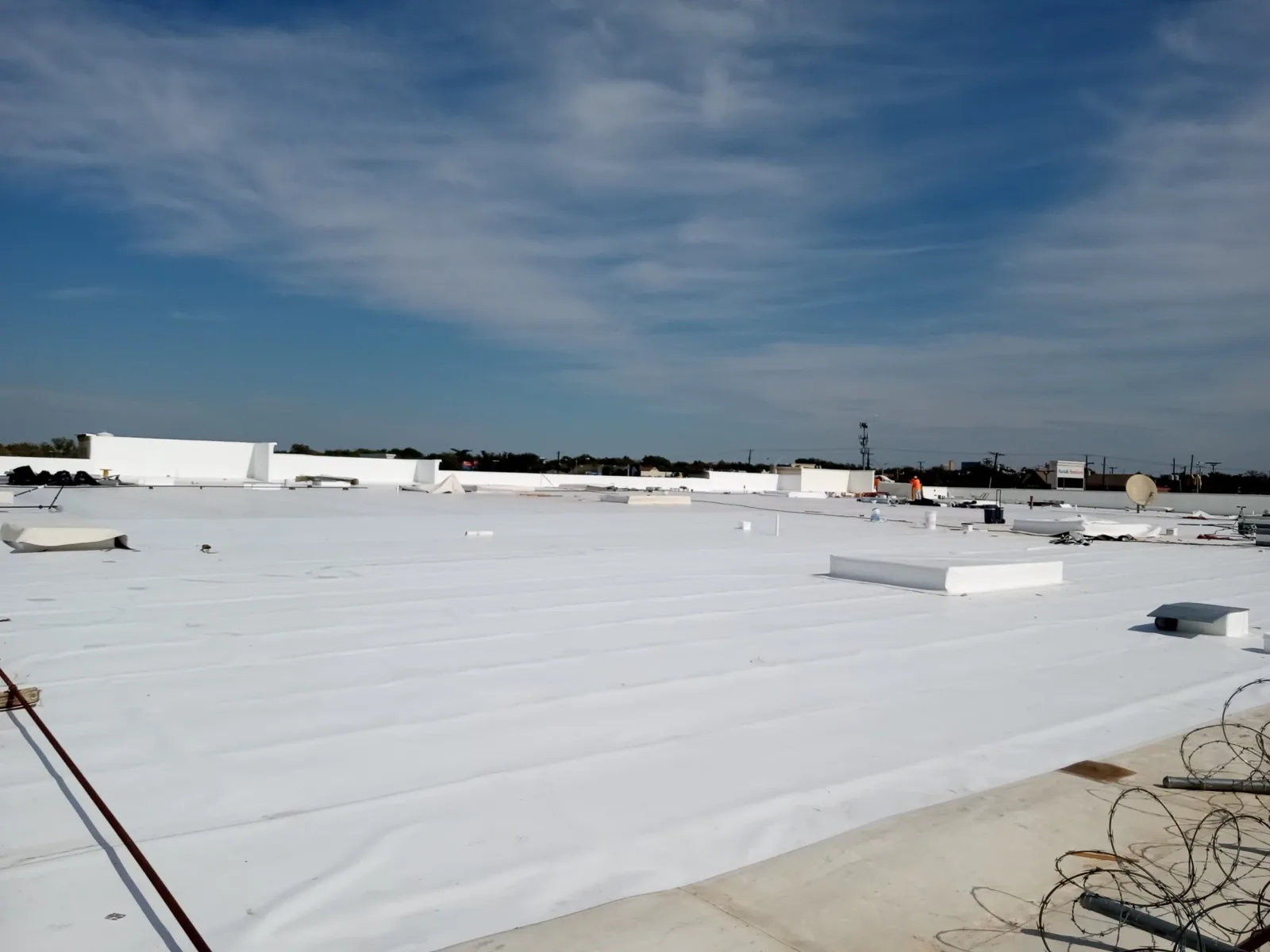
Where PVC roof construction is installed, we examine the specific system, surface condition and suitable joining method. The receiving material needs to support the selected repair. A visibly narrow opening can require preparation beyond its edge, while more extensive membrane damage can alter the boundary. We describe that scope through the actual condition rather than assume every thermoplastic lap can be restored identically.
For modified-bitumen assemblies, we assess the installed layers together with the compatible repair approach. A surface lap can be one boundary within a larger construction. We examine whether underlying materials remain serviceable where they affect the recommendation. The selected closure should restore useful continuity across the joint with an appropriate receiving area, not simply cover an opening while unsuitable material remains underneath.
West Quincy's Common Market includes food-service and private-function activity. On a requested roof with such operating equipment, residue or repeated service contact can affect the area around a joint. We inspect actual membrane exposure and preparation needs before choosing repair material. Work in West Quincy should also account for the room or equipment interval needed beneath the connection being rebuilt.
Examine the restraint beside the split
An open seam can reflect local receiving preparation, but attachment or movement can also stress the joint. We inspect the surrounding field and the nearby supports or transitions where condition suggests that relationship. A membrane that returns to a flat appearance does not establish that every restraint remains useful. Closer examination may be needed to determine the construction supporting retention. The recommendation should identify whether a bounded joint repair is sufficient or another component needs correction first.
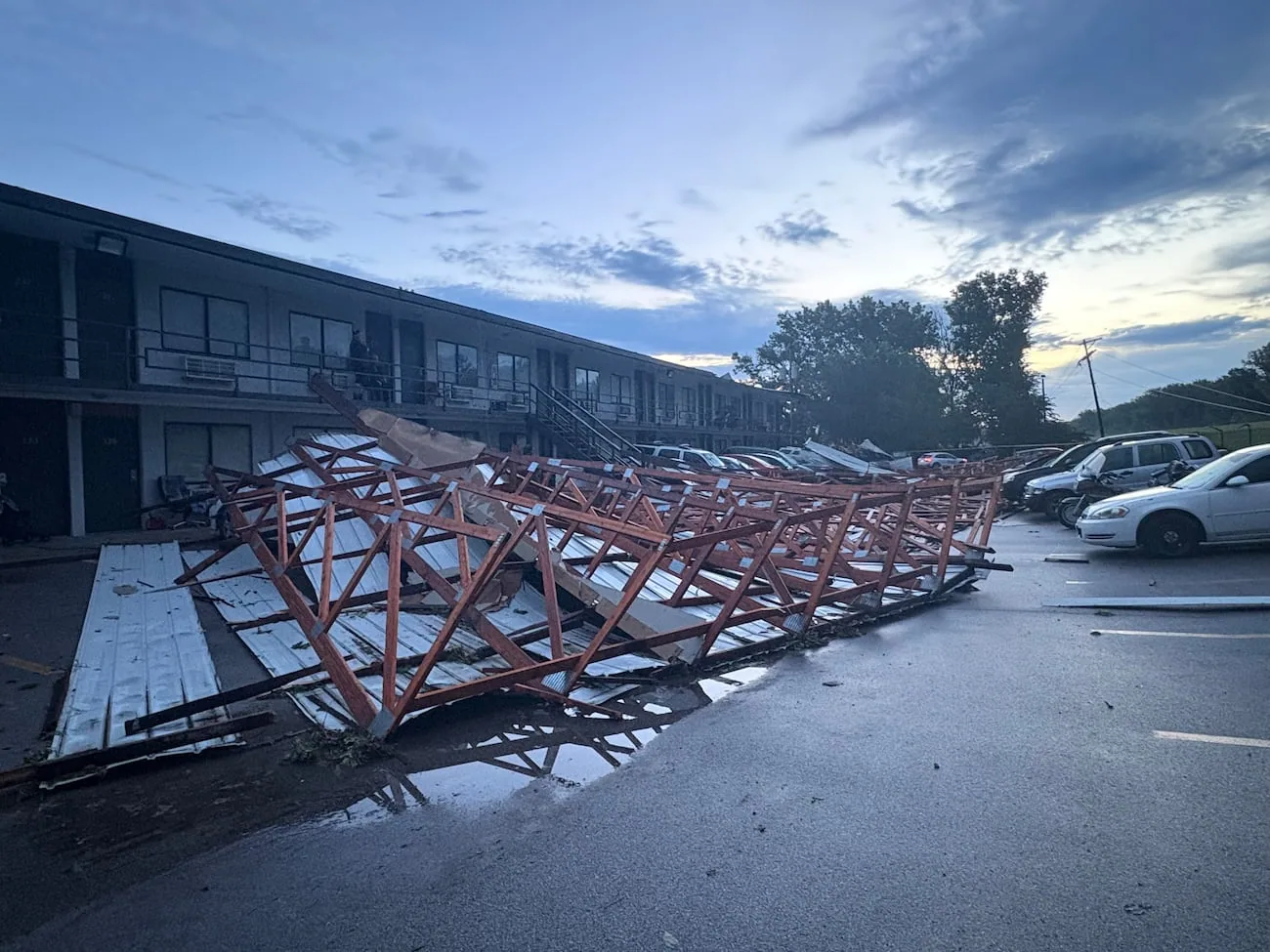
Wind-damage assessment can examine restraint and displaced connections where they affect seam condition. The final repair should not leave the joint exposed to the same unresolved movement. We coordinate any receiving or support work before permanent closure, using suitable material and preparation for the installed assembly. A new strip can otherwise mask the symptom without restoring the construction responsible for holding the roof together.
Seams can also meet equipment flashing or wall transitions. Flashing reconstruction may be needed where the adjoining detail contributes to local stress or entry. We inspect both boundaries instead of repairing one visible opening and assuming the complete interface is sound. Added insulation or changed support can alter the geometry the joint must bridge. The final connection needs the relevant construction in its stable intended position.
A repair should remain reachable for later inspection. Concentrated technician contact or sharp support edges need consideration where they can damage the renewed joint. Compatible protection can be useful, but it should preserve drainage and access rather than conceal a vulnerable transition under an obstruction. The finished joint and its service route need to work together after the immediate repair task has ended.
Trace admitted water into the receiving layers
A seam opening can admit water into insulation beyond the visible gap. We examine the assembly and use closer checks where concealed condition changes the repair decision. The opening's length is not automatically the removal limit. Wet boards, damaged receiving support and unsuitable attachment can require different reconstruction around the joint. The scope should establish those findings separately so closing the membrane is not mistaken for restoration of every affected component.
Conversely, an open joint does not prove the entire roof needs removal. Sound surrounding construction can support a local comparison when the defect is bounded and the installed system allows suitable repair. We explain the condition supporting that approach and the retained materials involved. Where findings show distributed damage, the owner receives a different basis for wider work. The useful distinction is the assembly condition established, rather than a uniform response to any seam failure.
Commercial roof leak repair follows the pathway and the receiving construction, not merely the interior observation. Water can reach an occupied room away from the joint that admitted it. We assess the geometry and plausible connection before setting the work boundary. The operating arrangement should then match the opening and closure needed at that location, with interior protection where the task creates exposure.
Choose an opening that can be completed coherently
A joint near equipment or a wall can take more completion effort than a straight field lap. We assess receiving preparation, related component work and suitable application conditions before setting the daily stage. Removal should not expose a larger area than the assembly can be secured within the available interval. Temporary boundaries need suitable continuity with retained roofing, and runoff should not be directed into the unfinished connection.
Canton's commercial setting includes a mixed-use center and Route 138 as an arterial. For requested roof work in that broader area, the occupied access and equipment arrangement need assessment at the individual property. A commercial setting can involve unlike uses beneath neighboring roof zones. The owner should identify which rooms or services require an interval while the seam and receiving construction are restored. That physical relationship is more useful than assuming one common closure arrangement from the district.
After work, the component description should distinguish the permanent joint, related support correction and any underlying removal. Routine inspection and outlet clearing remain separate from repairing damaged construction.
Commercial Roofing Questions
Can the same seam repair method be used on every membrane?
The installed material, joint construction and receiving condition need identification first. We select preparation and compatible closure for that assembly. A method appropriate to one system may not produce a useful joint on another, and previous surface treatments can affect preparation. The recommendation should explain the receiving construction behind the repair rather than rely on a familiar patch method alone.
What changes when movement keeps opening a seam?
Examine restraint, support and adjoining transitions before applying another joint treatment. A receiving or equipment correction may need to precede permanent closure. We identify the component causing stress and the construction suitable after it is corrected. The new joint should not inherit the same unresolved movement that repeatedly separated the previous connection.
Does an open seam mean a whole-roof replacement is necessary?
Assess the extent of membrane damage and the condition of retained layers. A bounded defect on sound construction can support a local repair, while distributed moisture or unsuitable receiving support can justify a wider comparison. We describe those physical findings and the components restored under each option. The presence of one open joint alone is not a complete scope.
How should the repair boundary relate to an interior leak?
Follow the roof pathway and establish the damaged connection before setting removal. The interior position can differ from the entry joint, and concealed layers can be affected beyond its visible edge. We identify the receiving material and required closure with closer checks where useful. Occupied protection then follows the actual roof task rather than an arbitrary area directly above the complaint.