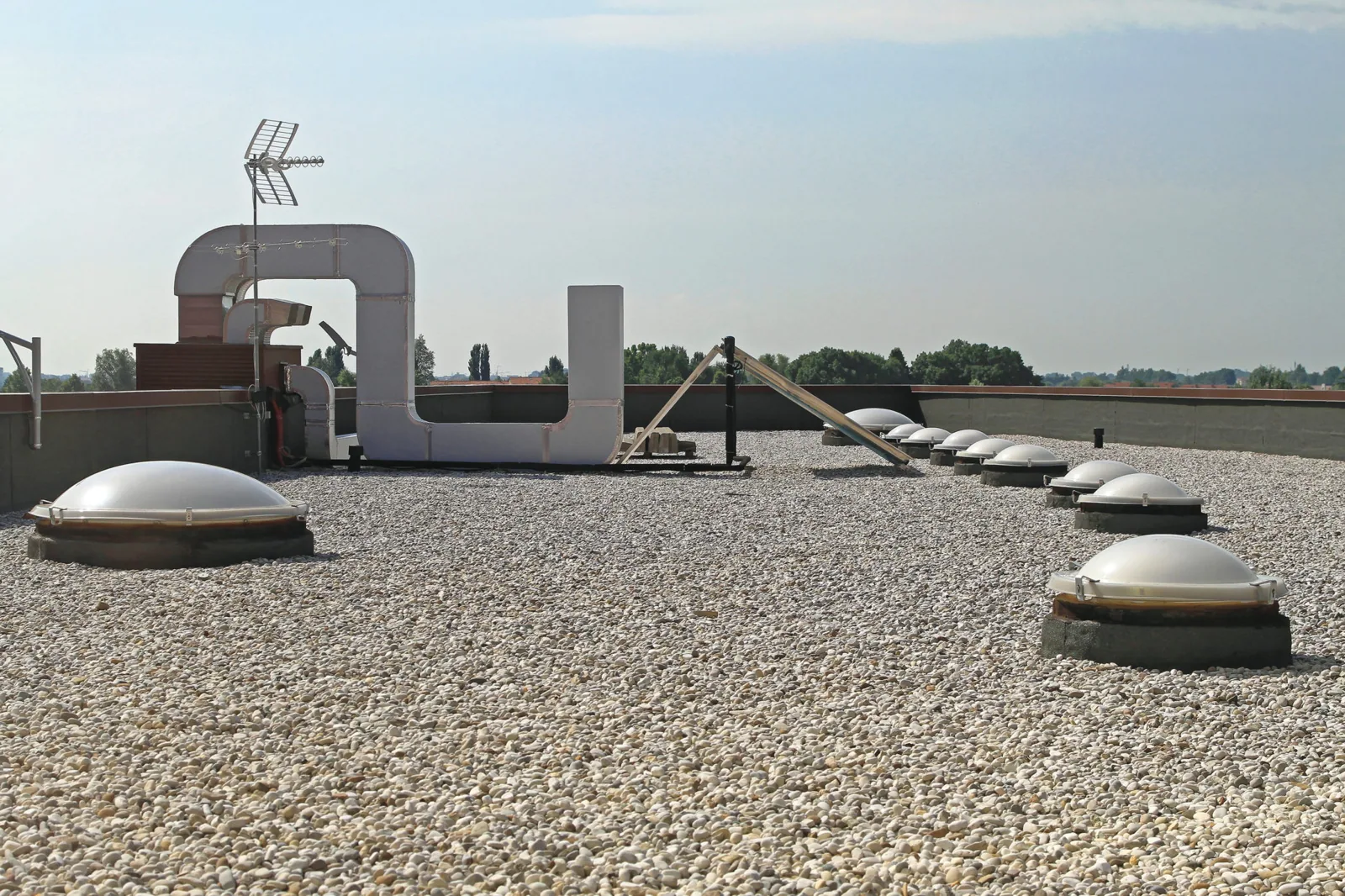
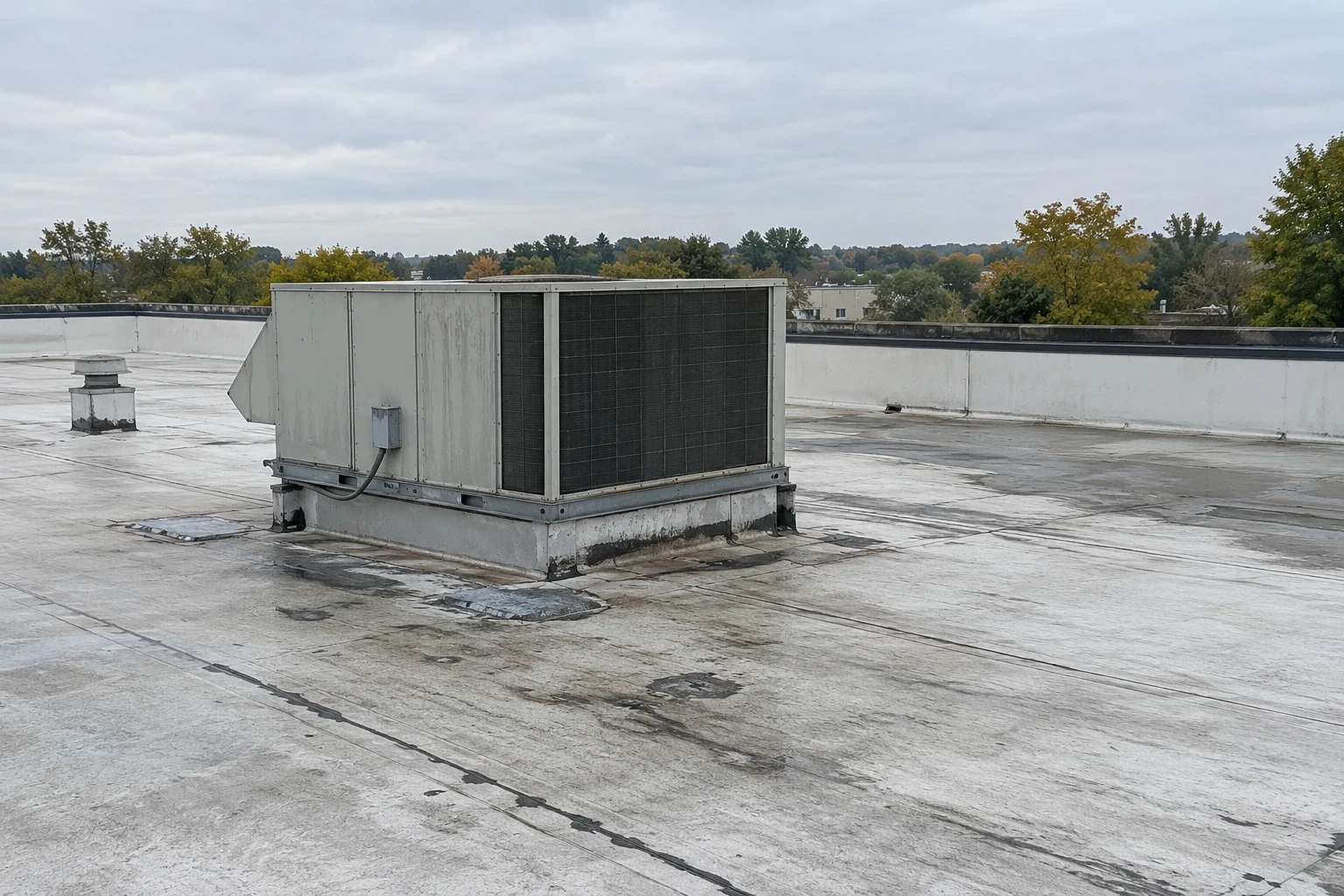
Commercial Roofing in West Quincy, MA
West Quincy borders Milton and the Blue Hills on the city's western side. Adams Street, Copeland Street, Furnace Brook Parkway and Quarry Street serve as major neighborhood roads, with direct I-93 access and bus connections toward Quincy Center. These connections can affect delivery and staging, but they do not reveal the condition of a commercial roof. We inspect the assembly, locate reported leaks and follow water across seams, penetrations and drainage details. The owner receives a repair boundary tied to what we can see, plus any test or opening needed before a wider renewal decision.
Plan for the Property, Not the Map
A restaurant, office or service building in West Quincy can have different hours, material routes and interior sensitivities. The neighborhood's access to I-93 and its roads toward Quincy Center help with regional logistics, but our work still depends on site rules. We confirm roof access, where a delivery can stop, which doors remain in use and who approves a change to parking or circulation. If staff move between buildings, the staging plan should avoid their normal paths. Those operational details belong in the scope before a crew arrives.
Common Market Restaurants identifies food-service uses in West Quincy, including dining, catering and private function spaces. That illustrates one kind of commercial operation without identifying a roof assembly. For a food-service property, we ask about operating periods and areas that require interior protection. A nearby Milton property or Quincy asset may share the same owner, but its roof and work plan stay separate. The comparison is useful only after each building has its own condition record.
Follow the Reported Water Path
When water appears inside, the visible mark may be several feet or a room away from the entry point. We check roof details above and around the report: field seams, curb corners, pipe penetrations, drains, scuppers and wall transitions. A membrane can conceal movement beneath its surface, and a deck joint can direct water toward an interior opening. We document the likely route and check whether insulation has softened or a prior repair has separated. If the area is broader than the visible defect, a selective opening or suitable moisture survey can clarify the true repair boundary.
Adams Street and Copeland Street help orient West Quincy's commercial areas, while Furnace Brook Parkway and Quarry Street connect other parts of the district. Those names do not tell us where a property's drain or leak lies. We map the roof zones and label each observation so the building team can return to the same place later. An infrared moisture survey may help identify a pattern under suitable conditions. The readings need interpretation with assembly details and confirmation where they change the work scope.
Prepare Drainage for Regional Weather
Quincy Emergency Management includes hurricanes, blizzards, nor'easters and flooding in local preparedness. The hazard list does not establish that a West Quincy roof was damaged in a specific event. It does support keeping drainage and edges in the maintenance record. We inspect drain strainers, scuppers, overflow openings and the surface leading to each outlet. We also check flashing and membrane terminations that could admit wind-driven water. If a drain is blocked, cleaning the outlet may be the immediate need; if water remains because the roof has a low area, the owner may need a separate slope or drainage review.
The western side's position beside the Blue Hills does not prove a wind or moisture condition on a particular structure. We assess the roof itself, including edge attachment, exposed metal and any signs of movement. After severe weather, photos of the interior and roof can record what changed. We separate temporary protection from the permanent repair and note any area that cannot be evaluated safely at the first visit. This gives the property manager a clear service priority rather than a general weather claim.
Identify the Existing System Before Repair
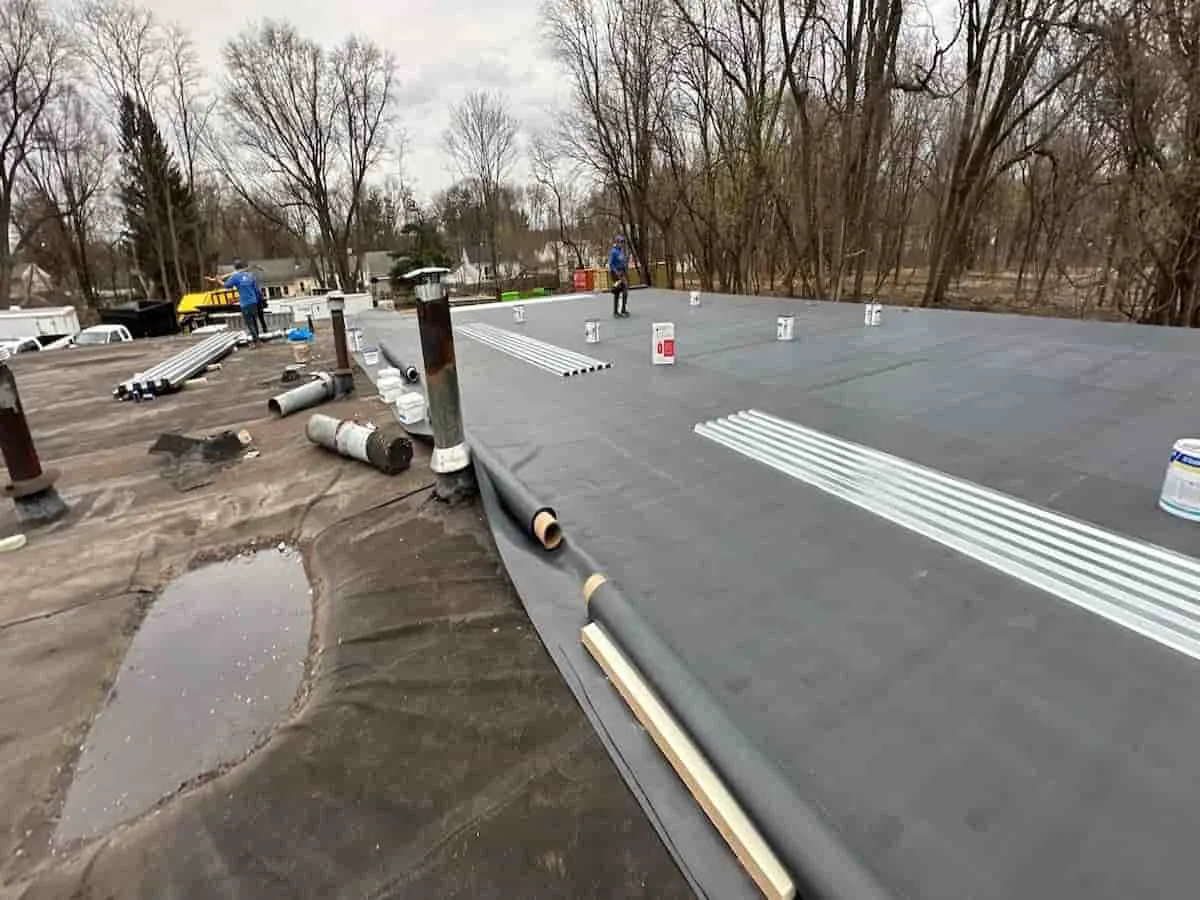
Single-ply membrane, modified bitumen, built-up roofing and metal each require different repair preparation. We identify the installed system and check whether the surface, substrate and adjacent details can accept the proposed material. A thermoplastic seam may need a clean, compatible weld; an EPDM splice needs the right adhesive and flashing approach; a metal panel joint may depend on fastener or seam condition. If a previous patch lifted, we inspect the interface rather than covering it with another product. The repair should address the failure mechanism visible on the roof.
For an owner weighing a local fix against broader work, we compare a commercial repair with a defined replacement scope. A recover is possible only when retained layers, moisture, final height and project requirements support it. A built-up roof assembly needs attention to surfacing and ply condition; a different material carries different details. We document the layer and repair history before recommending a system change.
Coordinate the Workday With Operations
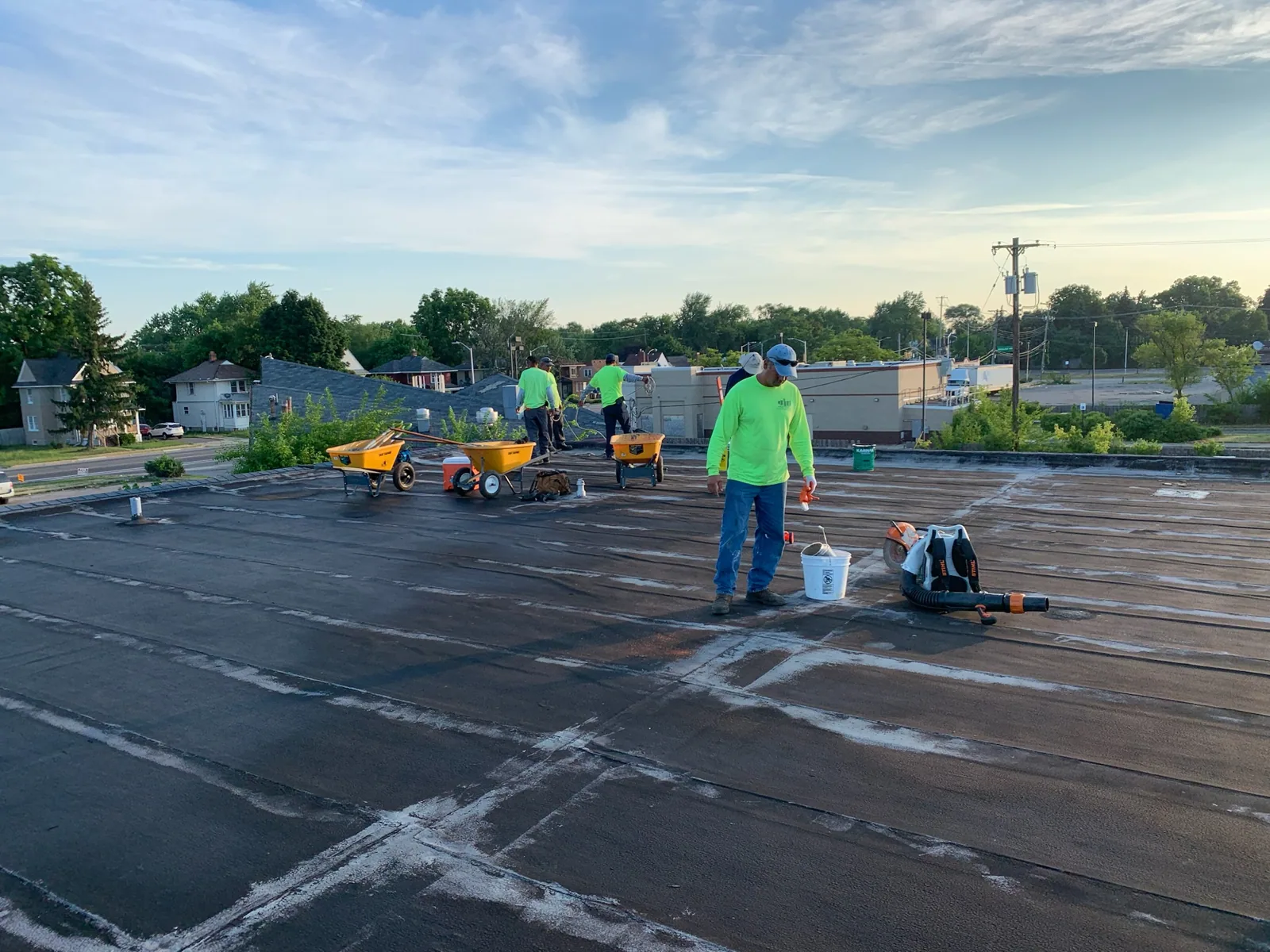
Roofing above occupied commercial space calls for agreed routes, interior protection and daily closeout. We ask whether food preparation, customer access, staff meetings or equipment service will continue during the work. If mechanical units require shutdown, a qualified technician coordinates that action. A repair may fit in a smaller work area; replacement exposes more insulation and deck and requires sections that can be secured before crews leave. Material delivery and waste removal have to fit the site's parking and access rules.
Emergency service is available at any hour, including weekends and holidays. The initial response can protect the interior and assess the reported area; the permanent work follows after the assembly and water path are clear. For planned upkeep, maintenance service checks the drains, edge metal, penetrations and previous repairs. The building manager receives an account of completed work, any temporary protection and the next decision point. A realistic sequence makes it easier to preserve service without claiming that roof work never interrupts operations.
Compare Conditions Across Buildings
West Quincy owners with several properties can compare risk only when roof findings are labeled consistently. We record assembly type, roof zones, active leaks, drainage, repairs and items that need confirmation. The report distinguishes an observed defect from possible hidden moisture. That matters when a manager sets a service priority or decides whether to budget an investigation before replacement. A dated photo tied to the same roof area helps the next inspection determine whether a repair held or the condition advanced.
We can carry those records into condition reporting, capital planning or a multi-property program. Quincy Center is another commercial district, but findings there should not be transferred to West Quincy. A review of Quincy Center can use comparable categories while preserving each building's own remaining-service and renewal window. Share existing roof plans and repair notes, and we will identify what the next inspection needs to settle.
Commercial Roofing Questions
Does direct I-93 access mean materials can be staged anywhere?
No. Highway access does not establish a property's loading permission or roof route. We confirm the approved stop, staging area, building entry and any restrictions on parking or circulation.
Can an active restaurant stay open during roof work?
The answer depends on the work area, interior protection and operating schedule. We coordinate access and any disruptive steps with the property representative before opening a section.
What if water has traveled beyond the ceiling mark?
We check likely seams, penetrations and drainage paths above and around the room. If moisture may extend into insulation, a survey or selective opening can define the affected area before repair.
When is a recover a reasonable choice in West Quincy?
Only after the existing layers and substrate are understood, moisture is addressed, and final height works at edges and drains. We compare that scope with tear-off after inspecting the roof.