Commercial Roofing in South Hingham, MA
South Hingham has two Route 3 interchanges, office space and power-control and food-manufacturing businesses. The building use sets the practical questions for roof work: which equipment must keep operating, what access can be shared and where interior protection matters most. We inspect the roof assembly and connect each defect to the operation below it. That means checking drains, seams, equipment curbs and wall transitions before we recommend a local repair or a broader renewal. The property manager receives a clear condition record and a scope that distinguishes what can be corrected now from what needs additional testing.
Protect the Operating Boundary
A food-production space may have cleanliness, equipment or delivery requirements that affect when roof work can occur. An office operation can have different limits, including tenant schedules and mechanical service windows. We ask the property team to identify sensitive areas and operating periods before setting the work boundary. Roof access, material staging and any HVAC interruption go into the sequence. If production continues below, the plan defines how open roof sections are protected and when work areas will be secured.
South Hingham's two Route 3 interchanges provide regional access, while the work route at a particular property still depends on its gates, loading areas and approvals. The inspection does not assume a roof type from the businesses in the district. We record the actual layer, penetrations, rooftop equipment, drains and previous repairs. A neighboring Hingham roof or Hingham Shipyard and Route 3A property may fit a shared review cycle, but the findings stay attached to the building where they were observed.
Trace the Defect Through the Assembly
A leak over office workstations can interrupt a floor even when its entry point lies at a rooftop curb several bays away. Water can move along a membrane interface, insulation joint or deck before showing inside. We use the reported room as the start of a roof-side review, then inspect likely upstream seams, penetrations, wall flashings and drains. If the membrane has lifted or the deck feels soft, we check whether concealed moisture has widened the repair area. The report identifies where more testing would change the recommended boundary.
At a production building, water near process equipment or stored material may require immediate protection while the roof is assessed. We note which operation is affected and keep temporary response distinct from permanent repairs. A survey or selective opening is useful when it establishes whether insulation is wet or the deck needs repair. We describe the question first, then the method that can answer it. That prevents an uncertain reading from turning directly into a replacement recommendation.
Keep Equipment and Drainage in the Same Review
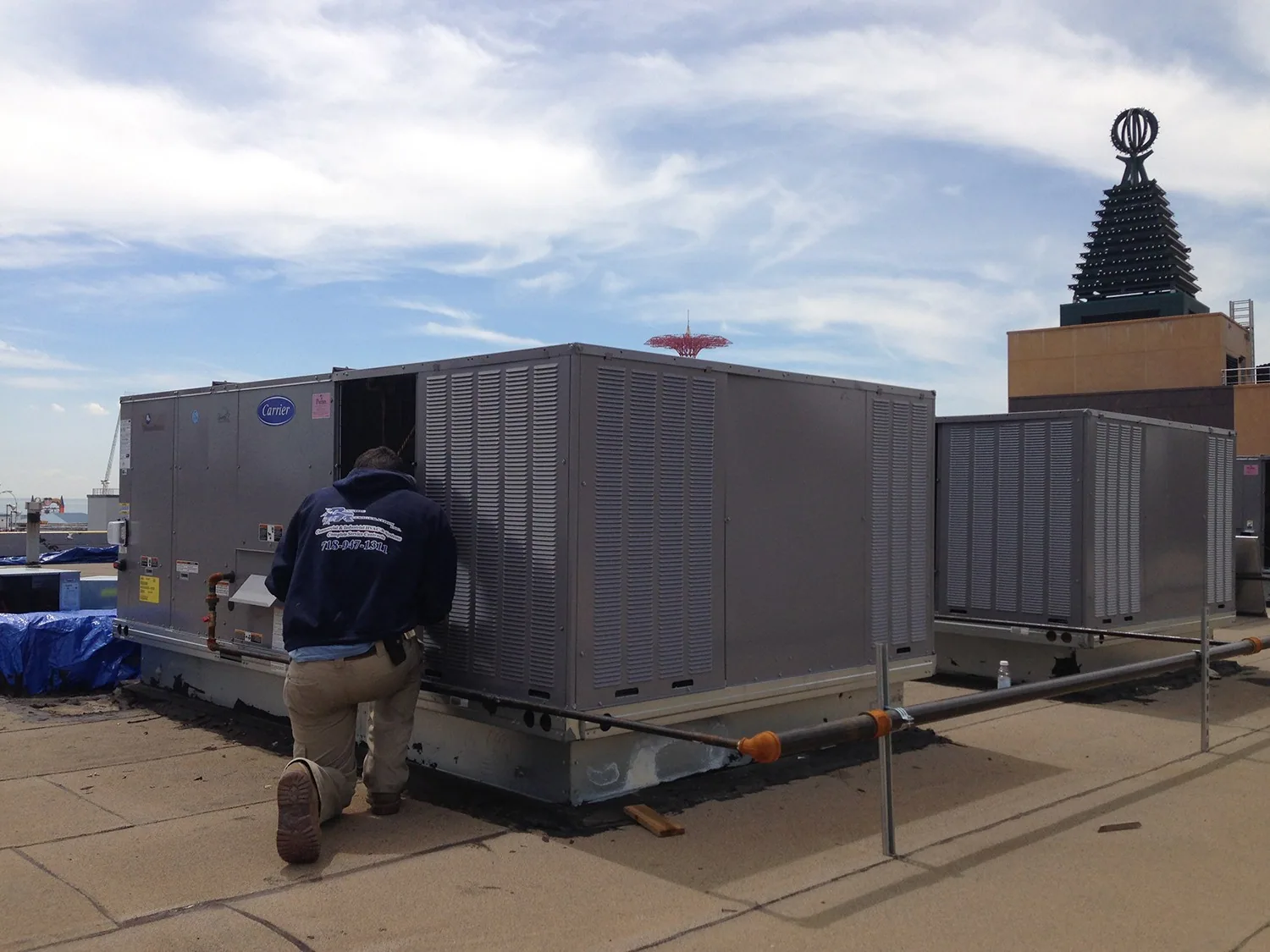
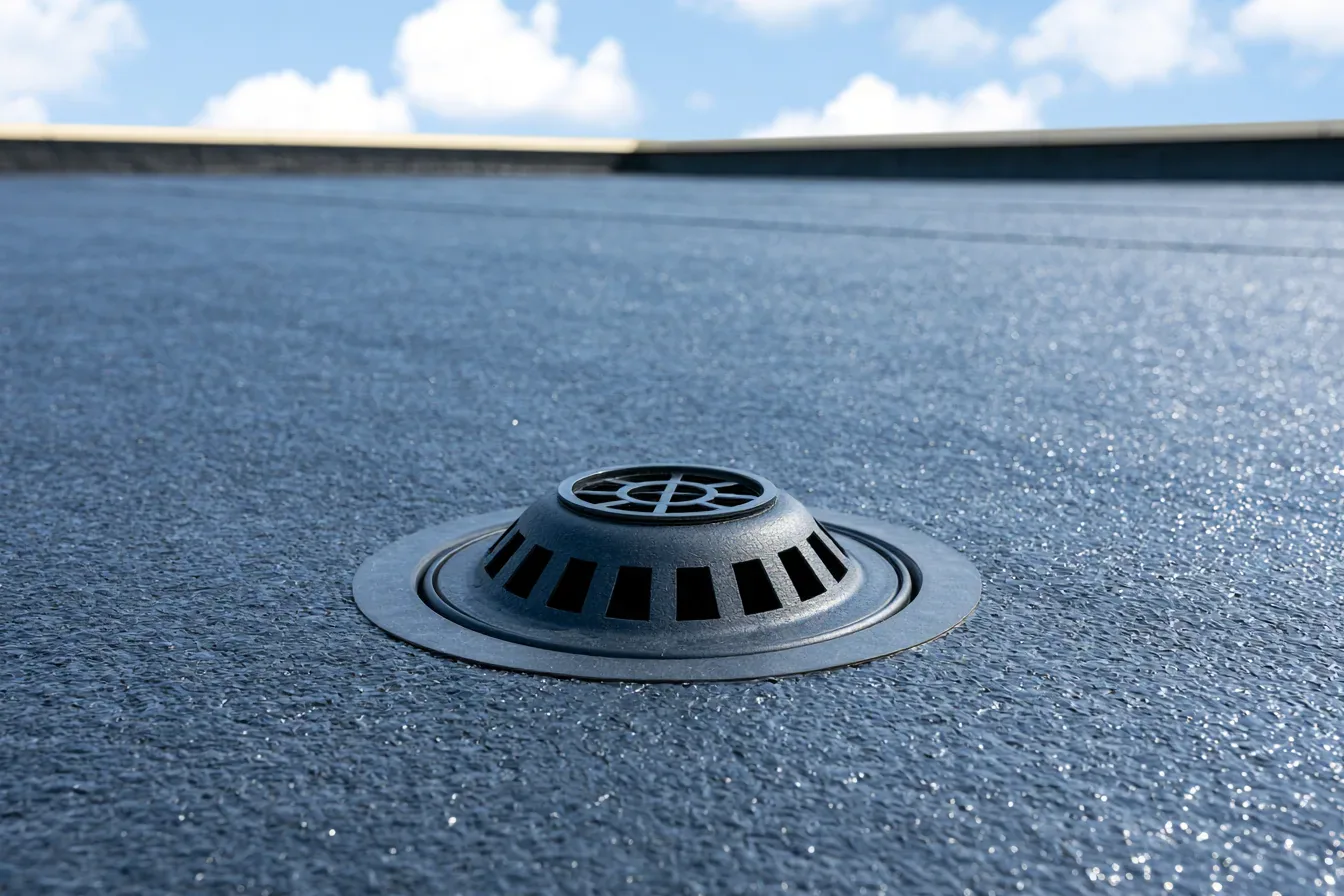
Equipment curbs, conduits and service supports interrupt the roof field. We inspect the flashing and fasteners at each connection, note any change made during mechanical service and check whether walking paths have worn the membrane. Drains and overflow routes need a separate check. Debris can restrict flow, but recurring water may also relate to slope or a damaged drain bowl. A surface coating can protect a compatible roof; it cannot clear an outlet or correct an equipment curb that moves independently of the deck.
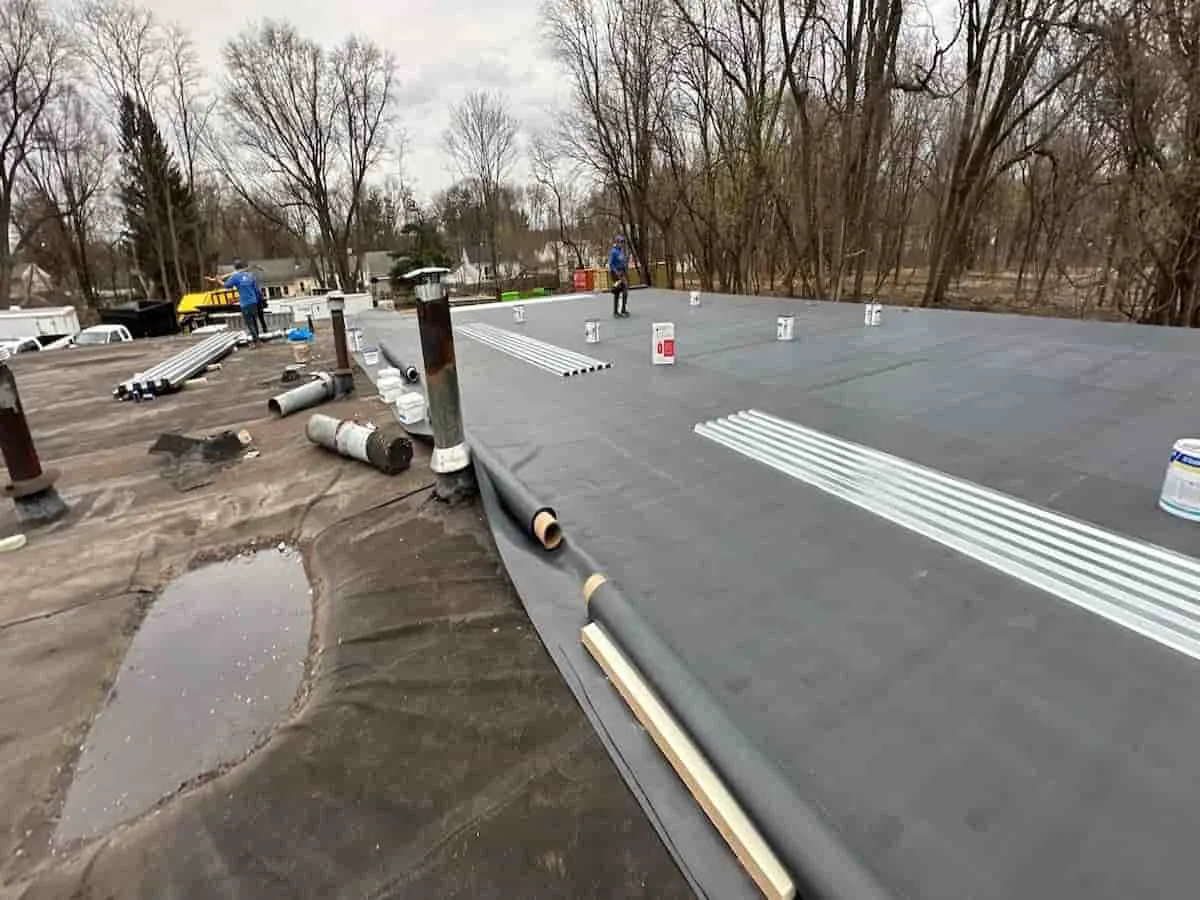
Replacement can add new insulation or change the finished roof height. That makes final elevations at curbs, parapets and drains a design issue rather than a cosmetic detail. Before removal, we document equipment to remain and identify any trade coordination. During installation, open sections are kept within a boundary that can be made secure and weather-protected. The owner can review equipment-curb work alongside drainage repairs so that separate details are not lost inside a broad membrane allowance.
Separate Maintenance From Renewal
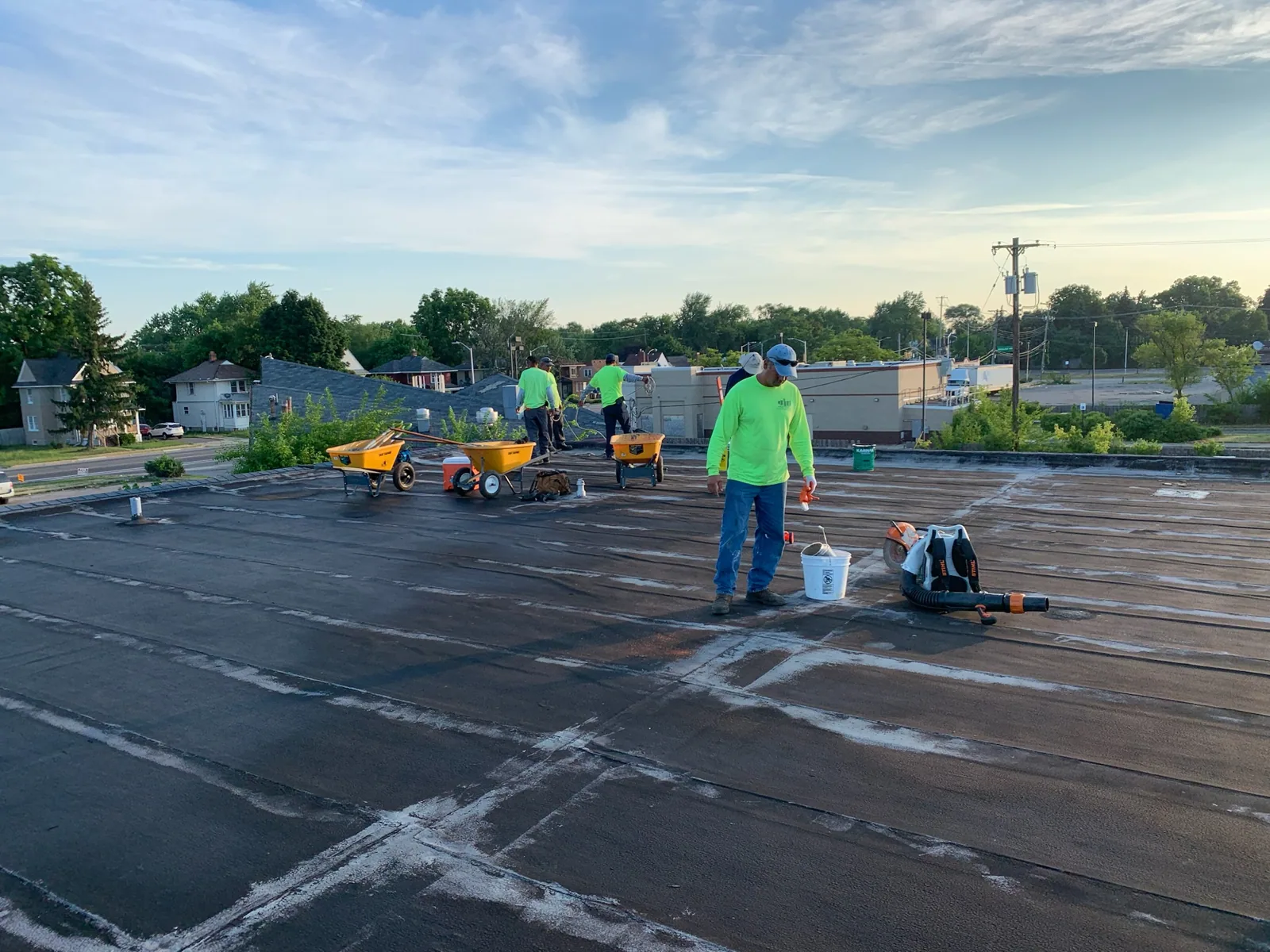
An isolated puncture on dry, stable material may support a repair. Repeated failures across seams, wet insulation or widespread edge movement may justify a wider scope. We compare the defect locations and the condition around each one, then identify what would confirm a hidden condition. The owner sees which items require immediate service, which can be monitored and which need planning for the renewal window. That comparison is more useful than choosing a system before the existing roof has been identified.
A recover may retain layers only when their condition, final height and project requirements allow it. A tear-off can expose the deck and correct insulation, but requires more daily protection for active production or office areas. We can compare commercial roof repair with replacement work after inspecting the current assembly. If a PVC membrane is installed, we examine its seams and flashing with compatible repair methods. The report does not turn a single roof observation into a blanket life estimate for other properties.
Prepare Details for the Next Weather Window
Before weather changes, maintenance can clear drains, inspect exposed flashing and secure loose edge components. Afterward, we document visible changes and compare them with prior wear at the same roof zones. If roof access is unsafe, temporary interior measures can begin while the rooftop assessment waits for suitable conditions. That sequence keeps water control moving without treating an inaccessible roof as inspected. We note which drains and edges were reachable, then schedule any remaining check once safe access returns.
Maintenance records are particularly useful where different trades access the same equipment zone. We note the condition of curbs, service paths and nearby seams, then compare those points during a later visit. A scheduled preventive roof review can help catch open joints before water reaches production or office areas. We also note an item that remains serviceable but may need later attention. That lets a property manager keep the immediate repair and long-term capital date in the same record without calling every small change an emergency.
Carry Findings Into the Capital Calendar
Each report should make it clear which roof section was inspected, what condition was found and what decision remains open. We label photographs by roof area, describe the water path and identify whether an observation was confirmed or only suspected. A later assessment can return to the same seam, curb or drain and show whether it changed. Where the owner manages both office and production properties, comparable labels make it easier to sort service priority while preserving each building's separate scope.
A roof condition report can feed a capital-planning review or a multi-property service program. That allows the asset manager to sequence inspection, repair and renewal based on active water entry, interior consequence, access and remaining service. Share the assembly record, leak dates and production limits, and we can identify the next check needed before the budget is set.
Commercial Roofing Questions
Can production continue while roof repairs are underway?
It can when the affected operation, protection needs, access and work boundary are planned with the site representative. Removal and HVAC work may require a scheduled interruption, which we identify before the scope is approved.
Do the Route 3 interchanges establish a building's roof condition?
No. They describe access to the district. We inspect the actual assembly, drainage and connections at each property before recommending any roof work.
What does a leak over process equipment require?
First protect the equipment and interior area as needed, then trace the water path through the roof details above. We define a permanent repair after checking the surrounding membrane and concealed layers that could affect scope.
How should an owner compare separate South Hingham buildings?
Use the same roof-zone labels and condition categories, then compare defects, moisture status, operating effect and access. We keep each assembly's findings separate before assigning service priority.