Commercial Roofing in Hingham, MA
Hingham combines Route 3 access and commuter connections with small businesses and historic properties around Hingham Square and Hingham Harbor. South Hingham adds office, power-control and food-manufacturing uses. Those different settings influence roof access, but none reveals a roof assembly on its own. We inspect the membrane or metal system, trace the reported water path, check drains and edge details, and record which interior areas need protection. From those findings, the owner can distinguish a localized repair from concealed-moisture testing or a planned replacement. Each scope stays tied to the property where the conditions were observed.
Keep the Work Boundary With the Building
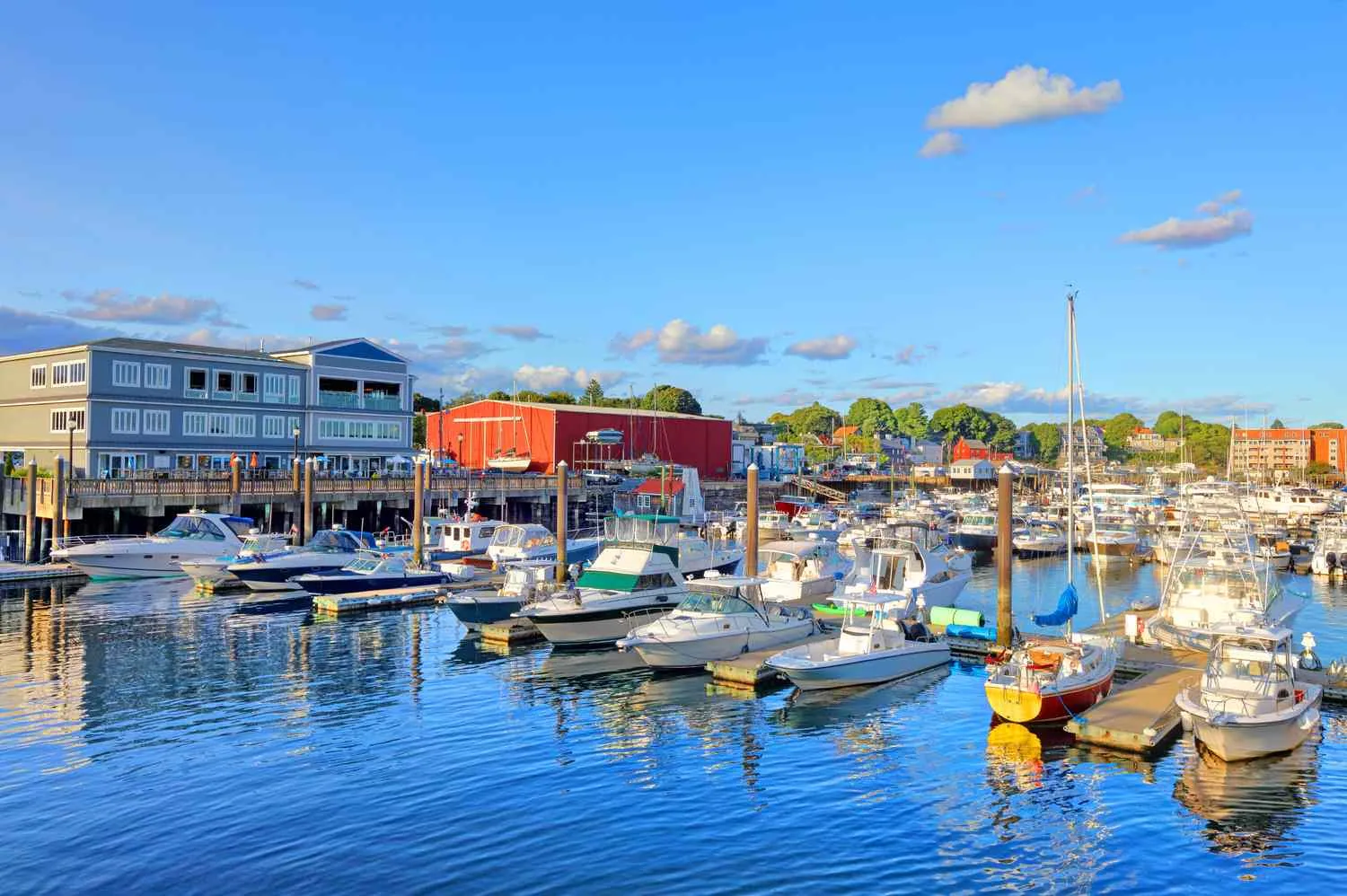
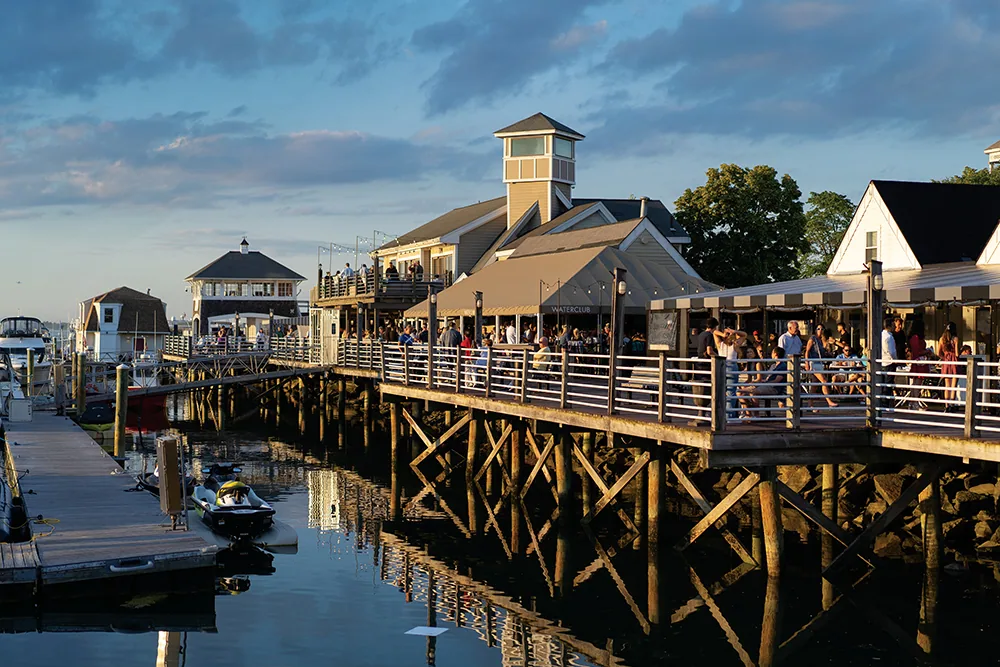
Hingham Square includes small shops, restaurants and historic properties near Hingham Harbor. A roof project above a commercial storefront may need different material staging and customer routing than work at an office or production space in South Hingham. We confirm the building representative, roof access, loading and any public routes that must remain clear. If the work affects a roof edge above a shared entrance, temporary protection needs to match how people use the area below. We document that boundary before equipment and materials arrive.
Hingham connects to Boston by Route 3, commuter rail and ferry service. Those regional connections do not replace a site's access approval. We confirm where vehicles can unload, whether a lift is allowed and which doors or service corridors can be used. For an owner comparing South Hingham and the Hingham Shipyard and Route 3A corridor, those differences can shape the sequence, while assembly condition still decides whether repair or renewal is warranted.
Locate the Roof-Side Cause
An interior stain is a signal to investigate, not a roof map. Water can travel along a deck or insulation joint before reaching the room below. We examine likely routes above and around the report, including seams, curb corners, drains, skylight flashing, wall terminations and prior patches. A membrane that looks intact at one point may hide wet insulation nearby. If soft material or repeated leaks suggest a broader condition, we explain which survey or selective opening can establish the repair boundary. That keeps the immediate patch from becoming a substitute for understanding what failed.
Hingham's small-scale commercial properties may have limited roof access and tight staging. We account for those constraints while selecting the inspection method. A drone can help document large or hard-to-reach fields, while close review remains necessary for seams and flashing. Infrared survey readings are useful only when the roof construction and conditions support interpretation. We pair readings with visible details and confirm them where the result changes a repair or replacement decision. The owner receives the evidence and the next step together.
Drainage Does Not End at the Outlet
Water should move from the roof field toward a drain or scupper without being held against equipment, walls or seams. We check the outlet, strainer, overflow path and slope approaching the low point. Debris may be the reason for standing water, but movement or damaged flashing can also restrict discharge. Applying a coating over an obstructed drain leaves that condition in place. If the deck has a low area, the owner may need a separate drainage review or tapered insulation plan during renewal. We document the condition that supports each option.
A seasonal roof review can identify drainage and connection conditions before a weather window narrows. We record accessible outlets, perimeter transitions and equipment paths by roof zone, then connect any deficiency to the work that restores the water boundary. A later visit can compare those same locations against completed repairs, keeping maintenance separate from reconstruction. After severe weather, we distinguish new movement from older wear and record any temporary protection. At an Hingham Harbor-area property, proximity to the water does not by itself establish corrosion; we inspect exposed metal and fasteners to see whether corrosion is actually present.
Select Work That Fits the Installed System
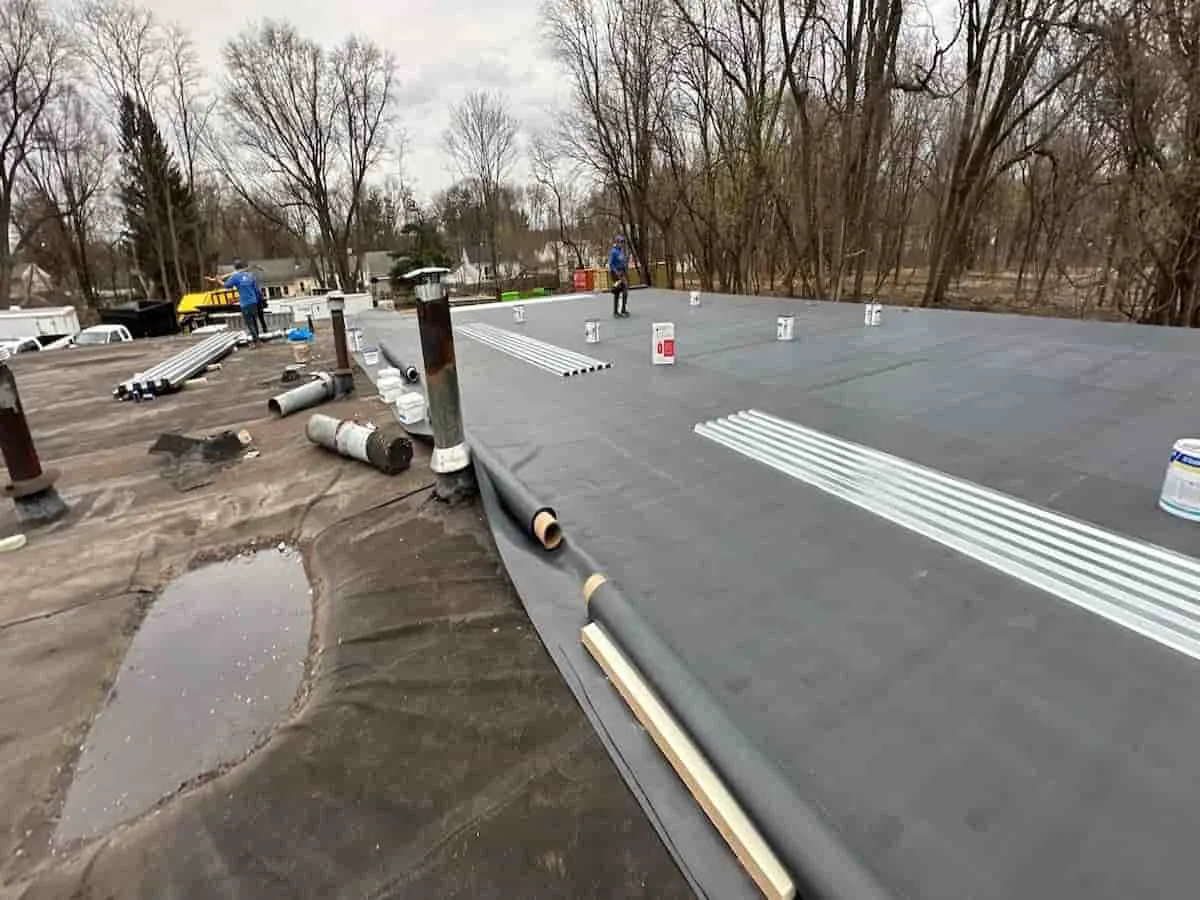
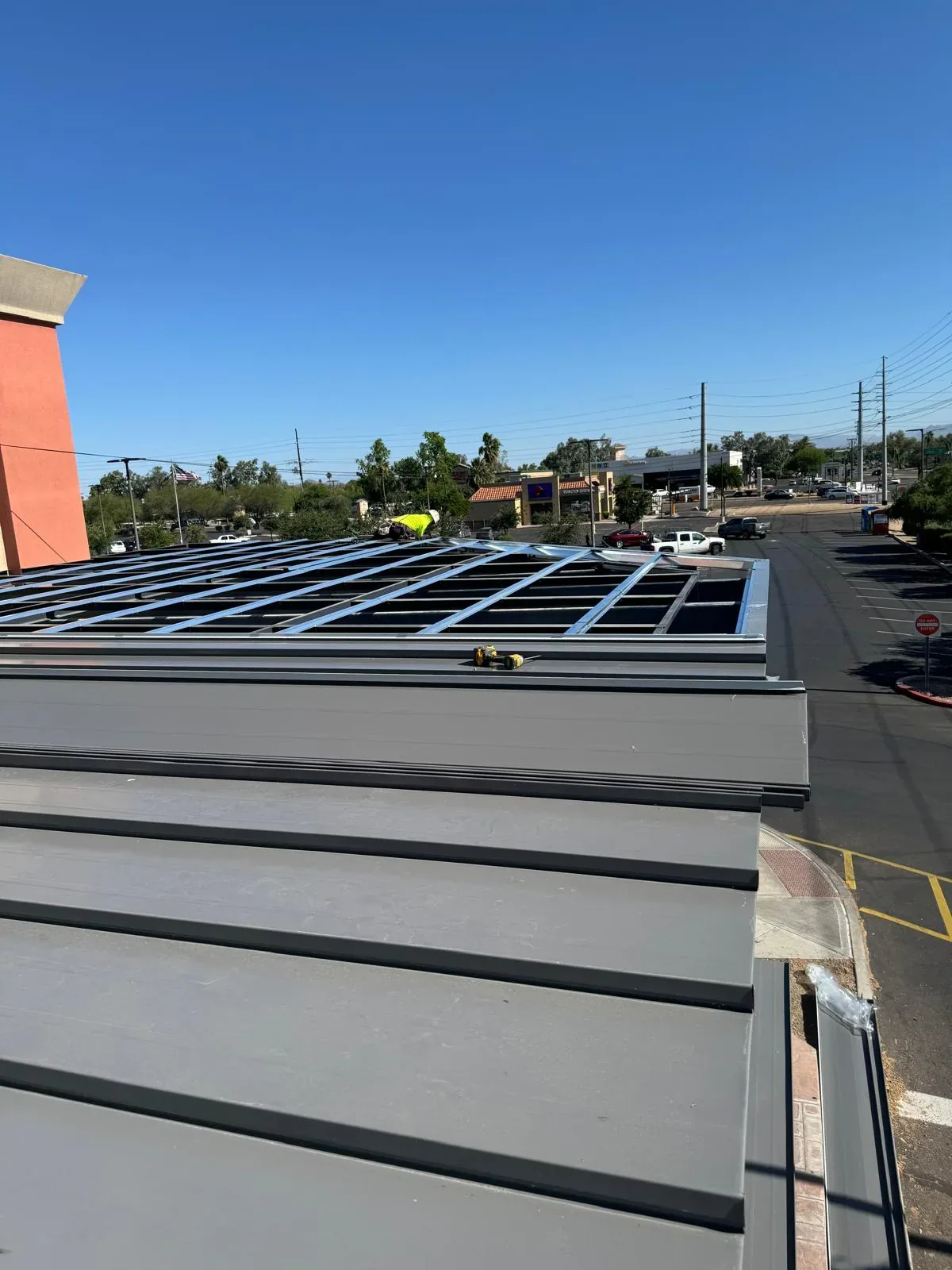
Before a repair, we identify the installed membrane or metal assembly and inspect how it joins at seams, penetrations and edges. TPO and PVC seams may be welded; EPDM repair uses compatible cleaners, primers and adhesives; modified bitumen details depend on the plies and surfacing present. A metal roof calls for a review of panel joints and fasteners. The substrate has to be clean and stable enough for the method selected. If a prior patch has lifted, we inspect whether movement, moisture or material incompatibility caused the separation.
A recover can keep sound, dry layers in place if added height works at drains and edges and project requirements permit retention. Tear-off exposes the deck and allows insulation correction, but creates a wider work zone that must be protected below. Owners can compare targeted repair with replacement work after we document the assembly. A standing-seam system has different expansion and attachment details from a low-slope membrane, so the decision follows the roof actually present.
Coordinate With the Operating Day
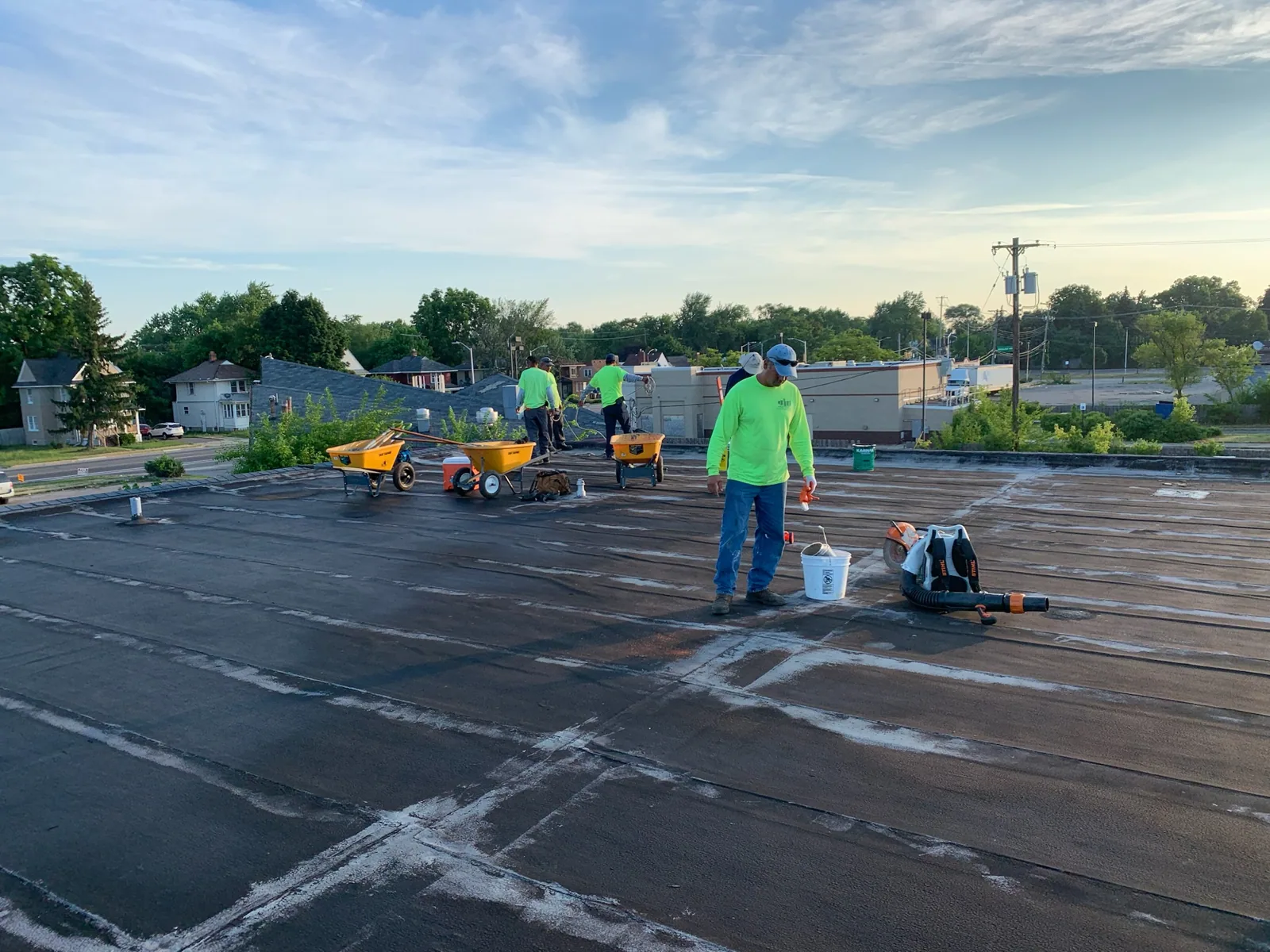
We work on occupied buildings and plan around tenants, building services and schedules. The property team identifies sensitive rooms, routes that need to remain open and equipment that cannot be interrupted without a technician. For replacement, removal proceeds in sections the crew can secure and weather-protect before moving forward. We confirm daily closeout, debris removal and any required notification. For a local repair, the work boundary may be small, but interior protection still matters where the reported leak affects a business or a shared space.
An urgent response can limit water entry and identify what must be secured; permanent repair follows after the roof detail is understood. A phased occupied-building project may be useful where a full closure is not practical. We can also review scheduled roof maintenance before a service issue recurs. The schedule is set from roof condition, property use and the access window rather than a fixed assumption for all buildings.
Keep the Inspection Comparable
A dated record lets an owner return to the same roof area and see what changed. We label the system and roof zones, photograph defects, identify completed repairs and list any unanswered question. This makes it easier to distinguish an active leak from a surface condition that can be monitored. It also supports a future property transfer or capital review without implying that a visible survey can determine concealed layer condition.
Hingham owners may manage properties near Hingham Square, along Route 3 or in South Hingham. Consistent condition reports and capital planning can compare service priority while keeping the findings property-specific. For multiple roofs, a portfolio roof program can group inspections and maintenance visits. Share repair records and current leak locations, and we will identify the condition that the next roof review should settle.
Commercial Roofing Questions
Does a harbor-side address prove corrosion on the roof?
No. We inspect metal edges, fasteners and exposed components for actual corrosion or coating failure. Location alone is not enough to select a repair.
How do you plan roofing near Hingham Square?
We confirm loading, roof access, pedestrian routes and building hours with the property representative. Those details set the staging and protection plan before material arrives.
Can a recover work on an older Hingham commercial building?
Potentially, if the layers are dry and stable, final height works at drains and edges, and project requirements allow retention. We inspect those factors before comparing a recover with tear-off.
What should an owner include in a roof record?
Keep assembly information, repair scopes, dated photos, leak locations and inspection findings by roof area. We can compare those records with current conditions and identify gaps that need testing.