Standing Seam Metal Roofing in Quincy, MA
Winter contraction followed by a sun-warmed panel can stress a metal roof where clips or penetration details restrict its intended movement. On a Quincy, MA, standing seam assembly, that movement belongs in the inspection before a leak is treated as a sealant problem. We examine panel connections, attachment and the way the roof meets walls and equipment. The material may remain serviceable while a restrained transition fails repeatedly. Repair should resolve that restriction instead of simply adding another bead over the crack.
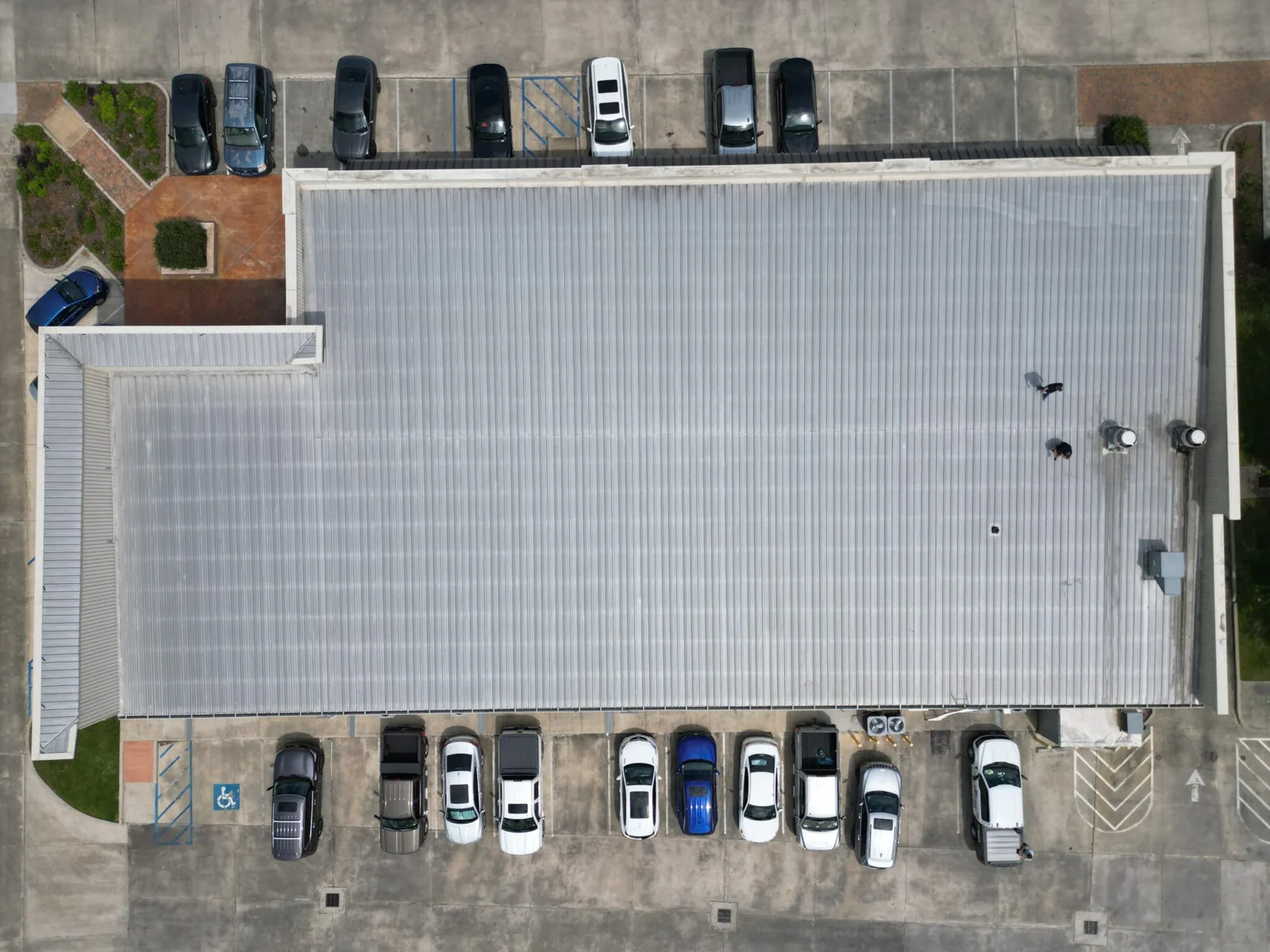
Standing seam construction can reduce exposed fastening through the panel field, but its performance still depends on the selected profile and correctly detailed connections. We install and repair commercial metal roofing with the roof's slope, support and operating exposure in view. Owners with an existing exposed-fastener roof can separately consider metal roof retrofit approaches, which address a different assembly and renewal decision.
Let the panel move correctly
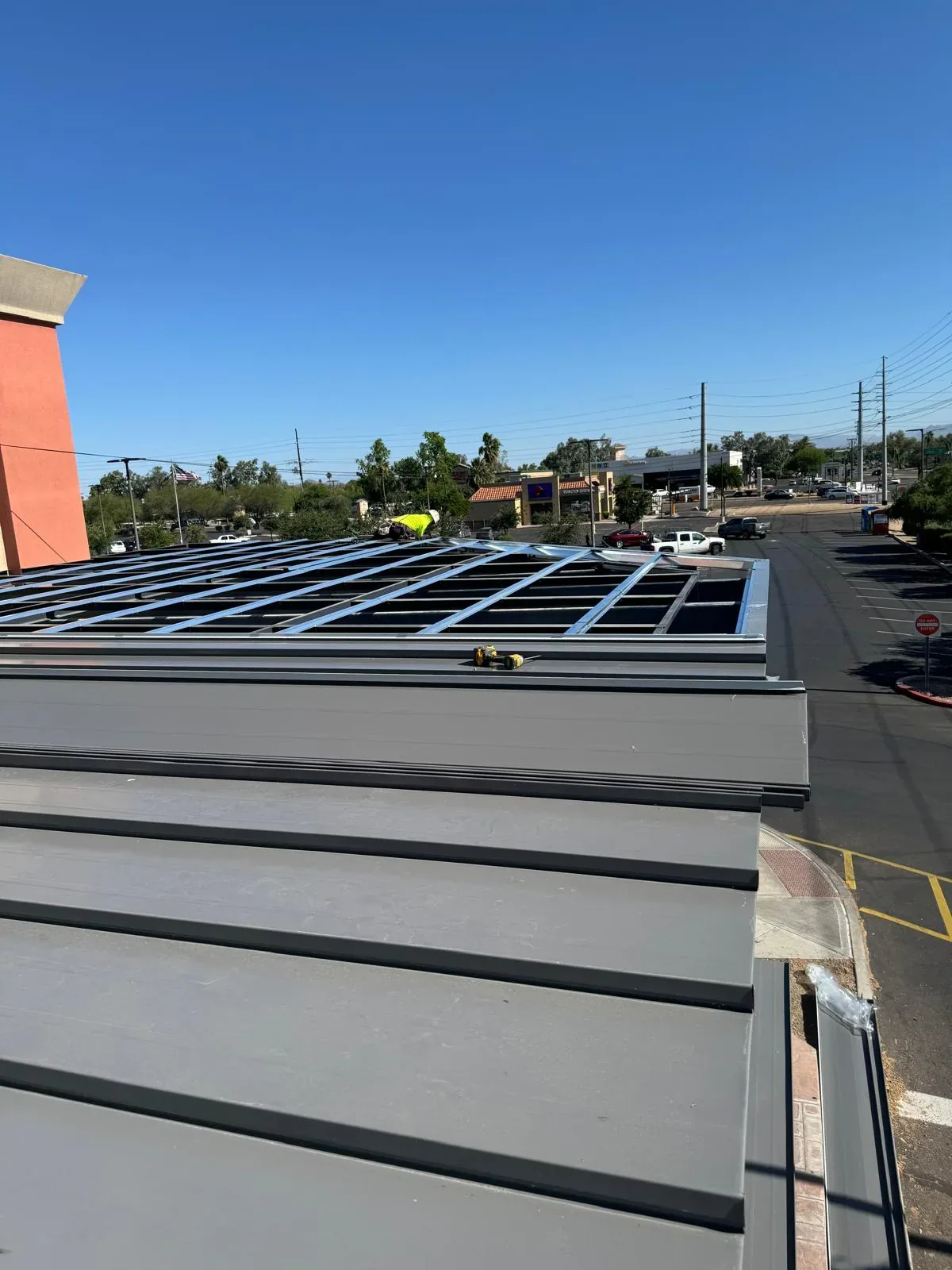
A displaced flashing or an elongated opening can indicate that movement is concentrating where it should have been accommodated. Clips, fixed points and transitions need to suit the roof's panel system. We assess their arrangement and the condition of the supporting construction before defining repairs. Additional restraint applied without understanding the assembly can transfer the problem elsewhere. A locally firm connection is not necessarily a correctly functioning one.
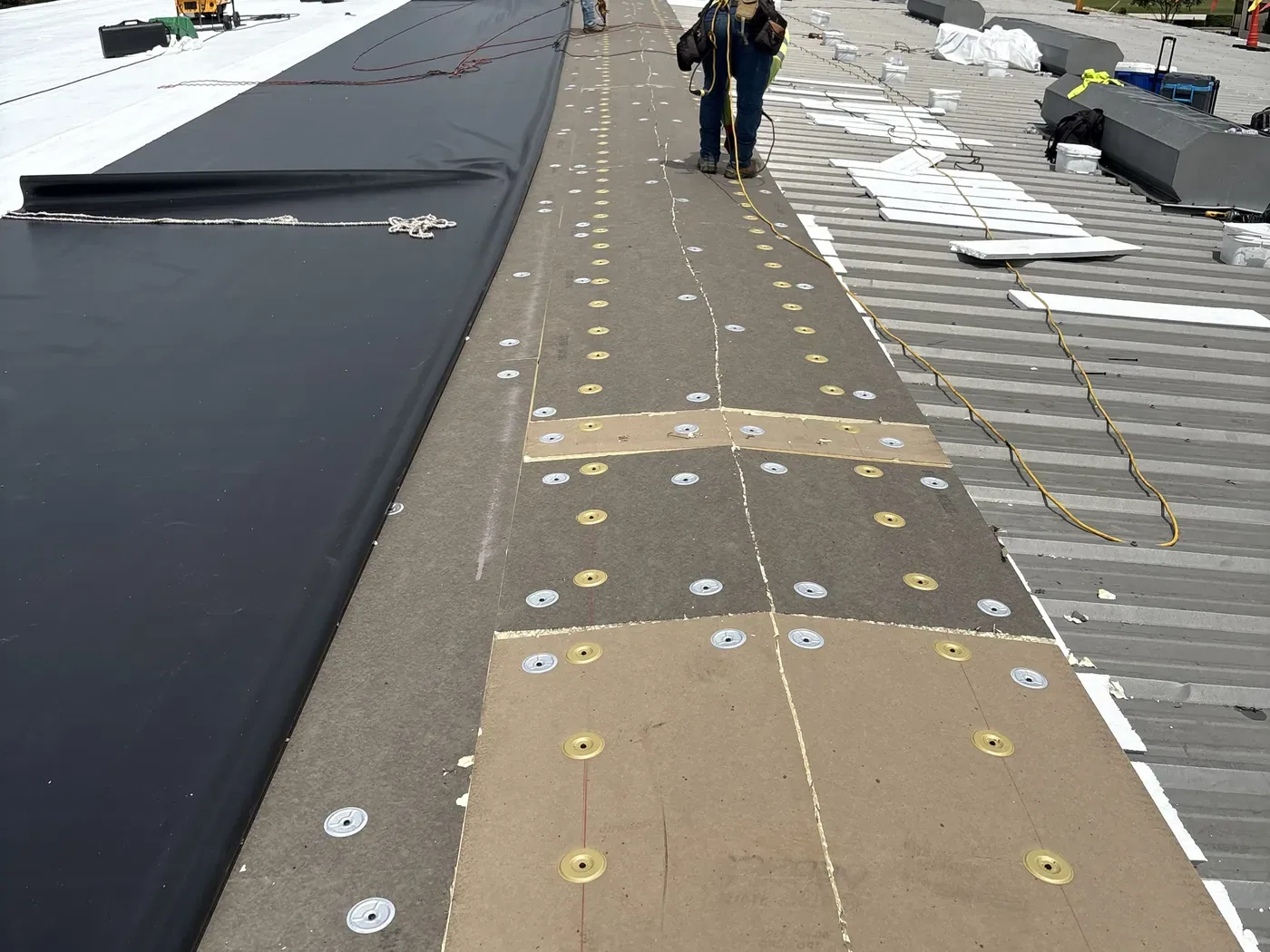
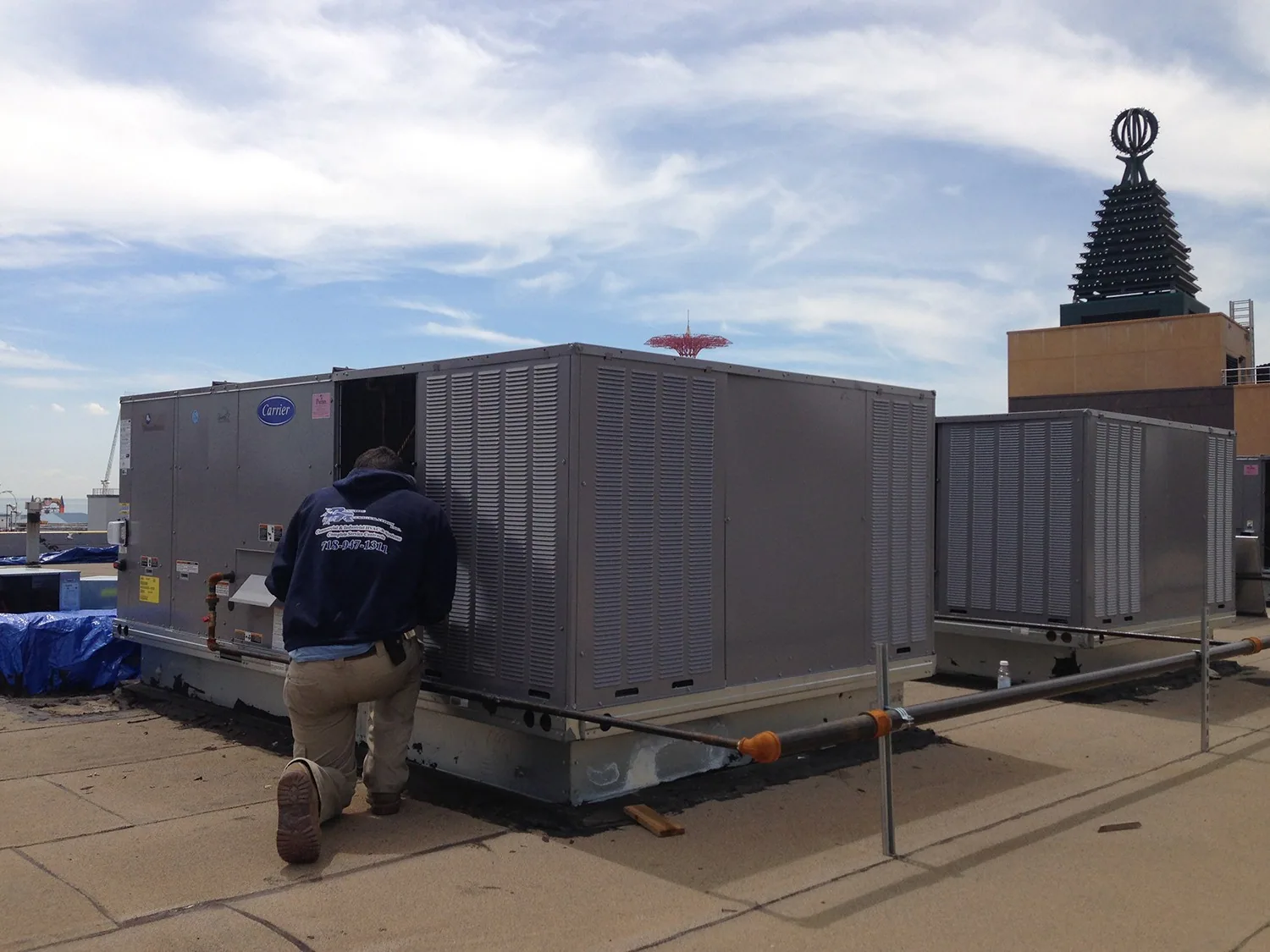
Penetrations also need details compatible with the panel's movement. We examine the relationship between the opening, the seam and the slope, then determine whether the flashing can be repaired or should be reconstructed. Large equipment openings often require more than a flexible seal around a pipe. For curb and equipment-support work, we consider how water moves past the obstruction and how the metal assembly changes dimension without pulling the water boundary apart.
Assess snow at the roof edge
A sloped metal surface can shed accumulated snow toward entrances, equipment or pedestrian routes. Quincy's blizzard preparedness makes that discharge relevant to the property assessment. We examine roof geometry and the areas below before recommending any retention arrangement. Snow-retention components need an appropriate attachment and design for the panel system and the loads involved. An improvised barrier can damage the roof or create a different hazard.
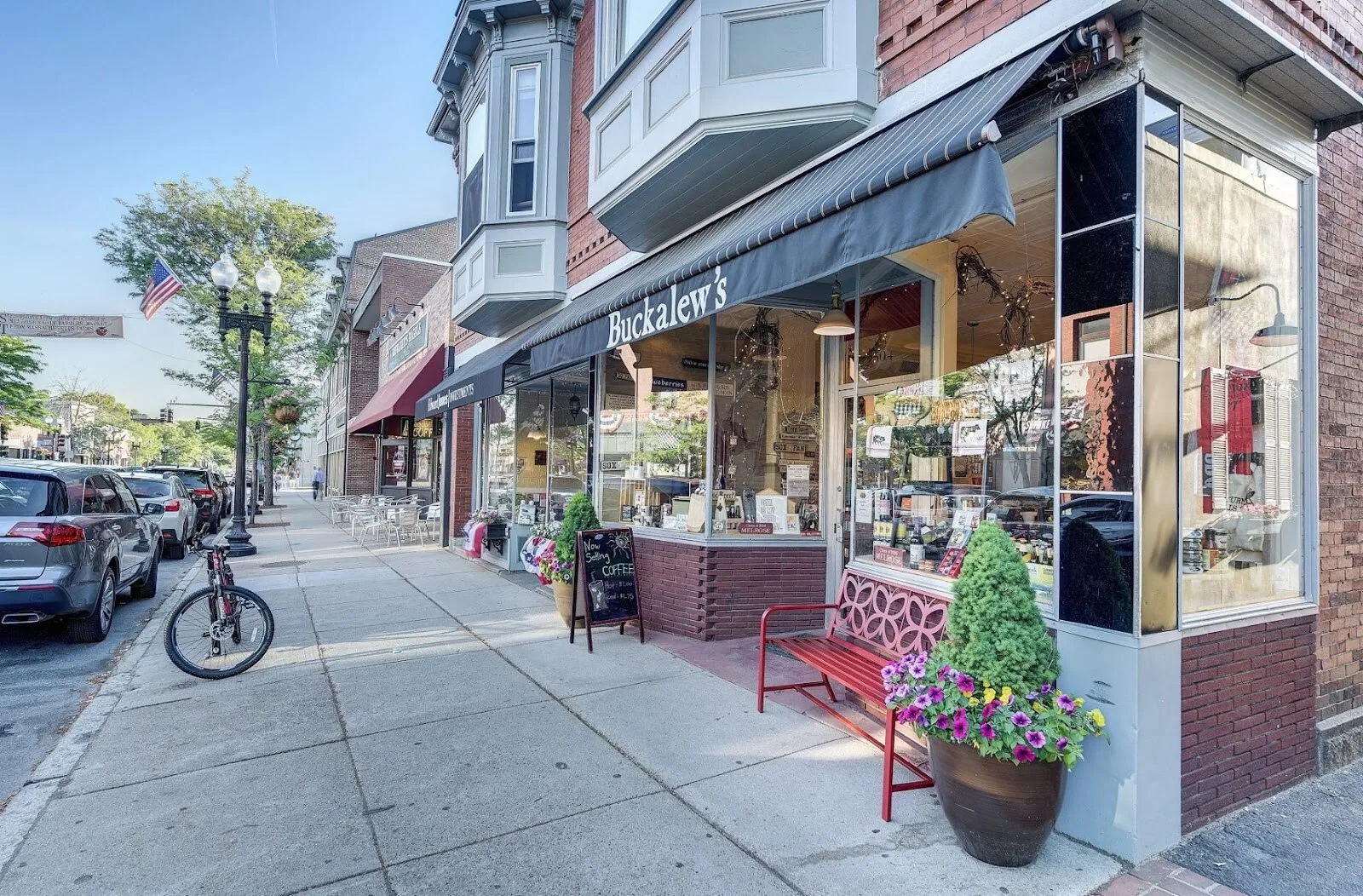
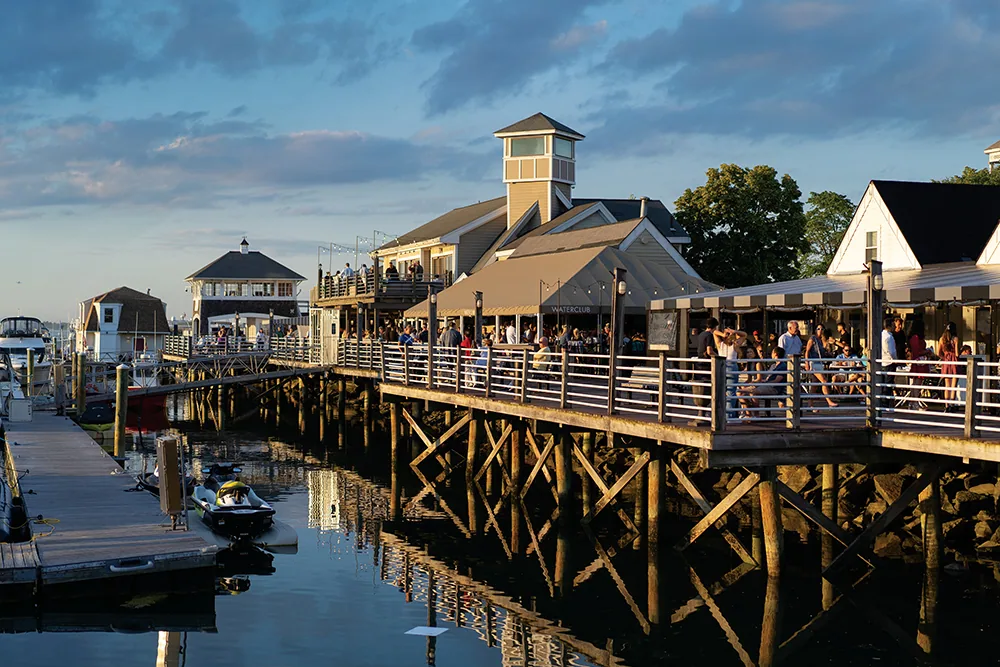
In Hingham, the business district includes retail and restaurants near the harbor. On commercial property with active public access, the roof's snow path deserves consideration alongside gutter condition and drainage. We assess the actual entrance arrangement, rather than assume a particular building has the same slope or discharge direction as its neighbor. Snow and ice damage repairs can include panel, flashing or drainage work, with related site protection addressed separately where needed.
Distinguish seams from transitions
A standing seam rises above the panel pan, but water can still enter through an unsuitable joint, damaged closure or poorly completed termination. We examine the profile and slope requirements of the installed system, along with the condition of seam engagement and any specified sealant. A roof that holds water beyond the arrangement's intended conditions needs a broader assessment. Surface sealing should not disguise a drainage or profile mismatch. We also inspect damaged seam areas after equipment servicing or foot traffic. A distorted joint may require restoration or panel replacement, depending on the profile and extent of damage, rather than pressure applied to its visible edge.
End laps, valleys, eaves and roof-to-wall transitions require their own examination. Debris in a valley can redirect water toward a connection that would otherwise drain freely. We assess the obstruction and detail together. A repair at the lowest visible drip point may miss the route higher on the slope. The scope should follow the failed connection and water path, including adjacent panel damage where the repair needs a sound receiving area.
Read coating damage with the substrate
Scratches, cut edges and incompatible metal contact can create localized deterioration even where the panel field remains intact. We examine surface damage and the underlying metal before deciding whether a protective repair is practical. Corrosion that has reduced the metal's integrity calls for a different scope from an isolated coating defect. Fasteners, clips and adjacent flashings also deserve attention because the panel face alone does not describe the assembly's remaining service.
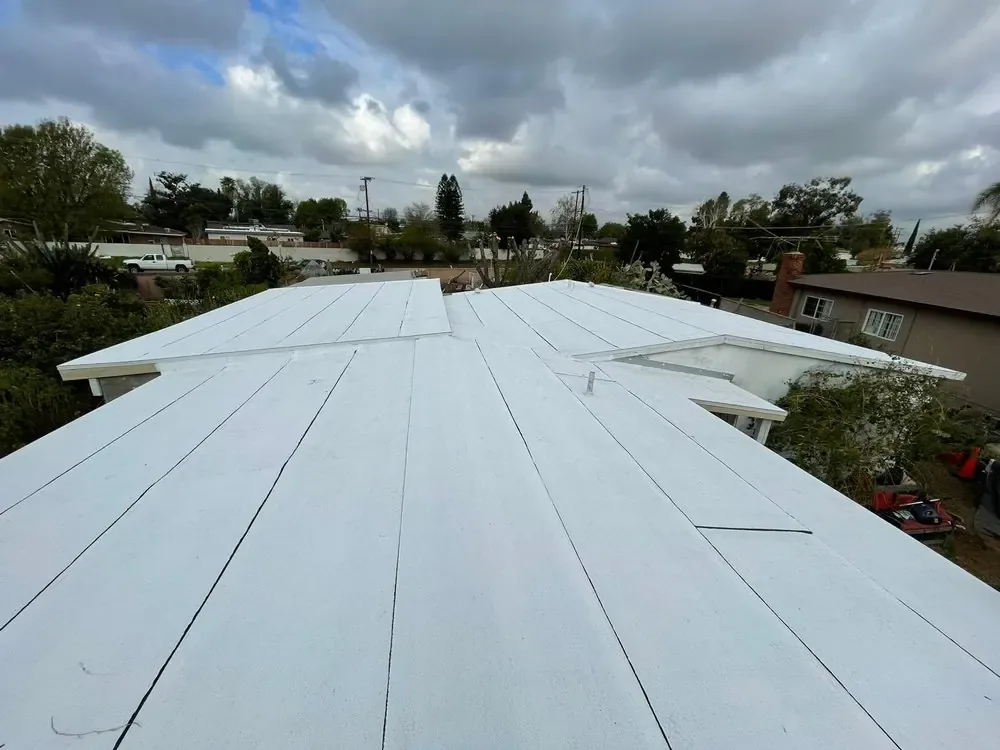
Marina Bay combines office, restaurant and residential activities near the water. We assess the property's actual exposure and material condition when considering metal roof work there, including any observed corrosion and the suitability of proposed metals. The named district is not a substitute for examining the roof. Owners can compare a low-slope membrane assembly where the building's geometry and renewal options make a different construction practical, with transitions and drainage considered in the same decision.
Check what the panels span
Loose support, damaged substrate or deficient attachment can change a panel replacement into a wider structural repair scope. We examine the receiving construction and investigate suspect areas before specifying new metal. Insulation and condensation control matter as well. Moisture beneath the panel may arise from interior vapor conditions or exterior entry, and those mechanisms require different corrections. Replacing the surface without distinguishing them can leave the underlying problem active.
For an asset in Hingham, we compare local repairs, panel replacement and broader renewal against the actual roof condition and interior use. A hands-on roof assessment identifies where joints can be restored and where deterioration has crossed the repair threshold. Panel length, delivery access, equipment openings and protection below affect the construction sequence. Those constraints should be included before the owner selects a renewal window.
Replacement details also need to account for existing wall junctions and edge geometry. A new panel profile may change the position of closures, gutters or flashing supports. We assess those interfaces rather than assume the old trim can be reused. The goal is an installed assembly with appropriate movement, secure attachment and a clear route for water, not a new panel field ending at worn or incompatible perimeter components.
Commercial Roofing Questions
Can repeated sealant failure mean the metal is moving incorrectly?
Movement is one condition we investigate. We examine clips, fixed connections, penetration details and the location of the failed seal. A material-compatible repair is useful only if the connection can accommodate the assembly's movement. Where the geometry or restraint is wrong, reconstructing the detail can be more appropriate than applying another surface seal.
Do we need snow retention above every entrance?
Roof slope, discharge direction, access use and the panel system determine the assessment. We examine the actual exposure and consider whether a designed retention arrangement or another site measure is suitable. Components should be attached and specified for the roof and loading conditions. Adding a barrier without that evaluation can damage panels or change how snow loads act on the assembly.
Should a rusty panel always be replaced?
The depth and location of deterioration matter. We examine whether the metal remains sound, whether the coating can be repaired and whether adjacent attachments or connections are affected. Perforation or significant loss of integrity can require replacement. A localized surface defect may support a more limited repair with appropriate preparation and compatible protection.
What distinguishes a panel leak from condensation below the roof?
We compare weather timing, interior conditions and the location of moisture with the panel joints and concealed construction. Exterior entry and condensation can occur together, so the investigation needs to address both possibilities. Insulation continuity, vapor control and interior air leakage may need attention alongside waterproofing. The repair recommendation should identify the mechanism it is intended to correct.