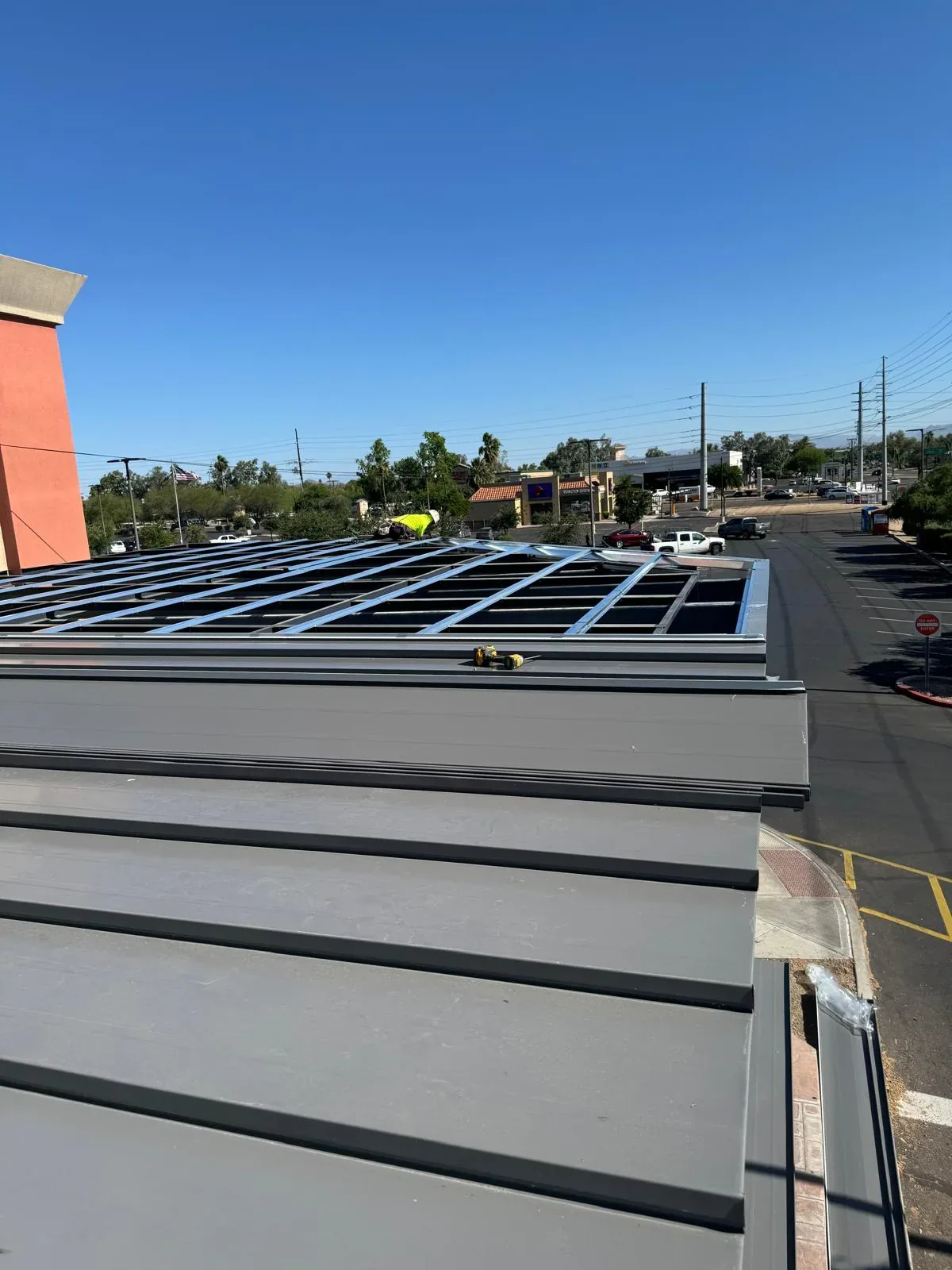
Metal Roof Retrofit in Quincy, MA
Alternating frozen and sun-warmed metal can work an exposed fastener against its sealing washer until a narrow opening develops. On a Quincy, MA, property, that mechanism can support a retrofit investigation while the panel field still has useful service. We examine the fasteners, panel laps, corrosion and supporting construction before choosing a coating or a new assembly over the metal. A retrofit should retain sound components and correct specific weaknesses. It should not make degraded metal harder to examine.
Our assessment distinguishes exposed-fastener panel repairs from a change to the roof's complete water boundary. Some roofs can receive a compatible restoration system after repairs and preparation. Others may support a properly designed membrane recover. Where the metal or supports have deteriorated too far, replacement can be the more appropriate construction decision. Standing seam roof construction is another option to assess where panel renewal suits the building.
Resolve the hole and its support
A backed-out screw is not necessarily corrected by driving it farther into a damaged hole. We examine the panel, washer and receiving support to determine why the connection loosened. Enlarged holes, deteriorated substrate or inappropriate fastening can require a different repair. The replacement component should provide suitable holding and sealing without distorting the panel. Overtightening can damage the washer and the surrounding metal, leaving another vulnerable connection.
Laps deserve attention alongside fasteners. We inspect seal condition, movement and the arrangement that directs water across the joint. A repair system may require reinforcement at selected connections before the field coating is applied. That treatment needs to follow the product and roof requirements. A coating spread uniformly across unrepaired openings can leave the weakest details dependent on insufficient material or an unsuitable receiving surface.
Establish what can carry the retrofit
Corrosion with visible section loss changes the retained value of a panel. We examine deteriorated areas, purlins or other supports and any indication that the construction cannot provide a suitable base for new work. A restoration coating is not a structural repair. Adding boards, insulation or membrane also changes the loading and attachment demands. Those demands need to be assessed before the owner commits to retaining the metal.
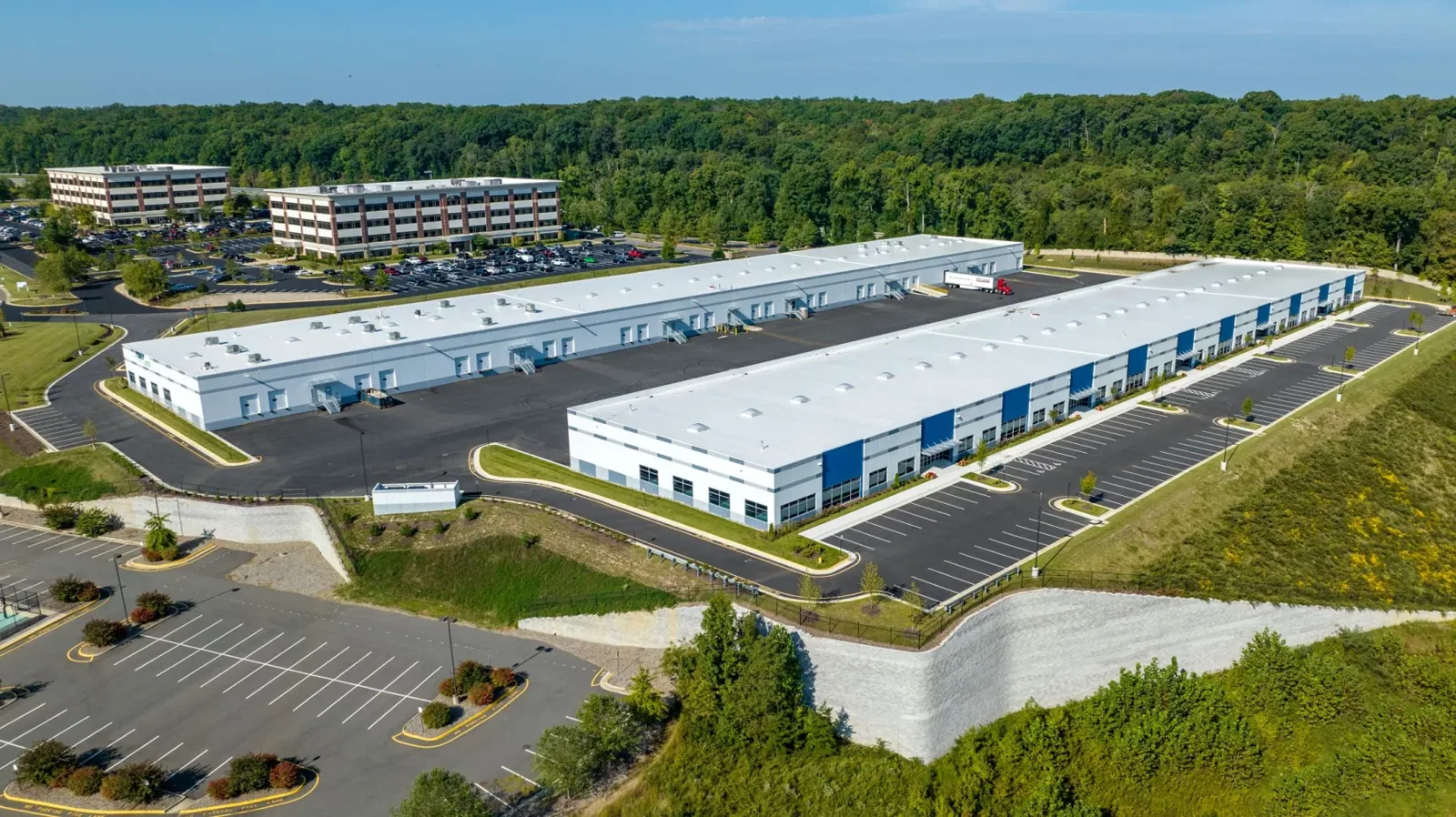
Hanover has industrial locations including Circuit Street, Winslow Crossing and King Street Industrial Park. Industrial property can include different building configurations and operating demands within those areas. We examine the actual support arrangement and roof use when assessing flex-industrial roof work. The proposed retrofit must provide a suitable attachment path and stable receiving surface, with damaged metal or supporting construction repaired where needed. A business-park setting alone cannot decide the assembly.
Prepare before restoring the surface
Loose finish, rust, oils and incompatible previous repairs can interfere with coating adhesion. We examine and prepare the roof before selecting a compatible system, using adhesion checks and primers where the chosen product requires them. The preparation scope can be substantial on a badly weathered surface. It belongs in the comparison. A thin field application over unresolved corrosion or failed lap treatment does not provide an equivalent repair to a properly prepared restoration.
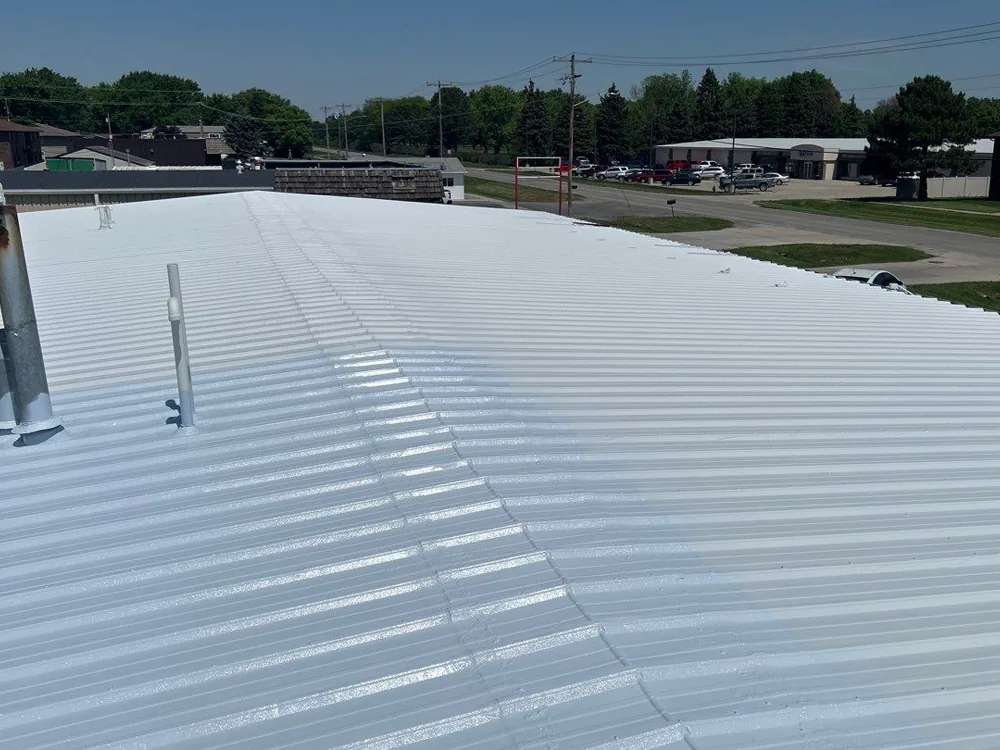
We compare silicone restoration systems and acrylic coating options against the substrate, water exposure and maintenance needs. Product requirements govern their suitability. Seams, fasteners and penetrations may need separate reinforced treatment before field application. We also evaluate drainage, because a coating choice should not be used to excuse a water-holding condition that calls for a geometry or outlet correction.
Separate the new water boundary
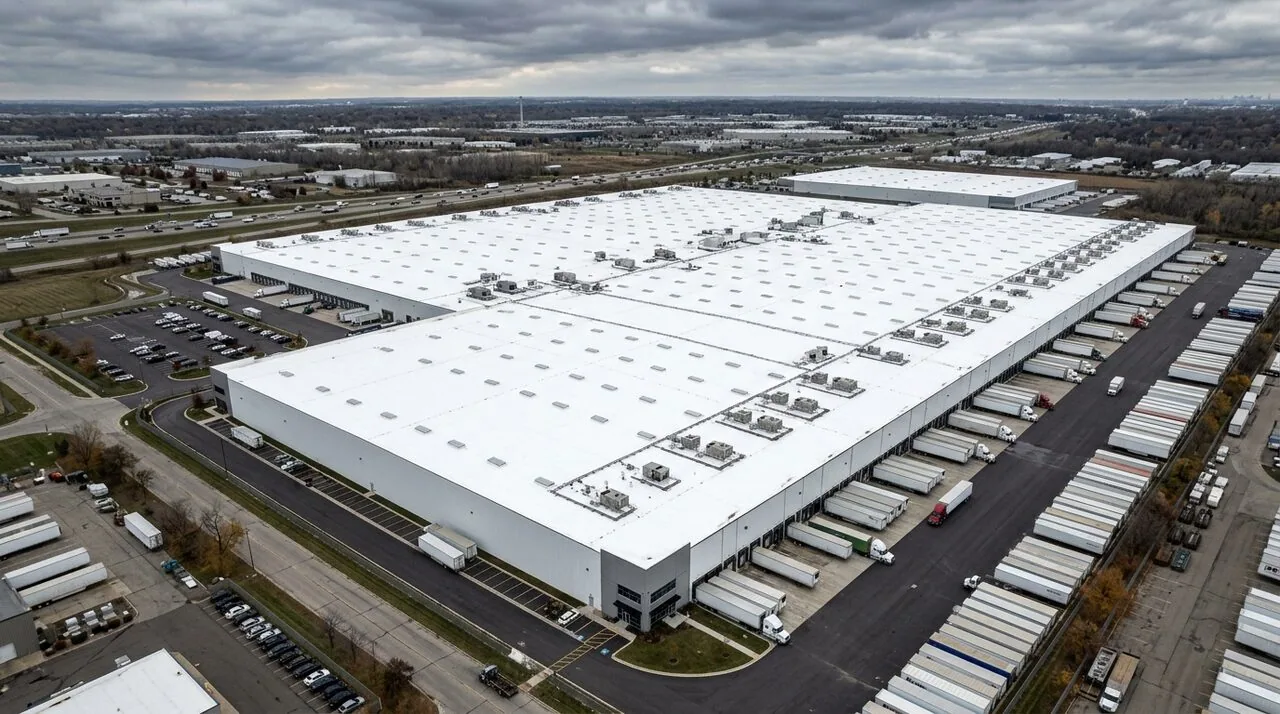
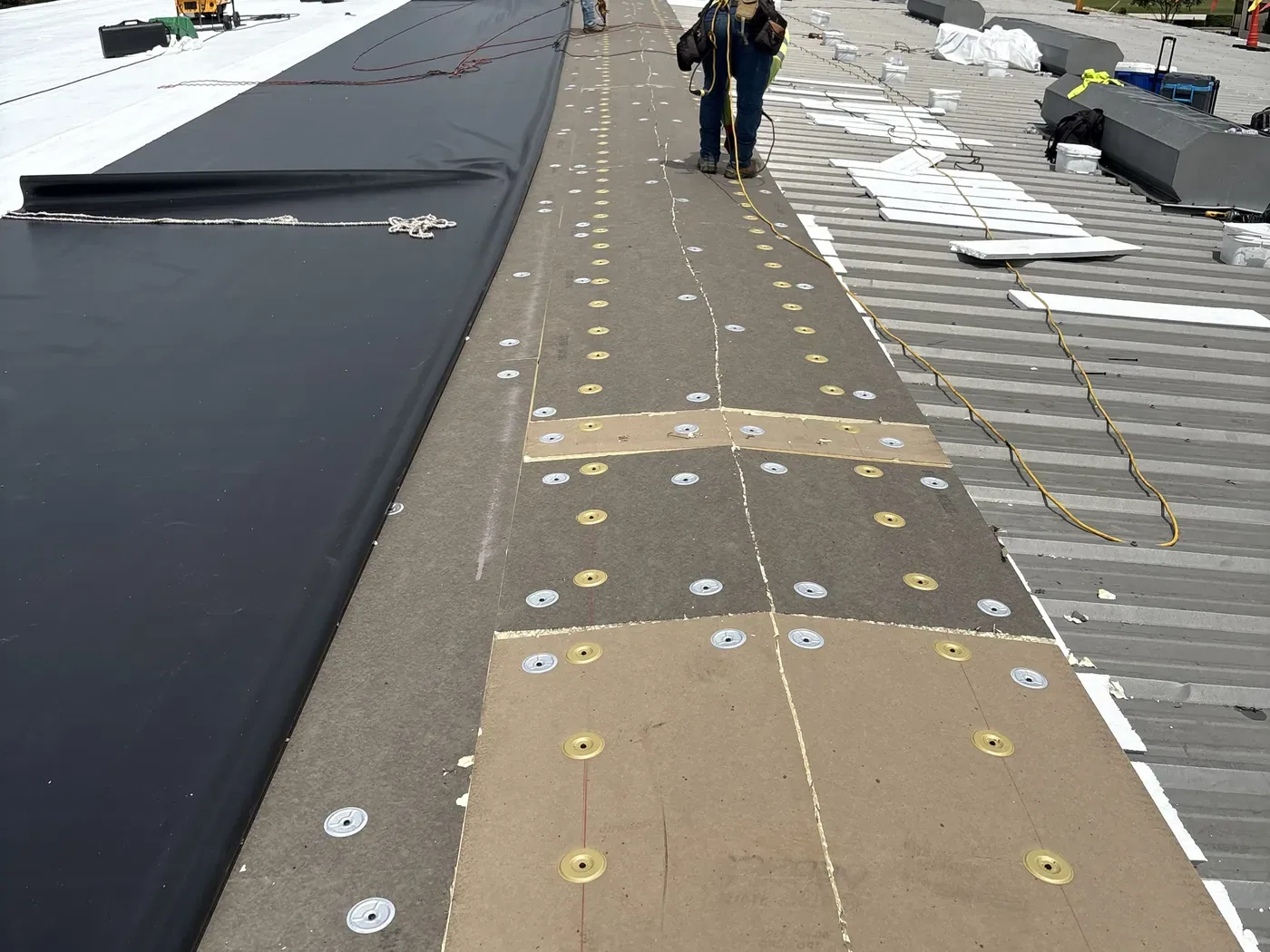
A membrane recover over metal changes the assembly more than a surface restoration does. Flute filling, suitable boards, insulation and attachment may be required to create a stable plane. We assess those components and the supporting construction together. The new membrane must finish at properly rebuilt edges, drains and penetrations. Simply covering panel corrugations does not create a complete low-slope roof detail.
Winter meltwater can reveal pockets created by poorly planned transitions. Quincy identifies blizzards and nor'easters among its preparedness concerns, making those flow routes relevant to the retrofit assessment. We compare the proposed roof plane with the existing slope and outlets before selecting a retained-roof recover. Increased roof elevation can affect curb and perimeter heights. Those changes should be resolved in the construction scope before material is placed over the panels.
Check both sides of the metal
Water below a metal roof can result from exterior entry, condensation or both. We assess weather timing, insulation condition and interior moisture conditions alongside the panel joints. A retrofit that seals exterior openings may leave condensation active if air leakage or deficient vapor control remains unresolved. Conversely, treating every drip as condensation can overlook failed washers or damaged flashings. The investigation needs to distinguish the mechanisms before selecting the construction.
Brockton's industrial areas include Coweeset Brook and Oak Hill Way, with regional road connections supporting varied businesses. For an operating industrial property there, we relate the roof investigation to the actual process and interior conditions rather than assume that its neighbor presents the same moisture demand. In Hanover and across the wider service area, insulation and interior use can determine whether a coating, recover or replacement addresses the full problem.
Compare the work each option leaves
A useful retrofit comparison identifies retained panels, repaired fasteners, corrosion removal, replacement areas and reconstructed transitions. It also explains any concealed material being retained and the reason it remains suitable. We separate preparation from field application so the owner can see the physical work behind the proposal. Access restrictions, equipment clearances and protection below affect the renewal sequence, particularly where the building remains operational.
Repair frequency and the distribution of defects influence the repair threshold. A limited group of failed fasteners on sound panels can justify focused work. Widespread deterioration and unreliable supports can make repeated repair less useful. We explain that distinction without forecasting savings or assigning a service life unsupported by the condition. The decision should follow the components that can still perform and the components that need to leave the roof.
Commercial Roofing Questions
Can coating correct loose exposed fasteners?
Fasteners need a suitable repair before coating. We examine the hole, washer and receiving support, then select a correction that restores holding and sealing. Detail reinforcement may accompany the coating system, but it does not replace the mechanical connection. Leaving an unstable fastener beneath new material can preserve movement that damages the treatment.
When is a membrane recover different from metal restoration?
A recover creates a new roof assembly over retained construction, often with filling, boards or insulation and a separate attachment design. Restoration treats a suitable existing metal surface after repairs and preparation. We compare the actual retained condition, drainage and transitions for each approach. They should not be priced or assessed as interchangeable versions of the same surface work.
Does underside dripping mean the panels must be replaced?
The cause needs investigation before that decision. Exterior leaks, condensation and wet retained materials can produce similar interior symptoms. We examine the connections and interior conditions to establish the mechanism. Replacement may be appropriate for deteriorated panels, while condensation can require insulation, air-control or ventilation-related corrections beyond panel work.
What makes an existing metal roof unsuitable for coating?
Significant corrosion, unstable panels, poor adhesion conditions or unresolved structural problems can prevent a useful restoration scope. We assess whether those conditions can be repaired and whether the selected coating can bond to the prepared surface. Where too much of the construction is unsuitable to retain, panel replacement or a different complete assembly warrants comparison.