Commercial Roofing in Hanover, MA
Hanover's industrial districts include Circuit Street-Winslow Crossing and King Street Industrial Park, while Route 3 connections use Routes 53 and 228. These local links help organize access, not diagnose a roof. We inspect the assembly, water path and transitions at each property, then relate those findings to its loading and operating schedule. A manager receives a distinct repair boundary, testing questions and renewal option, with no roof condition inferred from the industrial listing or the route to the building.
Use the Employment Districts Carefully
Circuit Street-Winslow Crossing and King Street Industrial Park are separate employment areas. A site team can group appointments around those districts, but the report has to describe one inspected assembly at a time. We identify roof material, layer transitions, seams, outlets, edge details and prior patches directly. A business park listing does not show the installation at a particular warehouse or office. Once the entry point is found, a leak repair can be bounded to that condition.
Route 3 access from the districts uses Routes 53 and 228. We confirm the exact property entrance and delivery rules before deciding how materials will reach a loading zone or roof hatch. If a shared drive serves several businesses, the owner clarifies where a lift can set and how traffic must pass. The work plan then labels a staging area and barrier line so the route stays clear during roofing activity.
Investigate the Reported Leak
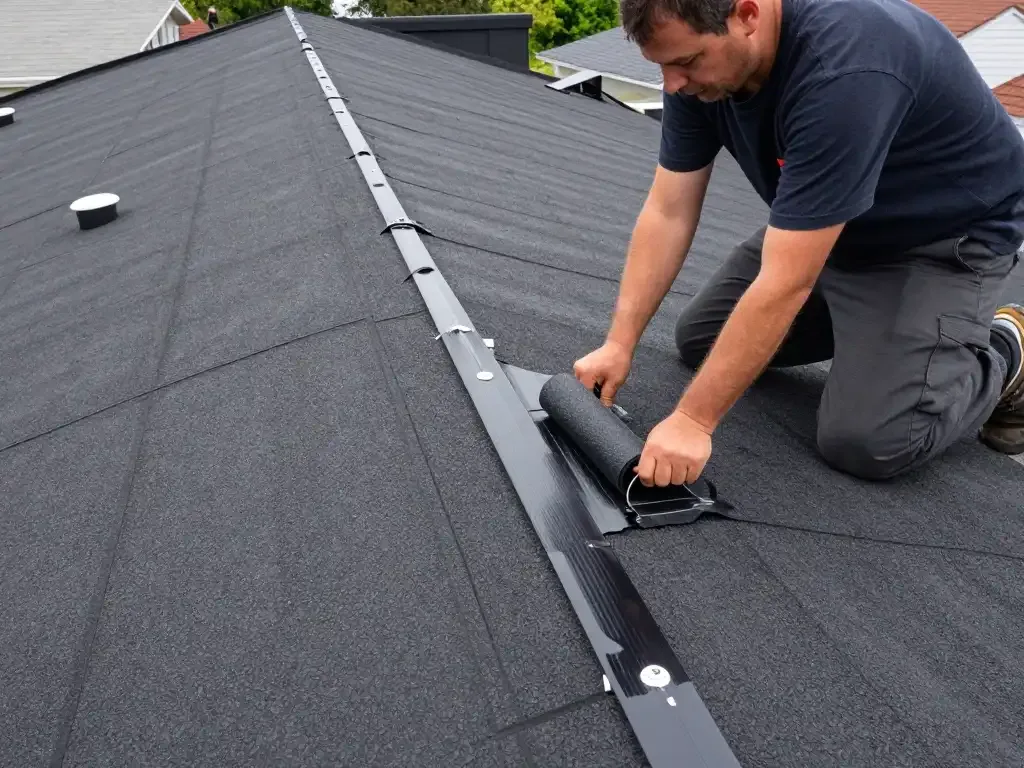
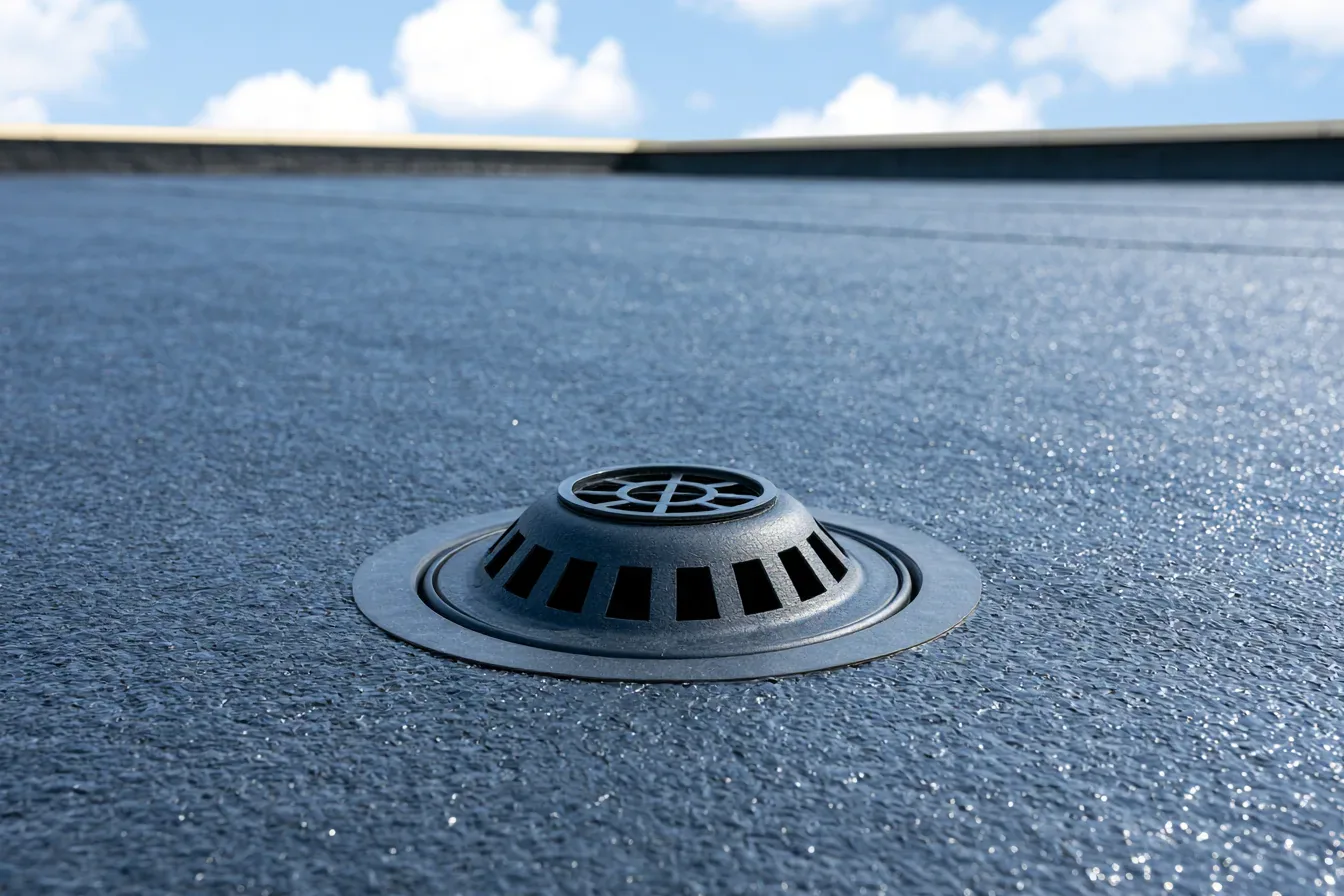
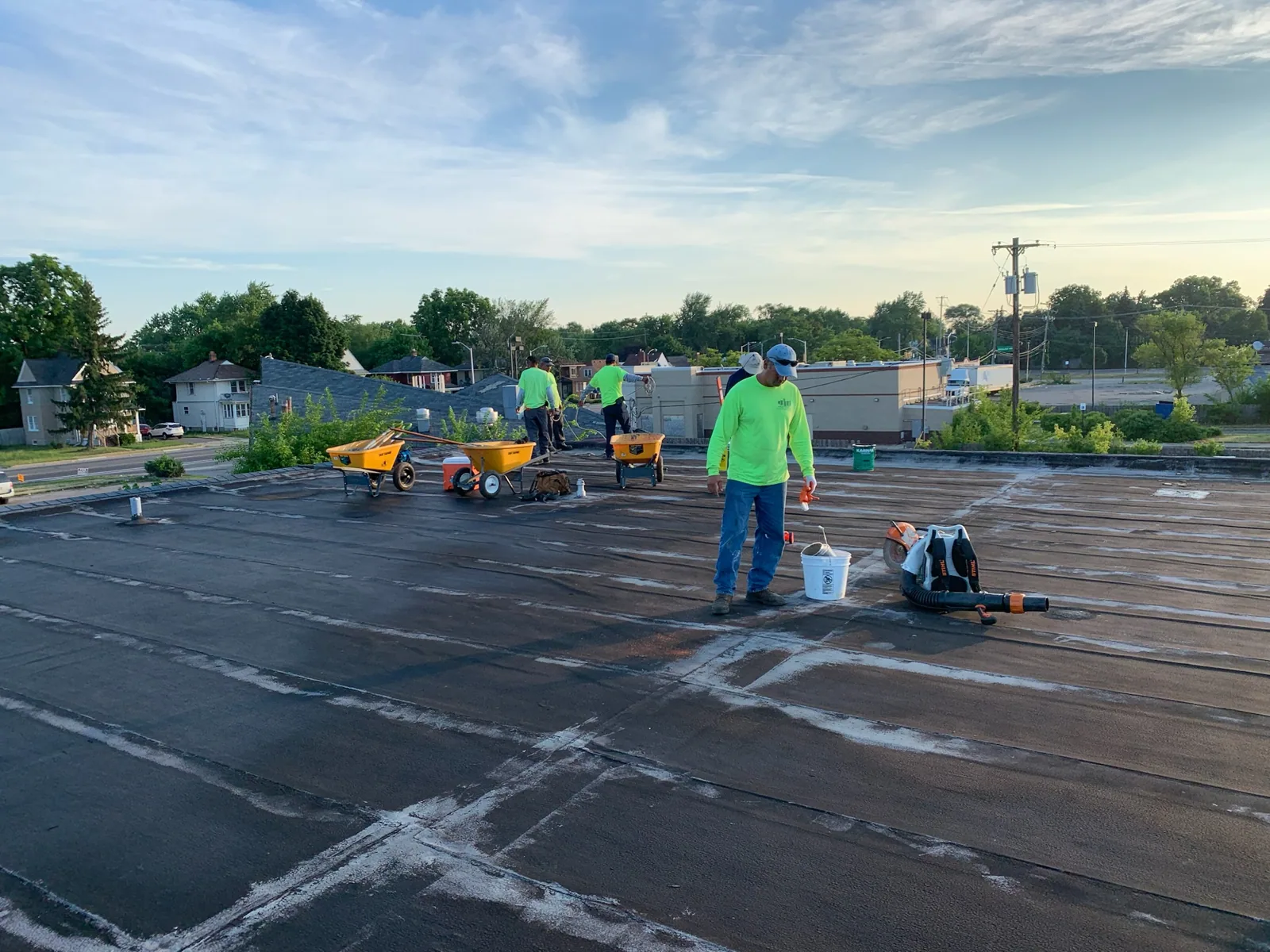
Interior evidence is useful when paired with a roof-side inspection. We compare the reported location with drains, wall transitions, equipment curbs, seams and fastener rows. The entry point may be offset from where water becomes visible below. We mark a confirmed opening separately from suspected moisture so a localized repair does not become an unsupported area allowance. A failed outlet may call for a drain correction as a separate line item.
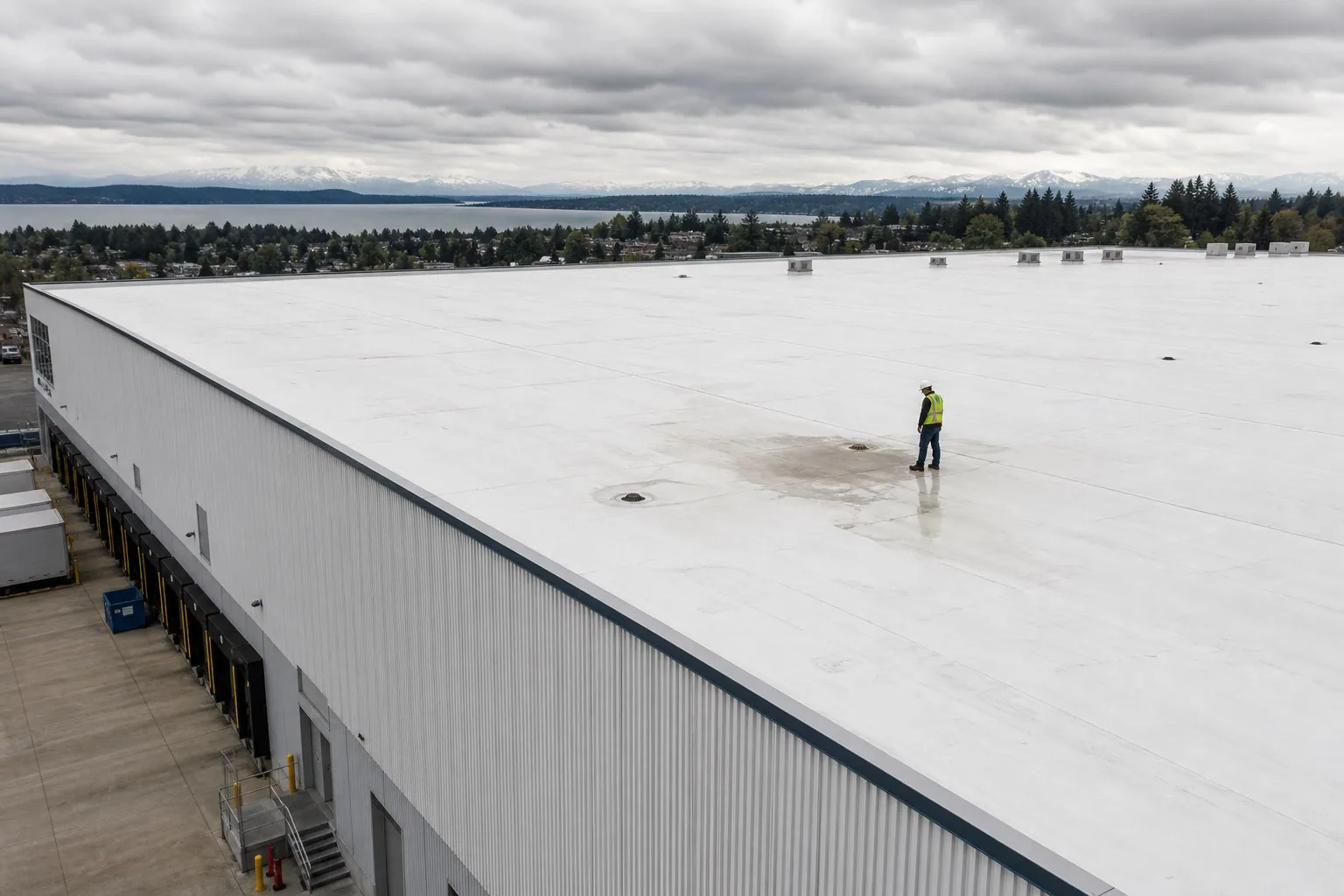
Where a warehouse roof has multiple sections, slope can carry water to a drain far from the point where the leak appears. We trace the route and check whether a strainer, bowl or overflow is obstructed. If a broader pattern remains possible, thermal survey or selective opening can confirm the extent. The scope states what the next test would answer and whether that answer changes immediate water control or a future capital decision.
Coordinate Production and Deliveries
Industrial operations can depend on receiving schedules and equipment that cannot be moved casually. We ask about truck windows, production periods, and the route between the loading area and roof access. Barriers and interior protection are placed before removal begins. If the plan involves several days, each day's work area is sized so open sections can be closed before the crew leaves or weather conditions shift. occupied-building reroofing can account for tenant route and end-of-day protection.
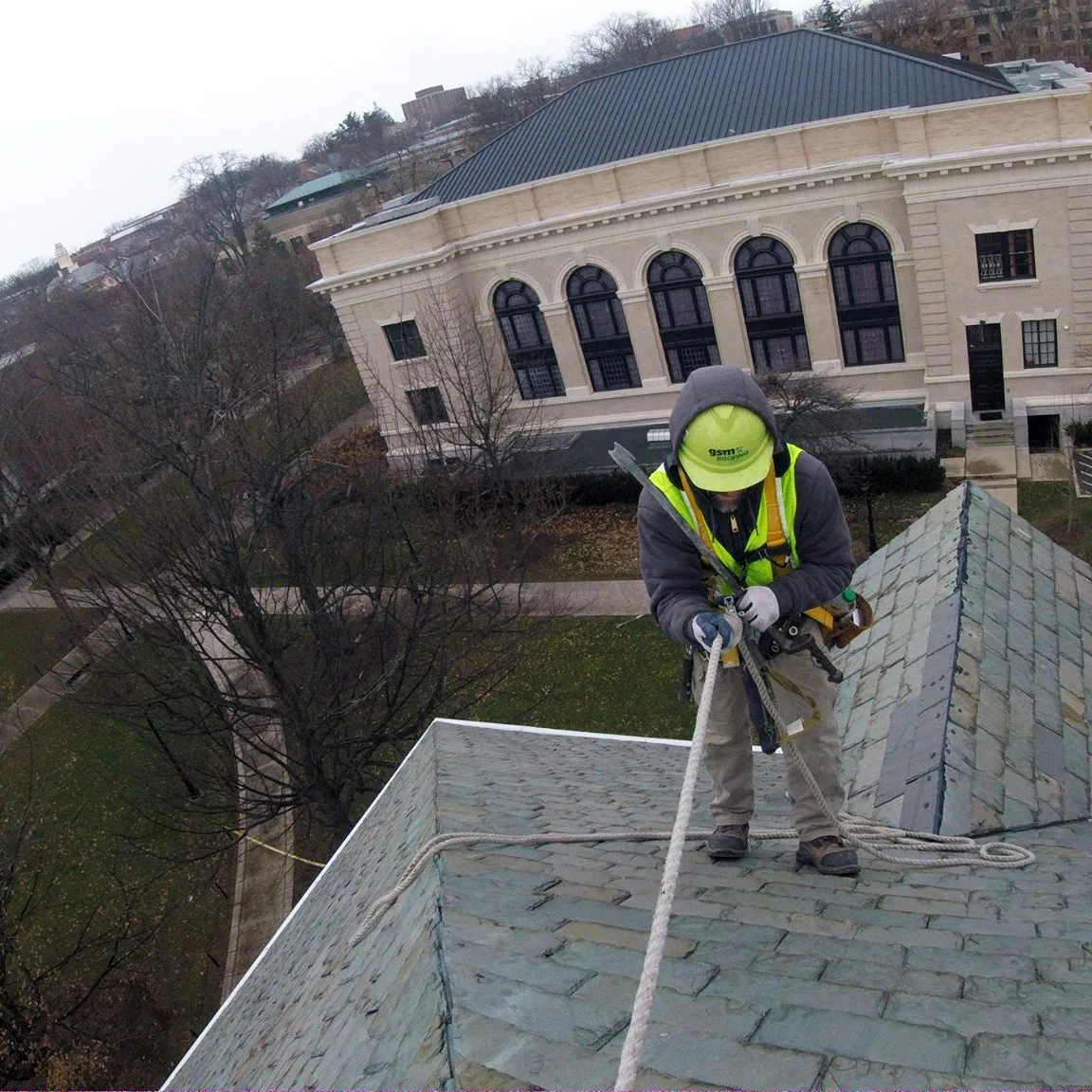
Roof penetrations may cross mechanical systems, electrical lines or exhaust service paths. We photograph current details and flag where a trade needs to isolate a unit or approve a support. This prevents an unplanned stop after the membrane has been removed. For occupied buildings, a phased sequence can preserve access, but the actual condition, weather window and approved routes control how much roof can be opened at once.
Set Scope by Assembly
A single puncture on sound membrane may be repaired. Repeated seam failure or moisture below a larger field changes the comparison. We explain what inspection confirms, what evidence is missing and whether a test would define the repair edge. Each action is tied to the actual roof and avoids treating building size or industrial use as a proxy for deterioration. The capital review can compare recover feasibility with commercial replacement' against the layers documented at the roof.
Recover feasibility turns on layer count, moisture, deck stability, drainage and final height. Replacement removes more material but allows review of the deck and insulation. Coatings require a compatible surface and do not repair a trapped-water condition. We compare each method's access needs, substrate preparation and weather protection, then show the manager which choice fits the current condition and which question still needs resolution.
Carry Findings Into Renewal
A condition report should help a facility manager authorize work and preserve the reason for it. We label each roof area, attach photographs to the detail and rank service priority. A later check can revisit the same seam, drain or curb to see whether a repair remains intact. Unresolved moisture remains an open test item rather than a condition assumed to continue across the building. capital planning can sequence separate service priorities.
Properties in Circuit Street-Winslow Crossing can be compared with those at King Street Industrial Park using common record fields. The report still keeps each access path and assembly independent. When the owner reviews several buildings, the record can place near-term repair beside a later renewal window without blending them into one project. A future inspection can compare evidence and update the remaining-service view when a real change appears. Nearby Pembroke and Braintree may share record fields, not roof assumptions.
At a site with several roof sections, we label the work by building and zone rather than describing the property as one surface. That makes it easier to match a ceiling report to the correct area and avoid extending a repair across a separation that has not been inspected. A manager can approve one confirmed correction while holding a second zone for testing. Where equipment penetrates both areas, we identify the trade coordination needed before choosing how to sequence the work.
A facility with a recurring leak may also need a review of its past patches. We photograph the edges of each repair, check whether material remains bonded and look for movement, moisture or contamination that could explain a repeat failure. The next repair should respond to that cause when the inspection supports one. If the evidence points to concealed wet insulation, a selective opening can establish its extent. If the roof stays dry and the patch is sound, the report records that result without inflating the renewal scope.
Before a budget review closes, we can summarize which field observations changed since the prior visit and which areas stayed stable. The manager then has a concise basis for setting an inspection interval or advancing a larger scope. It is the dated roof evidence, not a nearby employment listing, that supports that next step.
Commercial Roofing Questions
Can route access through 53 or 228 establish a staging area?
The roads help locate the districts, but a site contact approves the loading zone, shared drive and roof entry. We confirm the route for the specific property before delivery and keep those logistics separate from the assembly and condition findings.
How do you keep production running during repair?
We confirm production periods, receiving windows, equipment dependencies and access paths with the facility representative. Those details inform barriers and phased removal. Each opened roof area must have a weather closure plan before work shifts to another zone.
When is a repair too small for the problem?
A localized patch fits a confirmed defect where the surrounding membrane and substrate remain sound. Recurring seam openings, multiple leak paths or wet insulation found during testing can justify broader work. The report identifies the evidence and any test that would establish the repair boundary.
What should go into a roof renewal record?
The record needs a roof-zone label, photographs, observed condition, owner-supplied leak history and next action. It should identify what is confirmed and what remains unresolved. That lets a later reviewer compare the same detail and sequence repair or testing without relying on a prior manager's memory.