Acrylic Roof Coatings in Quincy, MA
Cool evenings with heavy dew can shorten the useful curing period for a water-based acrylic application even after a dry afternoon. On a Quincy, MA, roof, the restoration schedule needs to account for that period and the selected product's requirements. We assess the receiving surface and forecast conditions before opening the application area. A coating choice includes how the material will reach its intended finished condition, not just how the roof will look once it has dried.
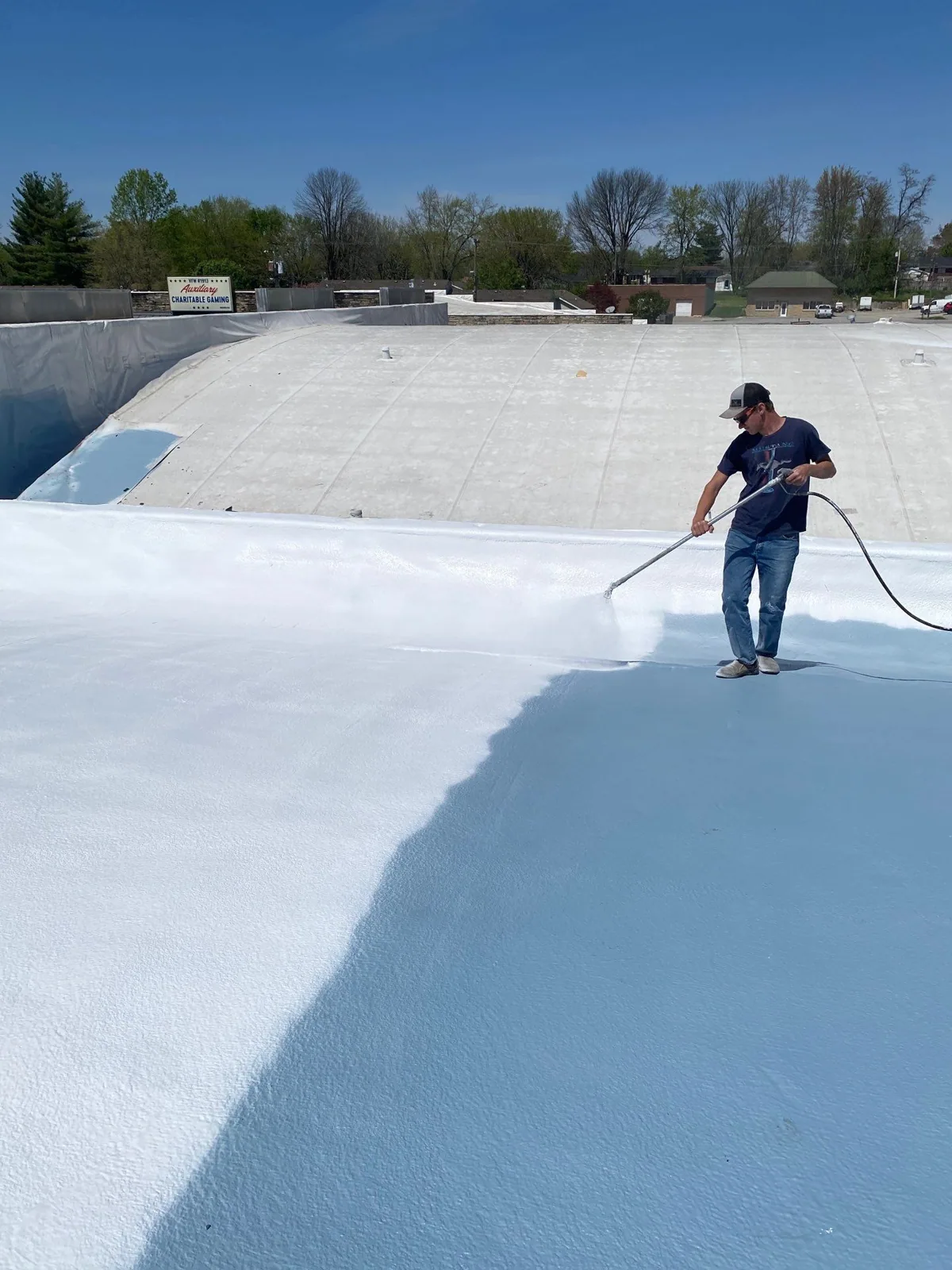
Acrylic systems can provide a protective reflective surface over suitable existing construction, with preparation and detail treatment appropriate to the roof. We compare that opportunity against concealed moisture, drainage and operating exposure. Quincy's winter storms make freely draining outlets and serviceable flashings relevant long after the application season ends. Owners evaluating a different treatment can compare silicone coating construction against the particular substrate and water conditions.
Reserve time after application
A surface that becomes wet before the coating has developed the required condition can compromise the application. We evaluate temperature, moisture and anticipated precipitation alongside the product's requirements. Wind and rooftop exposure also matter during placement. The work boundary should allow suitable preparation, application and curing, rather than assume the roof can be opened and coated solely because the morning is dry. Timing is part of the technical scope.
Multiple application stages may be needed to achieve the specified treatment. We account for the interval between them and the condition of the receiving surface before the next stage. A rushed second application over unsuitable material can leave a poor result hidden beneath a complete-looking finish. We also protect air intakes and adjacent property as required by the actual work. The occupied asset's equipment needs a workable arrangement while surface preparation and coating proceed.
Remove the weak receiving layer
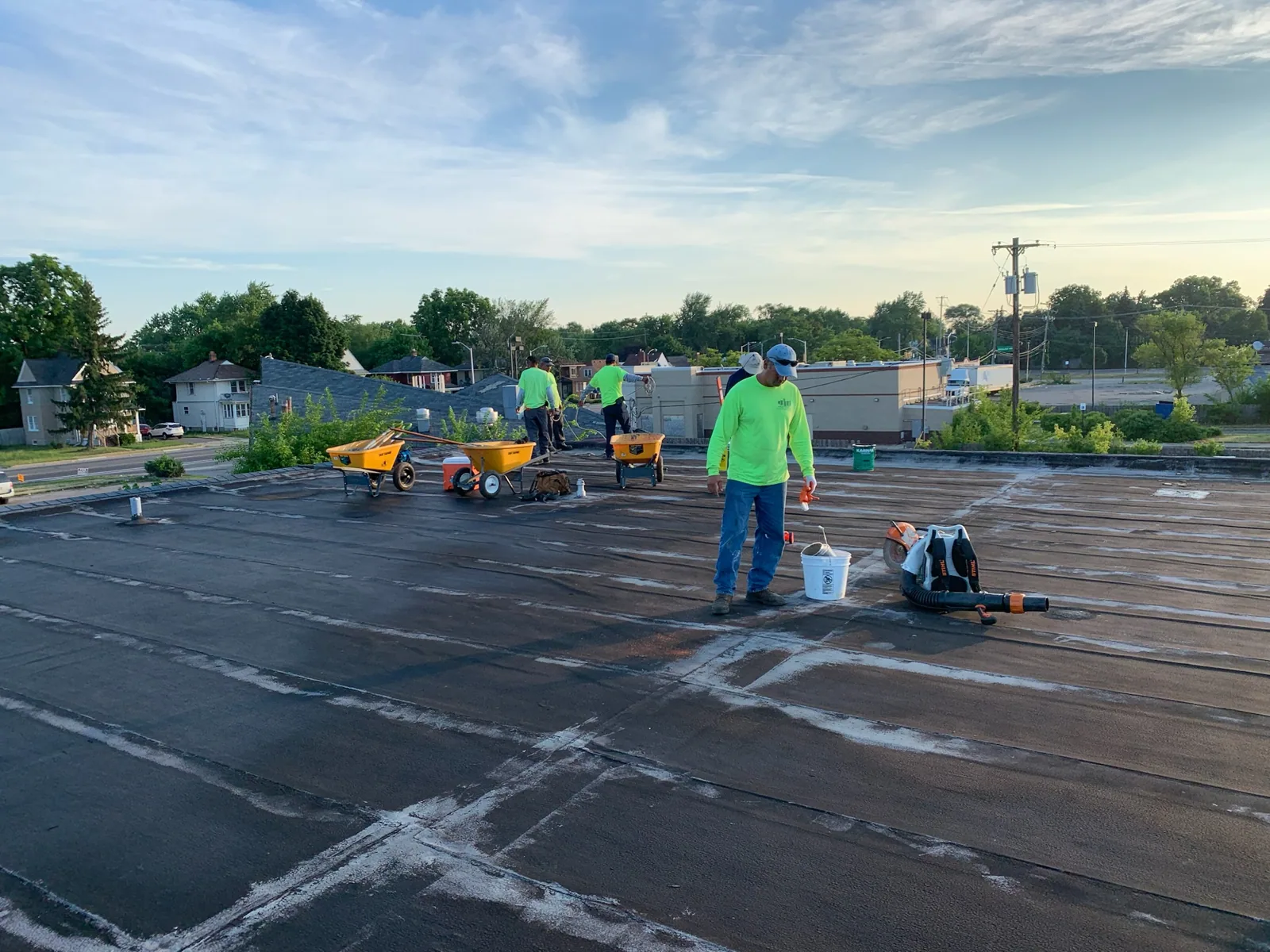
Chalking finish, loose coating and embedded dirt can interfere with the bond of a new system. We examine the surface before deciding what cleaning, removal and priming are needed. Preparation should leave a suitable receiving layer, not simply a visibly brighter one. Adhesion checks help assess the proposed materials on the actual roof. Old patches and sealants may need different treatment from the broad field, particularly where the previous repair material is incompatible.
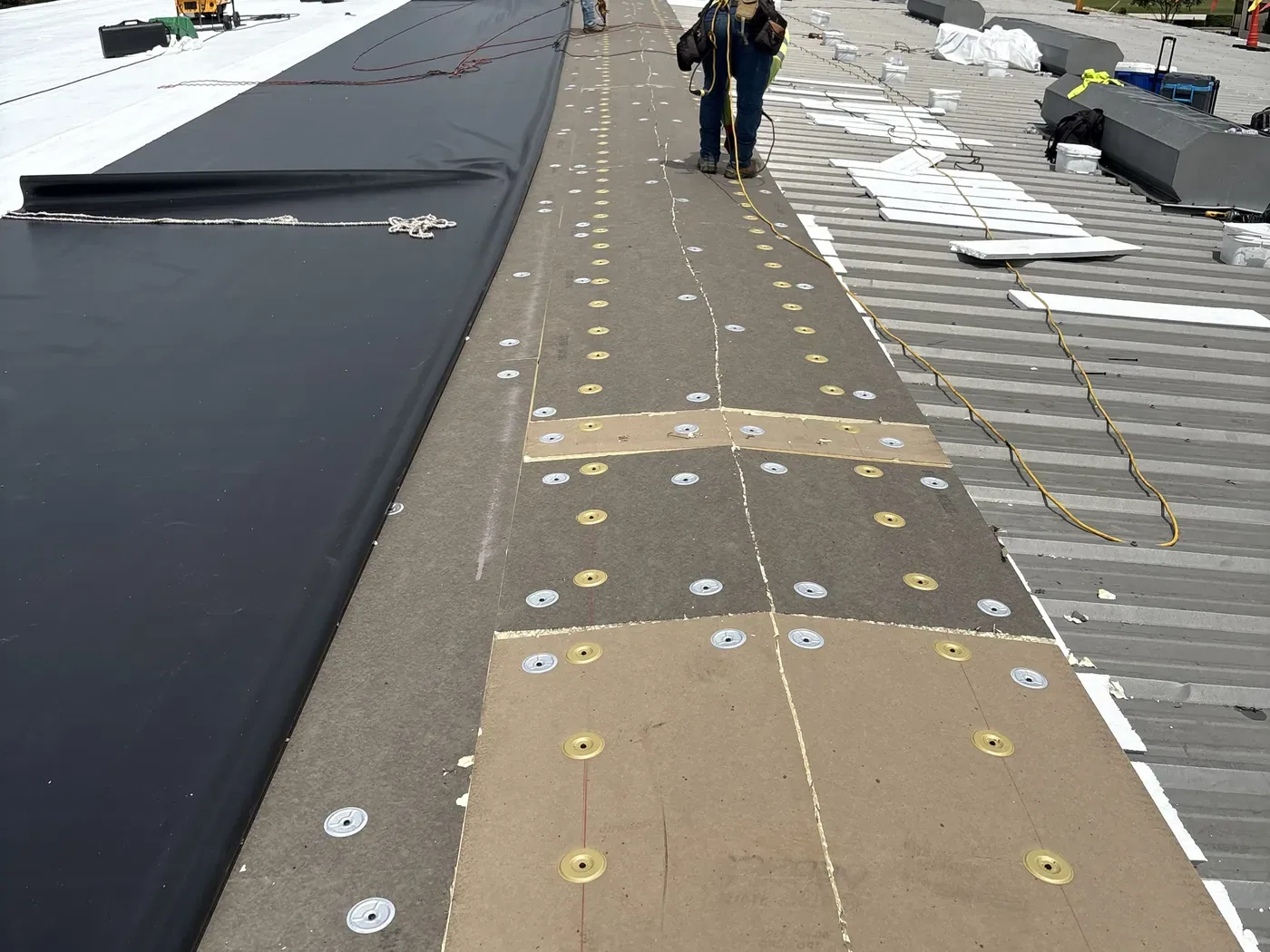
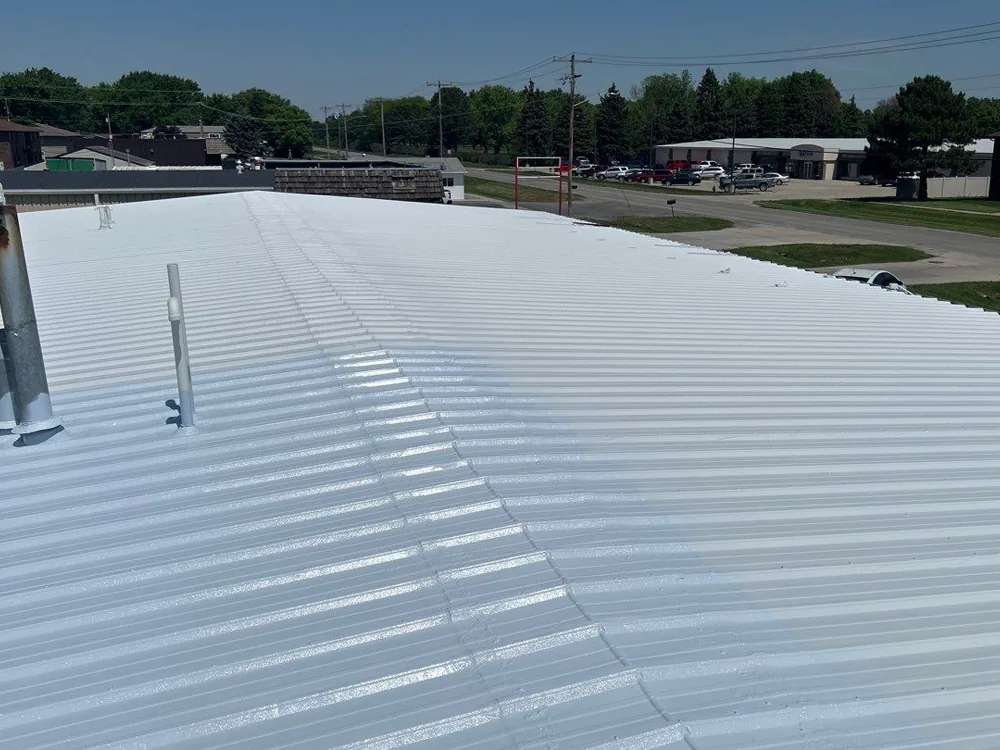
A weathered metal panel can also require corrosion repairs and suitable preparation before coating. We separate those tasks from field application so their extent is clear. For restoration of existing metal roofing, loose fasteners and deteriorated laps need appropriate corrections as well. A protective finish cannot provide structural holding at a damaged fastener or replace metal that has lost its integrity.
Give connections their required treatment
A narrow crack at a flashing transition can concentrate movement beyond what a simple field layer is intended to accommodate. We assess the joint and determine the repair and reinforcement required by the selected system. The receiving material should remain sound and securely attached. Applying more coating to an unstable detail can preserve the movement that caused failure. Some connections need reconstruction before they are suitable for restoration.
We examine seams, drain areas and penetrations separately because their geometry and exposure differ. A complete roof restoration includes the repairs needed at those details, with application requirements that suit both the field and transitions. The owner should be able to identify which connections are repaired, which are reinforced and which are replaced. Those distinctions affect whether the new surface provides useful remaining service.
Match restoration to the occupied roof
Milton has commercial activity in Milton Village and East Milton Square, with educational institutions that include Milton Academy and Curry College. Roof work above a classroom, shop or occupied office presents different protection and scheduling demands. We assess the actual room use and equipment operation before selecting the daily work area. The local setting helps identify operating questions, while the roof's condition determines the appropriate treatment.
Stoughton Technology Center combines office, commercial, retail, restaurant and housing uses. On a mixed-use property, a restoration plan may need to account for several activities beneath one roof. We examine tenant interfaces and air-intake requirements alongside application conditions. For work in Milton, the scope should identify how those needs are maintained through preparation and curing, not simply describe the finished coating color.
Correct persistent water exposure
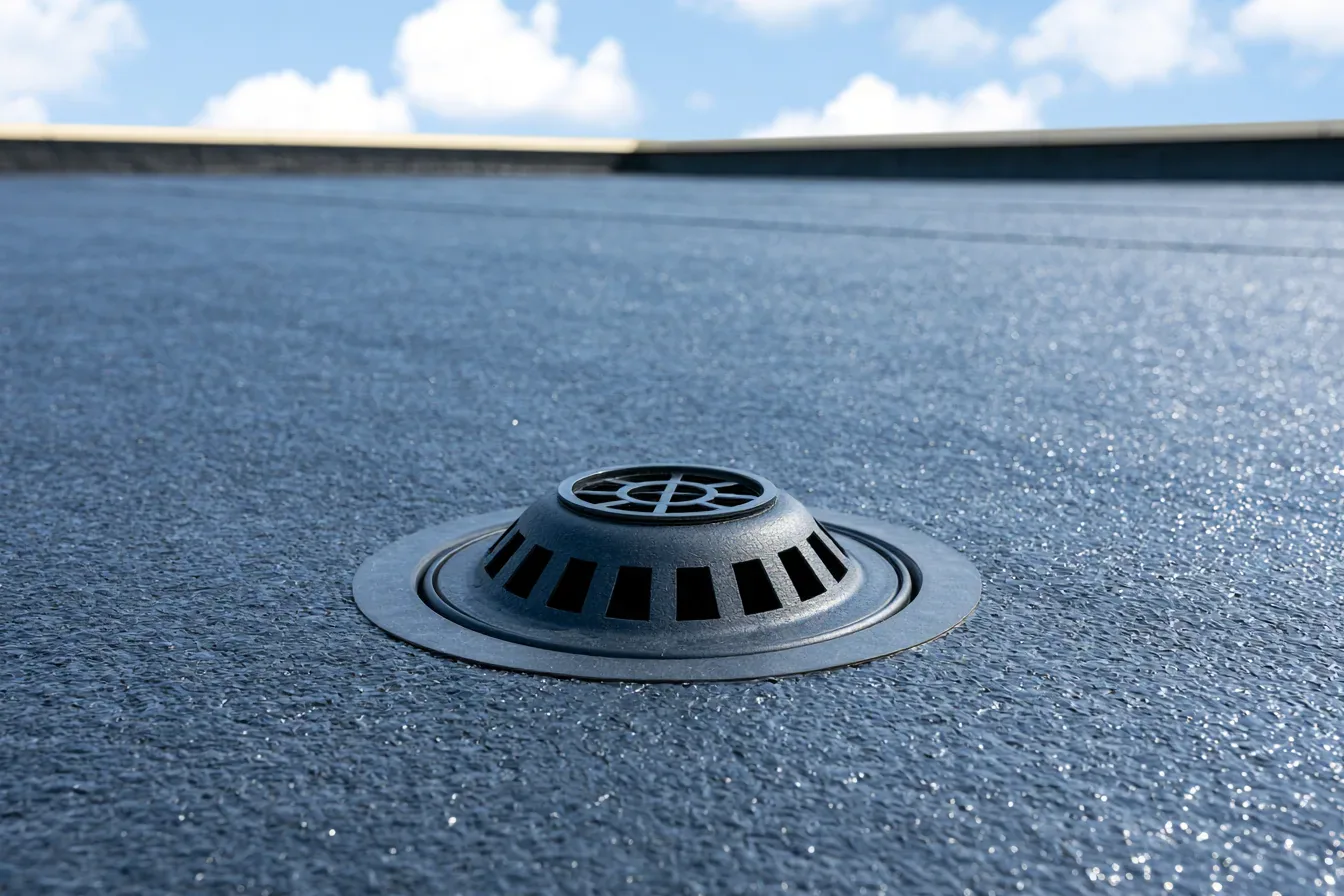
An outlet that remains above a low pocket can leave water on the surface through repeated wet periods. We examine elevations and the selected acrylic system's suitability before recommending restoration. Product requirements vary, and persistent ponding can limit an appropriate coating choice. The answer may include drainage corrections or another assembly rather than a thicker layer applied over the same geometry. Water management remains a roof-construction decision.
We assess drain and overflow connections with the surrounding roof plane. Clearing an obstruction can correct one problem; changing a low-point arrangement can correct another. Quincy identifies flooding and blizzards among its preparedness concerns, making rain and thaw drainage useful assessment priorities. The restoration scope should distinguish a cleanable outlet from a geometry defect so the owner can decide what to correct before the field is treated.
Decide what remains below
Saturated insulation or a loose membrane can make an otherwise attractive surface unsuitable for coating. We investigate suspect areas and define any removal and reconstruction before choosing restoration. A dry, stable assembly with worn surface protection presents a different condition comparison. Retaining it may be useful where the proposed system can bond and perform appropriately. The recommendation should identify that condition rather than equate all aging roofs.
Where the supporting construction is unsuitable, roof replacement can be compared with selective reconstruction and restoration. We assess the extent of damage, drainage needs and the condition of neighboring areas before presenting those alternatives. Future maintenance also matters: compatible repairs and access protection should remain workable after the coating is installed. The owner receives a scope tied to components and defects, without a service-life promise based only on the chosen material.
Coating coverage is assessed against the selected application requirements. We examine the completed field and details for inadequate treatment, missed areas and damage caused during subsequent access. A light-colored finish can make the roof appear uniform without establishing that every transition has received the required work. Completion therefore includes the physical connections and application quality, not merely the visible change in appearance.
Commercial Roofing Questions
Can a dry forecast still be unsuitable for acrylic application?
Yes. Surface temperature, dew, humidity and the curing requirements can affect suitability even without forecast rain. We evaluate the application interval and the time after placement before setting the day's work boundary. The coating should reach the appropriate condition before weather or routine roof access affects it. A clear afternoon alone is not the full timing assessment.
Does a reflective acrylic finish mean the building will use less energy?
Reflectance is one thermal characteristic, not a complete prediction of building operation. Insulation, air leakage, mechanical equipment and seasonal use also influence the result. We examine those factors where they affect the roof decision and avoid assigning an outcome from color alone. The primary restoration assessment remains the receiving assembly, details and required protective treatment.
Should wet insulation be dried beneath a new coating?
Wet material needs a deliberate investigation and removal decision. We assess its extent and condition before defining reconstruction. Applying coating above it does not restore damaged insulation or establish that the retained layers are suitable. Local removal may be possible where the boundary is clear, while wider deterioration can require a broader renewal scope.
How do we compare acrylic proposals with different preparation scopes?
Identify what each proposal removes, repairs and retains before comparing field application. Cleaning alone may not resolve loose coating, corrosion or failed detail material. We explain the surface and connection requirements of the selected system, including any priming or reinforcement. The comparison should make those physical differences visible so the owner can assess the completed construction.