Silicone Roof Coatings in Quincy, MA
Rain held in a roof depression after the surrounding field has dried makes coating selection a drainage question as well as a material question. For a Quincy, MA, building, we assess whether a silicone system is suitable for the existing surface and the observed water exposure. The decision also includes the layers below. A coating can form part of a useful restoration over serviceable construction, but it cannot restore saturated insulation or stabilize a loose receiving surface.
We examine the roof before recommending preparation, detail reinforcement and field application. Quincy identifies flooding and nor'easters among its preparedness concerns, making sustained wetting relevant to that assessment. Suitable silicone products may accommodate particular water exposures within their requirements. That characteristic does not remove the need to correct an obstructed outlet. Owners can compare acrylic restoration options where the roof condition and application requirements support a different system.
Establish a sound receiving roof
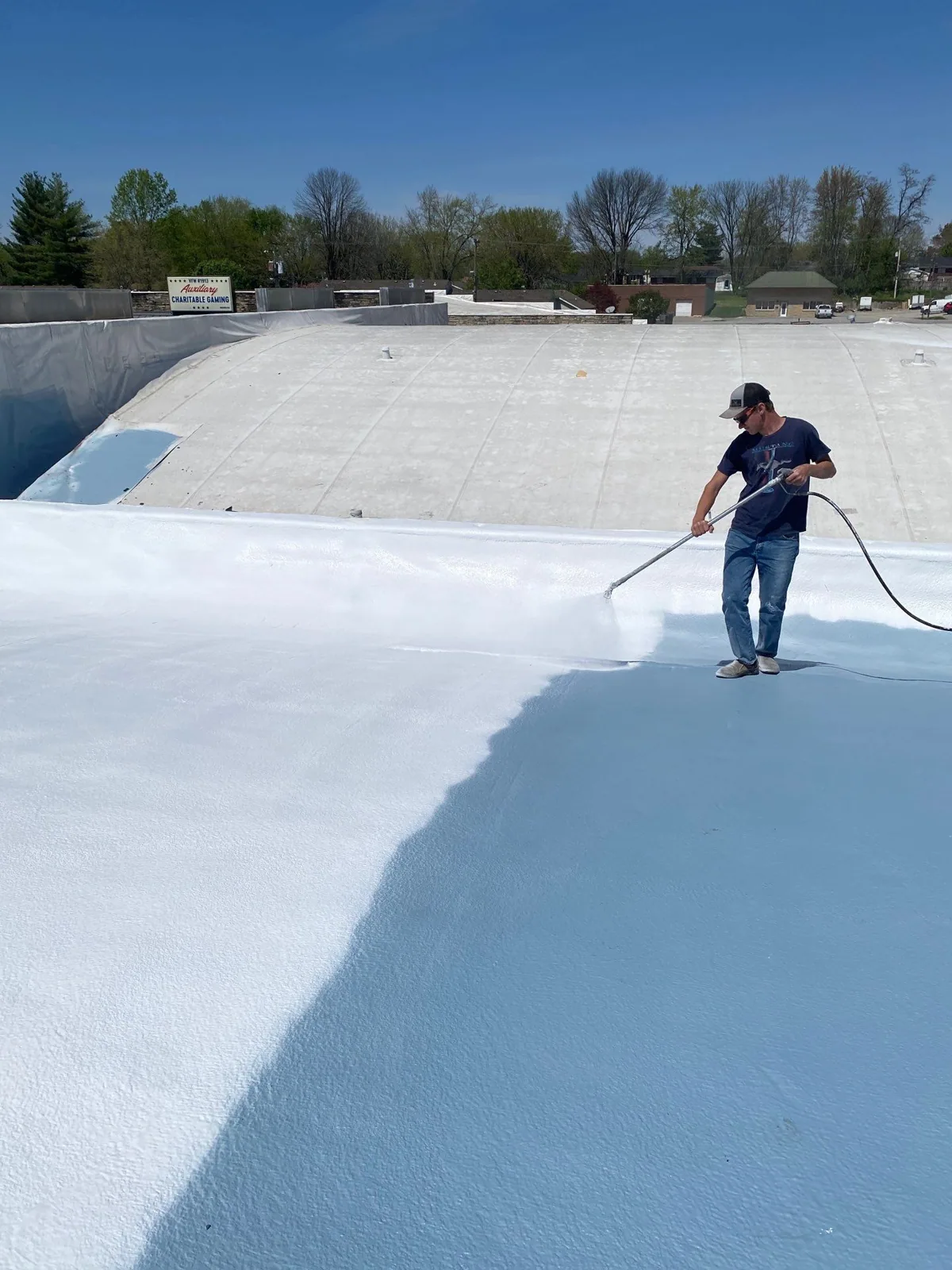
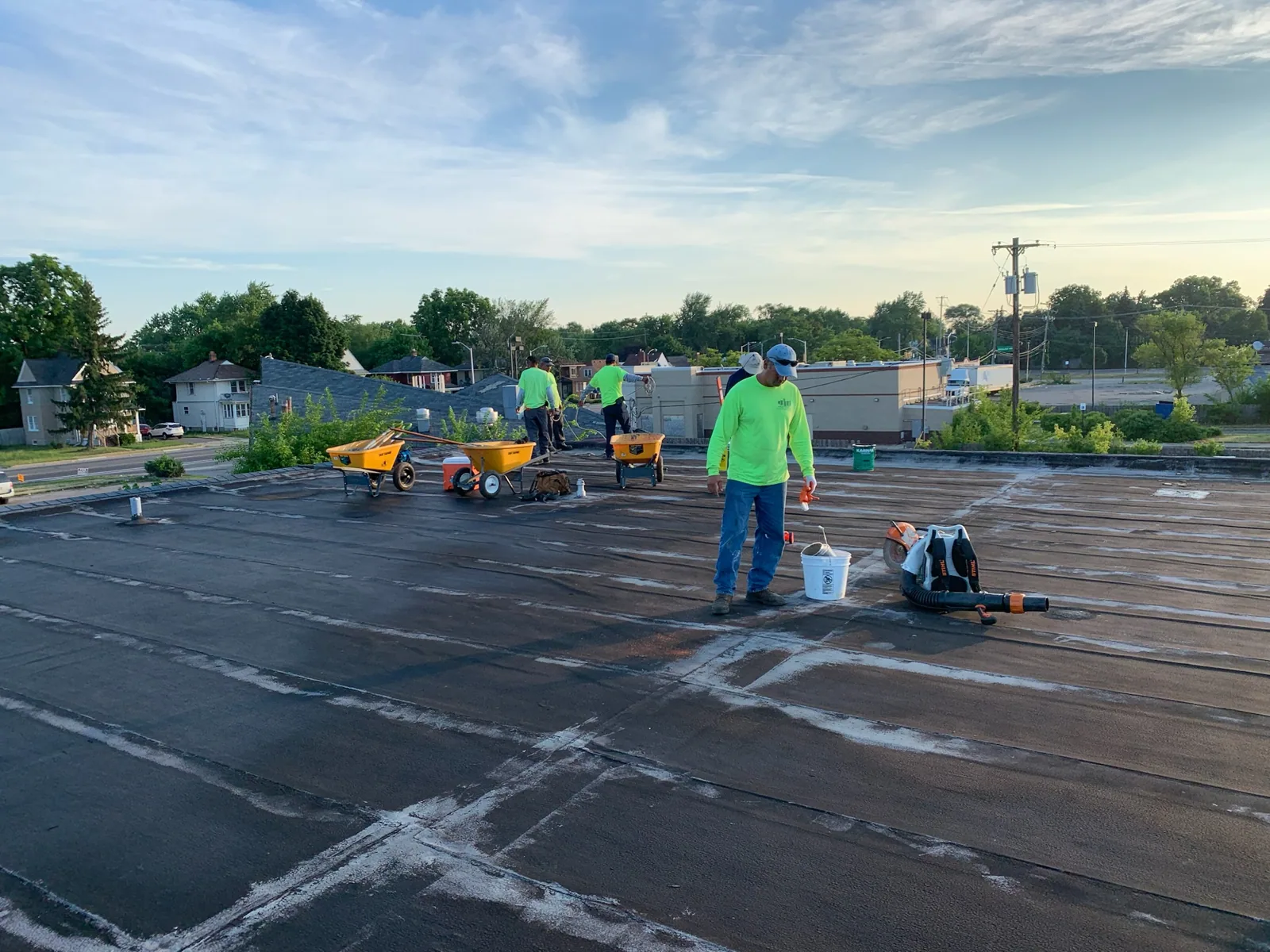
A firmly attached dry membrane presents a different restoration candidate from one with scattered wet areas and loose flashings. We assess the substrate, existing coating and concealed construction before setting the application boundary. Moisture investigation and selective checks can identify material that needs removal. The retained area should be suitable for the proposed system, with damaged portions reconstructed before surface treatment begins. Restoration starts with that condition assessment. We also check vulnerable edge zones and previous repair boundaries, where loose material can interrupt an otherwise suitable receiving surface.
Compatibility and adhesion need attention where an existing roof contains several repair materials. We examine old sealants, patches and coating residues rather than assume one preparation method suits everything. Cleaning, primers and adhesion checks follow the selected product's requirements. Poorly bonded old material can undermine new treatment even if the silicone bonds to its upper face. The connection needs to remain sound through the layers being retained.
Repair joints before the field
An open lap or puncture requires an appropriate repair, not simply an extra pass of field coating. We inspect seams, fasteners, drains and penetrations to identify the detail work needed by the system. Reinforcement may be specified at particular connections, with compatible material and the required application. A coating thickness suitable for the broad field may not be the correct treatment for a moving joint. Details should be resolved deliberately.
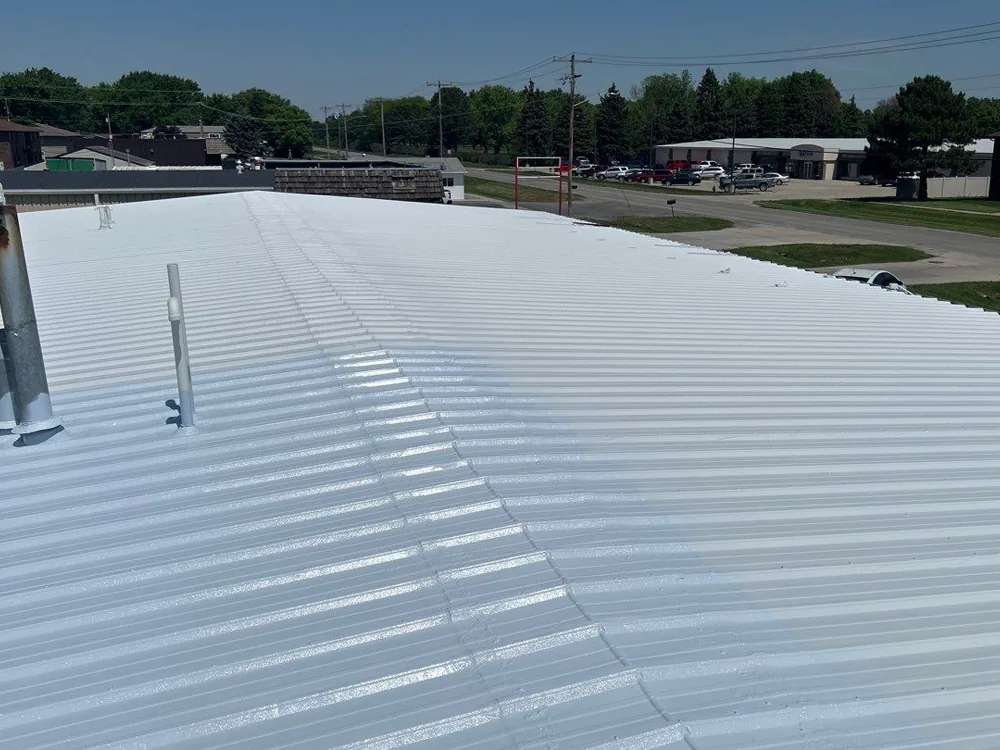
On an exposed-fastener roof, mechanical repairs can precede the reinforced treatment. On a membrane roof, damaged sheet and loose flashing may require compatible repairs first. We connect those tasks with the complete restoration scope so the owner can see what repairs are included before field application. A proposal consisting only of cleaning and coating can omit the connections that caused the water entry.
Treat ponding as a separate finding
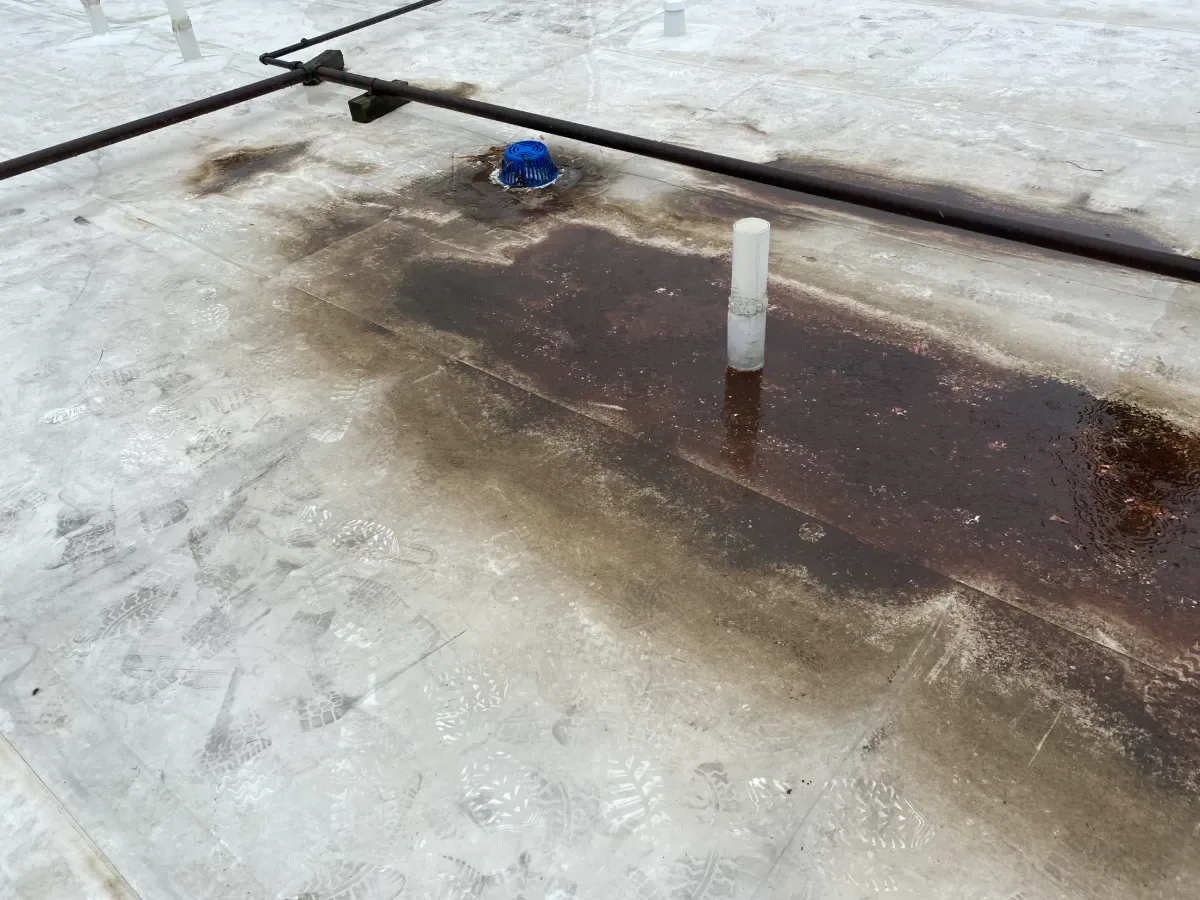
A blocked strainer and a low roof plane can both hold water, but they require different corrections. We examine outlet condition and elevations before deciding what belongs in the restoration scope. Clearing debris may restore flow where the geometry is sound. A persistent depression may call for drainage or assembly changes. The coating choice should be compared against the corrected roof condition wherever practical, not used to avoid investigating why water remains.
Marina Bay contains office, restaurant and assisted living uses beside residential development. Water entry over a care room has different operating implications from entry above an unoccupied service area. We examine the actual layout when prioritizing ponding-related repairs. The roof assessment identifies which defects need immediate work and which drainage changes should accompany restoration. It does not assume all buildings within the district share the same contour or interior use.
Account for the maintained surface
A coated roof still needs workable access to equipment and outlets. We assess maintenance routes, concentrated foot traffic and the protection appropriate to the selected system. Wet coated surfaces can require particular care during access. The plan should provide suitable footing and protection without creating barriers to drainage. Equipment servicing should not repeatedly damage the same flashing or abrade an unprotected route across the restored field.
Quincy Center's downtown combines offices, retail and civic uses. On an occupied commercial asset there, air intakes, loading arrangements and interior activities can affect surface preparation and application. We assess those conditions before work begins. For properties in Quincy Center, the restoration sequence should allow cleaned areas, repaired details and applied coating to reach the appropriate completed condition before weather or routine equipment access affects them.
Preserve a workable repair method
An existing silicone-coated area can require specific preparation and compatible materials when later repairs are needed. We identify the installed coating and assess the receiving surface rather than assume that any patch or paint will adhere suitably. That repair requirement belongs in the assembly decision. A restoration should leave clear information about the material used and the detail treatment so future work can be selected appropriately.
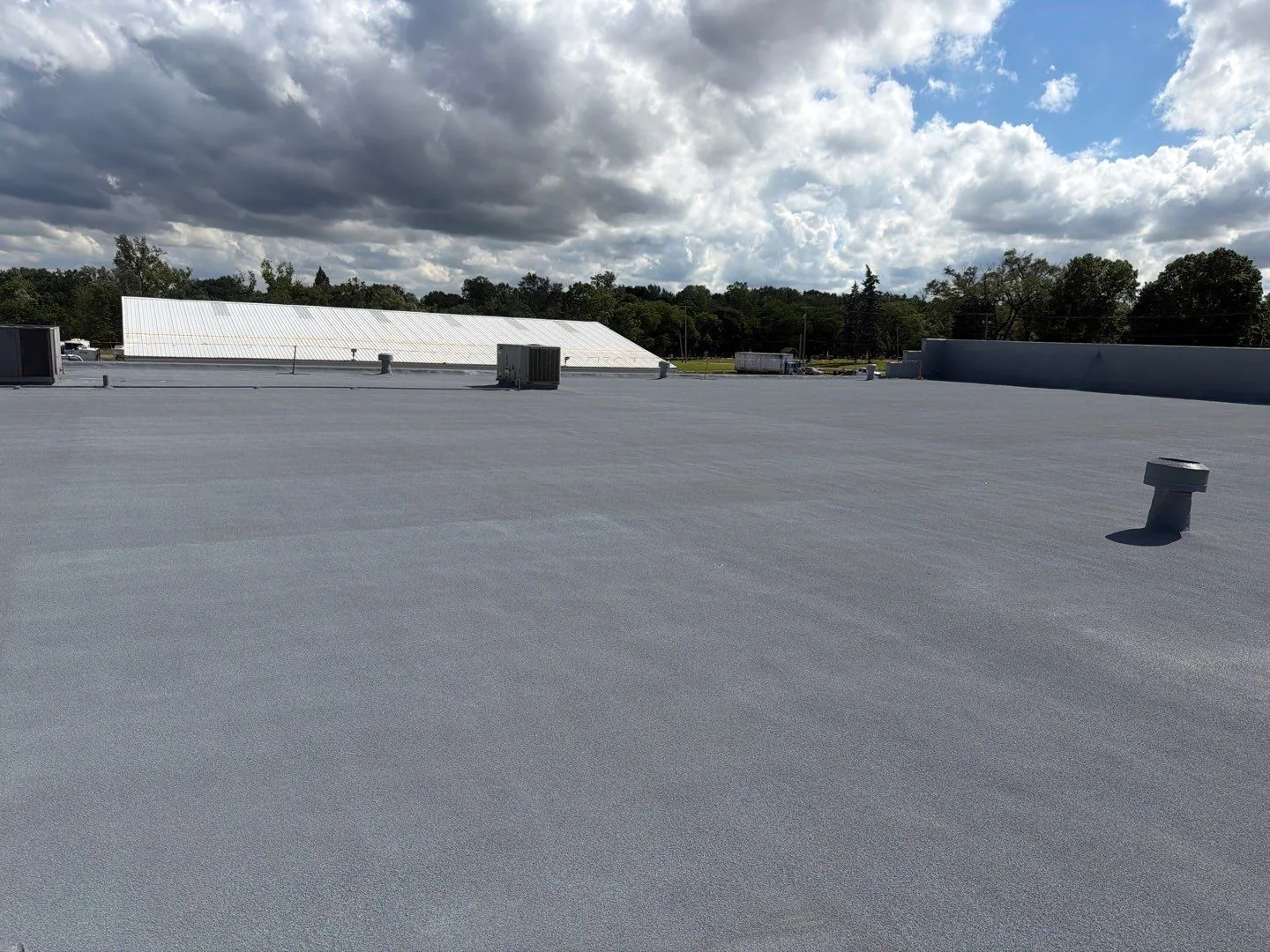
For a spray foam roof, coating condition is closely connected with protection of the foam below. Exposed or damaged foam needs attention before a new protective application. A sheet-membrane roof presents a different receiving surface and detail method. We compare those conditions directly. The same coating designation does not make unlike underlying constructions equivalent restoration candidates.
Compare restoration with removal
Distributed concealed moisture, unstable attachment or deteriorated deck areas can move the roof beyond a useful restoration boundary. We explain the removal and reconstruction those conditions require. A new coating may still suit sound neighboring areas where the construction allows a properly detailed division. The assessment should identify that division rather than force a single treatment across conditions that differ materially.
We compare restoration with replacement of the affected assembly when too much of the existing construction is unsuitable to retain. The comparison includes insulation, drainage, flashing and occupied-space protection. Surface treatment may involve less removal, but that benefit is meaningful only where the retained roof remains serviceable. The owner should be able to identify which defects are corrected and which components continue in use under each proposal.
Commercial Roofing Questions
Does silicone mean we can leave every ponding area unchanged?
Drainage still needs assessment. We identify obstructed outlets, low elevations and damaged connections, then establish which corrections belong in the work. The selected coating's suitability for water exposure is only one part of that decision. A persistent water-holding defect can also affect access, debris accumulation and the condition of components beyond the coated field.
Can we apply silicone over a previous coating?
The previous material and its bond to the roof need examination. We assess compatibility, preparation and adhesion requirements for the proposed system. Loose or unsuitable material may need removal. A new application attached to failing old coating leaves an unreliable connection beneath the visible finish, so the retained layers matter as much as surface cleanliness.
How do we handle an active leak before coating?
We investigate the entry point and make appropriate repairs to the affected detail and underlying material. Wet insulation or damaged foam may need removal. Detail reinforcement then follows the selected restoration requirements. Field application should complete a suitable repair scope, not conceal an unresolved opening or moisture-damaged area.
What should be included in a silicone maintenance plan?
Include drainage checks, examination of vulnerable details and suitable equipment-access protection. We also identify compatible repair materials and preparation requirements for future work. Damaged areas should be addressed before they expose or compromise the underlying construction. Maintenance should follow the actual roof use and observed condition rather than rely on an unsupported service-life promise.