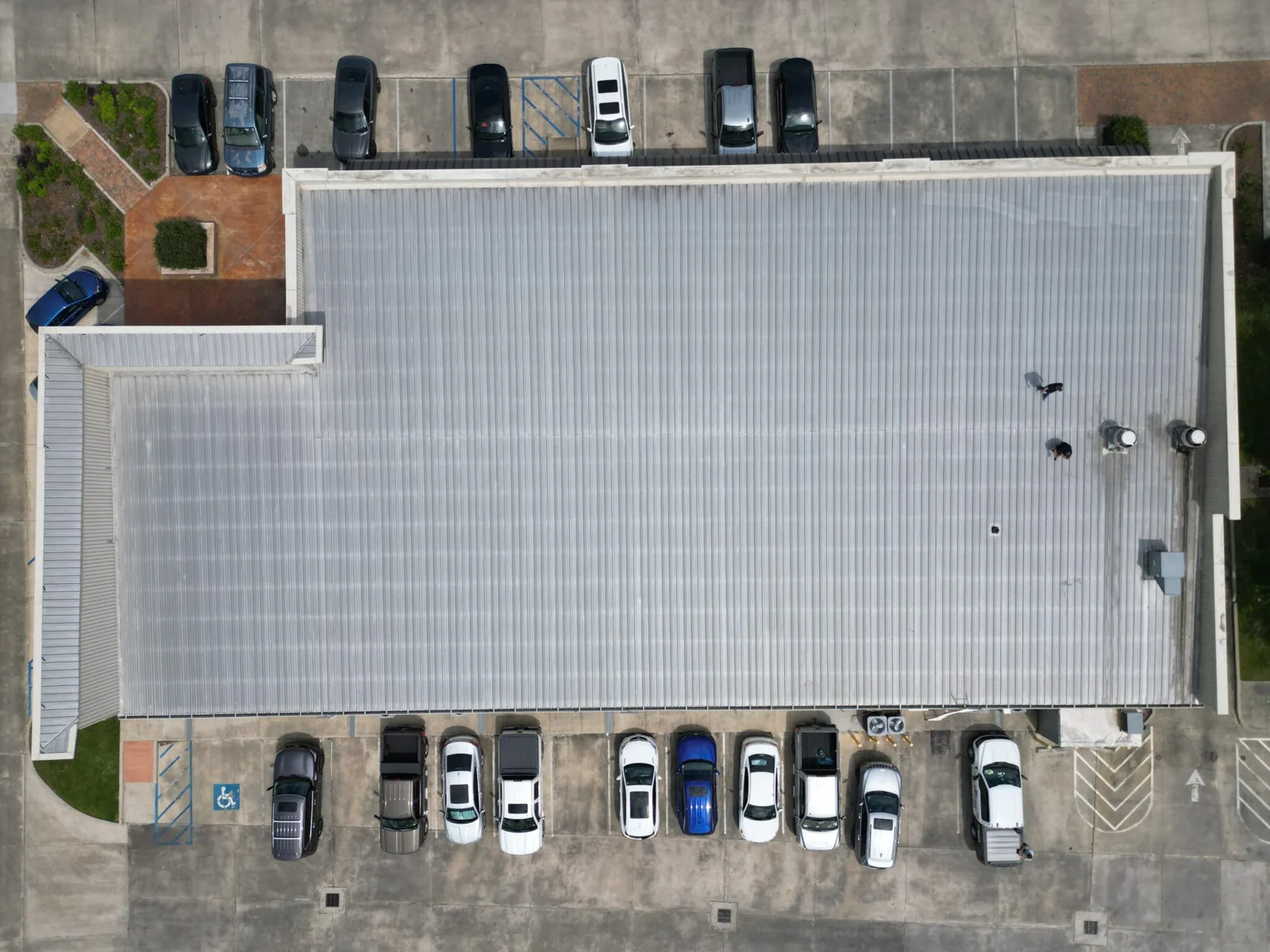
Manufacturing Plant Roofing in Quincy, MA
Rain following a dry operating period can move accumulated exhaust residue across a manufacturing roof and toward vulnerable flashings. For a Quincy, MA, plant, we assess that contact alongside the process that creates it. The roof repair may need a material-compatible connection and a correction to the discharge arrangement. A surface patch alone can leave the same exposure active. We examine the water boundary, equipment interfaces and the area below before recommending work.
Manufacturing operations differ in temperature, humidity, equipment and substances reaching the roof. We connect the assessment to the actual process rather than select an assembly from the building label. Quincy prepares for nor'easters and hurricanes, so temporary closure and secure penetrations matter during renewal. The planned work also needs to preserve any operating systems required for safe production. Roof condition and process continuity belong in the same construction decision.
Identify the material contact
A discolored area beside an exhaust opening can reflect deposits, material deterioration or both. We examine what reaches the roof and assess the selected membrane or coating against that exposure. Concentration and repeated contact matter. Suitable collection or discharge changes may be needed even where a replacement material offers useful resistance. An incompatible sealant or accessory can remain vulnerable within an otherwise suitable field assembly.
South Hingham has food-related businesses including Venus Wafers and Yankee Trader, as well as office and industrial activities. A food-production property can present roof questions involving exhaust and refrigeration, depending on its equipment and process. We assess those conditions directly when comparing PVC roof construction and other suitable materials. The decision includes cleaning and repairability around the equipment, not only resistance of the broad sheet.
Treat equipment movement at its support
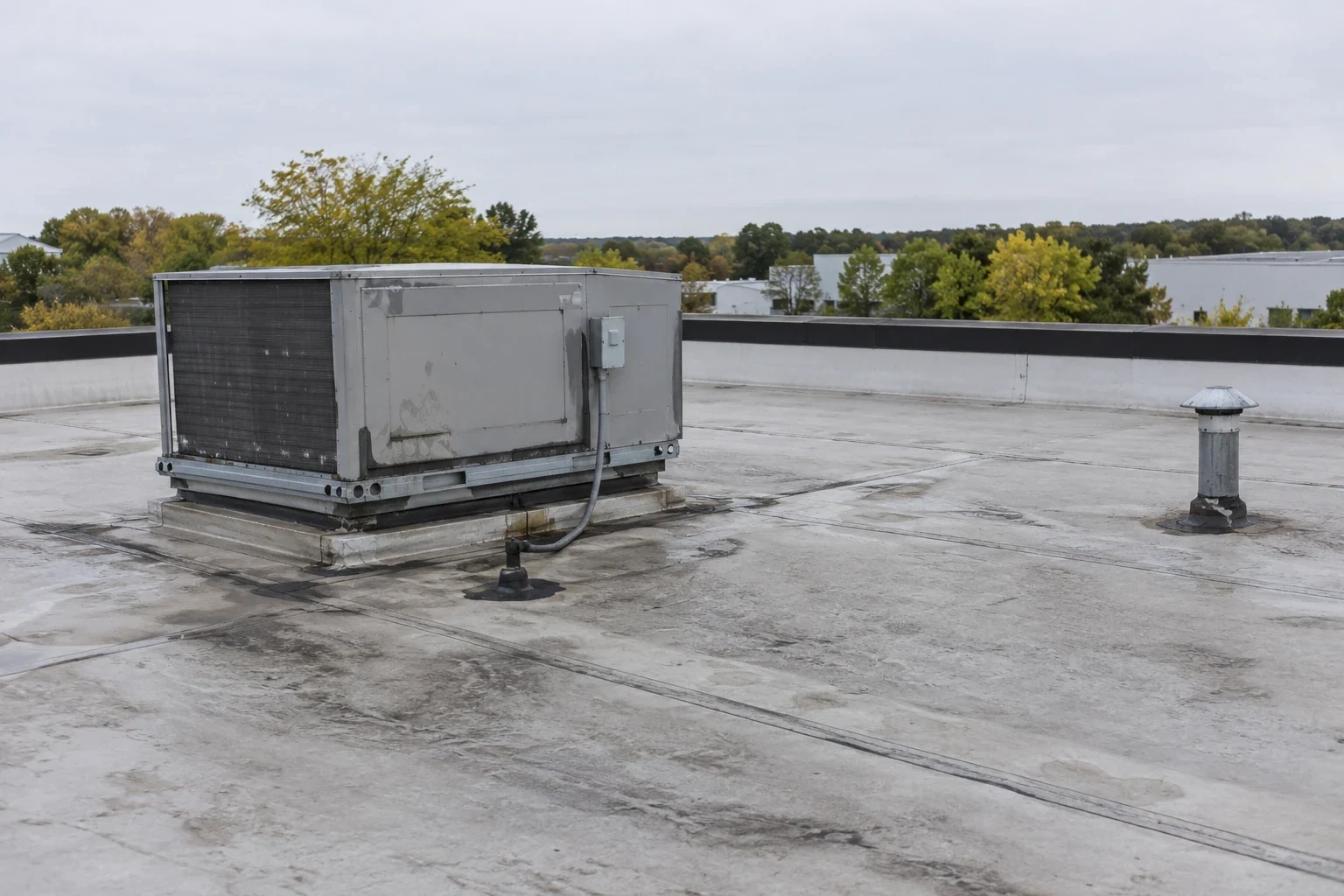
A support that shifts under vibration can repeatedly stress a flashing connection. We inspect the equipment interface, curb and receiving construction to determine whether movement or inadequate support contributes to failure. Roofing work may need to follow a coordinated equipment correction. A flexible patch cannot be expected to compensate for an unstable component indefinitely. The scope should identify which part of the connection requires reconstruction.
Our work at curbs and equipment supports also considers service clearance and the water path around the obstruction. Sharp contact, low flashing height or a poorly positioned opening can create different failure mechanisms. We examine each detail rather than apply a uniform treatment to unlike penetrations. A completed connection should remain accessible for the next equipment service without forcing contact with vulnerable waterproofing.
Distinguish condensation from entry
Warm moist process air reaching a colder roof layer can create condensation even where exterior waterproofing is sound. We examine interior conditions, insulation continuity and air movement alongside the roof joints. Exterior leakage and condensation can occur together. The investigation should separate their contribution before deciding whether the work needs membrane repair, insulation correction or improved control of air and vapor through the construction.
A surface replacement that leaves the same interior moisture path can preserve the problem. We assess the assembly and the process requirements when identifying those corrections. For a manufacturing asset with temperature-sensitive storage, cold-storage roofing introduces related but different thermal and vapor-control demands. The transition between unlike interior environments deserves its own assessment rather than being treated as an ordinary continuation of the field roof.
Set the boundary over sensitive work
Roof removal over production can introduce water, debris or temperature changes into an area that needs controlled conditions. We assess the activity beneath each work zone and coordinate suitable protection before opening the assembly. A planned production interval may be useful for equipment disconnection or a difficult penetration rebuild. The proposal should identify that need early. A general assurance that the plant can remain active does not establish how a sensitive process is protected.
Brockton's industrial development includes Coweeset Brook and Oak Hill Way. For manufacturing property within those broad areas, the operating process determines which roof tasks need coordination and which can proceed under protection. We also assess delivery and disposal routes against exterior movement. In South Hingham, the same assessment connects roof access with the property's individual equipment and interior layout. Work should be sequenced by the actual exposure created above production.
Investigate retained material near defects
Recurring water entry beside a penetration can damage insulation or the deck beyond the visible patch. We examine surrounding material before selecting the repair boundary. Selective openings and suitable moisture-survey methods can establish what remains serviceable. A dry stable field with a defective curb can support a focused repair. Wet construction spread across several equipment zones may support a wider renewal decision.
We compare hands-on roof inspection findings with the leak history and any planned equipment changes. The assessment should identify the mechanism behind the failure and the condition of components retained by each option. An adjacent warehouse area can have different interior protection needs from the production floor within the same asset. Its roof condition should therefore be considered separately where the assembly or operating exposure differs.
Build the sequence around completed details
Equipment-dense areas can require more closure time than open roof field. We define daily removal limits with the transitions that must be completed before rain, not simply with the amount of sheet that can be installed. Curbs, drains and wall connections need suitable receiving geometry and material preparation. A new field membrane does not make an unfinished equipment junction weather-tight. The sequencing should reflect that physical reality.
Application method also matters above an active process. Heat, odors, surface preparation and air-intake protection can influence the suitable installation approach. We examine those factors with the selected assembly's requirements before committing to the work plan. Increased insulation may improve the construction but change curb clearance or termination heights. Those dimensions need assessment before the roof plane is raised.
The owner can compare bounded repair with broader renewal through the components each retains. Access difficulty, damaged substrate and coordinated equipment work are meaningful scope drivers. We explain those drivers alongside any operating interval needed for completion. A useful manufacturing roof proposal resolves the water-entry mechanism and identifies how the construction can be completed without leaving the production environment exposed to an unmanaged opening.
Commercial Roofing Questions
Can exhaust deposits change the membrane we should select?
Yes. We examine the actual contact and compare suitable materials against the selected system's requirements. Concentrated discharge may also need collection or equipment correction. Membrane selection alone cannot remove the cause of repeated contamination. The scope should address both the water boundary and any operating change needed to preserve a repairable surface.
Should equipment vibration be addressed before flashing repairs?
An unstable support needs assessment alongside the waterproofing. We examine whether movement is causing separation or distortion and coordinate appropriate correction where required. Roofing repairs can then finish at a stable receiving detail. Replacing flashing while the same harmful movement remains active can preserve the original failure mechanism.
How do we assess leaks that occur without recent rain?
Interior moisture conditions, retained water and process-related contact deserve investigation. We examine the assembly and compare the timing of symptoms with exterior weather and equipment activity. Condensation may call for thermal or air-control corrections, while retained water may indicate a previous entry route. The repair recommendation should identify which mechanism the proposed construction addresses.
What belongs in the plan for a roof area above a controlled process?
Identify the interior protection, equipment requirements, removal boundary and suitable closure sequence. We assess how roof work could introduce water, debris or temperature changes and coordinate the required operating interval. The roof's details and receiving construction determine completion time. A controlled process needs those arrangements made specific before removal starts.