Restaurant Roofing in Quincy, MA
A soaking storm can carry kitchen-exhaust residue across a restaurant roof and into a drain approach that is already holding debris. For a Quincy, MA, property, we assess the discharge and water path together before recommending membrane repairs. Grease contact can affect material suitability and preparation, while an obstructed outlet prolongs wetting at defects. The repair should address both the damaged connection and the condition that keeps testing it. A new patch alone may leave the operating cause unchanged.
Restaurant roofing also needs a workable relationship with exhaust service, refrigeration and occupied dining. We examine the actual equipment and room layout before opening a roof area. Quincy identifies nor'easters and flooding among its preparedness concerns, making secure closure and freely draining low points useful priorities. The owner receives a scope connected to roof mechanics and the activity below, rather than a generic recommendation based only on the building's food use.
Control the discharge before surface work
Deposits concentrated around an exhaust outlet can create a difficult receiving area for a repair. We examine collection arrangements and the substances contacting the roof, then assess the selected membrane or coating's suitability. Equipment servicing may be needed to reduce repeated contamination. The roofing scope addresses damaged material and compatible connections. Cleaning the immediate patch area does not resolve uncontrolled discharge that will continue reaching the same detail.
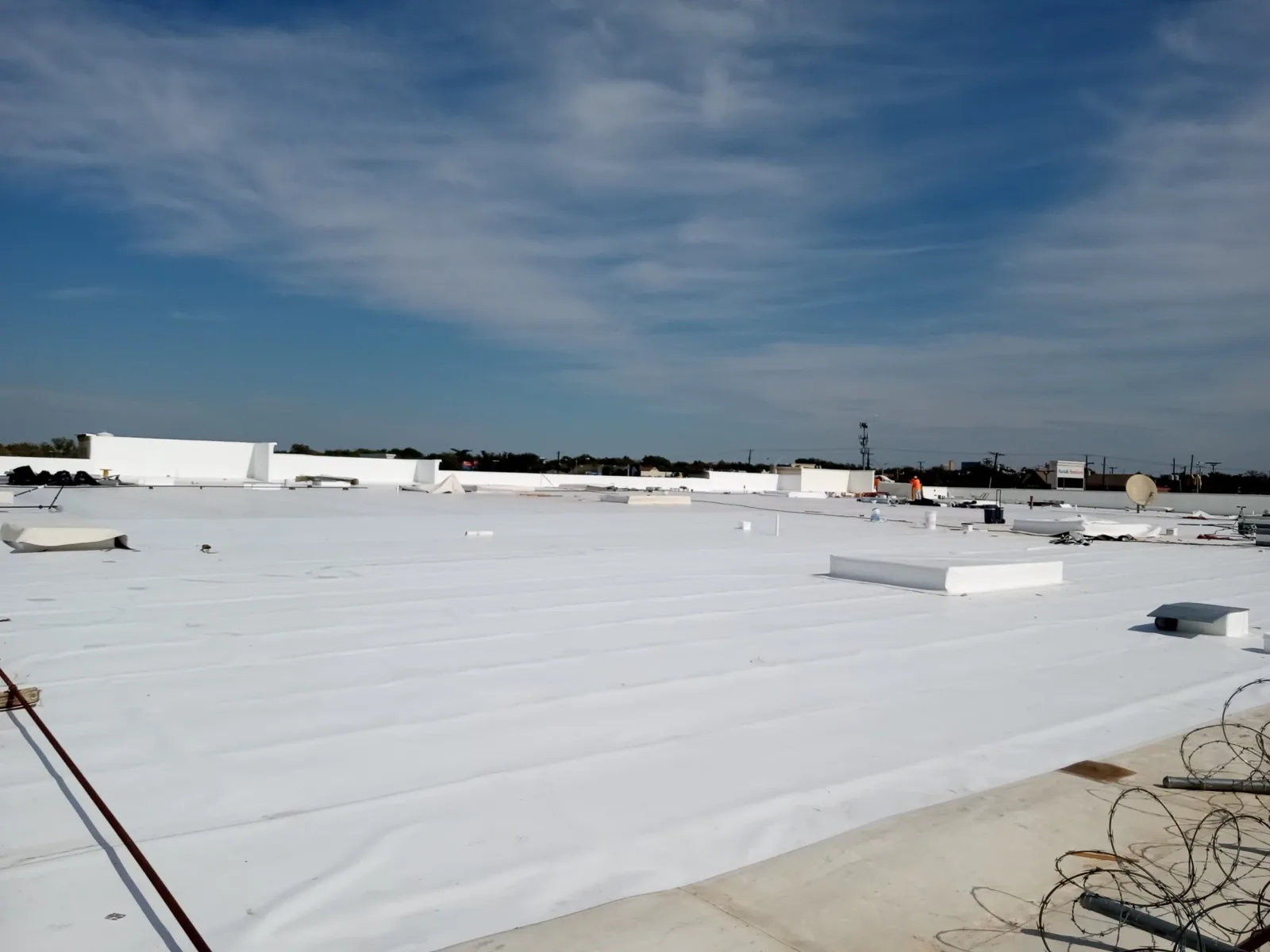
We compare PVC membrane options and other suitable materials against the actual exposure and their application requirements. Accessories, sealants and flashing components also need compatibility. A suitable field membrane can still finish at an unsuitable component beside the fan. The proposal should identify those interfaces and any operating correction required, rather than treat material selection as a substitute for discharge control.
Keep the fan serviceable without roof damage
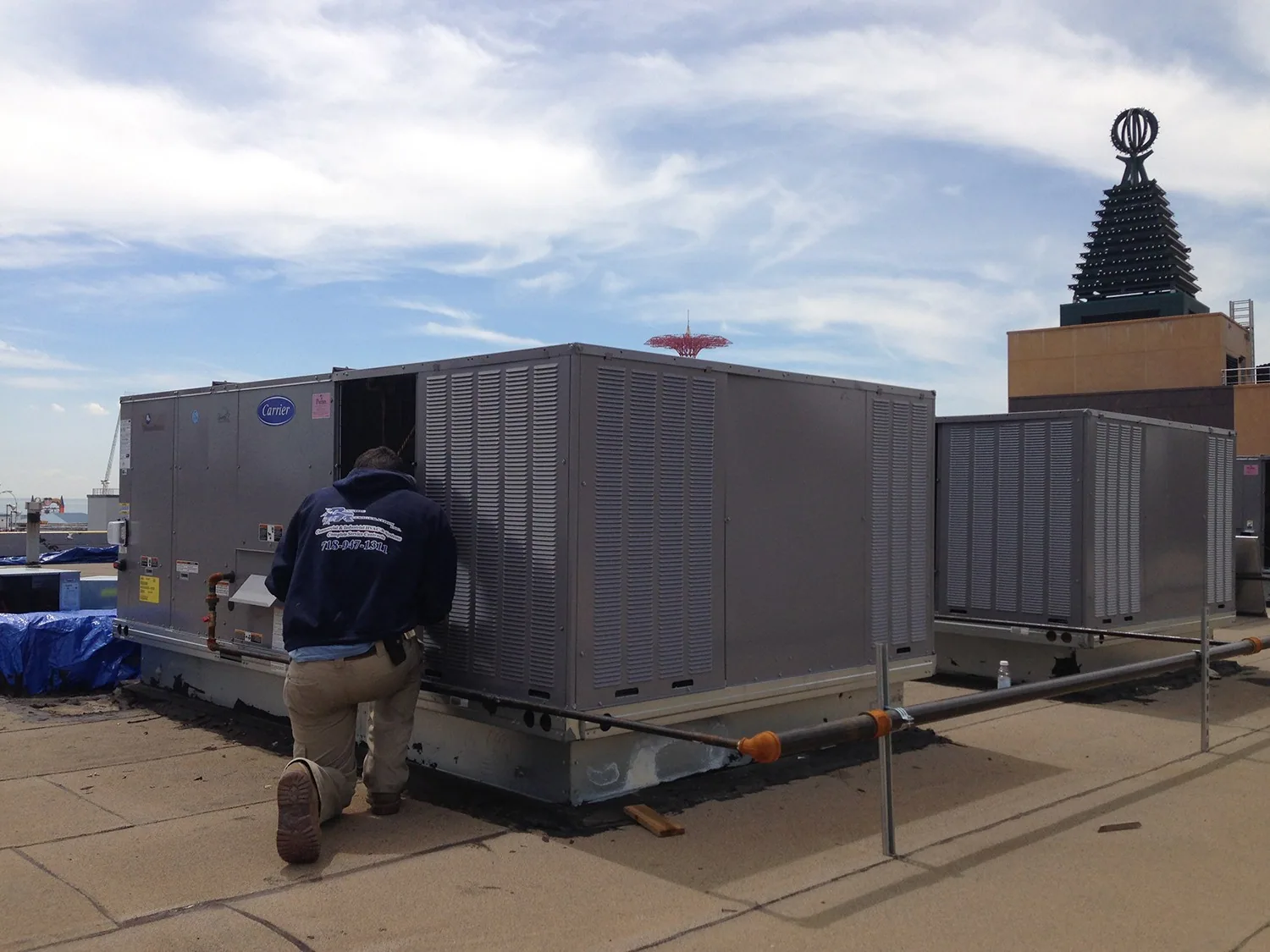
A hinged exhaust fan can need access for cleaning that changes how nearby flashing is exposed to contact. We inspect the curb, support and service clearance, including any sharp or moving component that repeatedly abrades the roof. The detail should permit necessary equipment work without forcing contact with vulnerable waterproofing. A patch beneath an unchanged damaging edge can fail again when the fan is serviced.
Our repairs to exhaust curbs and supports examine stability and flashing geometry. A low curb may need modification if insulation is raised during renewal. Unused openings left after equipment changes also require deliberate closure through the assembly. We coordinate the relevant equipment tasks with roofing so the final water boundary is not completed before a support or connection that affects it has been corrected.
Assess food use in the local setting
West Quincy includes the Common Market's restaurant, cafe, pub and private-function activity. A dining property can therefore have different occupied areas and event requirements beneath the work. We assess the actual rooms and equipment rather than select a single protection arrangement for all food uses. A repair above a service room and one above a prepared function space can present different access and interior-protection constraints.
Marina Bay includes restaurants alongside offices, assisted living and residential uses. For a restaurant within a mixed-use property, neighboring air intakes and shared access may affect roofing preparation or application. Work in Marina Bay should identify those actual interfaces before equipment or material is brought to the roof. A useful proposal connects the chosen installation method with the occupied property, not simply with the membrane being installed.
Separate cleaning from drain reconstruction
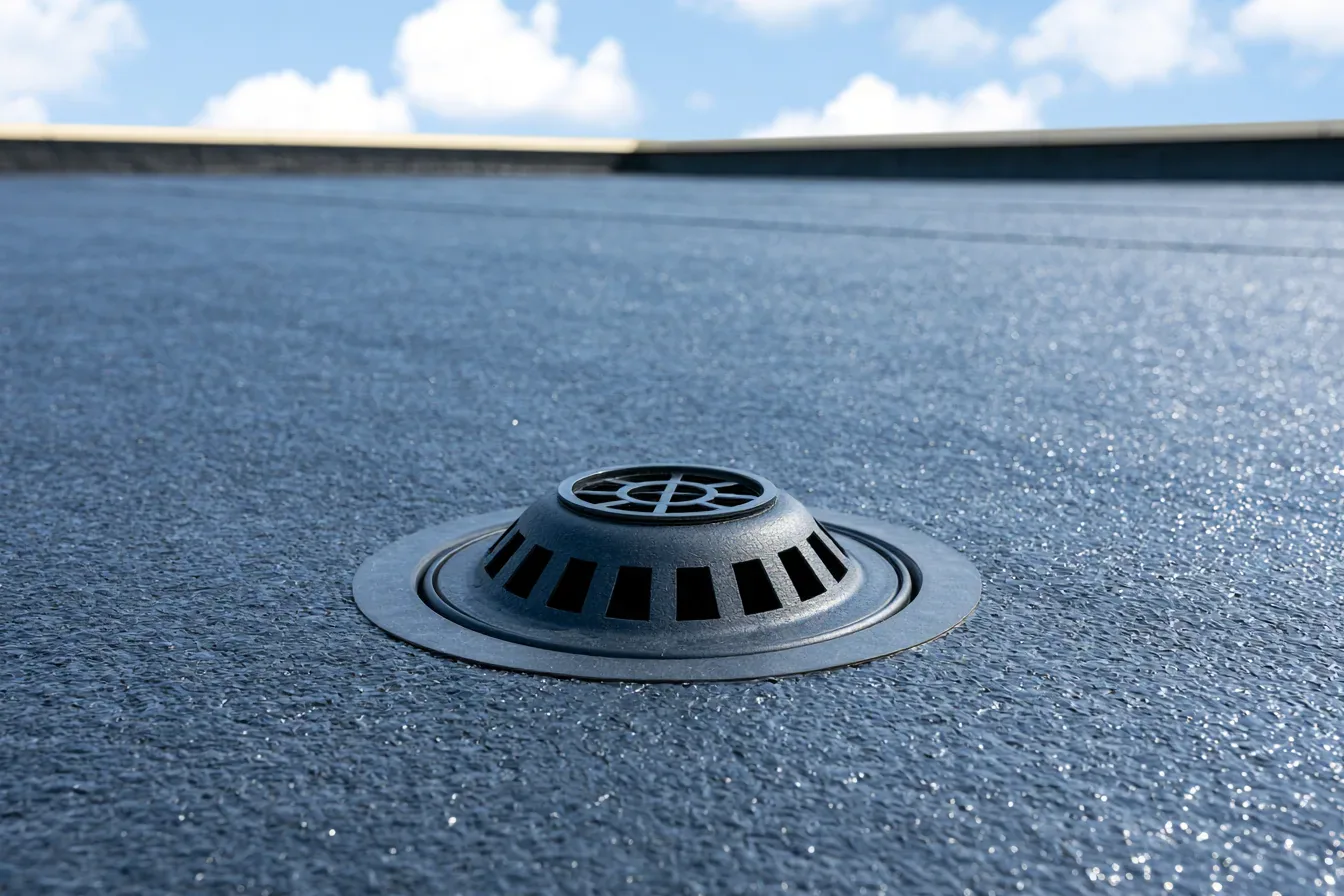
A strainer obstructed by debris or residue may need cleaning, while a drain above a persistent low area may need geometry correction. We examine the outlet, bowl flashing and elevations to distinguish those findings. Both can occur on the same roof. A restored flow route does not close a damaged drain connection, and a new flashing does not remove an obstruction. Each task should be clear in the scope.
Our drainage repairs account for the completed roof height and overflow arrangement. Tapered insulation may be useful during renewal where the field geometry holds water. Supports and walk protection should not create new pockets. Winter thaw can extend exposure at low-point defects, making accessible outlets relevant after the installation is complete as well as during the leak investigation.
Plan the equipment interval explicitly
Disconnecting or altering kitchen ventilation can affect whether food preparation can proceed. We assess the roofing tasks with the required equipment coordination before defining the work interval. Some nearby field repairs may leave the equipment untouched. Reconstructing the curb or changing the unit can require a planned interruption. The proposal should identify that distinction rather than assume the restaurant can operate unchanged through every task.
Interior protection also needs to fit the kitchen, stock and dining layout. We define what removal could expose and which areas require isolation or suitable protection. Comparisons with grocery roof work can be relevant where refrigeration and stored goods add thermal or product-protection demands. Shared retail roofing may require further coordination where outlets or roof transitions cross tenant boundaries.
Investigate damage beneath the repair area
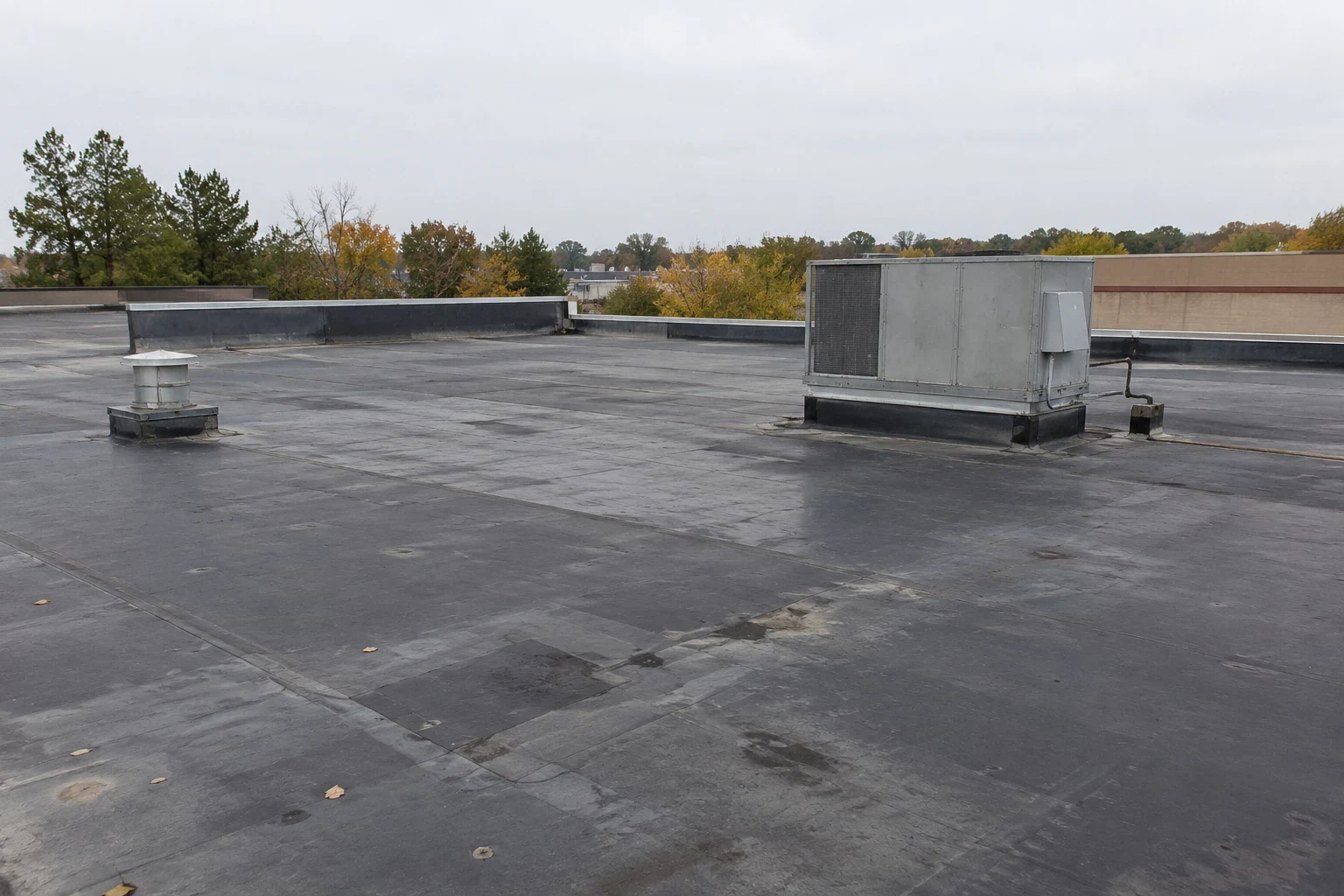
Repeated leakage near exhaust equipment can leave wet insulation or degraded receiving material below the visible patch. We investigate the supporting assembly before choosing a permanent repair. Compatible preparation and a sound connection area are necessary for a useful patch. Where contamination or deterioration extends farther, the removal boundary may need to grow. The repair should finish on serviceable construction rather than the first available surface.
During commercial roof repair, we separate immediate entry-point work from renewal supported by broader damage. Several localized defects on a stable dry assembly can justify a focused scope. Distributed moisture or unreliable attachment can support replacement. The owner should understand the retained components and the defects corrected by each choice, with no lifespan forecast based merely on a new surface application.
We sequence removal with the detail work that can be completed before weather changes. Equipment clusters and transitions can take longer than open field. The daily boundary should allow a suitable secured stage above the occupied restaurant. Later service traffic also needs an appropriate route, with compatible protection where useful and no obstruction to drainage. The finished roof should remain accessible for both maintenance and inspection around the equipment that continues operating on it.
Commercial Roofing Questions
Should we repair the exhaust leak before correcting grease discharge?
Active water entry needs an appropriate response, while the discharge issue should be assessed alongside the permanent repair. We examine whether contamination affects the receiving material and identify any collection or servicing correction needed. The completed scope should not leave the same avoidable contact damaging the new connection. Roofing and equipment tasks may therefore need coordinated sequencing.
Can the kitchen keep cooking while the exhaust curb is rebuilt?
The equipment arrangement and required work need assessment first. We identify whether the curb or unit needs interruption and coordinate a suitable interval where necessary. Some adjacent roofing can proceed without changing equipment operation. A curb reconstruction should not rely on an unrestricted promise that every kitchen activity can continue through the task.
What should we examine after damage from fan cleaning?
Assess the service movement, clearance and contact points around the fan. We inspect the membrane and flashing, then identify whether support correction or suitable protection should accompany repair. A patch can restore damaged waterproofing where the receiving material is sound. The service route should also be corrected where it repeatedly harms that connection.
How should we compare restoration with removal near a contaminated area?
Compare surface compatibility, adhesion and the condition of layers below. Cleaning and preparation may support restoration where the assembly remains suitable. Damaged sheet, wet insulation or unreliable bonding can require removal and reconstruction instead. We explain those findings and the discharge-control task needed under either option so the owner can assess the complete repair.