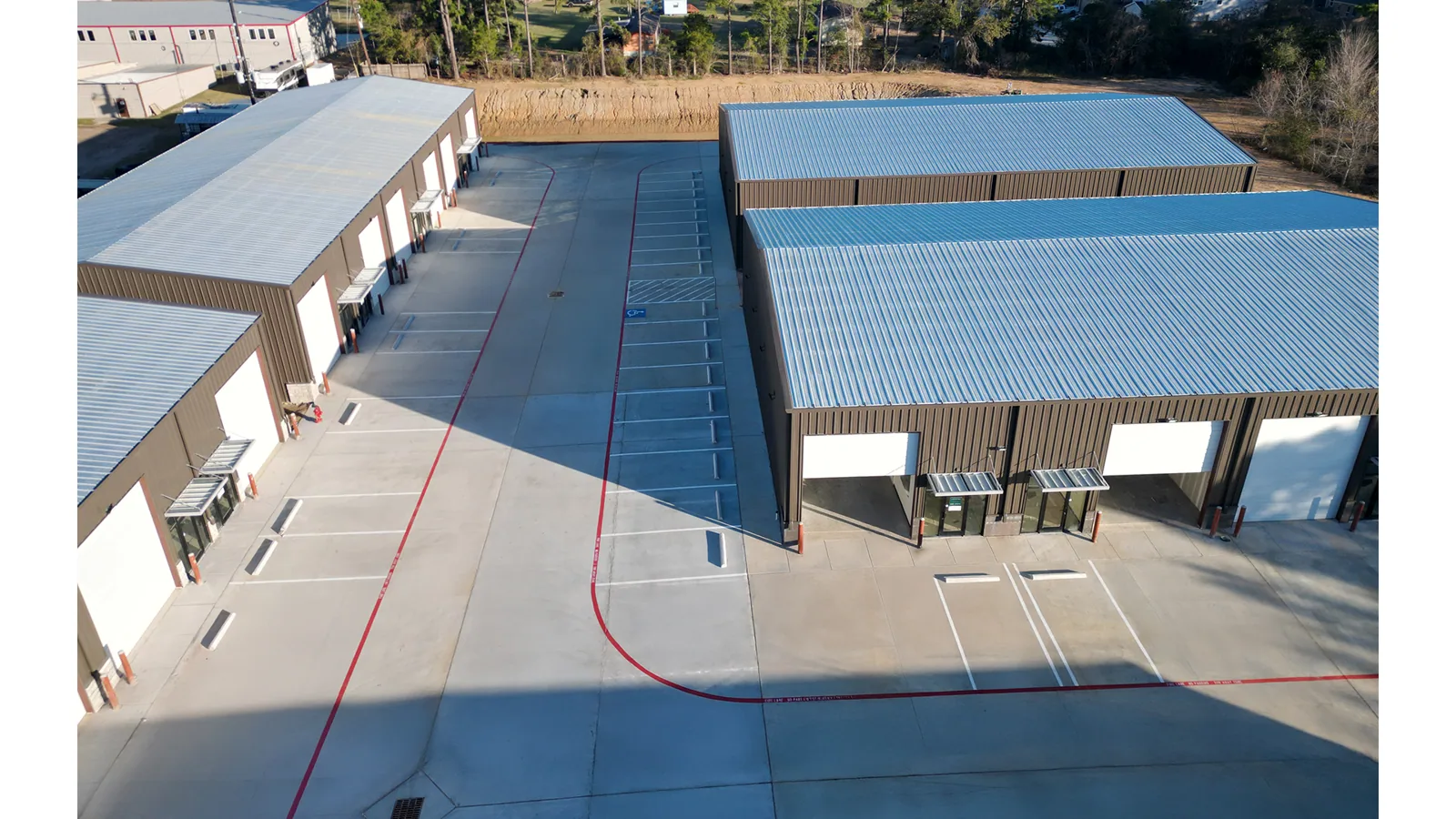
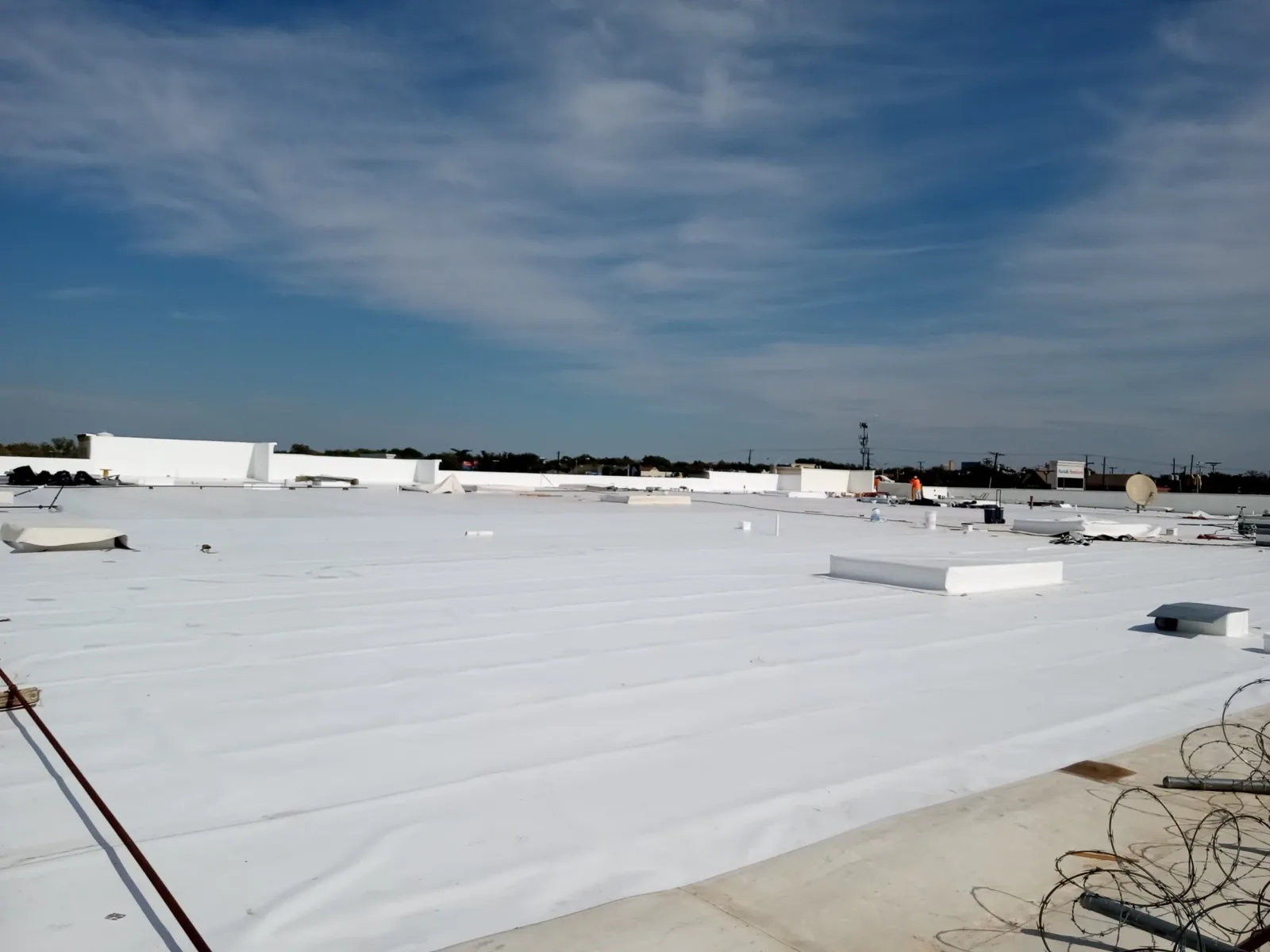
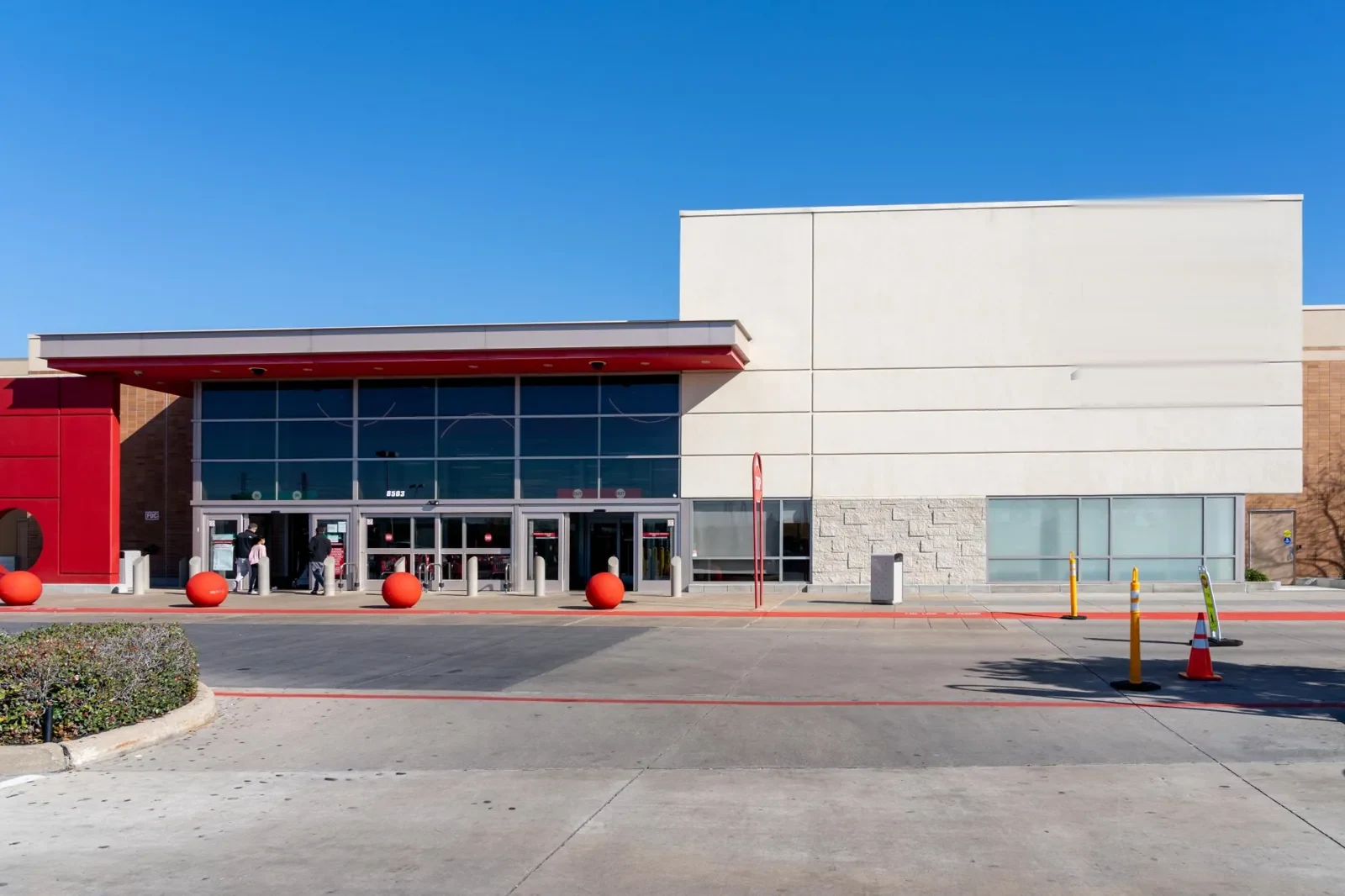
Grocery Store Roofing in Quincy, MA
Summer humidity reaching the construction above a refrigerated grocery zone can create a moisture problem different from rain entering over the sales floor. For a Quincy, MA, property, we examine which mechanism is active before selecting roof work. A grocery asset may combine ordinary occupied rooms, refrigerated areas and food-preparation equipment beneath one covering. Those uses can create unlike demands on adjacent roof sections. The repair should address the actual assembly and operating conditions rather than treat every interior drip as the same defect.
We assess the membrane, insulation and equipment transitions together with the space below. Quincy prepares for flooding and severe winter weather, adding exterior drainage and meltwater concerns to the thermal questions. Some findings can support a bounded repair. Other areas may require removal of damaged layers or correction of a concealed control-layer interruption. The owner should see those differences before choosing a uniform surface treatment.
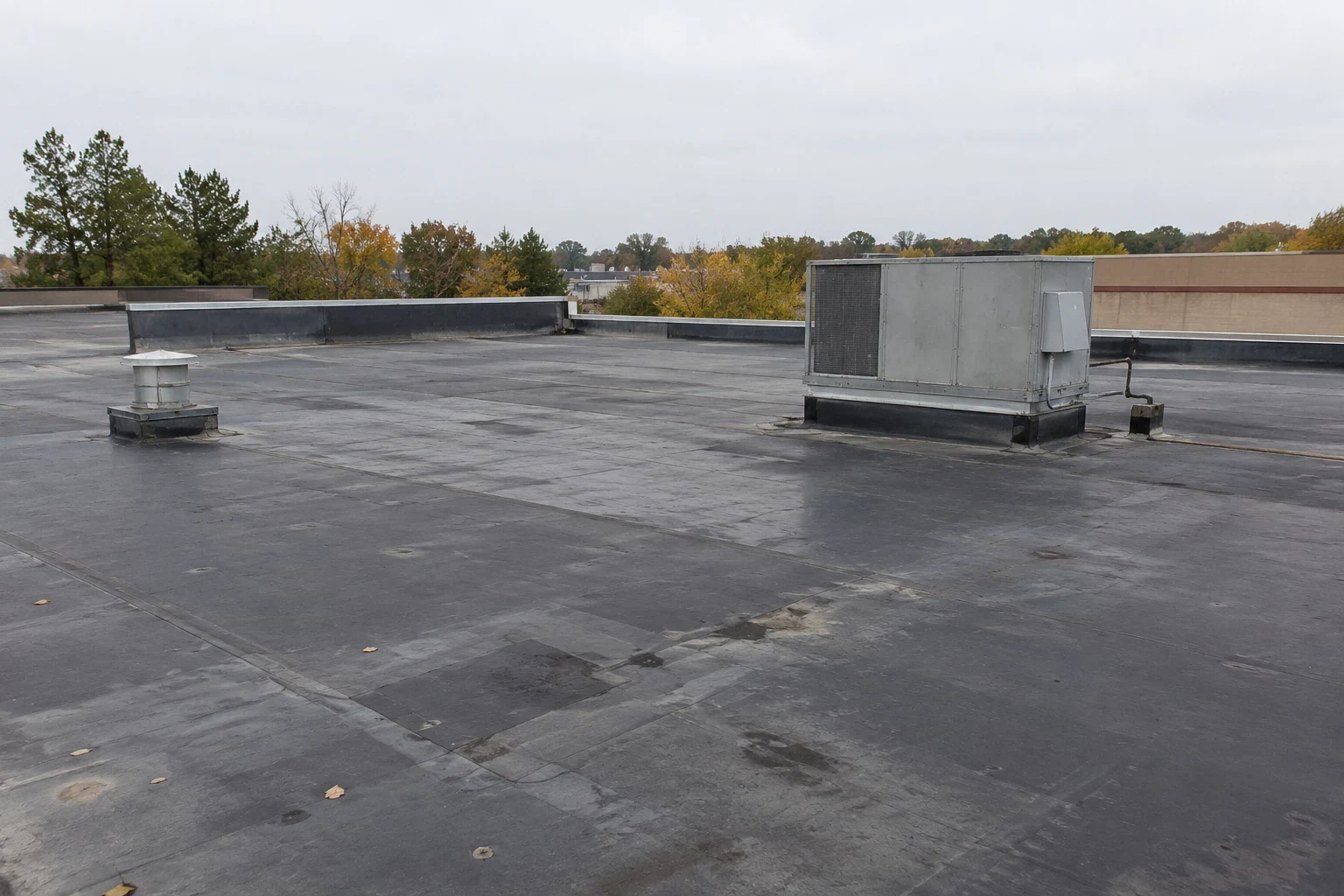
Inspect the boundary between unlike rooms
A refrigerated area beside an ordinary storage room can place different thermal conditions beneath neighboring roof construction. We examine insulation continuity and the paths through which warm moist air can reach colder layers. Penetrations and roof-to-wall connections deserve attention because an interruption can allow moisture movement even where the upper membrane remains intact. The location and severity of the problem depend on the actual temperatures and assembly arrangement.
Our assessment of refrigerated roof construction separates air and vapor-control questions from exterior entry. Both can occur within a grocery asset. We investigate symptom timing and concealed condition before recommending repairs. A new surface may close a rain defect while leaving the same internal moisture path active. The proposed work should state which components are restored and how the corrected connections continue through the affected construction.
Check what equipment deposits on the roof
Kitchen exhaust can contaminate the repair area and affect material selection. We examine discharge, collection arrangements and the condition of the membrane around the equipment. A suitable material should answer the actual exposure, including compatible accessories at the flashing. Concentrated residue may also need operating correction. Coating over the deposits without appropriate preparation can leave poor adhesion and an unresolved cause of deterioration.
West Quincy's Common Market includes restaurant, cafe, pub and function uses, providing a local example of food-related activity with different operating interfaces. For grocery property with food preparation, restaurant roof assessments involve related questions at exhaust and service routes. The actual grocery equipment still needs individual examination. We compare PVC membrane suitability and other materials against the contact and complete assembly rather than rely on appearance or a familiar specification.
Keep the affected product area controlled
Water entry above stock needs immediate assessment of the interior exposure as well as the exterior defect. We examine the entry route while the store identifies goods, fixtures and equipment requiring protection. Temporary isolation or movement may be needed before investigation opens construction. The roofing plan should identify those arrangements early. A small defect can create a wider operating constraint when the goods below cannot remain under debris or water exposure.
Our commercial roof repairs restore the affected water boundary and address damaged underlying material where necessary. Temporary intervention is distinguished from permanent construction. A contained interior drip is not a completed roof repair. We assess nearby connections and concealed moisture so the scope follows the defect rather than the first visible symptom alone. The work sequence then accounts for the active stock and occupied store areas beneath it.
Assess the occupied retail setting
Wollaston's business areas include Hancock Street, Beale Street and Newport Avenue. Roof work on occupied retail property in that neighborhood needs an individual delivery, disposal and access assessment. We examine the actual entrances and stocking routes before placing equipment. The proposal should identify any exterior area requiring temporary control and how required circulation remains available. A roof access point cannot be evaluated separately from the activity using the ground below.
For work in West Quincy, the same assessment can connect roof access with the building's actual food and retail operation. A grocery store can have unlike schedules for sales, stocking and equipment service. We identify which of those activities affects the roofing task. Comparisons with other active retail roofing are useful where sales-floor protection is similar, while refrigeration and exhaust demand their own specific checks.
Separate drainage from equipment water
Water around a rooftop component can come from roof runoff, equipment discharge or a failing connection. We examine the route before defining the repair. A blocked outlet and a low pocket require different corrections, while an uncontrolled equipment discharge may need coordination beyond roofing. The recommendation should identify the source and the construction affected. Treating every wet area as a membrane defect can leave the actual mechanism active.
During drain and scupper repairs, we assess the outlet detail and approach elevations. New insulation can change that relationship, making a deliberate sump or transition necessary. Equipment supports and walk protection should not obstruct flow. Winter accumulation can prolong wetting at low points during thaw, so accessible outlets remain part of the maintenance arrangement after the repair or renewal is complete.
Renew layers that cannot remain useful
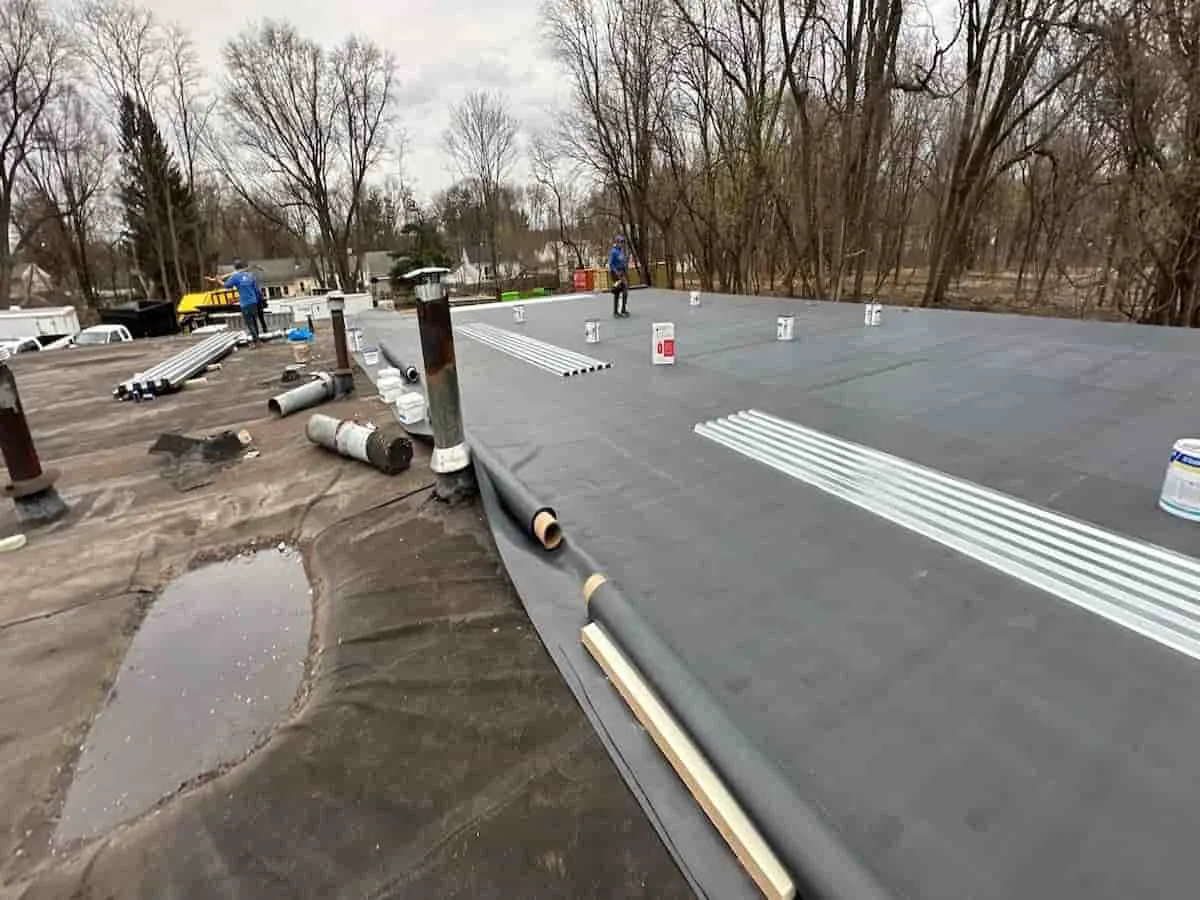
Wet insulation, loose boards or deficient deck attachment can require removal beneath an apparently intact sheet. We investigate those conditions before recommending a recover or restoration. Dry stable areas can be considered separately where the assembly allows suitable boundaries. The proposed work should identify the retained components and the reason they remain serviceable. A brighter or newer covering cannot restore damaged material that stays beneath it.
Removal above refrigerated or stocked areas needs a defined protection and closure sequence. Equipment interfaces can require more completion time than open field, particularly where control layers and flashing must both be restored. We set the work boundary with those tasks and application conditions in view. A suitable closed stage should be reached before weather or the next operating period affects the exposed construction.
Later maintenance also needs a workable route across the roof. We assess concentrated traffic, unstable supports and sharp contacts that could damage the completed assembly. Compatible protection should reduce wear without concealing vulnerable connections or interfering with water flow. The finished scope should leave both the field and equipment details maintainable, with the future repair method suited to the material actually installed.
Commercial Roofing Questions
Can refrigeration-related condensation be mistaken for rain entry?
Similar interior symptoms can arise from different mechanisms. We compare timing, room temperatures and the condition of the roof and control-layer connections. Condensation may need insulation or air-control corrections, while exterior entry needs a waterproofing repair. Where both occur, the recommendation should explain the work addressing each rather than assume one surface patch resolves all moisture.
Should a grocery roof use the same material above every tenant activity?
The actual exposures need comparison before that decision. Kitchen discharge, refrigerated construction and ordinary sales areas can present different questions within one asset. A suitable common assembly may be possible, but its accessories and transitions still need to answer those demands. We examine the material contact and geometry before recommending the field system and detail methods.
What protection is needed before opening roofing above stocked areas?
The store identifies the product and equipment exposure while we assess the construction task. Suitable movement, isolation or protection may be needed where water or debris could reach goods. Removal limits then follow the area that can be closed and the details requiring completion. The arrangement should be established before opening the assembly, not improvised after material is removed.
How should planned refrigeration changes affect roof renewal?
New supports, line penetrations or equipment openings can change the roof connection and concealed control layers. We assess the proposed geometry with the current assembly before selecting repairs or replacement. Coordinated work can allow those interfaces to be completed deliberately. The proposal should identify any operating interval and reconstruction needed so new equipment does not immediately disturb a finished roof detail.