Commercial Roofing for Healthcare Systems in Quincy, MA
An ice-obstructed clinic drain and a hospital's deteriorated equipment flashing can need different roof interventions after a thaw. For healthcare assets served from Quincy, MA, we compare the actual mechanisms and rooms affected before setting service priority. Clearing an obstruction does not repair damaged flashing. Rebuilding a connection does not restore wet insulation below it. The system-level decision should identify those components separately, with the clinical dependencies that determine how each task proceeds.
Quincy's winter-storm and flood preparedness makes blocked drainage and weather exposure relevant to the comparison. We relate those concerns to roof outlets, transitions and secure construction stages across the requested properties. A primary-care clinic, inpatient building and support facility can have unlike operating intervals. Their shared healthcare organization does not establish the same roof condition. The assessment should keep the physical findings visible enough to compare repairs and renewal without flattening those differences into a uniform treatment.
Compare the actual services below
Quincy VA Clinic offers outpatient primary care. Emergency care at West Roxbury VA Medical Center operates around the clock. Surgery and physical therapy are among its other services, together with rehabilitation and acute spinal-cord programs. Those actual service roles help identify operating questions for roof work. We assess the affected rooms and equipment with the property representatives, then determine the protection needed for the proposed task. A roof interval suited to one area should not automatically be applied to another.
At Brockton VA Medical Center, the care program ranges from primary and specialty treatment to nursing and hospice. Mental-health care includes both inpatient and outpatient services, and spinal-cord treatment is also provided. The campus has several buildings, including a gym and a chapel in its own building. For a system comparing such properties, hospital roof repairs can require protection above care that cannot readily move, while medical-office roof work can have a different room interval. We establish the actual dependency and closure task rather than infer either one from the organization name.
Separate the entry point from damaged layers
An open seam can be a bounded waterproofing defect while the water admitted through it has damaged a wider insulation area. We examine both findings before selecting removal. Closing only the entry point leaves the retained material decision unresolved. Conversely, a broad replacement should have a reason grounded in the extent and condition found. The healthcare owner needs to see which component each task restores and how that work affects the room below.
Our roof moisture investigations are selected for suitable assemblies and conditions, with physical checks used where needed. A temperature pattern helps direct examination; it does not substitute for establishing what material is present. Wet boards, deteriorated support or unsuitable attachment can change the repair threshold. We explain those findings before proposing retention, allowing the owner to compare roof areas through actual condition rather than visible surface age.
Inspection limits should lead to a useful next step where they affect the decision. Inaccessible equipment zones or concealed construction may require coordinated access or selective opening before a renewal scope is final. Our hands-on roof assessments identify those areas and the physical connection requiring examination. The owner can then decide what investigation is needed to resolve a material removal boundary, instead of receiving a broad uncertainty statement detached from the construction choice.
Sequence the curb task with the operating system
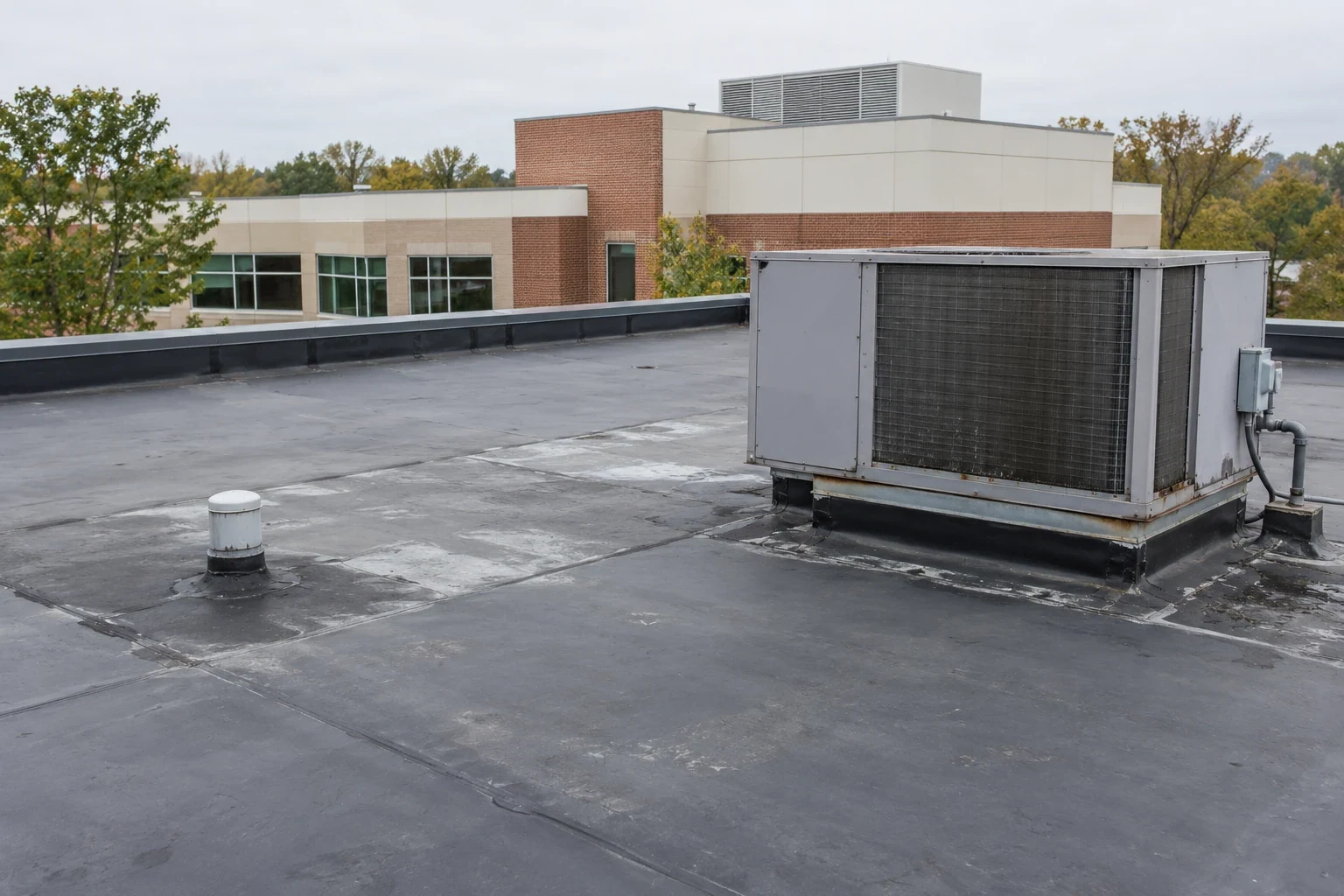
A support correction or changed rooftop unit can require work by another trade before roofing closes around it. We identify the task order and suitable equipment interval with the property team. A completed field membrane should not be treated as completion if a curb or connection still needs reconstruction. The roof stage must include the relevant water boundary after the support is stable. That interface can differ between neighboring buildings within the same care system.
Where general-contractor coordination is part of renovation, the opening and closure responsibilities need to match the physical sequence. We assess curb heights, changed penetrations and receiving material before final detailing. Increased insulation can reduce available flashing clearance. Air intakes also need a suitable arrangement during preparation or application, with necessary operation considered before a component is blocked or disconnected.
Service traffic after construction can damage vulnerable connections if routes or sharp contacts remain unchanged. We examine the access path from the hatch to the equipment, selecting compatible protection where useful without impeding drainage. The installed detail should remain reachable for inspection and suitable later repairs. A new roof can otherwise inherit repeated contact damage from the same operational use that harmed the previous connection.
Keep completed and temporary work distinct
Immediate entry protection and permanent reconstruction need clear boundaries. A temporary measure can stabilize an active situation while investigation establishes the full work. The later scope should identify the receiving material, layers removed and final connection formed. Interior containment alone does not close the roof defect. A healthcare program should be able to distinguish completed repair from a measure awaiting further construction, particularly where several properties have unlike intervention stages.
Property-management roof coordination can preserve that distinction in recurring work orders. A blocked outlet, damaged low-point flashing and wet insulation are separate tasks even when they contribute to one leak report. We identify which task remains outstanding and why. The system owner can then compare immediate work and supported renewal based on components, with the clinical protection needed for each intervention clearly connected to its actual construction exposure.
For work associated with Brockton, we assess the individual property access and room use before selecting stages. Material delivery, disposal and roof lifting should fit required entrances and circulation. The scope should identify any temporary control or interior interval needed. A multi-building program can share a comparison method while retaining the physical differences that establish each roof's repair threshold.
Select stages that finish the water boundary
A roof zone dense with equipment or wall transitions can require more closure effort than an equal area of open field. We define daily removal with those details, application conditions and occupied-room protection in view. Temporary project divisions need suitable construction where new and retained roofing meet. Drainage should remain workable through the stages. The proposed sequence must leave a secured assembly rather than rely on the next visit arriving before weather reaches an unfinished detail.
Replacement, recover and restoration can retain different materials. We identify insulation condition, support, attachment and reconstructed connections under each option, with the relevant project requirements included. Dry serviceable construction can be considered differently from compromised layers. The system owner receives a comparison of complete roof assemblies and construction exposure, with retained layers, attachment and rebuilt details distinguished under each option.
Commercial Roofing Questions
Should a small clinic leak and a hospital leak receive the same priority?
Compare the active entry, affected room and equipment dependency rather than the facility label alone. We identify the defect and concealed condition, then explain the protection and intervention needed. A bounded opening above sensitive use can require prompt work, while wider deterioration elsewhere may support planned renewal. The component and interior exposure should supply the reason for each priority.
How do we compare moisture findings across unlike roof systems?
Use methods suitable to each assembly and examine the material condition behind the result. We identify wet layers, receiving support and the removal boundary, with physical checks where necessary. Similar temperature patterns can occur on unlike constructions. The useful comparison is the damaged component and repair task established by investigation, not an assumption that every mapped area needs identical treatment.
What should remain clear when temporary protection precedes renewal?
Identify the temporary measure, the permanent connection still required and any damaged layers needing removal. We distinguish containment from completed waterproofing work. The later stage should include the receiving material and closure details that restore the assembly. A healthcare program needs that distinction visible so an immediate intervention is not mistaken for completion of the supported renewal scope.
How can planned equipment replacement change a roof stage?
It can alter support, penetration geometry and the operating interval needed before flashing closes. We assess those changes with the assembly and room dependencies. Roofing should follow the relevant support task, with new insulation height and drain relationships resolved before field installation. The sequence should leave a completed connection after the coordinated equipment work, not require immediate disturbance of a newly finished detail.