Commercial Roofing for Insurance and Restoration Work in Quincy, MA
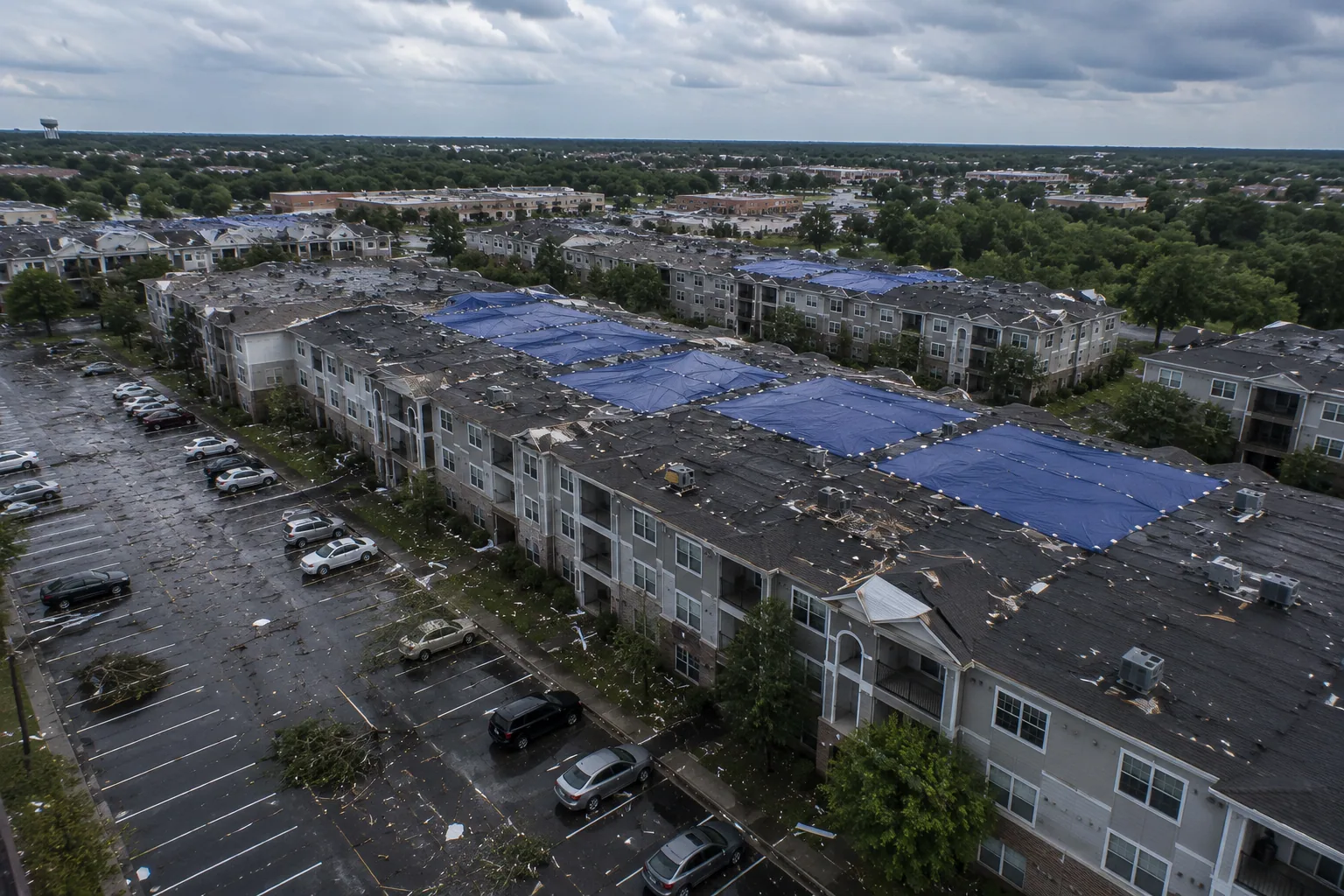
A loosened perimeter connection after a winter storm can admit water beyond the visibly displaced metal. For insurance and restoration work in Quincy, MA, we examine the roof pathway and receiving assembly before treating the visible opening as the complete repair scope. The connection may need reconstruction while wet insulation requires a separate removal boundary. Temporary protection also needs to be distinguished from permanent closure. Those physical findings allow the roof task to be coordinated with affected interior work.
Quincy prepares for flooding and winter storms. We assess the requested roof's components in that weather context without assigning every defect to the latest event. Field condition, attachment and earlier deterioration can affect the construction required. We inspect, repair and renew commercial roofs, describing what was observed and what closer examination establishes. The resulting scope explains the assembly work rather than assuming a coverage decision or treating a restoration label as a particular roofing intervention.
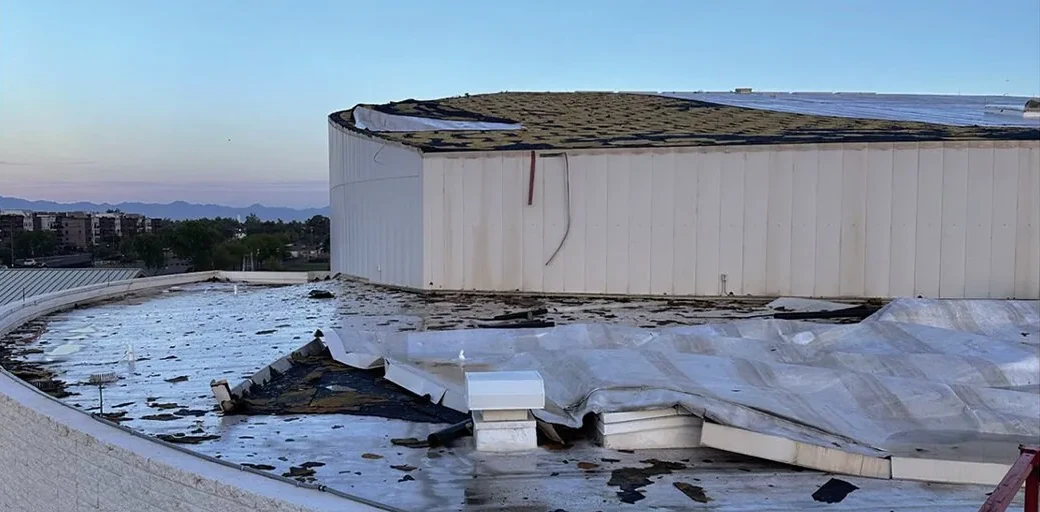
Stabilize the opening without concealing the next task
An immediate measure can limit entry while suitable conditions or further investigation are needed for permanent work. We assess how the temporary construction meets the existing roof and where runoff will travel. Loose or incompatible material can create another vulnerability rather than useful protection. The temporary boundary should be appropriate to the actual assembly and access available. Interior containment also has a separate role; it does not reconstruct the roof connection that admitted water.
Our emergency roof intervention identifies the affected connection and any later task needed for complete restoration. We describe temporary closure separately from final flashing, receiving repair or damaged-layer removal. The property team can then arrange the next construction interval with an understood roof scope. A visit attended to during active entry should not be mistaken for completion of every component supported by subsequent findings.
Separate displaced components from concealed damage
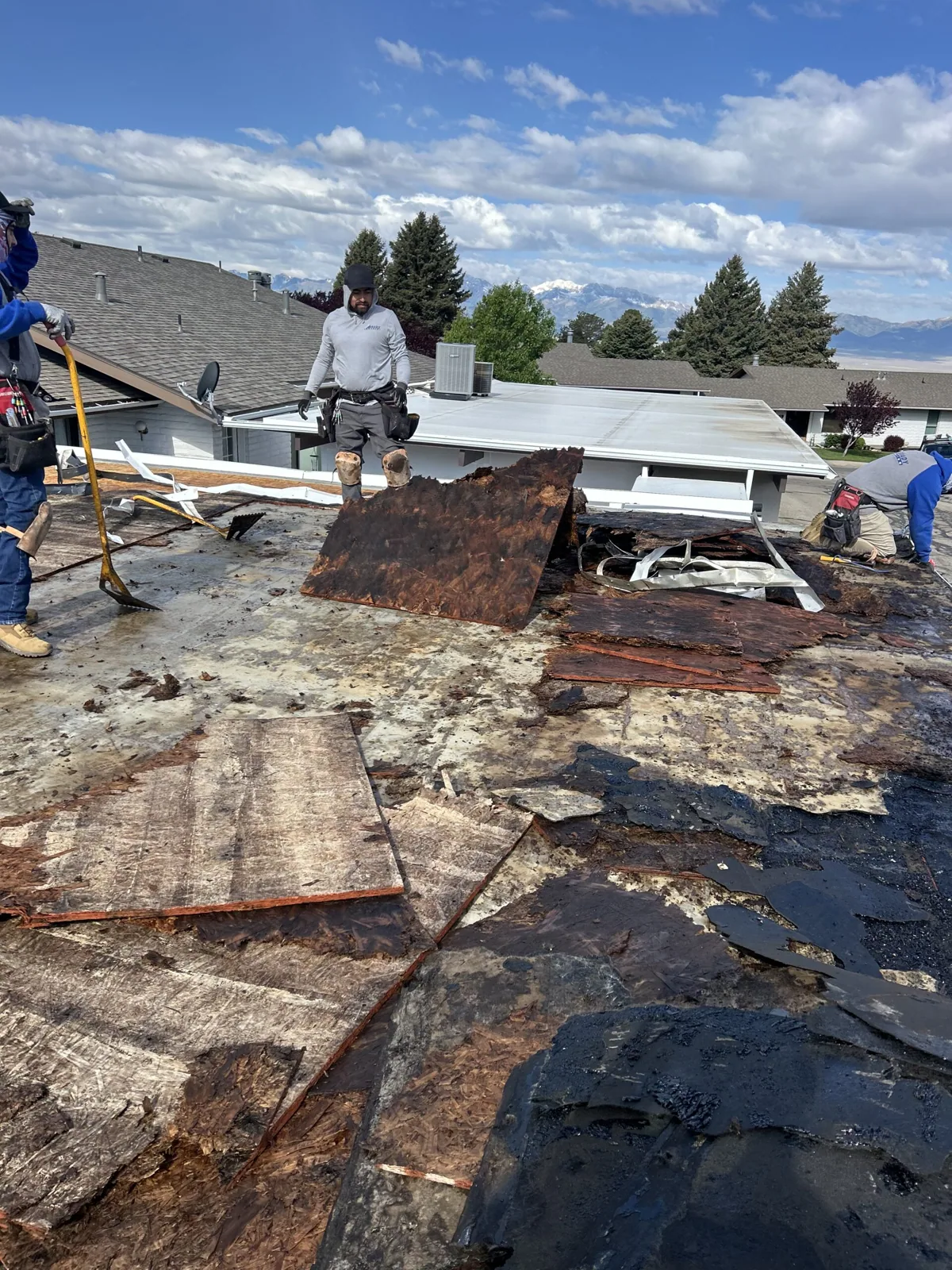
A damaged edge, open seam and compromised equipment flashing can create different water pathways. We inspect the connection and surrounding construction rather than define the repair from the interior symptom alone. Moisture can spread through layers beyond the surface defect. Selective examination may be needed to establish the receiving material and extent affected. The supported removal boundary should follow those findings, with the entry point and damaged underlying construction identified separately.
Storm-related roof repairs can require field, perimeter or equipment work. We distinguish displaced components from deterioration that changes the receiving scope, explaining what the examination establishes at each area. A weather event and an older defect can both be relevant to the physical assessment. The recommendation should not simplify those conditions into a single unexamined cause merely because the inspection follows a storm.
North Quincy's Hancock Street commercial activity and Marina Bay's offices, restaurants and residential uses provide different local settings for occupied restoration. We check actual property access and interior exposure for work associated with North Quincy. District names and nearby uses help identify operating questions; the requested roof's physical construction establishes the restoration tasks.
Connect each finding to the construction it supports
Photographs and observations are most useful when they identify the component, location and condition relevant to a roof decision. We examine the assembly rather than treat a broad damaged-roof description as a complete scope. Where concealed layers matter, closer checks can establish moisture, support and retention suitability. An unexplained surface mark should not become a material removal assumption. The finding needs a relationship to the repair or investigation being proposed.
Roof condition assessments distinguish visible defects, established concealed findings and areas requiring further examination. We explain how each affects the recommended construction. A bounded waterproofing opening and distributed unsuitable insulation can belong to different parts of the scope. Those descriptions make coordination with the restoration team more useful because the tasks are linked to actual components rather than an interior damage estimate alone.
Restore the roof boundary before closing affected rooms
Interior restoration needs a suitable relationship to the roof work that resolves entry. We identify whether the current roof condition remains temporarily protected or has received its permanent connection. The damaged assembly can require more than closing the visible opening. If affected insulation or support remains unresolved, that task should be understood before interior completion is treated as the end of the project. Roof and room boundaries are related but not interchangeable.
For property-management restoration coordination, we explain which components have been repaired and which construction still needs an interval. A repaired flashing, cleared outlet and removed wet boards represent different work. That clarity also helps when a later symptom occurs. The next examination can compare the pathway with completed roof tasks rather than assume every new interior observation means the same connection has failed again.
Marina Bay contains assisted living alongside its other commercial and residential uses. Where a requested roof affects a care area or occupied room, the property team should identify actual relocation and protection requirements before roof work. We assess the task's water and debris exposure with the property team. The occupied interval should support secure roof completion, not pressure the scope toward leaving unsuitable components in place.
Compare local reconstruction and wider removal
Repair can be appropriate where the defect is bounded and receiving construction is suitable. A wider intervention can be useful when moisture, support or attachment findings establish distributed damage. We identify the basis for each approach and what remains after it. A new surface does not itself show that concealed layers are dry or useful. The proposal should describe removal, insulation, support and final details rather than reduce the comparison to a covering name.
Where general contractors coordinate restoration, equipment and adjoining wall tasks need an appropriate sequence with roofing. The final flashing follows support or geometry changes that affect it. Added construction height can alter outlets and curb clearance. We assess those relationships before field installation, allowing the completed repair to close at suitable interfaces instead of preserving the same vulnerable condition beside renewed material.
Leave a repairable final assembly
Service access should remain useful after restoration. We examine technician routes and compatible protection where concentrated contact can damage the installed roof. Outlets need accessible water paths, and vulnerable details need to remain inspectable. A restoration that leaves supports obstructing drainage or sharp contacts against new material can create another recurring defect. The final construction should account for how the roof will actually be used.
We also identify installed-material information relevant to later compatible repairs. Temporary treatments and permanent work should remain distinguishable in the completed component description. The property owner can then arrange upkeep around the assembly present, with routine cleaning separated from construction damage needing repair. That practical endpoint supports future service without treating every roof work order as an identical maintenance task.
Commercial Roofing Questions
Does the visible storm opening define the full repair scope?
Examine the receiving construction and concealed condition around it. The opening can be bounded while moisture has affected a wider layer below. We identify the entry connection and damaged materials separately, with closer checks where needed. Permanent restoration should address the components established by that examination rather than stop automatically at the visible edge of the defect.
What should remain clear after temporary roof protection?
Describe the temporary construction and the permanent tasks still required. We identify receiving repair, final flashing and any damaged layers supported for removal. Interior containment has a different function from roof closure. The owner should understand that distinction before arranging later room restoration or considering the overall roof work complete.
Can an inspection establish the insurance outcome?
The roof assessment identifies physical condition and recommended construction. We describe observed defects, relevant assembly findings and repair boundaries, while coverage depends on the applicable policy and claim review. A roof scope remains useful when it explains the components and tasks clearly. It should not turn a weather-related inspection into an assumed coverage or payment result.
How should roof work be sequenced with interior restoration?
Confirm the status of permanent waterproofing and any remaining assembly work before closing affected interiors. We coordinate the relevant roof connections and exposure with the project team. Temporary entry protection can precede a larger supported intervention, but those stages need to remain distinguishable. The room completion interval should relate to the actual secured roof boundary.