Commercial Roofing for School Districts in Quincy, MA
A thaw can expose a blocked low outlet at one school while meltwater reaches weakened wall flashing at another. A district serving Quincy, MA, needs to distinguish those tasks before assigning the same seasonal response to both properties. We inspect the water route and receiving assembly, then identify cleaning, component repair or reconstruction supported by the findings. The occupied school interval matters, but it should follow an understood roof scope. A free classroom does not make unsuitable insulation fit to retain.
Quincy includes winter storms and flooding in its preparedness planning. We assess drainage and secure closure in that context, with the actual rooms and activities below each requested roof considered separately. A classroom wing, gym and administration area can have different access and protection needs. The district receives a comparison grounded in damaged components and completion effort, allowing immediate waterproofing and wider renewal to be sequenced through their physical requirements.
Rank the repair mechanism rather than the school label
A leaking penetration above occupied teaching space can need prompt work even when the surrounding field remains useful. A different school may have distributed wet insulation supporting larger removal without the same visible interior event. We examine the condition and affected use before comparing priority. The recommendation should identify the entry point, the damaged layers and the construction required to restore them. A district can then distinguish active protection from renewal based on documented physical needs.
Individual school roof assessments establish those component findings. We do not treat equal roof areas as equal projects. Equipment density, wall transitions and receiving support can change both scope and closure effort. The comparison should show which layers remain under a repair or recover, as well as what removal rebuilds. That prevents a new field surface from being mistaken for resolution of every underlying defect.
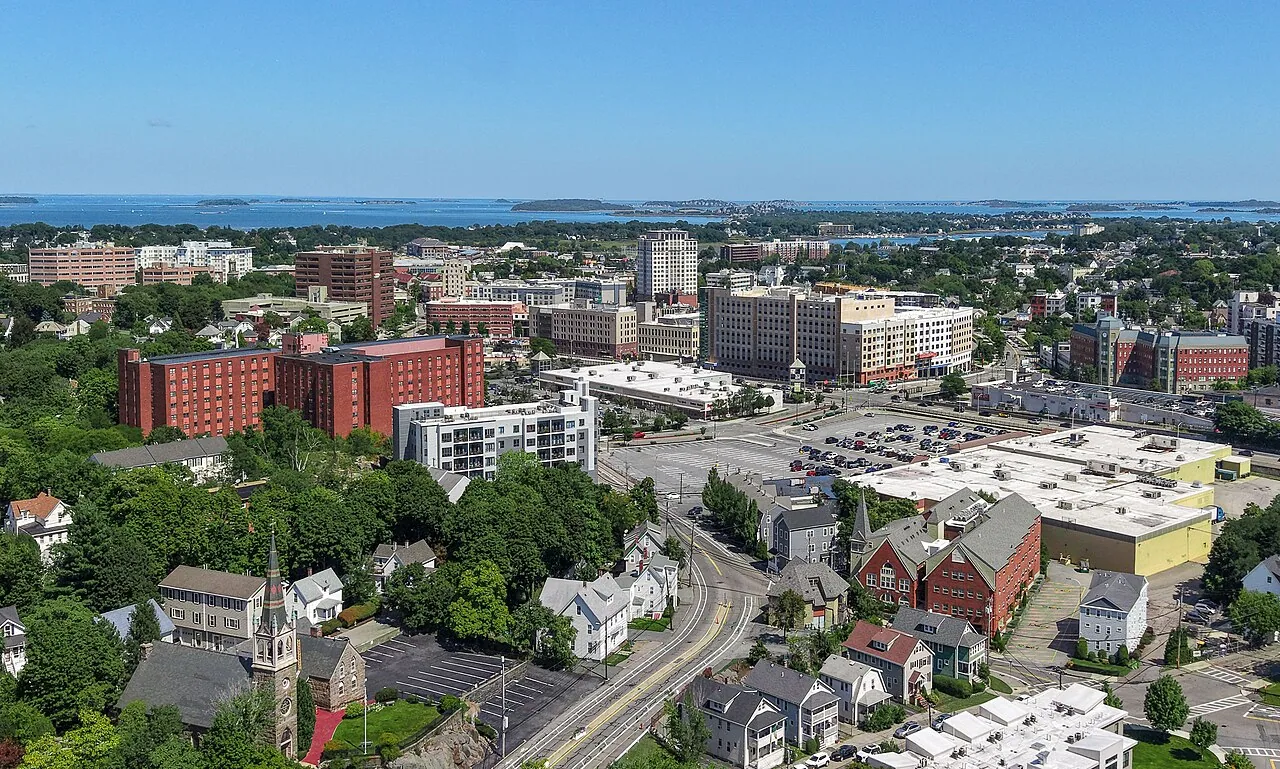
North Quincy High School is near the Hancock Street and West Squantum Street commercial area. For roof work associated with North Quincy, we check the particular school's entrances, interior circulation and proposed lifting positions. A district's local setting helps identify access questions, but the construction arrangement still needs to fit the actual property and occupied school use.
Examine the height changes between spaces
School roofs can meet walls above lower wings or change elevation beside larger interior spaces. We examine those transitions when runoff, movement or flashing deterioration contributes to entry. The assessment should establish the receiving wall and roof construction before another surface treatment is selected. A repaired field seam will not resolve water admitted above a wall termination. A replacement also needs a suitable final connection rather than conceal the old vulnerable interface beneath new roofing.
Holbrook has a shared elementary, middle and high school complex opened in 2017. That combination illustrates the district-level need to distinguish roof areas by their physical transitions and activities below. We inspect the requested assembly without assigning its roof age or material from the complex's opening year. Where unlike interior conditions affect a connection, air and thermal control may need examination alongside the exterior water boundary.
For district programs that also include college or university roof work, laboratory exhaust and associated equipment can introduce additional material-contact and service-route questions. The specific discharge needs assessment before membrane selection or local flashing repair. Those physical interfaces provide a more useful comparison than assuming every educational building needs the same assembly because students use it.
Set the classroom boundary before opening above it
A removal stage should have a defined relationship to the rooms below. We identify interior protection, any temporary room interval and the access routes needed during preparation and closure. A teaching area available for part of a day may not provide enough time for equipment coordination and complex detail work above it. The daily roof opening should reflect what can be secured within the available construction interval. Room availability is one constraint within that decision.
Occupied school reroofing also needs arrangements around entrances, air intakes and debris movement. We assess the actual construction task before selecting those controls. Preparation at a wall connection presents a different exposure from replacing boards in an open field. The work sequence should describe the vulnerable stage and its protection, with a completed water boundary established before the crew leaves an area exposed to weather.
A district can have after-school programs or other occupied activity outside the regular classroom schedule. We ask which spaces remain in use during the proposed work instead of treating a school break as unrestricted access. The roof's receiving material and suitable installation conditions remain part of the decision. A compressed interval should not lead to retaining damaged components simply to make the calendar appear workable.
Coordinate the unit change with the roof connection
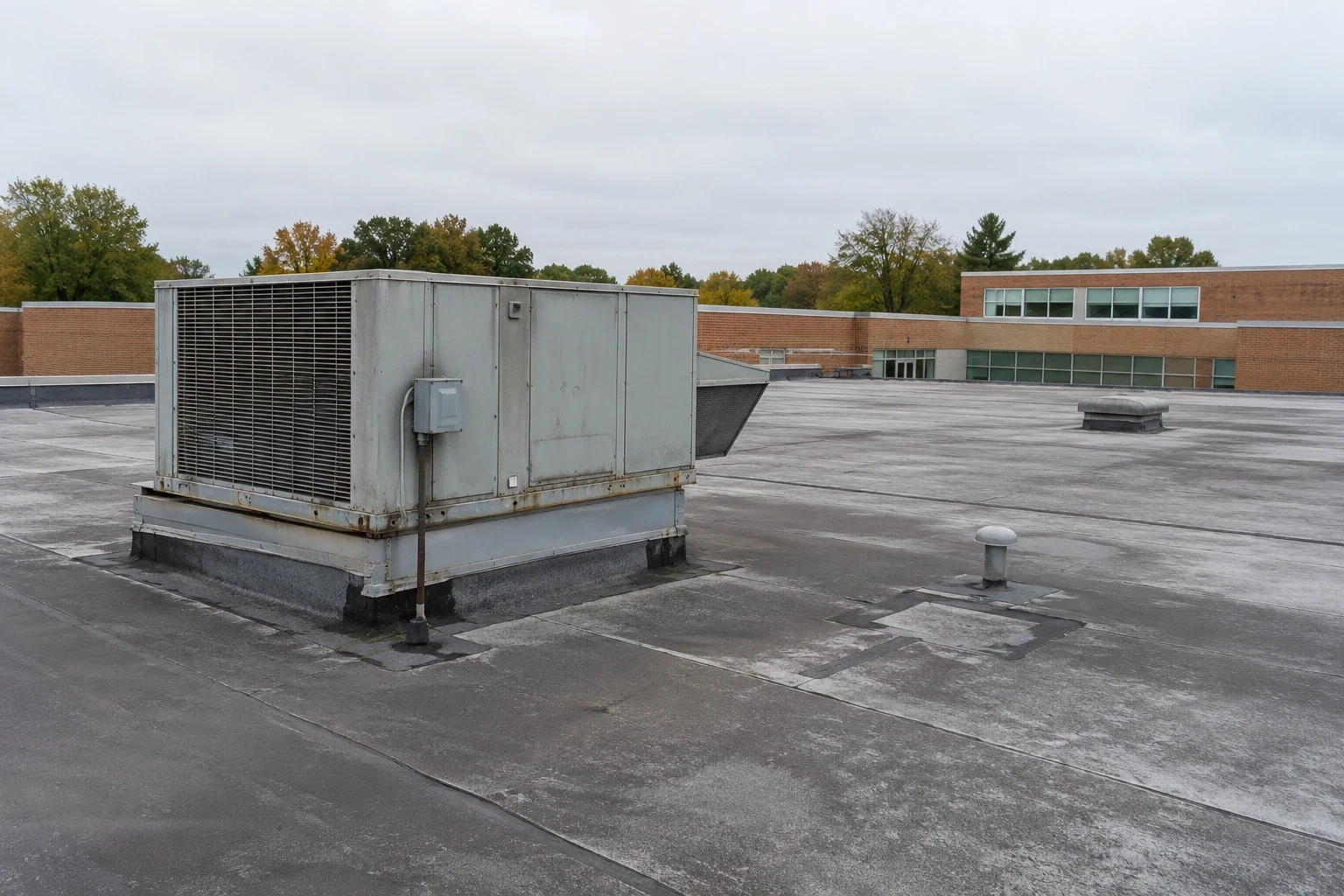
Planned rooftop equipment work can change penetrations, support requirements and flashing clearance. We examine those changes before selecting a roof renewal boundary. Support or mechanical tasks that alter the connection should finish in the appropriate sequence before final waterproofing. A completed surface is not the completed roof if an adjacent curb still needs alteration. The district should be able to identify the task that opens the assembly and the construction that closes it afterward.
Where general contractors coordinate school renovation, we assess the receiving detail with the relevant project tasks rather than install roofing around a support expected to change. Additional insulation can reduce the exposed height available at existing equipment. Changed drains or unit access can also affect geometry and traffic. Those interfaces need a final arrangement suited to the assembled roof, with compatible protection where service activity repeatedly crosses it.
Separate recurring upkeep from damaged construction
An outlet that needs seasonal clearing is not the same task as rebuilding its deteriorated flashing. We identify the distinction when reviewing repeat work orders. Maintenance should preserve the water path and accessible connections, while repair restores damaged components. If a recurring interior symptom remains after a previous intervention, the next examination should revisit the pathway and concealed condition rather than repeat the same treatment without establishing its effect.
For districts working with public-agency property teams, roof removal above a records room or public entrance needs protection specific to that use. A school classroom and an administration room may share a building but present different relocation and intake arrangements. We connect those arrangements to the actual assembly work. The district can then compare priorities and completed tasks through the components restored, without an unsupported service-life forecast assigned from appearance alone.
Commercial Roofing Questions
Should every school with a winter leak receive replacement?
A winter leak requires examination of the defective connection and the layers below it. We examine whether entry comes from a bounded connection and whether retained layers remain serviceable. A localized repair can suit one roof while distributed damage supports removal at another. The district should compare those findings and the affected rooms rather than infer the same intervention from the season of the leak.
How does a school break affect the proposed roof area?
It can provide an operating interval, but the daily opening still depends on completing connections and suitable application conditions. We check remaining activities, equipment coordination and interior protection before setting the stage. A large available roof area is not automatically a useful removal boundary if the associated details cannot be secured before weather exposure resumes.
Can rooftop equipment replacement wait until after the new roof?
Assess whether the equipment task will change supports, penetrations or clearance first. Those changes can require reopening a finished connection. We coordinate the relevant task order so final flashing follows the construction it must close. The recommendation should explain which existing components remain useful and which interfaces need reconstruction with the equipment project.
What should change when an outlet problem keeps returning?
Examine the surrounding geometry and damaged material as well as the obstruction. Supports, construction height or a deteriorated receiving detail can contribute to repeated water accumulation. We identify whether maintenance restores flow or a component repair remains necessary. The completed task should match that finding, allowing the district to distinguish regular upkeep from unresolved construction damage.