Commercial Roofing for Public Agencies in Quincy, MA
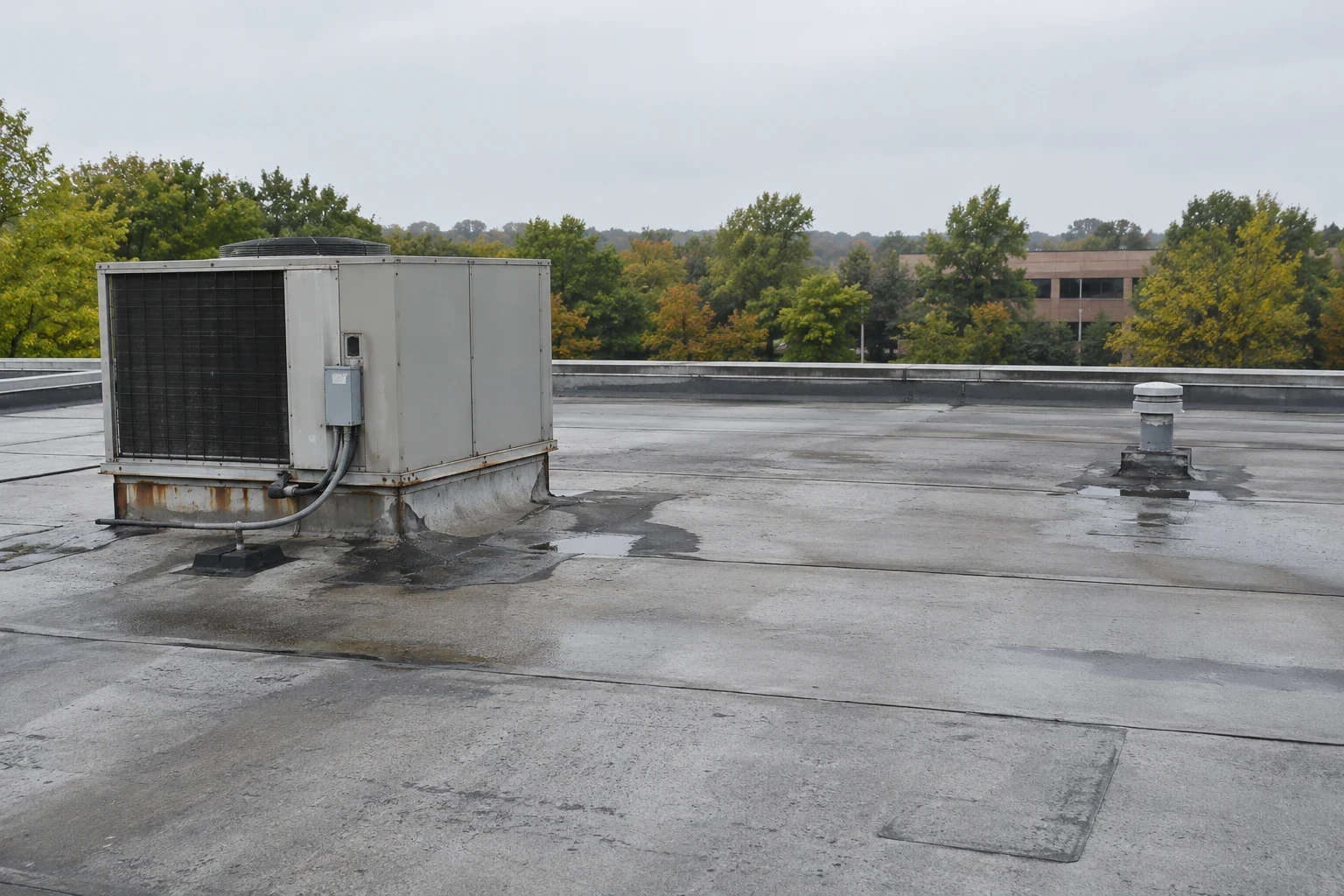
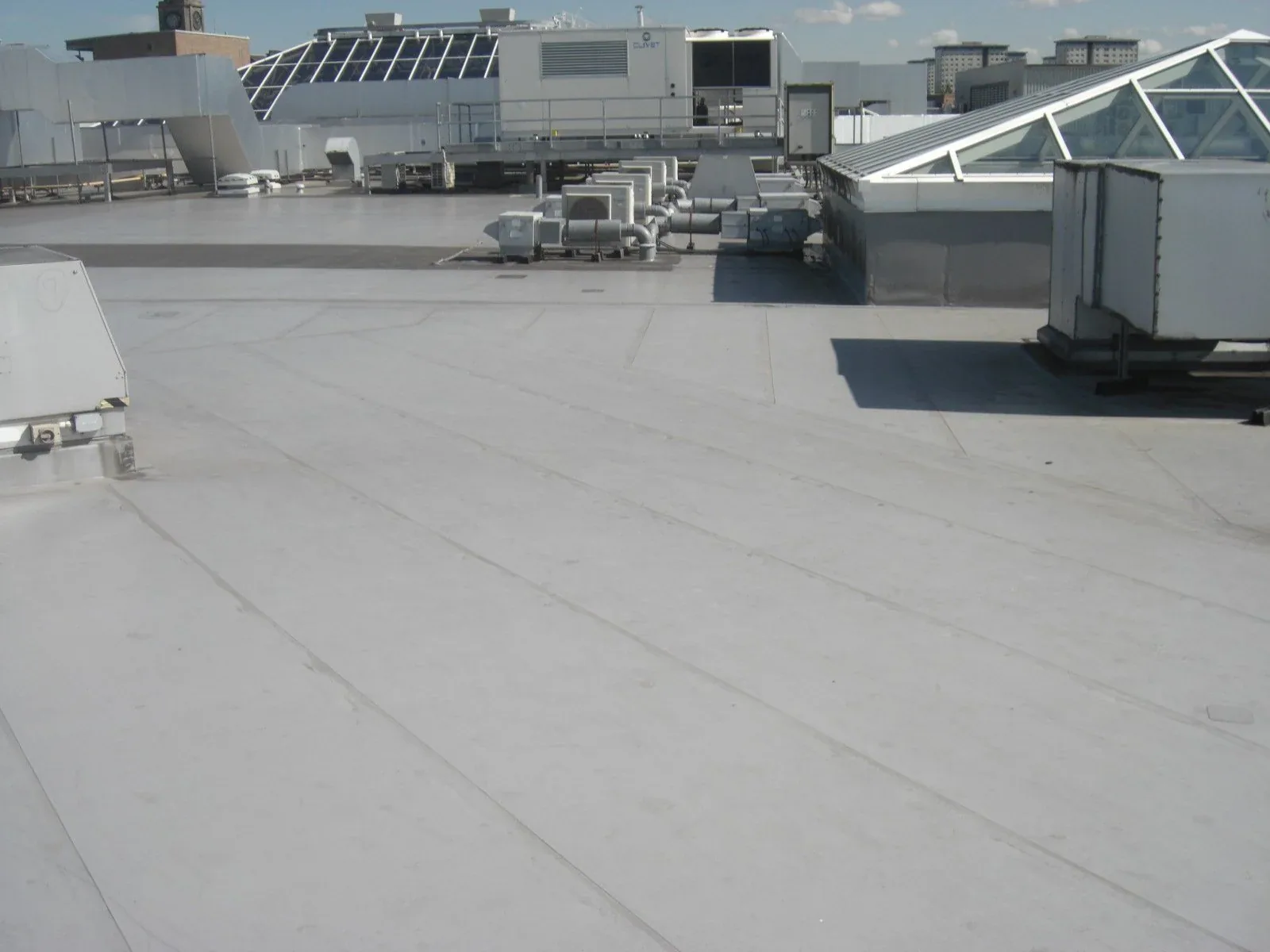
Ice remaining beside a roof outlet after the field clears can reveal a drainage problem that affects a public entrance below. For a public agency in Quincy, MA, we examine the roof geometry, outlet connection and receiving construction before defining the intervention. Cleaning an obstruction, repairing damaged flashing and changing a low area are different scopes. The agency needs that distinction before arranging access or comparing renewal options. A replaced surface should finish at a workable discharge relationship.
Quincy's preparedness addresses floods and winter storms. We apply those concerns to the requested property's actual water routes and exposed construction stages, with public circulation considered alongside the assembly. A library, administration office and service building can require unlike protection during removal. We identify the roof task and the occupied use it affects, so a program covering several buildings does not substitute one uniform operating assumption for the individual construction needs.
Match protection to the room and entrance
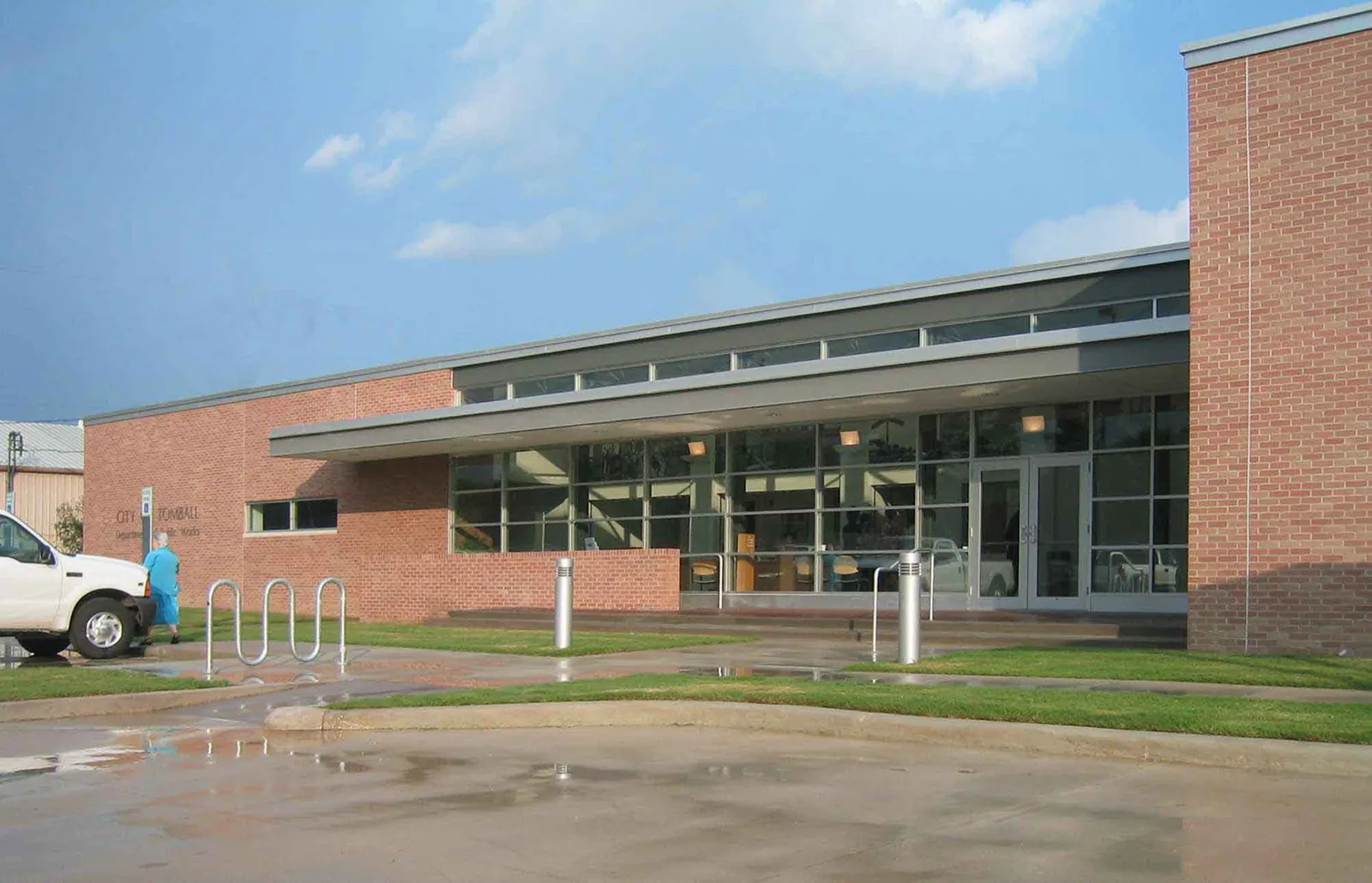
A roof opening over a collection room creates a different relocation question from an opening above a service bay. We assess the proposed task with the property representatives before establishing the interior boundary. Protection should address the water, debris and construction exposure created by that task. The plan also needs usable entrance and circulation arrangements. A general statement that a building stays open does not identify how its affected rooms remain protected during a vulnerable stage.
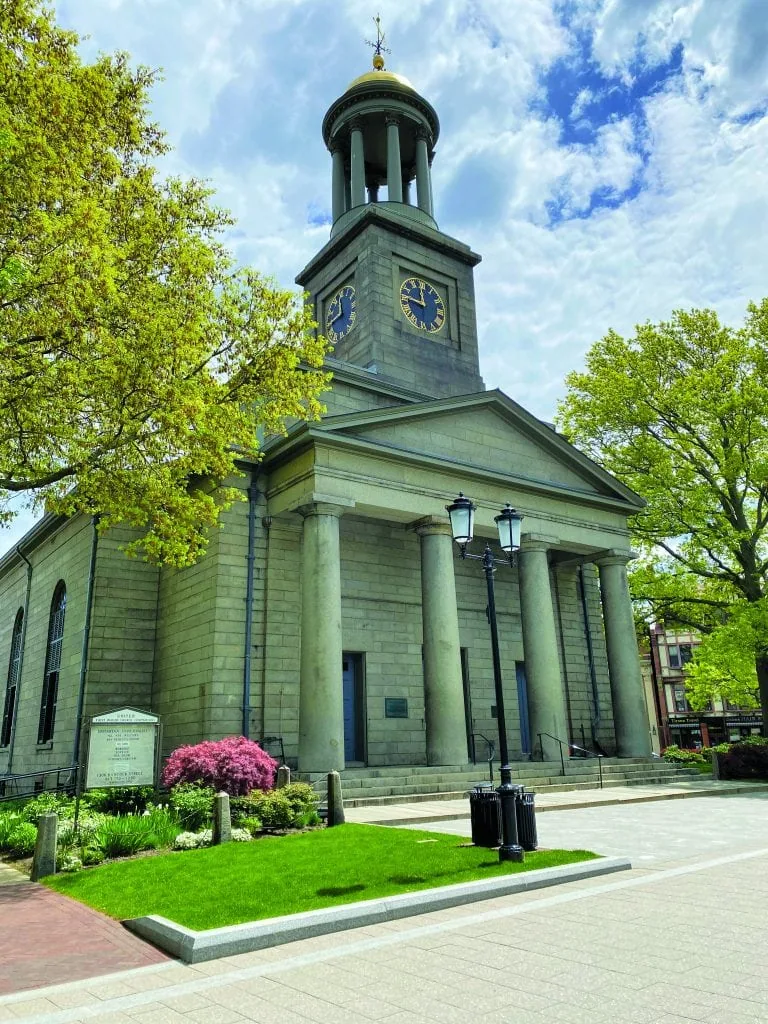
Quincy Center includes City Hall, the Thomas Crane Public Library and downtown office and retail activity. For requested work associated with Quincy Center, we check the individual property's lifting positions and public routes before locating delivery or disposal. The mixed civic and commercial setting makes those arrangements relevant to the work. It does not establish unlimited access around a building or a particular roof construction.
Our government-building roof work examines the receiving assembly and damaged details with those operating arrangements in view. A bounded connection can need local reconstruction while the wider roof remains useful. Distributed concealed damage can support a different removal decision. Public use affects how the task proceeds, while physical condition establishes the components requiring repair.
Identify the connections above sensitive use
Randolph has the Turner Free Library as well as community and school facilities. A public-agency comparison across such uses should connect the actual roof area to the protection needed below. Collection storage can require a suitable interior arrangement before boards are removed. An office equipment area can need a different interval for intake or service coordination. We assess the affected construction rather than infer a repair scope from the facility name.
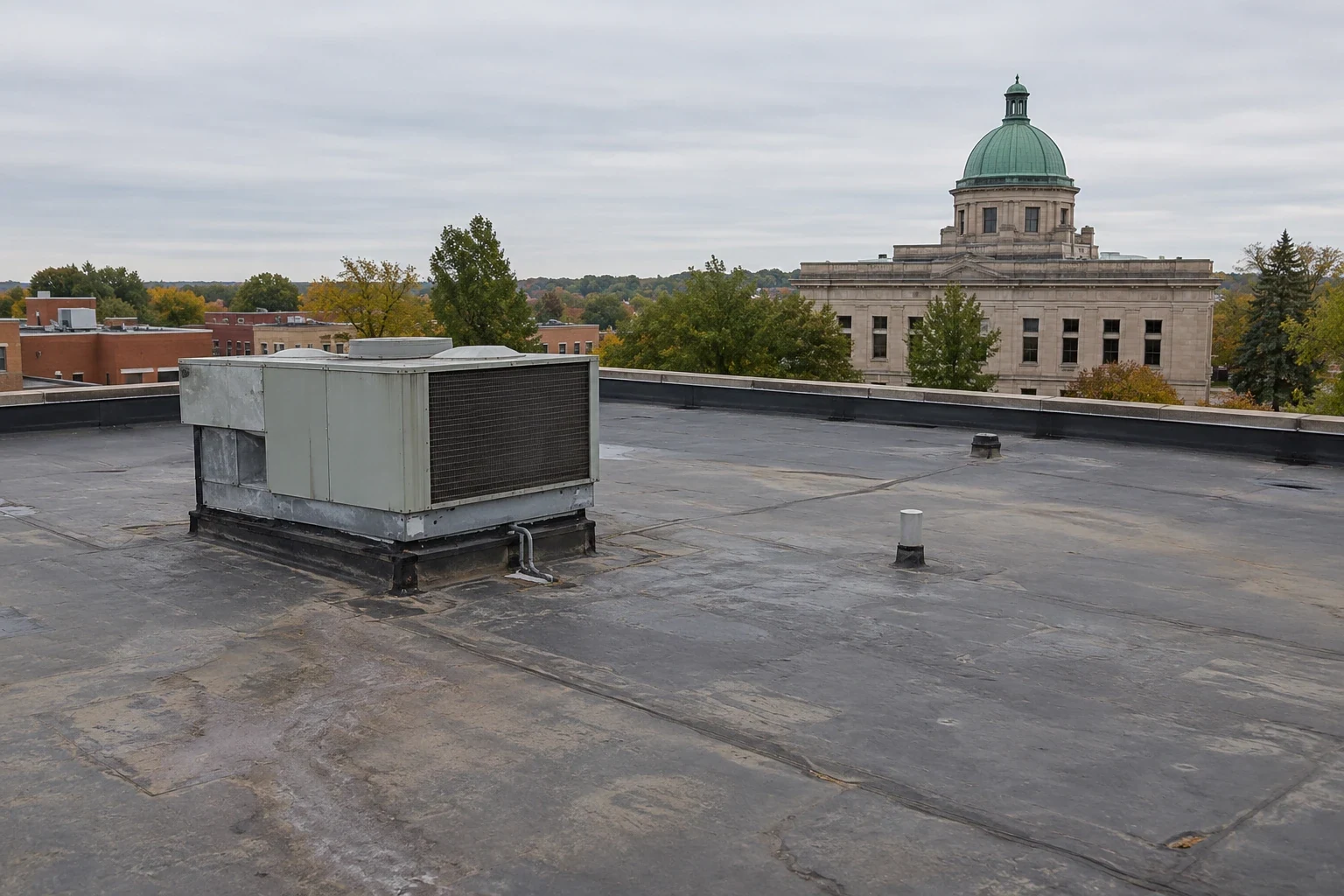
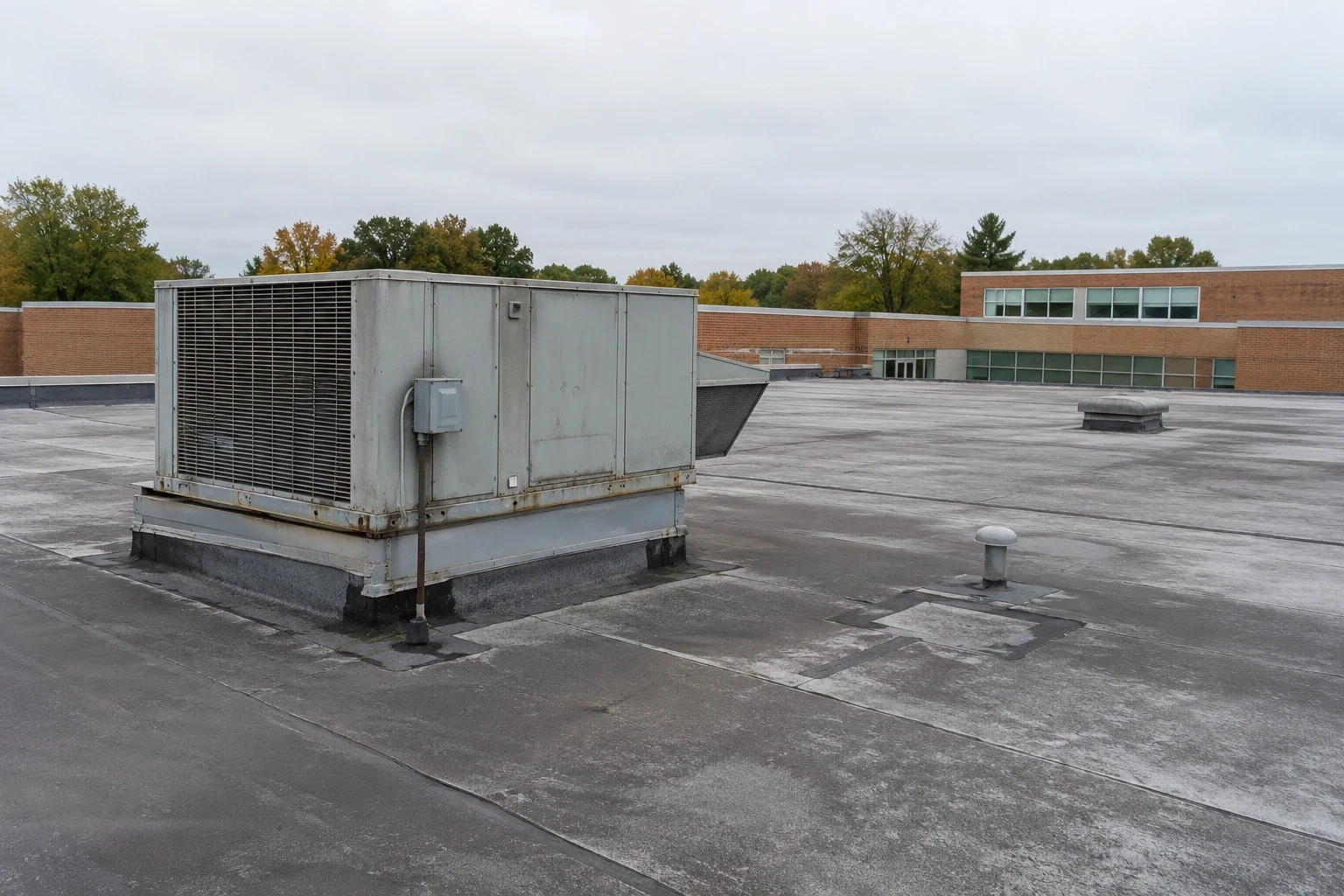
Where agencies also manage school-district roof projects, classroom isolation and the actual teaching schedule belong in the removal sequence. For office roof repairs, an equipment curb can require support work and a suitable operating interval before flashing closes. Those differences are meaningful when comparing the tasks. The owner should see what component is restored and what occupied arrangement enables that restoration at each property.
Resolve the receiving condition before choosing retention
A continuous roof covering can conceal insulation or support no longer suitable to remain. We inspect field and detail conditions and select closer investigation where concealed construction affects the recommendation. Surface age and appearance cannot establish the condition of every retained layer. If an opening is needed, its location and closure should be coordinated with the agency's operating use. The findings then identify removal based on the material and extent actually established.
Moisture survey work can help direct examination under suitable assembly and weather conditions. A thermal indication is not itself a complete removal scope. We connect the result with physical condition and checks appropriate to the decision. Wet insulation, deteriorated support and damaged flashing can require different work, even where they appear in one roof area. The comparison should explain which task restores each affected component.
Air and thermal control also deserve assessment where interior conditions or roof transitions suggest a contributing moisture pathway. Exterior entry and condensation need different remedies. We examine the relevant construction instead of repeating a surface treatment without establishing its effect. A useful agency recommendation identifies the connection or layer behind the problem and the complete intervention supported by that finding.
Compare removal and retained construction explicitly
A repair, recover and replacement can leave substantially different materials in service. We describe removal limits, insulation, deck work, attachment and final flashings under each proposed approach. Outlet elevations and equipment clearance also need assessment where construction height changes. The agency can then compare complete assemblies rather than regard two different scopes as interchangeable because both end with a new-looking surface. Retention needs support from the actual receiving condition and applicable project requirements.
For public-property roof replacement, the proposed work should identify which interfaces are reconstructed along with the field. A damaged wall termination or unstable equipment support should not remain unresolved beside newly installed roofing. When a local repair is more appropriate, its receiving materials and finish still need a defined boundary. The agency receives the physical basis for the recommendation, making immediate intervention and wider renewal distinguishable through their construction content.
Finish the detail after the coordinated task
Another trade may need to alter equipment or support before roofing can form its final connection. We identify those dependencies before setting the stage. The proposal should show which task opens the assembly and how the roof closes after the relevant work. Added insulation, changed penetrations and intake arrangements can each affect the geometry. A field membrane installed early is not completion while adjacent equipment connections remain unfinished.
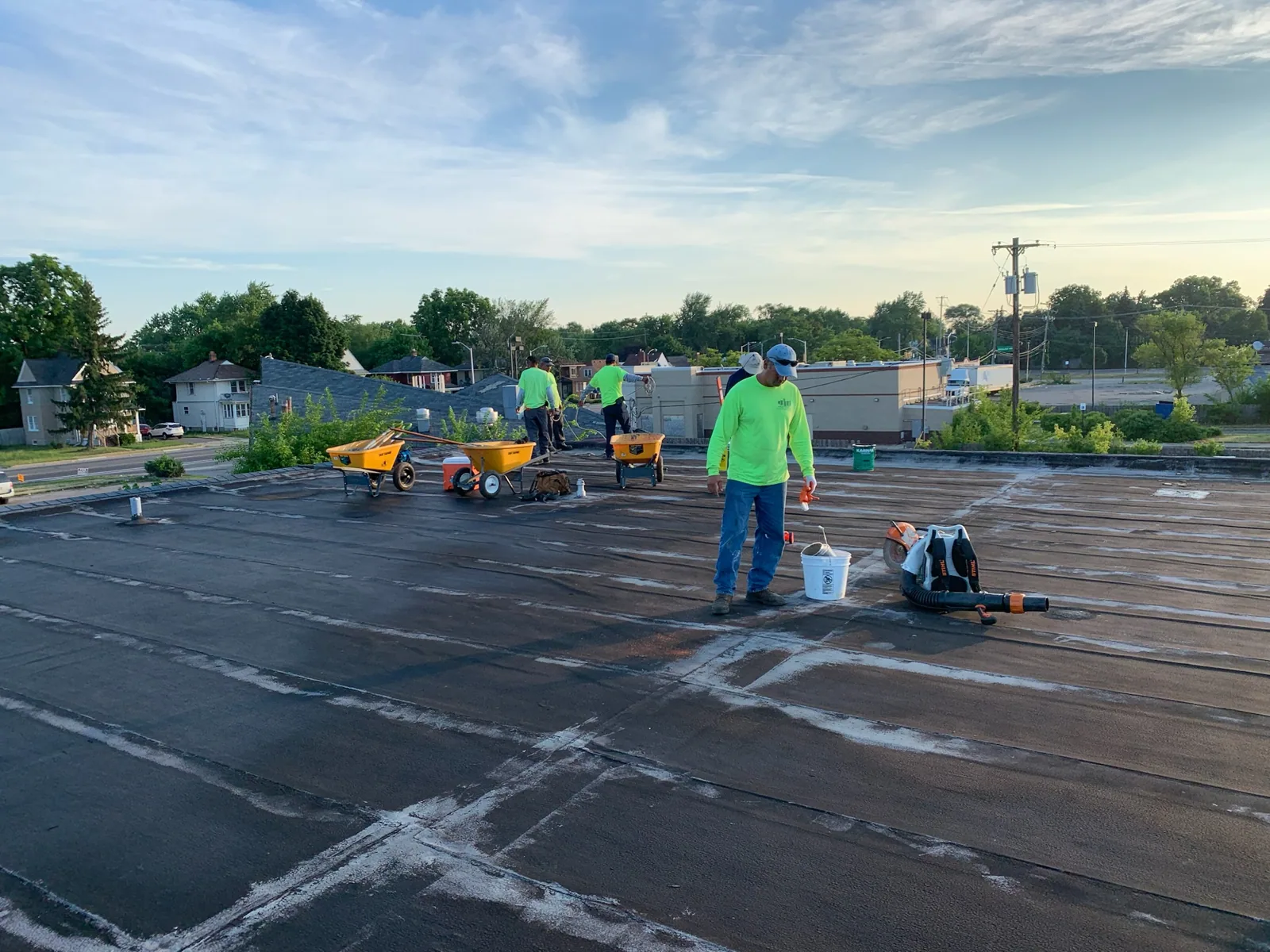
General-contractor project coordination can align those tasks during a public-property renovation. We establish removal boundaries using detail effort, suitable application conditions and the rooms that need protection. A small dense equipment area can require more closure work than a larger open field. The daily opening should reflect that difference, with drainage remaining usable and construction at the retained edge secured for the stage.
After work, technician routes should preserve access to outlets and vulnerable connections. Compatible traffic protection can reduce concentrated contact where useful, but it should not create a new obstruction. The agency should be able to distinguish routine cleaning and inspection from repair of damaged construction. That separation helps later service requests follow the actual component rather than repeat a broad maintenance instruction after every interior symptom.
Commercial Roofing Questions
How should public access affect a roof removal boundary?
Identify the entrance, rooms and circulation affected by the task before opening the assembly. We assess the required protection and completion effort together. A usable public route needs a practical arrangement during lifting, disposal and installation, not only a promise that the building remains open. The stage should leave its connections secured within the available interval.
What should distinguish repair and replacement proposals?
Compare the components removed and retained, receiving support, insulation, attachment and reconstructed details. We identify drainage or equipment changes separately where needed. A local repair and wider renewal can restore unlike construction. The agency should be able to understand those physical differences before comparing the options or selecting a suitable operating interval.
Does a moisture survey establish every area needing removal?
A suitable survey directs further examination rather than replacing it. We assess the indicated assembly and use physical checks where needed to establish material condition. The resulting scope should identify wet or unsuitable layers and their repair boundary. Similar thermal patterns can occur on different constructions, so the recommendation needs the component findings behind the mapped indication.
Can a roof stage finish before associated equipment work?
Check whether the other task will alter the support, penetration or clearance first. If it does, the final roof connection needs the relevant work completed in an appropriate sequence. We coordinate the exposed interval and closure rather than treat field installation as completion while a nearby detail remains unfinished. The secured assembly is the useful endpoint for the stage.