Government Building Roofing in Quincy, MA
Snow clearing from a municipal roof can leave meltwater beside a blocked overflow connection even as public rooms reopen below. For a Quincy, MA, government asset, we assess the outlet route and adjacent waterproofing before choosing a repair. The building's public role affects protection and access, while the assembly's condition determines the work required. A bounded defect on sound construction can support local repair. Distributed moisture or deteriorated support calls for a wider renewal assessment.
Public buildings can combine offices, meeting rooms, libraries and operational functions. We identify the actual uses beneath each affected roof area rather than apply one protection arrangement across the property. Quincy includes blizzards and flooding in its preparedness concerns, making drainage and secure stages practical priorities. The proposal should connect the physical findings with the rooms, equipment and entrances that need to remain protected during construction.
Identify the service affected below
A leak over a collection or equipment room can create a different exposure from one over a clear corridor. We examine the roof entry route while the property team identifies the contents and public activity requiring protection. Temporary containment may be useful while permanent construction is defined. It should remain distinguishable from the completed roof repair. Wet insulation or damaged receiving material can require removal beyond the visible surface opening.
Our repairs to commercial roof defects address the failed connection and supporting condition. Interior circulation or room availability may require a specific work interval when investigation exposes the deck. The proposal should identify those arrangements before removal. A small exterior task can affect a wider occupied area if water or debris cannot otherwise be controlled below it. Protection follows that exposure, while the roofing boundary follows the defect.
Assess the civic property individually
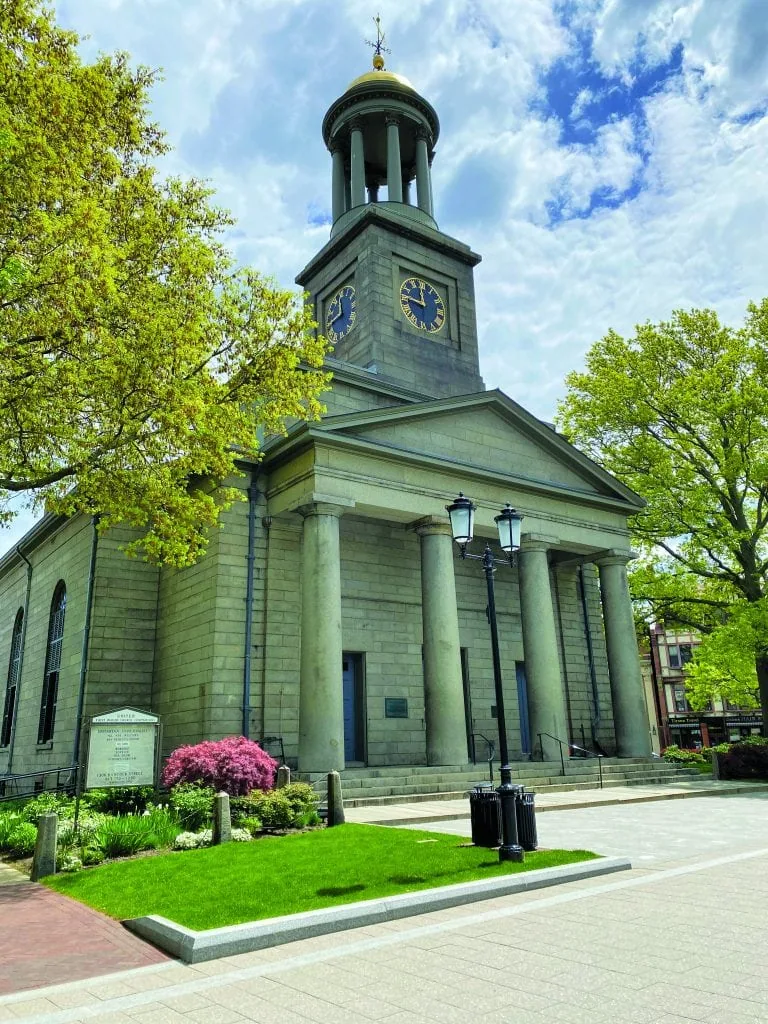
Quincy Center contains City Hall and the Thomas Crane Public Library alongside downtown retail and offices. A municipal roof in an active downtown setting needs an access and staging arrangement tied to the actual property. We examine entrances, circulation and material-handling routes before locating lifts or disposal equipment. The work position should not create an unmanaged conflict with required public access. That operating plan is distinct from the roof condition assessment.
Randolph's civic uses include the Turner Free Library. A repair above a collection area needs suitable water and debris protection when investigation opens the roof layers. In Quincy Center, the public-room layout likewise informs the removal interval and access arrangement. With office roof construction, equipment curbs may require coordinated mechanical work before the flashing can close. For school roofing, a classroom or gym beneath removal may need isolation until receiving material and the water boundary are restored. We identify that specific task and the protection it requires, rather than assume one occupied-building schedule resolves every roof connection.
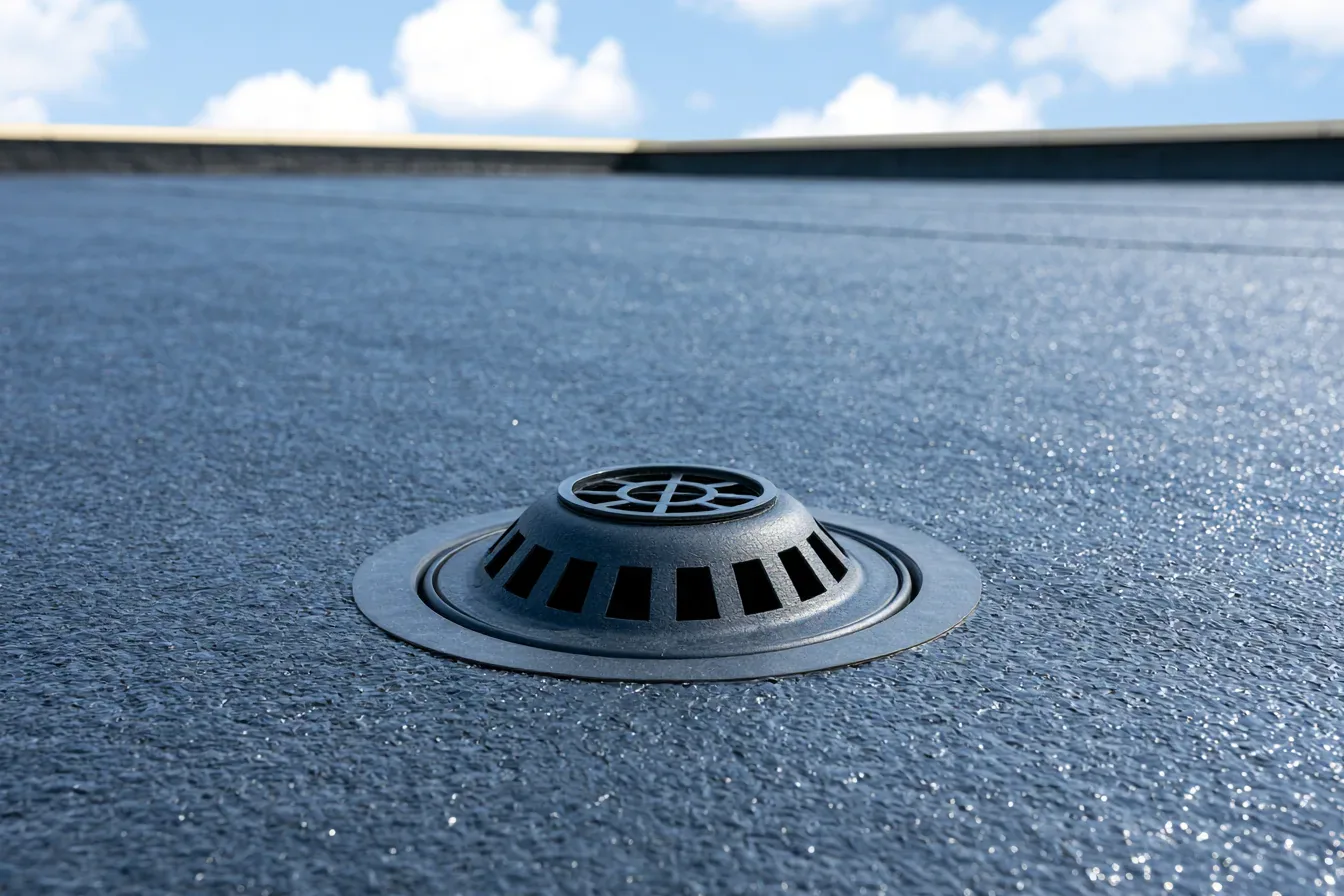
Read the drain and overflow together
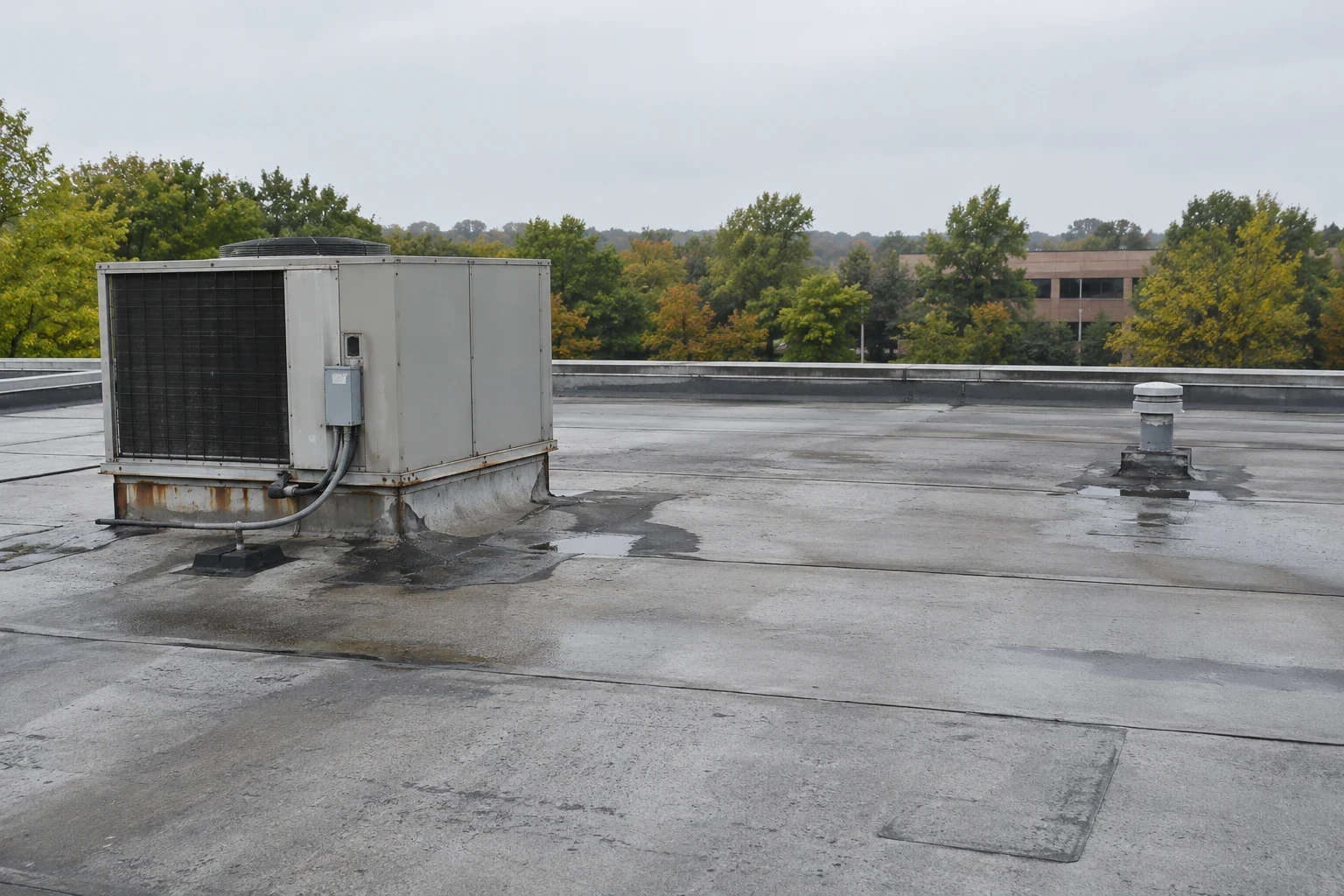
A clear primary drain does not establish that the overflow arrangement is serviceable. We examine outlets, low-point flashings and elevations together. Debris, damaged connections or unsuitable geometry can change how water leaves the roof. The scope should distinguish a cleaning task from a construction correction. Where water is held against an active defect, repairing the opening and correcting the water route can both be necessary.
Our drain and overflow work considers the completed roof height and insulation layout. Increasing insulation can change outlet relationships or available flashing clearance. The revised details should be established before the field is installed. Walk protection and supports must also leave drainage paths usable. A repaired roof should remain accessible for routine outlet examination rather than require maintenance staff to cross vulnerable equipment connections.
Resolve the support before sealing movement
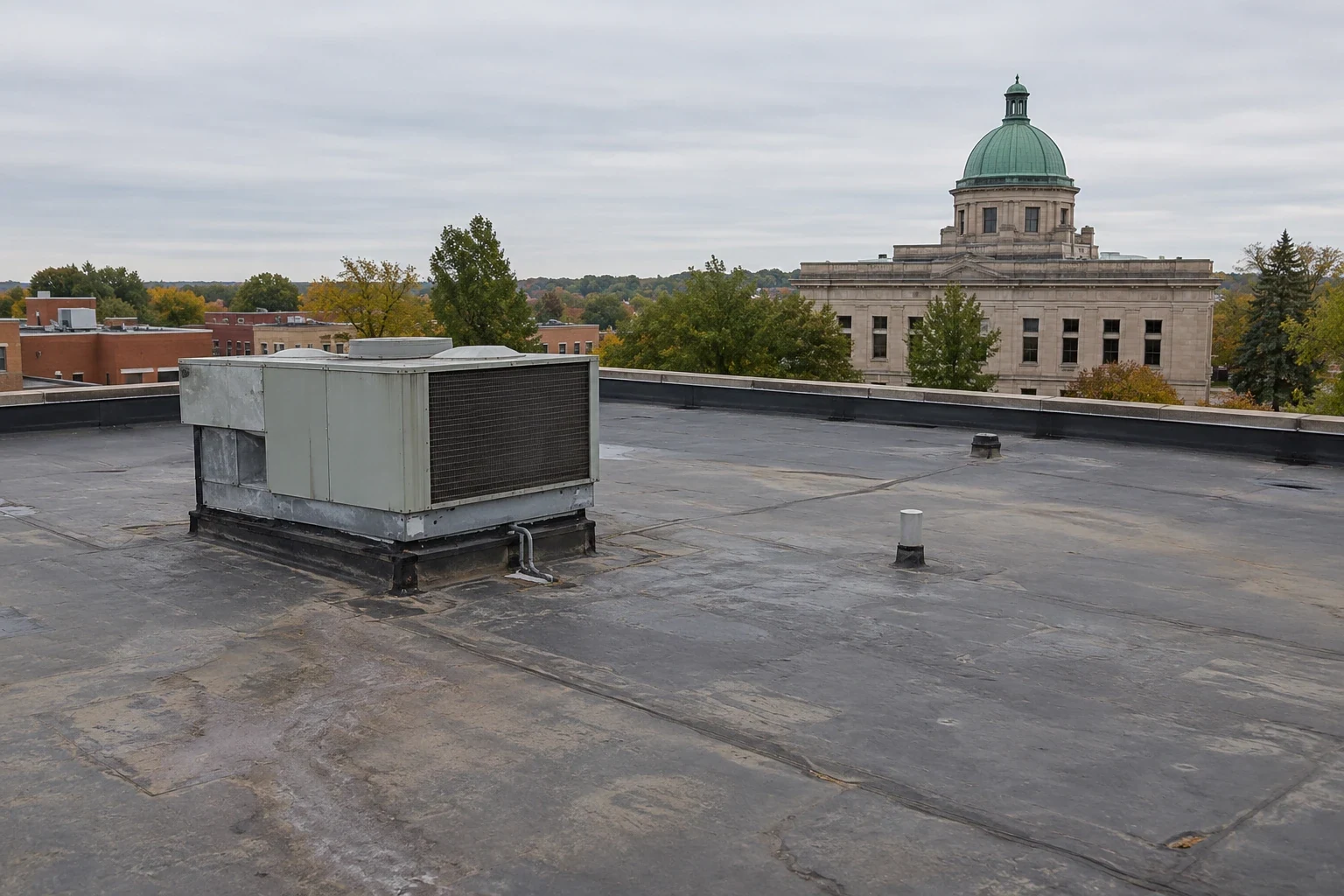
A rooftop component that rocks during servicing can pull repeatedly on its flashing. We assess the support, curb and adjacent sheet together. Compatible patching may be useful where the connection has a sound receiving area, but the source of harmful movement may need correction first. A surface seal cannot stabilize equipment or restore a deteriorated support. The permanent scope should identify the tasks required on both sides of that interface.
Air intakes and equipment dependencies can also affect preparation or application. We assess the selected method and the systems required to remain available before work begins. A coordinated operating interval may be needed for some tasks while nearby field work proceeds separately. The plan should make that distinction clear. Public use does not establish that every unit can be disconnected or that every task leaves the equipment untouched.
Compare retained layers on their condition
Soft field areas or recurring leaks can indicate moisture below the membrane. We investigate those findings before proposing a recover, restoration or replacement. Dry stable construction can be considered for suitable retention where requirements allow it. Wet insulation, deficient attachment or deteriorated deck areas can justify removal. The comparison should identify the retained components and the reason they remain serviceable, rather than treat every new covering as equivalent construction.
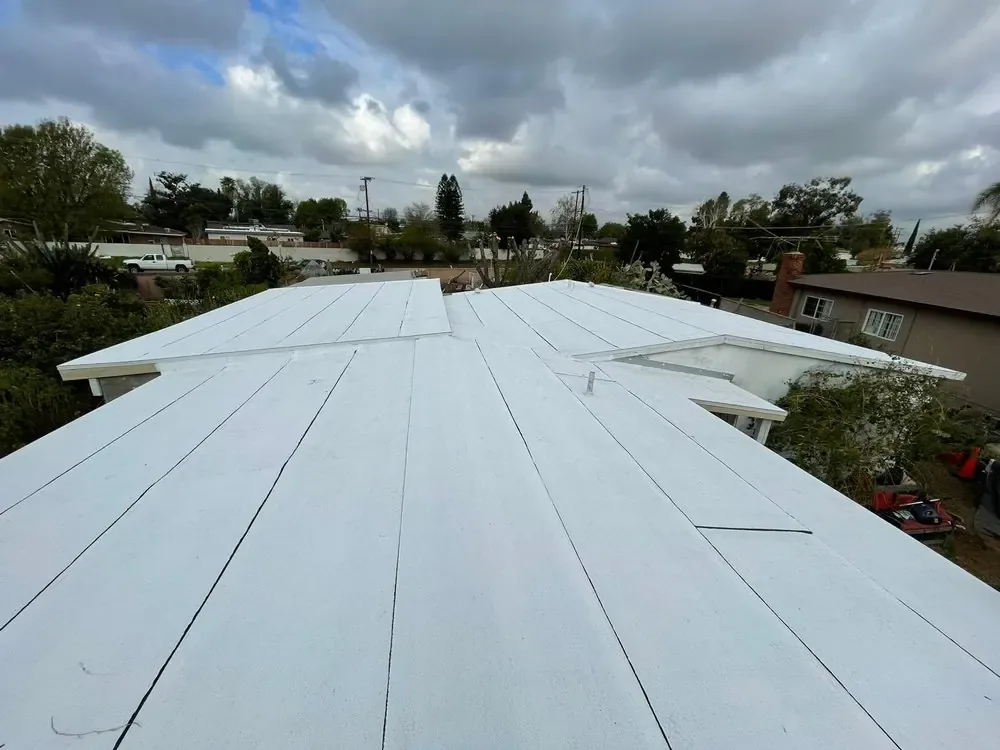
We assess TPO roof assemblies and other suitable materials through support, insulation, attachment and detail requirements. Material selection follows the roof's geometry and operating exposure. The selected construction also needs to satisfy applicable project requirements, with permit and design coordination appropriate to the jurisdiction. We identify those tasks without reducing the decision to a surface preference or carrying unresolved conditions into the new assembly.
Define the physical scope for comparison
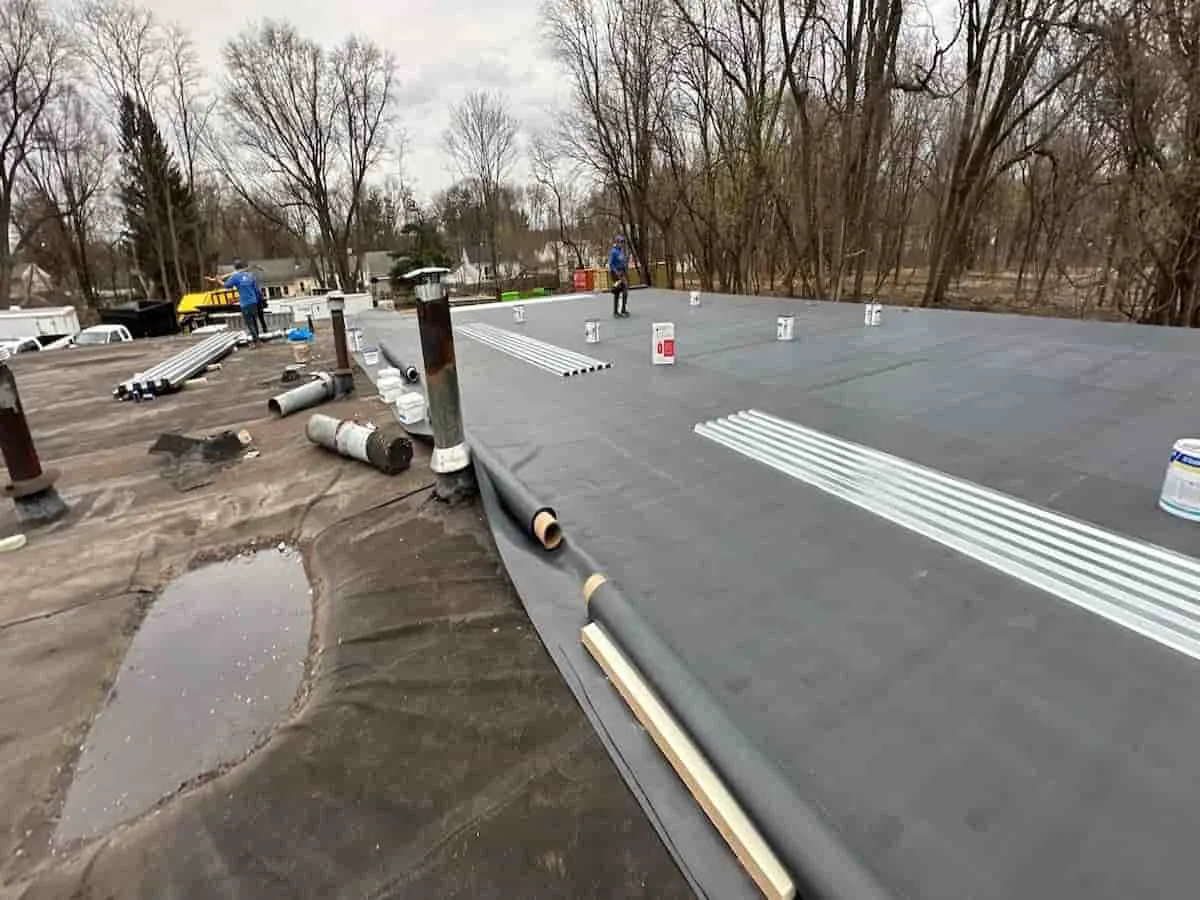
A useful proposal describes removal limits, deck or insulation reconstruction, drainage corrections and the connections being rebuilt. Those items let the owner compare the installed assembly rather than only the selected membrane. We separate a bounded repair from renewal supported by wider deterioration. Scope drivers such as difficult access, equipment coordination and occupied-room protection should be clear enough to assess alongside material choice.
Daily removal limits need to include the detail work that can be completed before weather changes. A penetration cluster may require more closure time than a larger open area. We define stages with that difference and the room use below in view. Temporary boundaries must connect suitably to retained roofing and preserve a workable water route. The chosen sequence should leave secured construction at each stage rather than assume the next work period will arrive before rain.
Later maintenance should preserve those completed connections. We examine service paths, sharp contacts and accessible outlets, with compatible protection where appropriate. Installed material information and repair methods should remain available for subsequent work. A condition record identifying specific roof findings can support that maintenance decision, distinguishing routine clearing from defects requiring repair and keeping the assessment tied to physical components rather than general urgency.
Commercial Roofing Questions
What should a roof proposal identify for a public building?
Identify the removal boundary, retained layers, drainage work and reconstructed details, with the occupied-room and access arrangements needed during construction. We explain those components so the owner can compare actual assemblies. Material names alone can conceal substantial scope differences. The proposal should show which defects are corrected and which existing construction remains in service under each option.
Can a library area remain open below roofing work?
The room use, contents and construction task need assessment first. We identify water or debris exposure and the protection or operating interval required before opening the assembly. Some tasks may proceed under suitable arrangements, while others need a defined area isolated. The plan should make that boundary specific rather than promise unrestricted public access through every stage.
Does a cleared drain mean the ponding issue is resolved?
The roof elevations and outlet connection still need examination. Water can remain in a low pocket even when the strainer is clean, and damaged flashing can admit it. We distinguish obstruction from geometry and connection defects before recommending work. A maintenance task can correct one condition while construction is needed for another.
How should emergency repairs relate to a later renewal project?
Immediate entry needs a suitable response and interior protection, while wider renewal follows the assembly assessment. We identify temporary measures and the permanent repair boundary clearly. Dry stable areas may remain serviceable, while wet or deteriorated construction can require removal later. The decision should explain what protects the building now and what components the proposed renewal will replace.