Versico Commercial Roofing in Quincy, MA
A joint opened beside a restrained equipment base can admit winter runoff into layers beyond the visible gap. Commercial Versico roofing work in Quincy, MA, should identify the membrane and local stress before selecting another surface closure. VersiGard EPDM, VersiWeld TPO and VersiFlex PVC use different compatible system construction. We examine the connection and receiving layers, then define the task supported by their condition. A brand-wide repair method cannot replace that material and component assessment.
Quincy prepares for flooding and winter storms. We connect those demands to the requested roof's runoff, restraint and secure reconstruction, with occupied use considered where the work creates exposure. Versico offers several single-ply families and assembly options. We repair and install commercial roofing through the specific system requirements and useful receiving construction, allowing the owner to compare what remains and what the intervention restores.
Prepare the EPDM receiving area for compatible closure
VersiGard identifies Versico's EPDM membrane family. We inspect the rubber sheet and joint construction before selecting the preparation and repair method. An older receiving surface may contain contamination or previous treatments affecting the connection. The repair boundary should reach suitable material around the defect. A patch that spans the visible gap is not necessarily a useful bond to the retained assembly if its preparation or surrounding condition is unresolved.
EPDM repair assessment examines the detail and its receiving support together. Movement at a base or adjoining component can repeatedly stress a joint. We identify the support task before permanent waterproofing where the correction changes the interface. The final connection should close against the stable geometry that will remain, rather than place new material over another opening while the same movement continues.
When Carlisle SynTec EPDM options are considered alongside Versico, the compatible joint components and specified receiving method should be identified under each proposal. Common rubber chemistry does not describe every adhesive, primer or detail arrangement. We compare the actual construction and condition before selecting work. The owner should understand which layers are retained and how the rebuilt interface is formed.
Examine the welded boundary for TPO and PVC
VersiWeld is Versico's TPO family, while VersiFlex includes PVC and KEE HP product options. The selected product and assembly need appropriate compatible preparation and closure. We examine the installed sheet and any earlier surface treatment at a repair area. A joint may require work beyond its visible opening where torn, contaminated or unsuitable material affects the receiving boundary. The scope should explain that preparation rather than rely on a membrane name as the repair instruction.
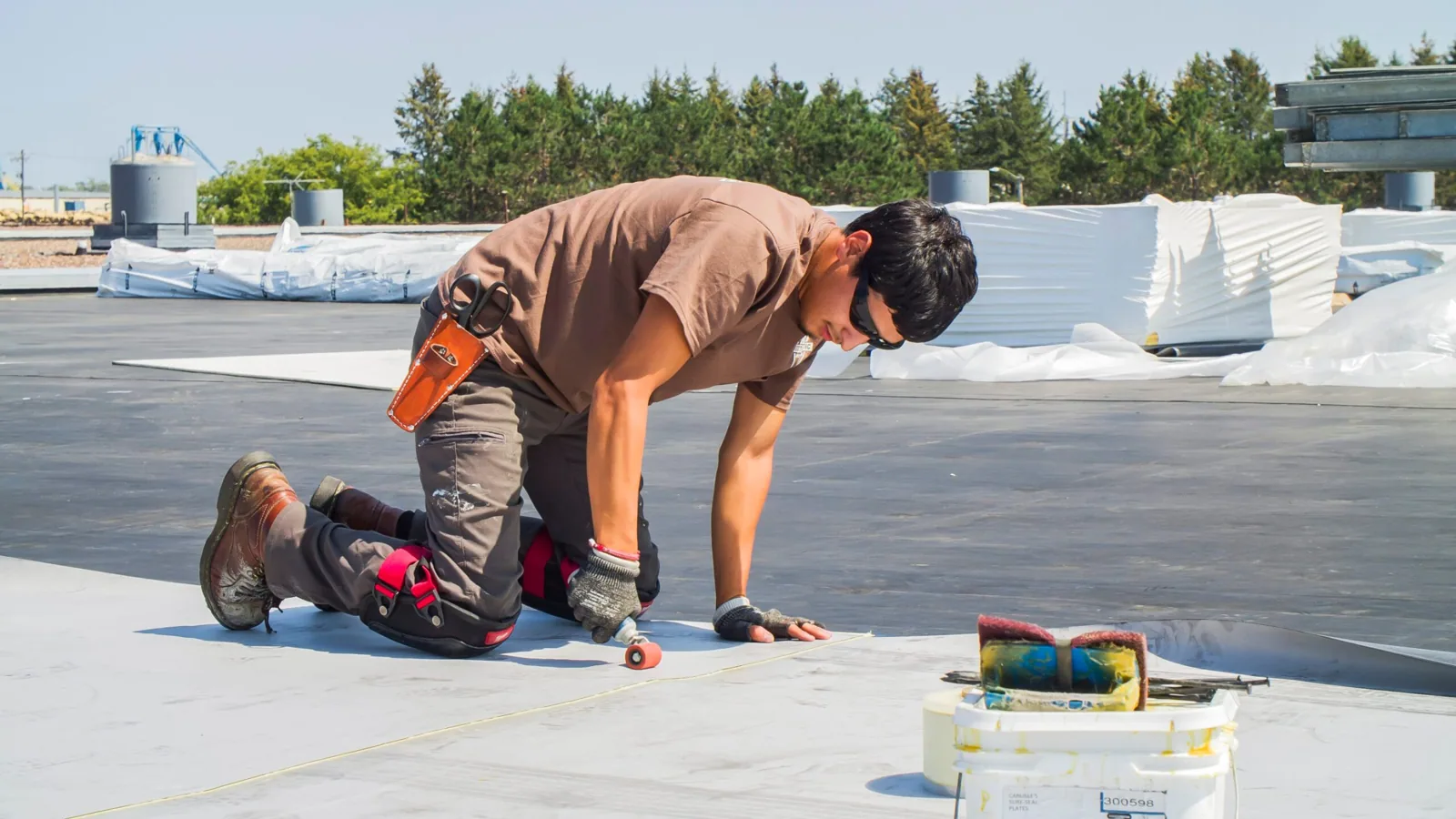
TPO system work assesses heat-welded field and detail connections with the actual receiving construction. An apparently continuous surface does not establish sound attachment or every joint's condition. Closer examination may be useful where those findings change local repair or renewal. The permanent scope identifies the defective connection and supporting component tasks separately, particularly when water has affected layers below the field.
Where discharge or material contact reaches the roof, we assess the specific exposure with the installed or proposed system. An equipment change can alter that relationship without removing the wider membrane. Suitable local detailing should match the unit's final arrangement. A standard field option should not be assumed to resolve every concentrated contact, support or penetration around operating equipment.
Choose the attachment with useful layers beneath it
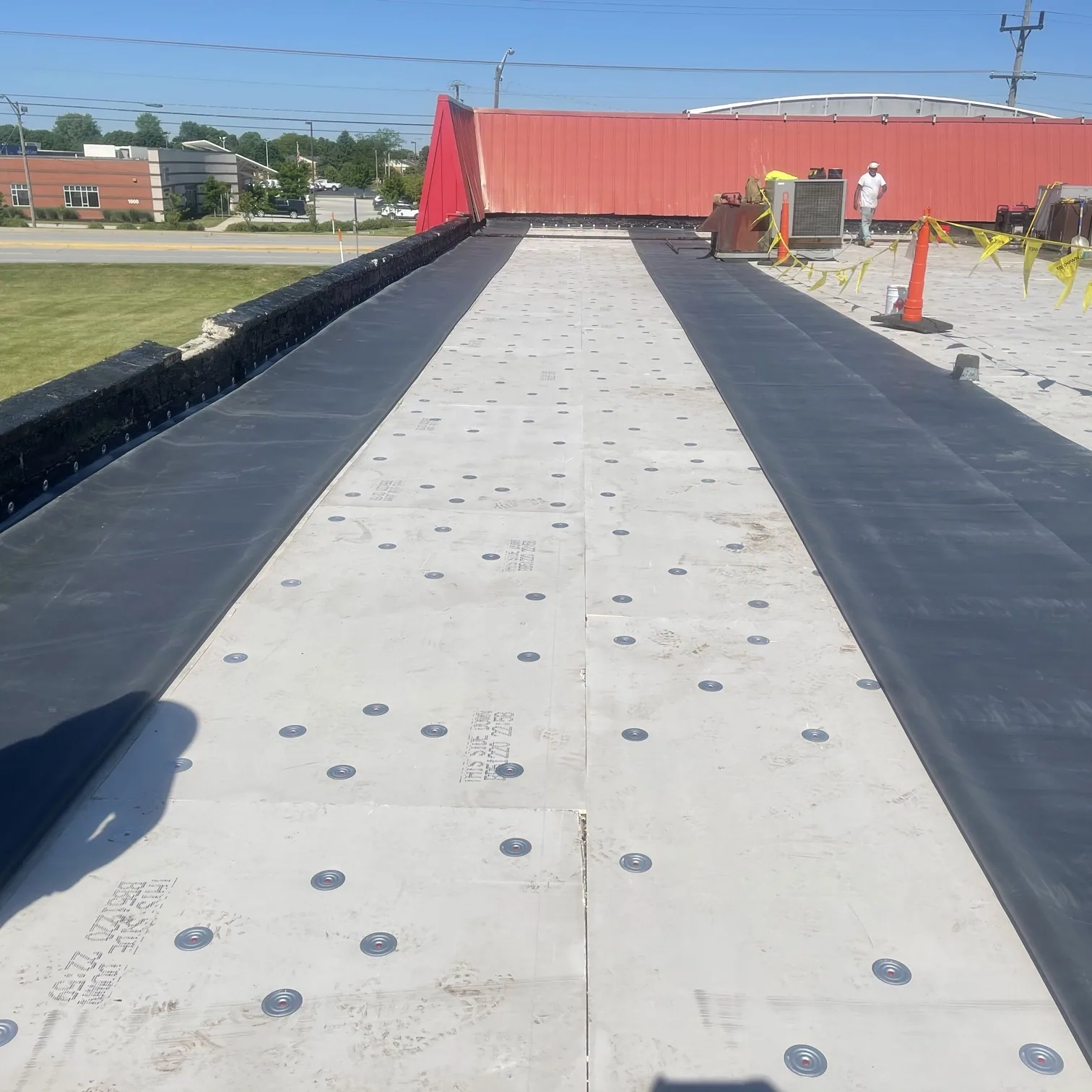
Versico's assembly options include mechanically attached and fully adhered construction, with induction-welded options for thermoplastic systems. The appropriate combination depends on the specified system and project conditions. We examine receiving support, insulation and attachment requirements before installation. A product option does not make wet boards or deteriorated support suitable to retain. The new field needs an assembled receiving arrangement grounded in the condition established.
Insulation and receiving-board reconstruction can restore unsuitable layers and establish the base for the selected roofing. Final height also needs assessment at equipment, outlets and walls. Added construction can reduce flashing clearance or change runoff. The proposal should identify related detail work so a useful field assembly does not finish beside constrained connections omitted from its scope.
Pembroke's industrial development includes Riverside Corporate Park and North River Commerce Park, with access through Route 139 and Route 3. On a requested property in Pembroke, equipment intervals and occupied protection should follow the actual receiving work. A board-removal zone can create a different exposure from a bounded joint repair. We establish that component task before agreeing the area to open.
Rebuild the interface altered by the next project
Planned rooftop equipment or tenant renovation can change support, penetration geometry and technician routes. We examine those tasks with the membrane and final roof elevation before closure is formed. Support work that changes a curb should finish in the appropriate sequence before permanent flashing. An installed field should not be treated as the completed roof while a neighboring connection still awaits alteration.
For Holcim Elevate membrane comparisons, a fleece-backed or self-adhered option should be assessed through the specified receiving and attachment arrangement. The construction retained below it remains relevant to both repairability and final geometry. We compare complete components rather than assume that similar product categories create identical scopes. Damaged layers or inadequate clearance still need a supported reconstruction task under the selected option.
Bicknell Square is a commercial hub in North Weymouth along the Route 3A setting. For requested work at a commercial property in that broader area, we examine actual unit access, room exposure and the receiving detail. A shop or equipment space may need a protected interval while the assembly opens. The work arrangement should match the closure task, allowing the property to remain suitably protected through the vulnerable stage.
Finish the receiving work and joint together
Versico system and warranty assessment can identify relevant information for compatible repair or alteration. Current condition needs its own physical examination. We describe the layers retained, receiving tasks and permanent details supported by the findings, with temporary entry protection distinguished from complete reconstruction. The owner can then coordinate the actual roof task rather than treat a document review as restoration of the damaged component.
Removal should be limited to a stage whose support work and waterproofing can finish under suitable conditions. Equipment density and adjoining transitions can change completion effort more than field area suggests. We identify occupied protection and unit dependencies before exposure is created. Temporary construction and material positions should preserve the outlet route, with final boundaries secured against useful retained roofing.
Later service needs access to the repaired joint and surrounding drainage. Protection for technician contact should suit the installed assembly and leave vulnerable interfaces inspectable. A new obstruction beside an outlet can create another defect even if the local membrane closure is complete. The component description identifies the construction actually present so upkeep and later compatible repair can follow the real roof arrangement.
Commercial Roofing Questions
Can VersiGard EPDM use a TPO joining method for repair?
The membrane and compatible system method need identification first. Rubber and thermoplastic joints require different receiving preparation and closure. We examine surface condition and previous treatments before selecting work. The final repair should form continuity with useful retained material, not apply a familiar process from another assembly without establishing suitability at the actual joint.
What should be checked before selecting Versico attachment?
Assess the deck and receiving layers with the specified system and project requirements. Mechanically attached, adhered and thermoplastic induction-welded options involve different assembled components. We identify retention suitability and relevant details before installation. A product category alone cannot establish sound support or make concealed damaged layers useful beneath a new field.
How does added roof height affect a renewal option?
Examine the final elevations at curbs, walls and outlets. Additional layers can reduce useful clearance or alter runoff, requiring related reconstruction. We keep those interface tasks within the proposed assembly. The owner should compare complete receiving and closure work rather than select a field whose connections become constrained by the height of its own construction.
What should precede permanent flashing around replacement equipment?
Establish the final support position and penetration geometry before roofing closes. The relevant equipment task may change the connection and operating interval needed. We coordinate that sequence with occupied protection and suitable preparation. The completed detail should suit the unit and service route remaining after work rather than require immediate disturbance of finished waterproofing.