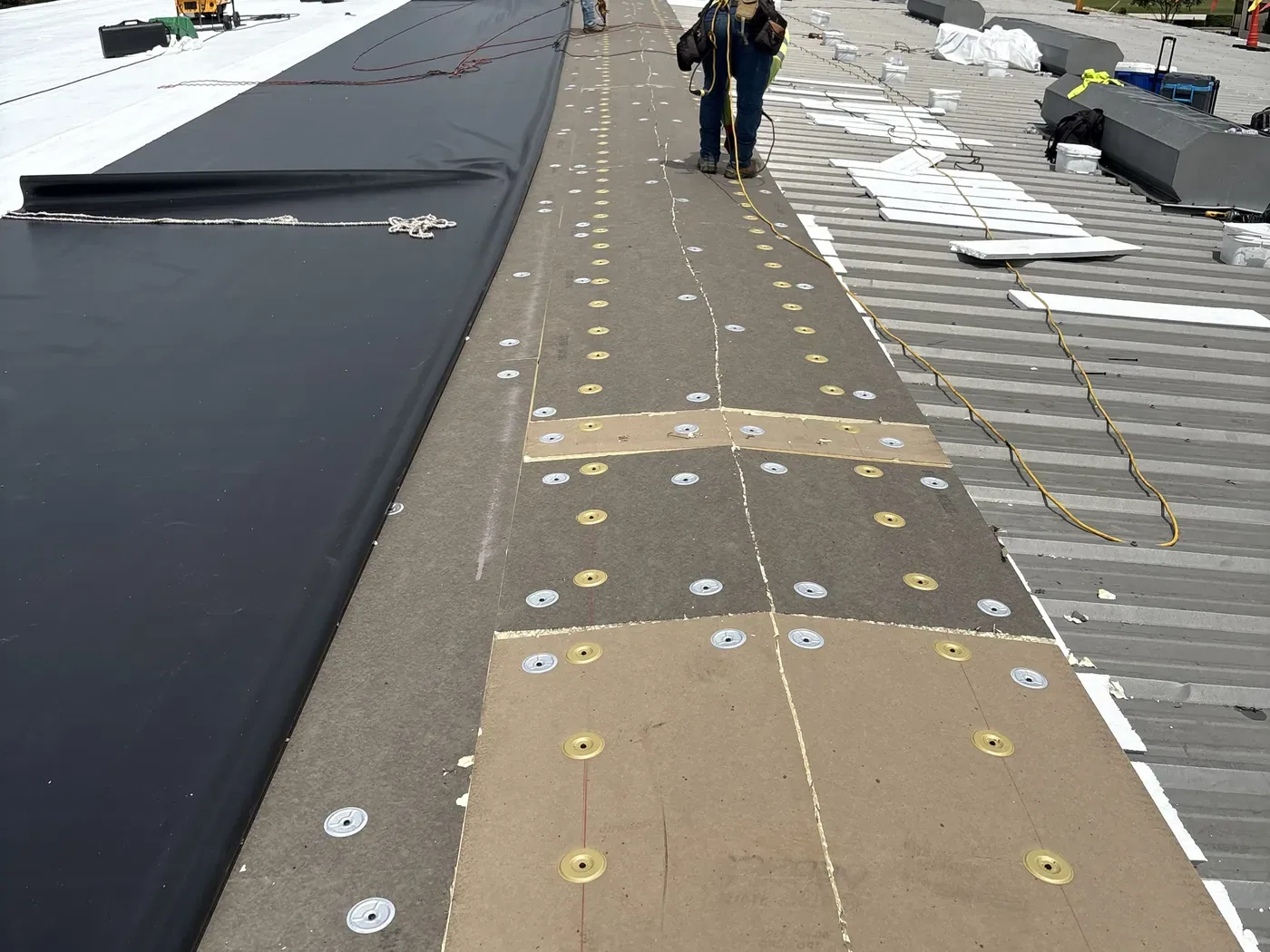
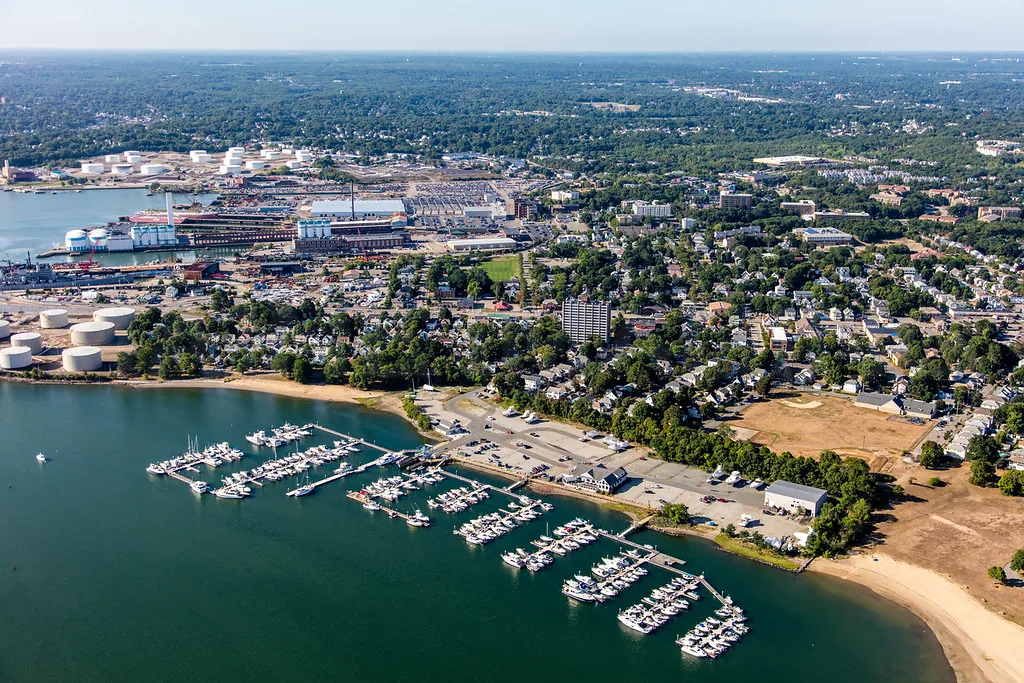
Aircraft Hangar Roofing near Quincy, MA
Wind-driven rain at a hangar's door-head connection can create water exposure without a broad opening in the roof field. For aviation roofing served from Quincy, MA, we examine the upper door interface, adjacent panels and runoff before assigning a membrane or metal repair. Large openings change the geometry available for support and weather closure. The proposal should account for that construction and the aircraft or equipment below. A surface seal on the nearest visible joint may leave the actual entry route untouched.
We assess commercial metal and low-slope assemblies associated with hangar and aviation-building uses. The scope follows the installed roof, its receiving support and the activity requiring protection. Quincy's regional storm concerns include hurricanes and nor'easters, making secure connections and controlled work boundaries relevant to the assessment. Aviation operations also require an exterior and interior material-handling arrangement that prevents removed roofing from becoming unmanaged debris around equipment or movement areas.
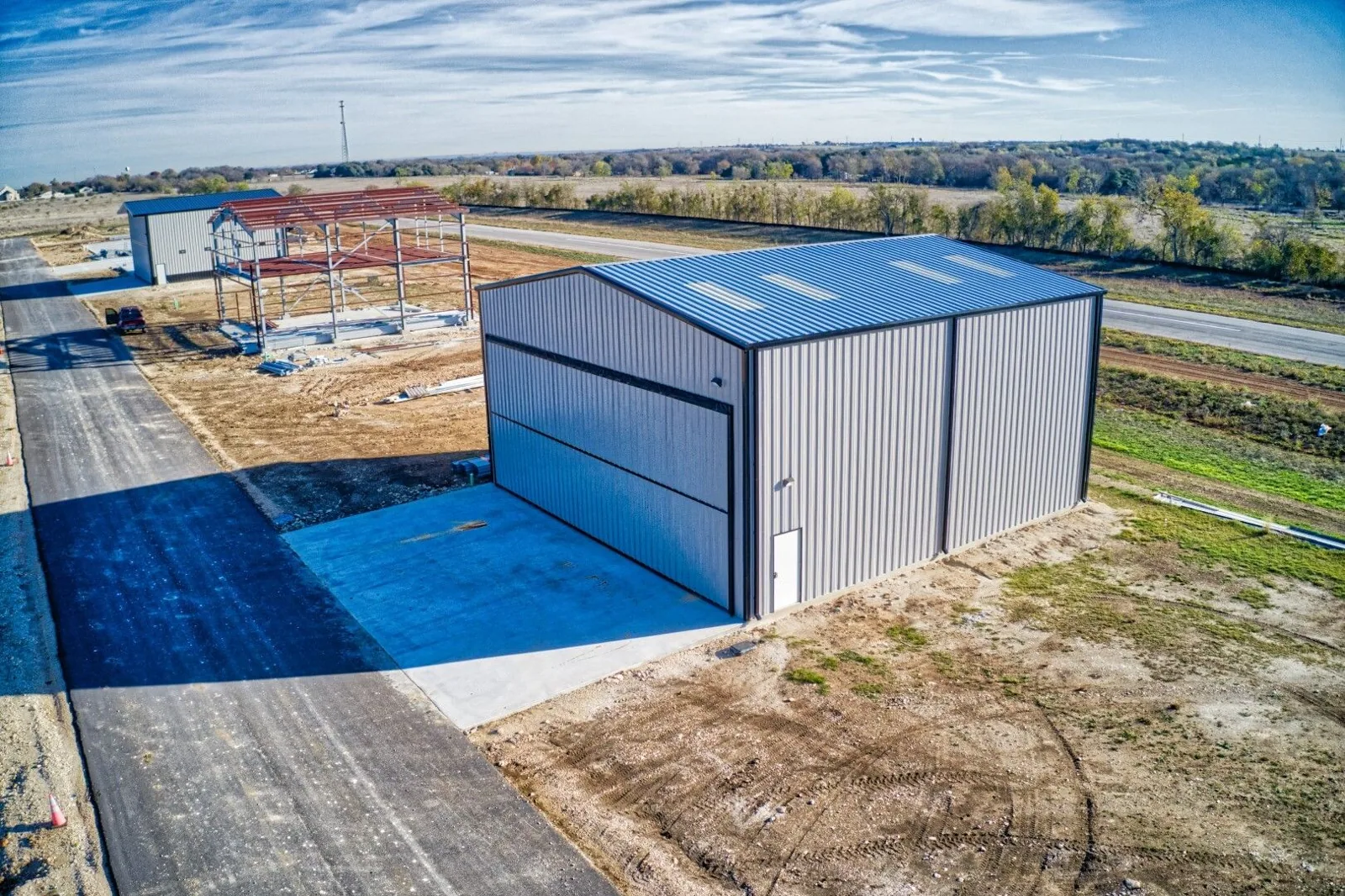
Examine the support across the opening
A long panel or a broad roof span can move under temperature and loading changes. We examine the installed system's supports, fixed points and movement provisions before defining repairs. A connection that restrains intended movement can concentrate stress at a seam or penetration. Conversely, deteriorated support can leave a panel unstable. Those mechanisms need different corrections. Adding restraint indiscriminately may transfer a problem rather than resolve it.
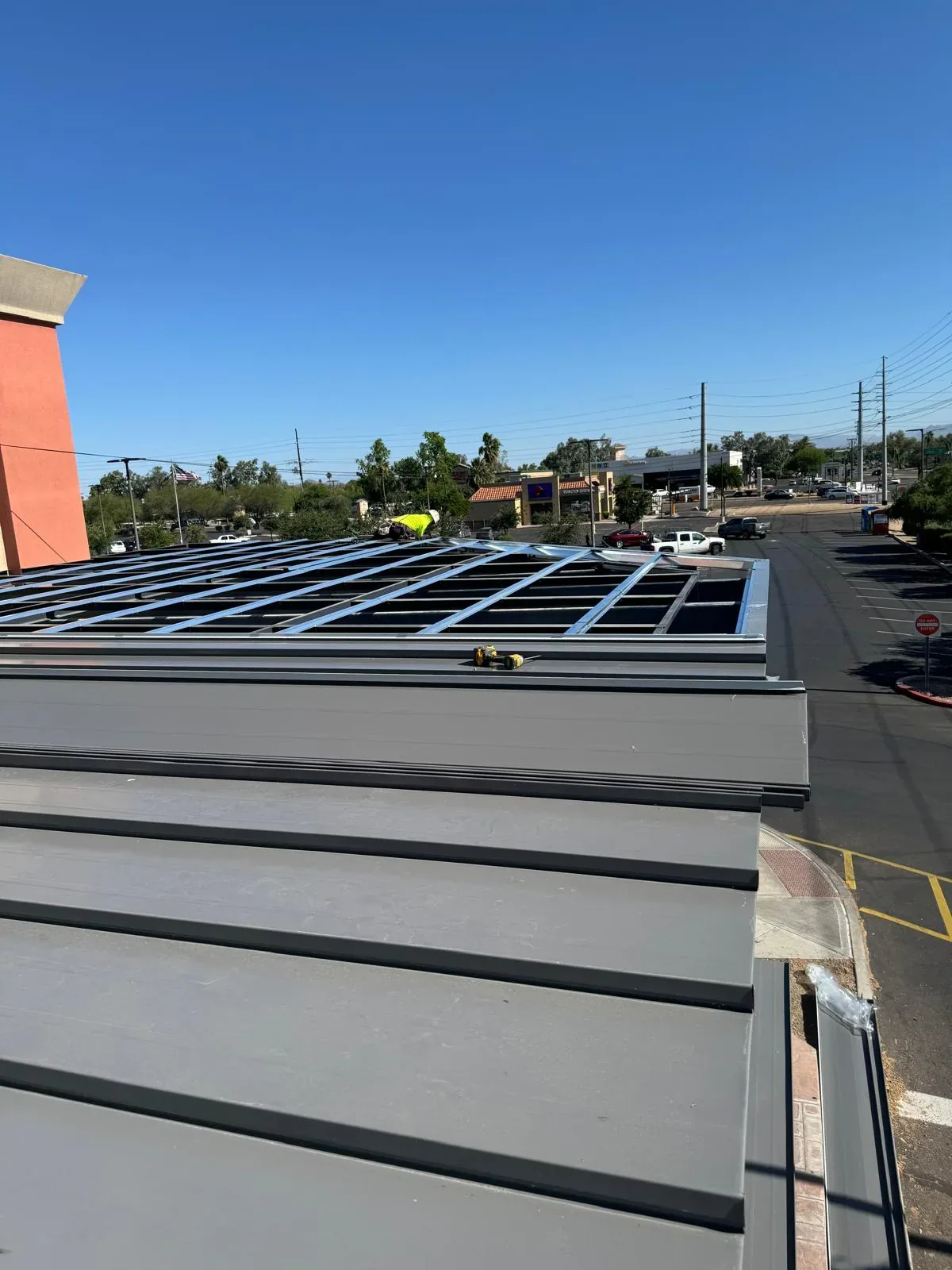
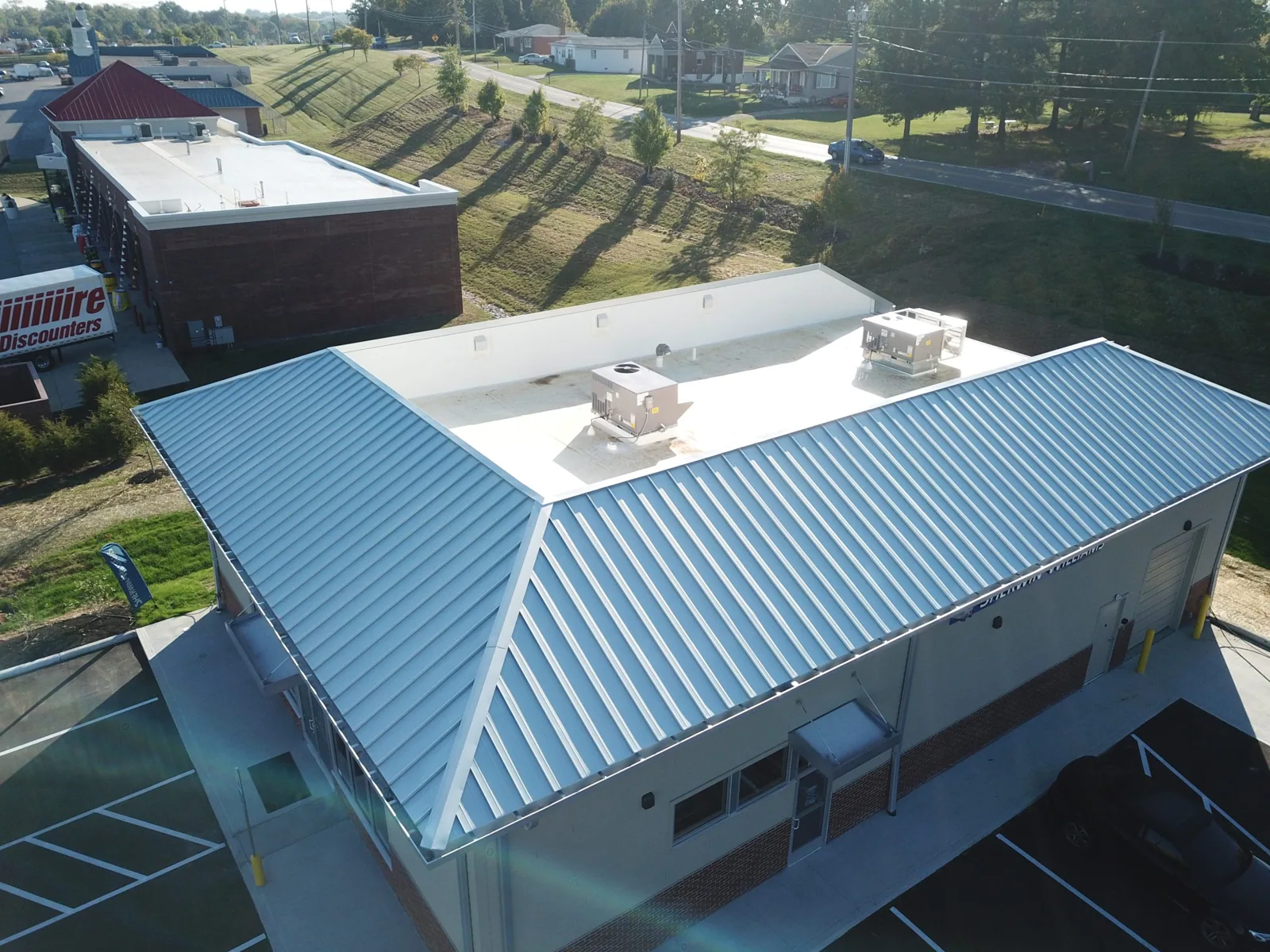
For standing seam hangar roof construction, clips and transitions need to fit the profile and assembly arrangement. An exposed-fastener roof has different holding and sealing requirements. We investigate the actual receiving member and fastening condition before selecting a replacement component. The inspection also addresses panel distortion and corrosion where they affect the ability to retain existing material. A usable surface coating cannot substitute for deficient structural support.
Trace runoff above the door head
Water directed toward a door opening can enter through failed head flashing, a damaged roof-edge connection or a route higher on the slope. We examine the detail sequence rather than assume the door seal is responsible for every symptom below it. Gutters and discharge arrangements can change that exposure. A blocked channel may hold water against a connection intended for freely draining conditions. The repair should restore the affected transition and address the flow obstruction where it contributes.
Our edge-metal and gutter corrections consider the receiving support and water path. Loose trim, corroded components and unsuitable joints may require reconstruction instead of another surface bead. Material compatibility also matters where different metals meet. The completed connection should leave a clear discharge route without directing runoff onto a vulnerable opening or obstructing required access beneath the eave.
Keep regional aviation roles distinct
Hanscom Air Force Base is a non-flying installation adjoining the separate civilian Hanscom Field. Roof work associated with civilian aviation needs its own assessment of building use and access rather than a military operating assumption. We examine the property and equipment actually involved in the requested work. The separate roles matter to coordination as well as to the construction description, particularly where an aviation label could otherwise obscure the activity beneath the roof.
Joint Base Cape Cod lies about 42 miles southeast of central Quincy by straight-line estimate. Its developed area has aviation hangars and support facilities; Air Station Cape Cod operates helicopters and fixed-wing search-and-rescue aircraft. In requested Coast Guard facility roofing, removal above equipment needs a defined debris-control zone and a completed closure connection. For Air Force property work, an occupied support room can instead require coordinated intake protection during application. We assess the operating interval and closure tasks before opening construction.
Control material above and around equipment
Roof removal can release debris into the interior or exterior work area. We assess the aircraft, equipment and movement routes requiring protection before defining handling and disposal. The plan should identify how removed components are controlled, where materials are staged and which areas need isolation. A convenient roof access position may conflict with an active apron or door route below. Those operating constraints should be resolved before the first removal task.
Preparation or coating methods can introduce a different exposure, including dust or spray carried by wind. For metal restoration and retrofit work, we evaluate suitable application conditions alongside inventory and adjacent-property protection. The receiving surface still needs repairs and preparation appropriate to the system. A method that limits roof removal is useful only where its application and the retained construction are both suitable for the property.
Braintree has office and industrial parks near Interstate 93 and Route 3. Avon Industrial Park also connects to Route 24. Those regional commercial connections matter when assessing deliveries for panel renewal: component length, lift placement and property access still need a route-specific plan before large material is moved.
Investigate condensation as its own mechanism
Moisture forming beneath cold metal can produce dripping even where rain has not recently reached the roof. We examine interior conditions, insulation and air movement alongside exterior joints. Hangar activity and large door openings can affect the interior environment, so the assessment needs the actual use. Rain entry and condensation can coexist. The recommendation should identify the mechanism addressed by each task instead of relying on a coating to solve every moisture report.
Where insulation or control-layer work is required, we examine its continuity at supports, walls and penetrations. A new waterproofing surface can leave an unchanged air path beneath it. Wet retained material also needs a construction decision before it is concealed. Work in the wider region, including Quincy commercial property, follows that distinction between exterior water entry and moisture arising within the assembly.
Close the detail before restoring access
An equipment or door-head zone may require more completion time than an unobstructed roof area. We define removal limits with the connections that must be secured, suitable weather and the protection below in view. Temporary boundaries need a dependable transition to retained construction. The next operating interval should not depend on an unfinished connection merely because the field material has been installed nearby.
Repairability follows the actual condition of panels, membrane and support. A bounded damaged flashing on sound receiving construction can justify local rebuilding. Wider corrosion, wet layers or unstable attachment can require more extensive renewal. We describe what each option retains and the defects it corrects. Delivery access, large components and coordinated equipment intervals can influence scope substantially, and those drivers should be visible in the proposal.
After completion, servicing should preserve the installed water boundary. We assess access routes and protection at concentrated contact areas, leaving outlets and vulnerable transitions reachable. Compatible future repair methods matter where coatings or specialized membrane connections are installed. The final arrangement should support appropriate maintenance around the aviation equipment without repeatedly damaging the roof details intended to protect it.
Commercial Roofing Questions
Can water at the hangar door come from the roof rather than the door seal?
The route needs examination. Roof-edge flashing, gutters and higher connections can direct water toward the door opening. We inspect those components and the door-head geometry before defining the repair. A surface seal at the visible symptom may miss the failed connection. The scope should restore the affected water boundary and correct any obstruction contributing to the exposure.
Does a metal roof coating correct movement-related panel damage?
Movement and support need assessment before restoration. We examine the joints, fasteners or clips and the receiving construction, then identify appropriate repairs. A coating can be considered over suitable prepared material, but it cannot restore holding or stabilize a damaged support. Leaving harmful movement active beneath the treatment can preserve the original failure mechanism.
What must be planned before removing roofing above aircraft?
Identify the equipment requiring protection, interior exposure and exterior movement routes. We assess handling and disposal arrangements so removed material remains controlled. Suitable isolation or a coordinated operating interval may be needed before opening construction. The work boundary should also allow secure closure in the available conditions, with detailed connections included in the completion plan.
How do we assess underside dripping without recent rain?
Compare interior moisture and temperature conditions with the roof's insulation and air-control arrangement. We also examine exterior entry routes because retained water can complicate the symptom. Condensation may require a different correction from a failed panel joint. The proposal should identify the mechanism and relevant layers rather than recommend the same surface treatment for every drip.