Military Warehouse and Depot Roofing near Quincy, MA
Thaw water held above stored equipment can make a depot drain connection the immediate repair priority while the surrounding roof still has useful service. For military warehouse roofing served from Quincy, MA, we examine that low point and the material beneath it before choosing the scope. Inventory protection belongs in the work sequence, but it does not define the roof's physical defect. The repair needs to address the water connection and any supporting construction already damaged by entry.
Depot and maintenance buildings can contain unlike processes, storage and administrative areas. We identify the actual use below each affected roof zone before recommending removal. Quincy prepares for flooding and winter storms, adding drainage and secure work boundaries to the assessment. The decision should distinguish a repairable connection from wider moisture or attachment problems that make surface work alone insufficient.
Investigate moisture around the operating process
The South Weymouth Coast Guard buoy depot handles storage, cleaning, repair and painting of buoys, with warehouse, administration and maintenance areas. Its operation is separate from the closed former naval air station. A roof assessment above maintenance activity needs the actual interior environment and equipment requirements. Moisture arising within the assembly can have a different cause from rain entering at a damaged flashing. We examine the symptoms and construction before selecting the correction.
Condensation can occur where warm moist air reaches colder layers through an interrupted air-control path. Exterior leakage can occur at the same time. The proposed work should identify what each task addresses, including insulation or control-layer corrections where necessary. Coast Guard shore-building roof work can involve other operational interfaces, while this depot's actual maintenance process helps establish the questions relevant to the requested area.
Define the equipment zone below removal
Opening a roof over stored equipment can create water and debris exposure beyond the narrow defect. We assess the task while the property representatives identify contents and access needed beneath it. Suitable movement, isolation or protection may be required before construction is opened. The exterior removal boundary follows the failed connection and supporting condition. The interior protection boundary follows the exposure created during that work. They should be explained separately.
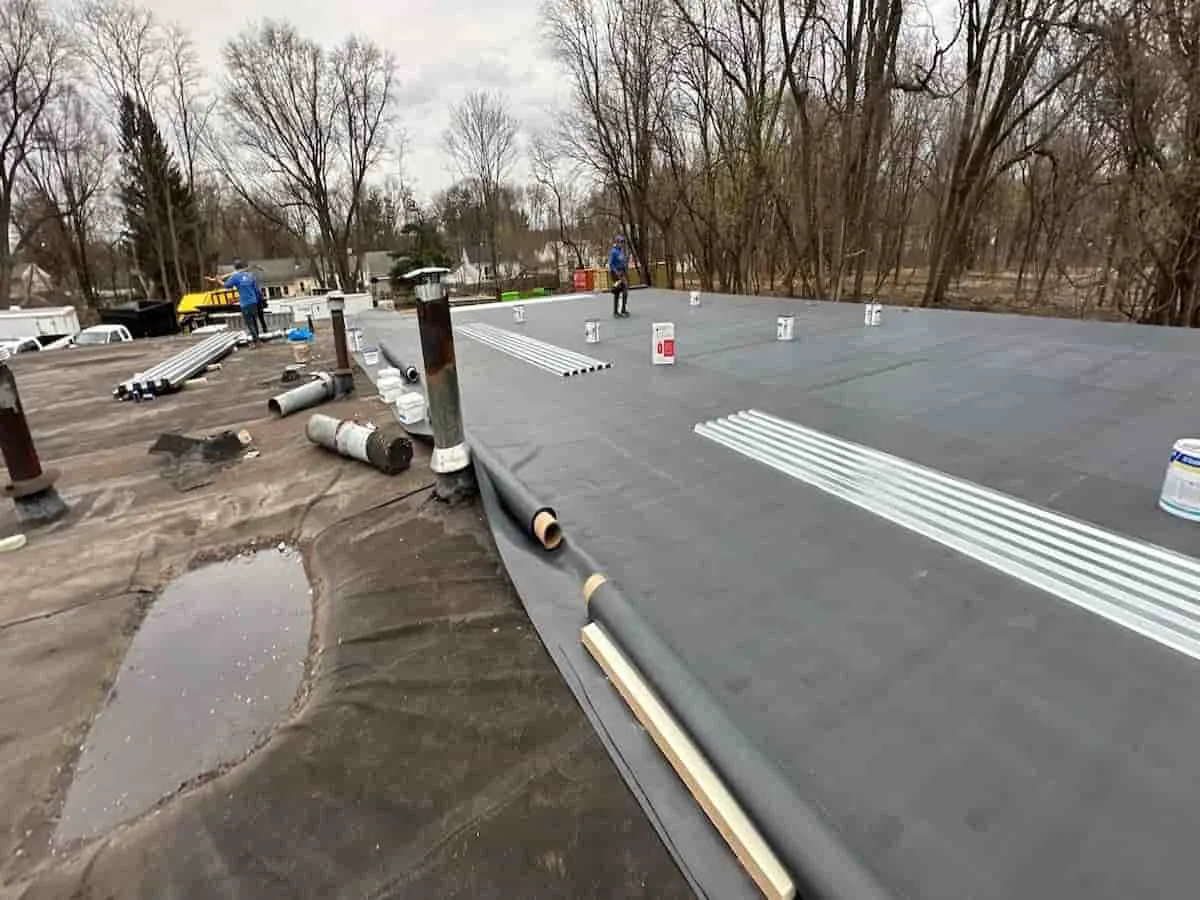
Our repairs to warehouse roof defects investigate the receiving material and any concealed moisture. Temporary intervention should remain distinguishable from the permanent scope. A protected item below the leak does not establish that the roof above has been restored. The owner should understand which layers are repaired or removed and which remain in service after the completed connection is formed.
Compare the actual military uses
Camp Curtis Guild includes Field Maintenance Facility 4 and vehicle-recovery training within its Army National Guard setting. The active Army Reserve training area at Devens has motor-pool and maintenance functions as well, in a more distant regional location approximately 40 miles northwest of central Quincy. Those facilities give maintenance roofing different operating questions from a room used mainly for administration. We assess the requested building and equipment rather than assume a uniform warehouse pattern.
For Army property roof assessment, a repair may need coordination with a specific work area or process. Civilian warehouse roofing also depends on stored-content protection, though military access procedures can add requirements for the requested project. We identify those intervals before choosing a removal stage. A delayed entry or delivery needs to be reflected in the amount of construction that can be completed that day.
Inspect the load path for new construction
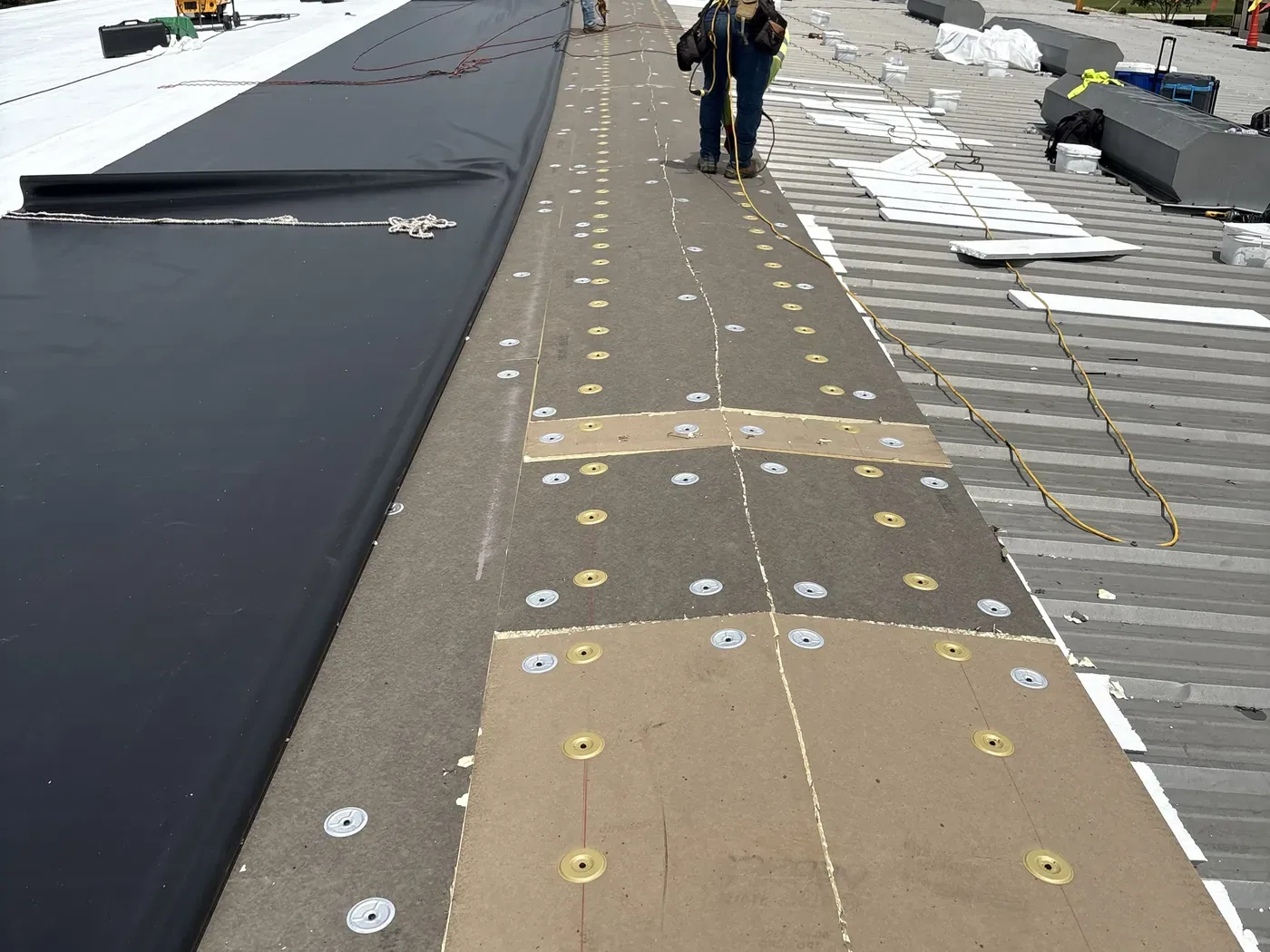
Loose panels, soft boards or degraded deck areas can change a surface repair into a wider reconstruction task. We investigate the condition of the support before recommending retained material as the base of a new assembly. Staged material loading and fastening need a suitable receiving structure. A dry-looking upper sheet does not establish the integrity of every layer below it. The scope should identify any support work the findings require.
We compare metal roof retrofit options with other suitable assemblies where the existing construction supports them. Coating restoration needs sound material and compatible preparation; a membrane recover can require boards, insulation and its own attachment design. Neither approach restores metal or support that has lost useful integrity. The comparison should keep those retained components visible instead of treating different interventions as equivalent new surfaces.
Plan deliveries with the property route
Bridgewater has industrial development along Elm Street and Scotland Boulevard with regional road access. Material handling for a warehouse roof in such a setting still needs a route-specific assessment of the actual delivery position and site circulation. Component size, lift placement and disposal can interact with ongoing equipment movement. We examine those arrangements before selecting stages, rather than assume a broad industrial location provides unrestricted access.
For commercial work in Weymouth, we likewise connect roof access with the individual property use and receiving construction. A requested military depot project adds its own controls, including badging or escorts where required. The practical work interval should include preparation and connection completion, not merely field placement. Large components and equipment-dense areas can create different handling or closure demands within the same project.
Finish the outlet at the revised plane
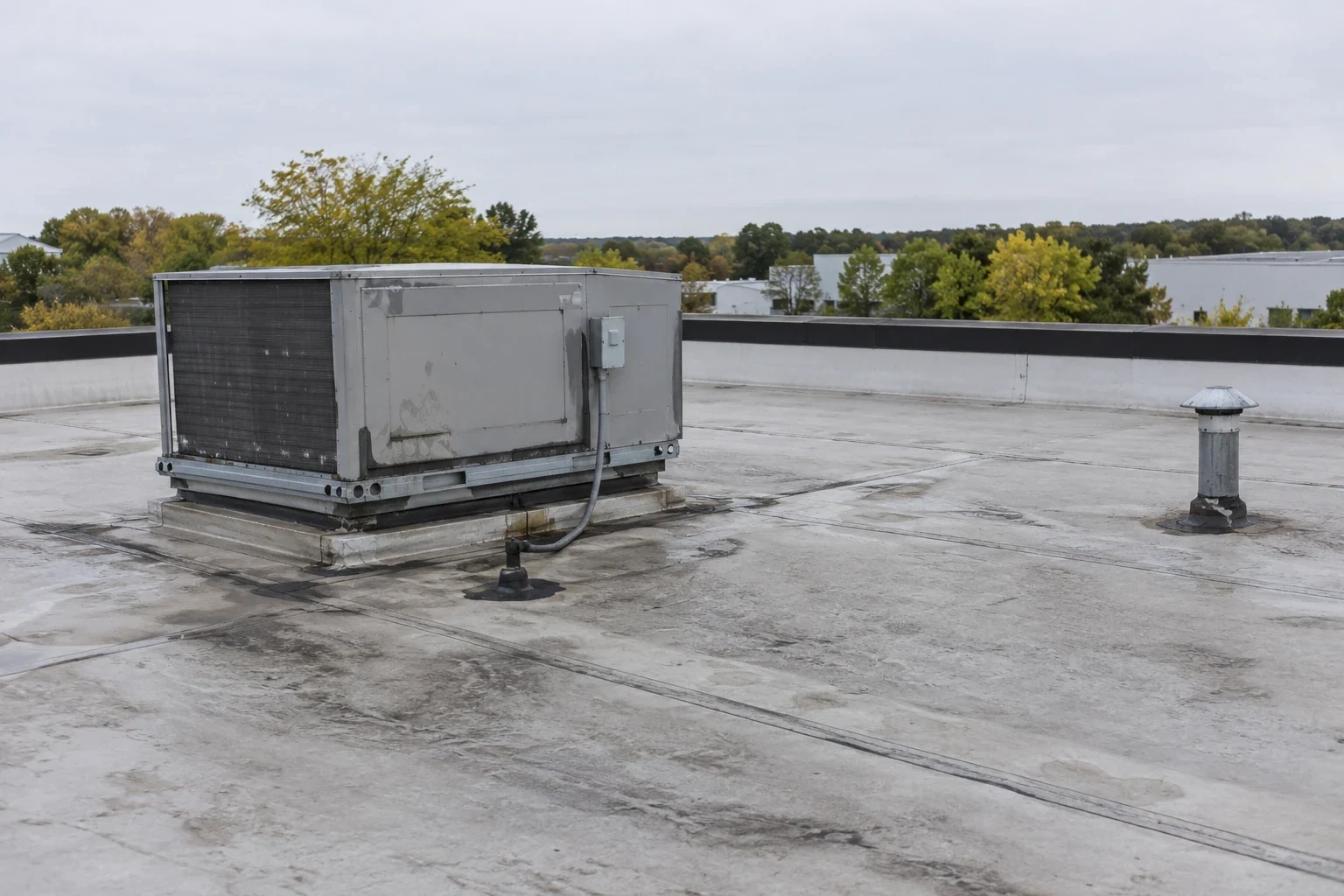
An outlet above a low pocket and a debris-filled strainer need different corrections. We examine the elevations and water boundary before defining maintenance or reconstruction. Damage at the drain flashing requires repair as well. Our drainage connection work considers the finished insulation plane and overflow arrangement, so a new field does not leave the same water-holding defect in service simply because the outlet was assessed after materials were chosen.
Higher insulation can also reduce curb or perimeter clearance. We establish those dimensions before installation. We examine the runoff channel beside maintenance-equipment supports before selecting traffic protection. A raised pad can create a new water-holding edge if it crosses that channel. The installed route should give technicians usable footing while leaving the low-point connection reachable without contact that damages its flashing. Wet insulation below a low area needs investigation and a removal decision before it is concealed. The proposal should distinguish drainage correction from restoration of damaged underlying layers.
Where federal project requirements govern the work, assembly selection and detailed design need appropriate coordination, including relevant Unified Facilities Criteria. We examine the components and operating constraints together. The completed scope should leave manageable maintenance routes, compatible future repair methods and accessible vulnerable details. Routine clearing can then be separated from damaged construction needing intervention, preserving a useful water boundary above the depot's actual activity.
Commercial Roofing Questions
Can depot moisture come from maintenance activity instead of roof entry?
Interior conditions can contribute to condensation or moisture movement within the roof, while exterior defects can admit rain separately. We compare symptom timing, the process and the layer arrangement before selecting work. Both mechanisms may require correction. The recommendation should identify the construction addressing each one rather than assume an upper-surface treatment resolves every report.
What should we identify before opening roofing above stored equipment?
A removal task above stored equipment needs a defined protection arrangement and a place for any contents that must move. We identify the roof connection and opening limits before the property coordinates that interior area. Debris handling and weather closure should be explicit. Temporary containment remains a separate measure from reconstruction of damaged receiving material and completion of the water boundary.
Does metal roof coating restore deteriorated support?
Coating can only be considered over receiving construction assessed as suitable for the system. We examine corrosion, fastening and support before recommending restoration. Damaged components may need replacement or reconstruction. The proposal should identify that work before field application, because a new finish cannot stabilize a weak structural connection beneath it.
How should a depot compare recover with removal?
Compare retained moisture, support integrity, attachment and revised drainage geometry under each option. A suitable recover may retain useful construction where project requirements allow it. Compromised layers can require removal instead. We explain the components kept in service and the operating protection needed so the owner can compare the complete assemblies rather than only their visible surfaces.