Commercial Roofing in Randolph, MA
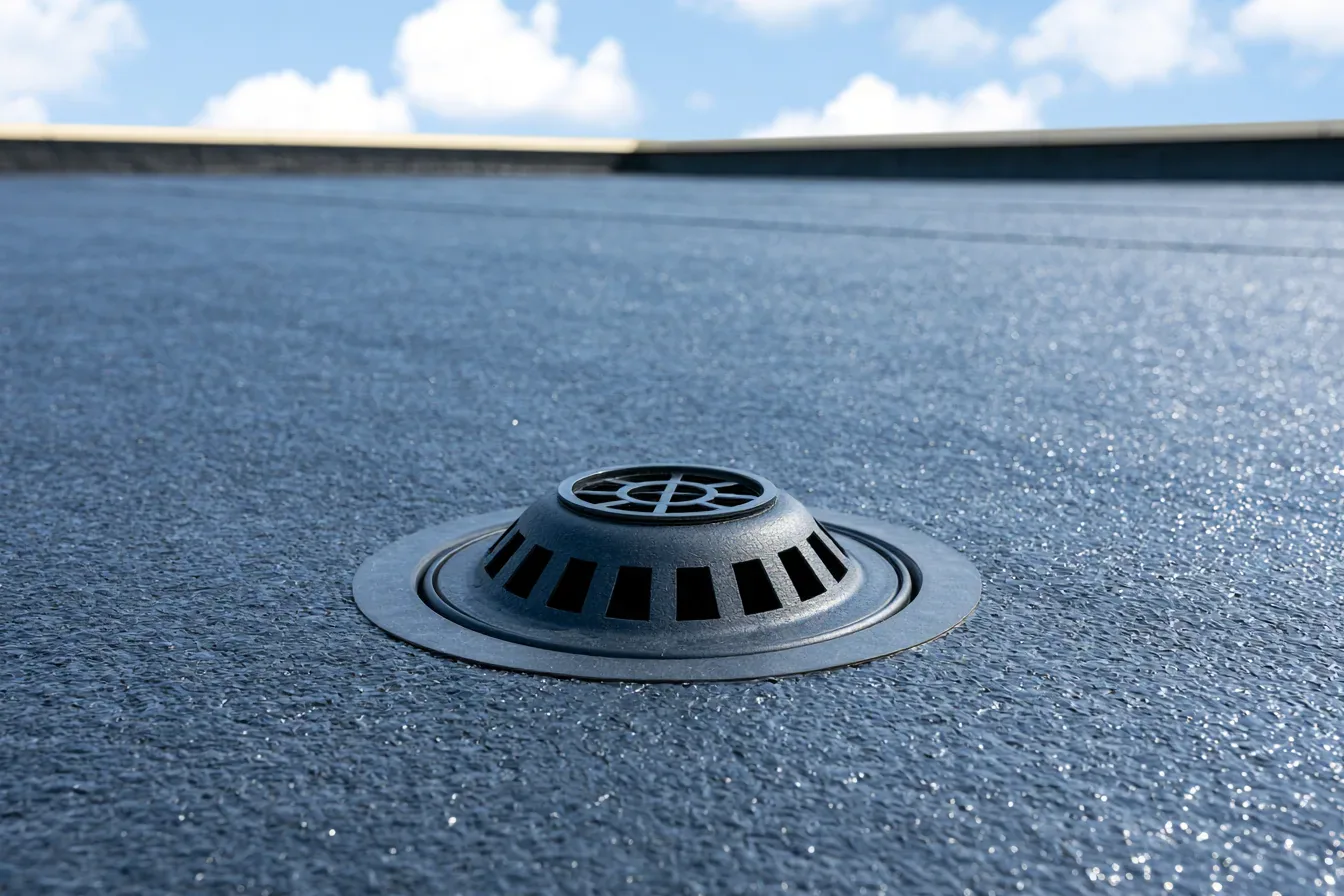
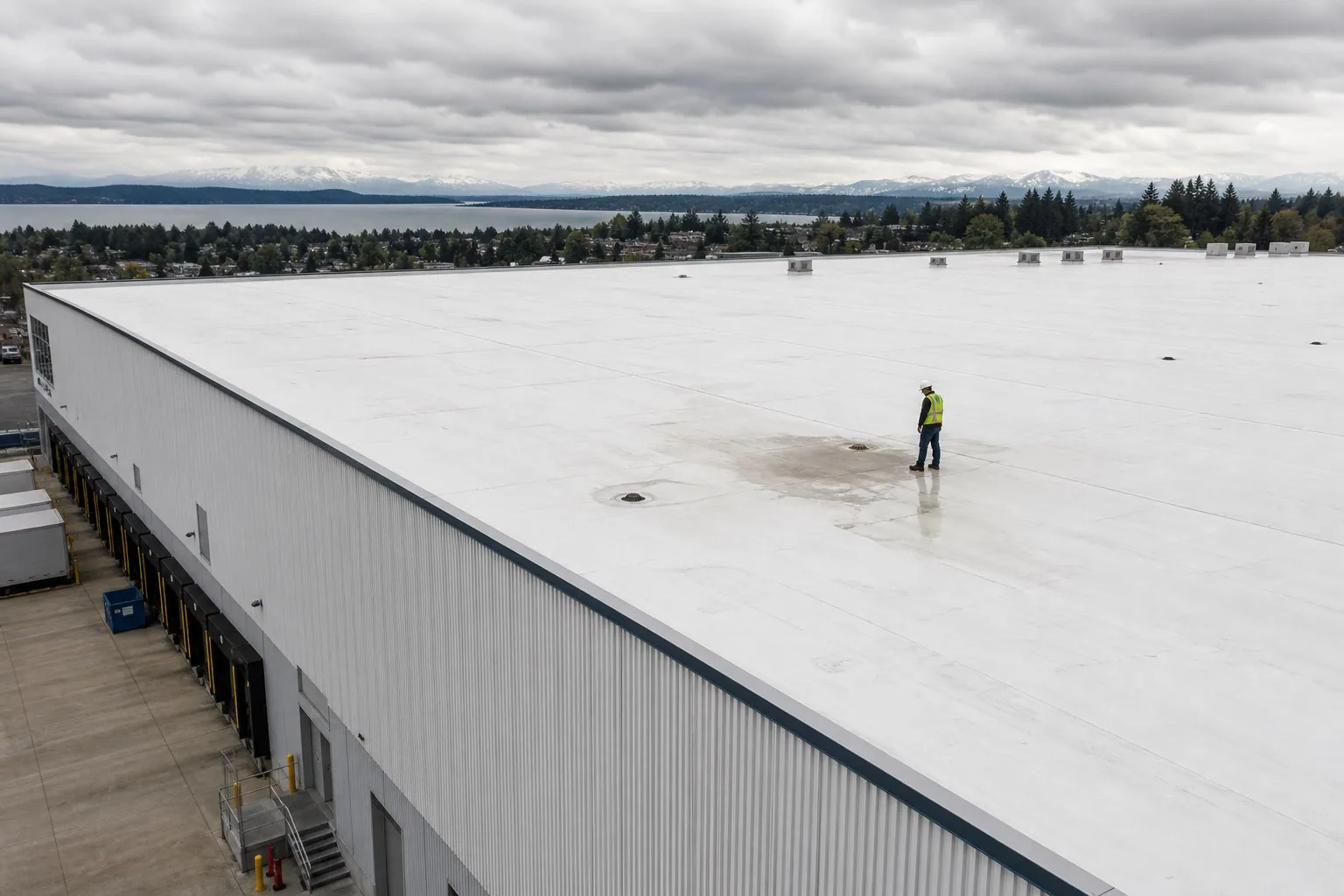
Thaw water can linger at a low outlet after the surrounding roof field clears. We inspect the drain, nearby flashing and the interior area below before setting a repair boundary. Randolph’s I-93, Route 24, Route 28 and Route 139 connections, plus Holbrook/Randolph station, help organize material access but do not reveal which roof is failing. The assembly, drainage and operating schedule do. A manager receives a bounded repair recommendation, a separate investigation item when needed, and a renewal view tied to what the roof actually shows.
Access Shapes the Workday
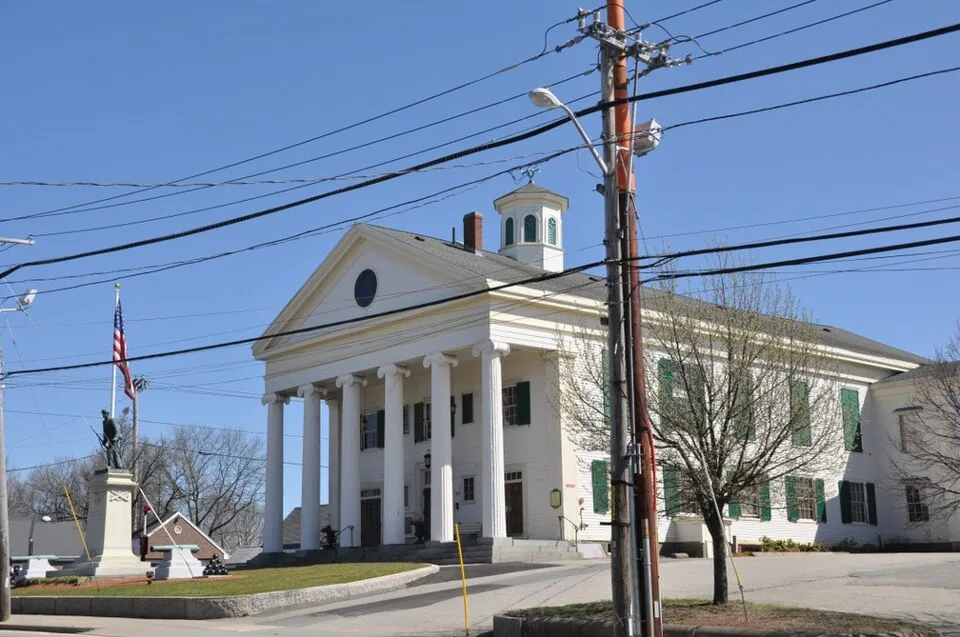
The highway connections inform arrival planning, while the property's entrance and loading rules control the delivery route. Randolph includes civic and educational buildings such as Turner Free Library, Randolph Community Middle School and Randolph High School. Those uses do not establish a roof's construction. Where an owner operates a public or school property, we confirm active entrances, scheduled use and areas that cannot be crossed by debris or equipment before the crew stages materials. The outlet can be scoped as a roof-drain repair when inspection finds a defect there.
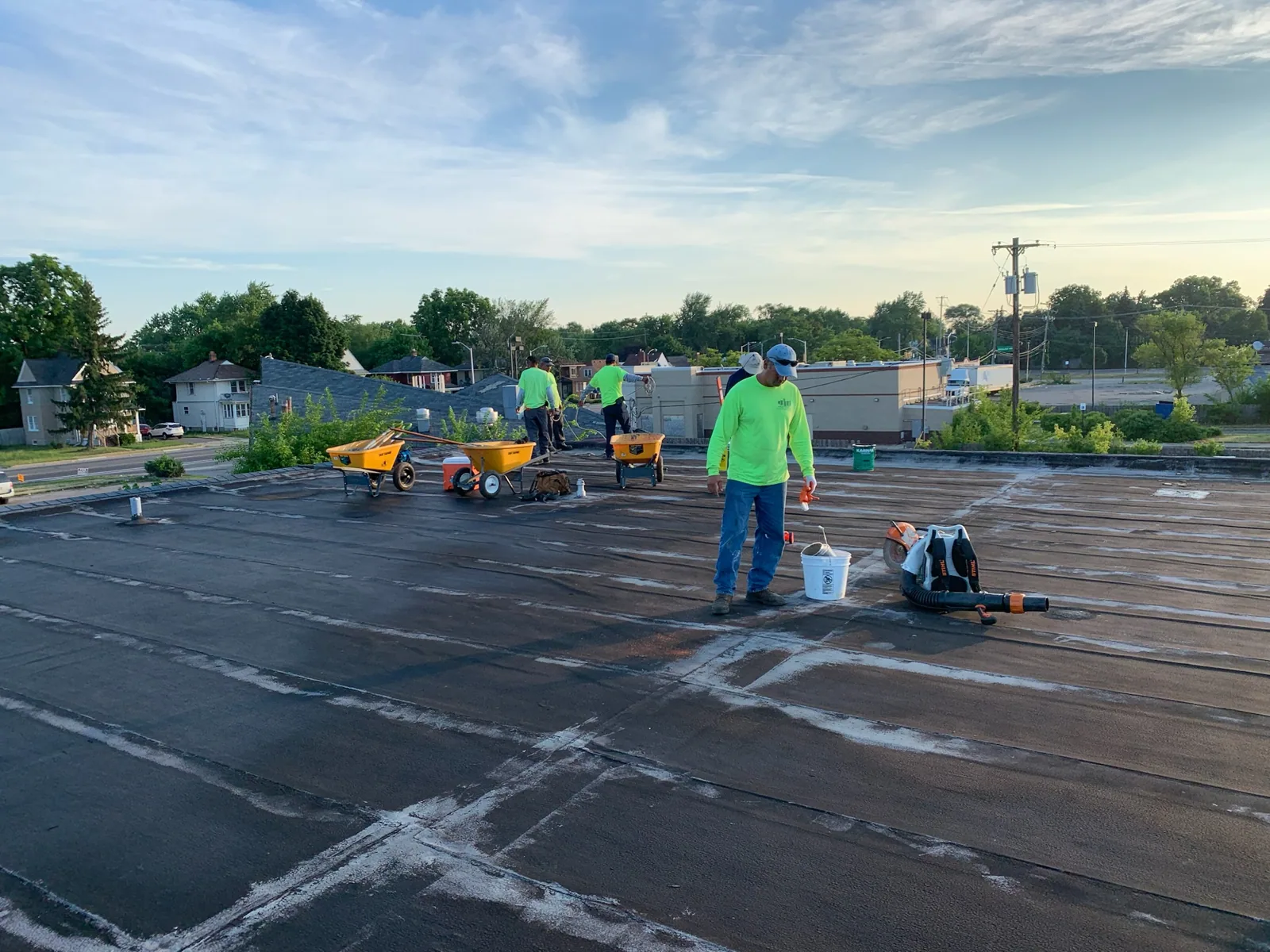
Holbrook/Randolph station connects the town to commuter rail. A busy property may have limited parking or a single service entrance, so we agree on lift placement and barriers with the owner before work starts. The ladder or hatch route is checked separately from the public path. A section can be opened only when weather protection can be secured before the crew changes areas or ends its shift, and that sequence appears in the daily plan.
Water Follows Roof Connections
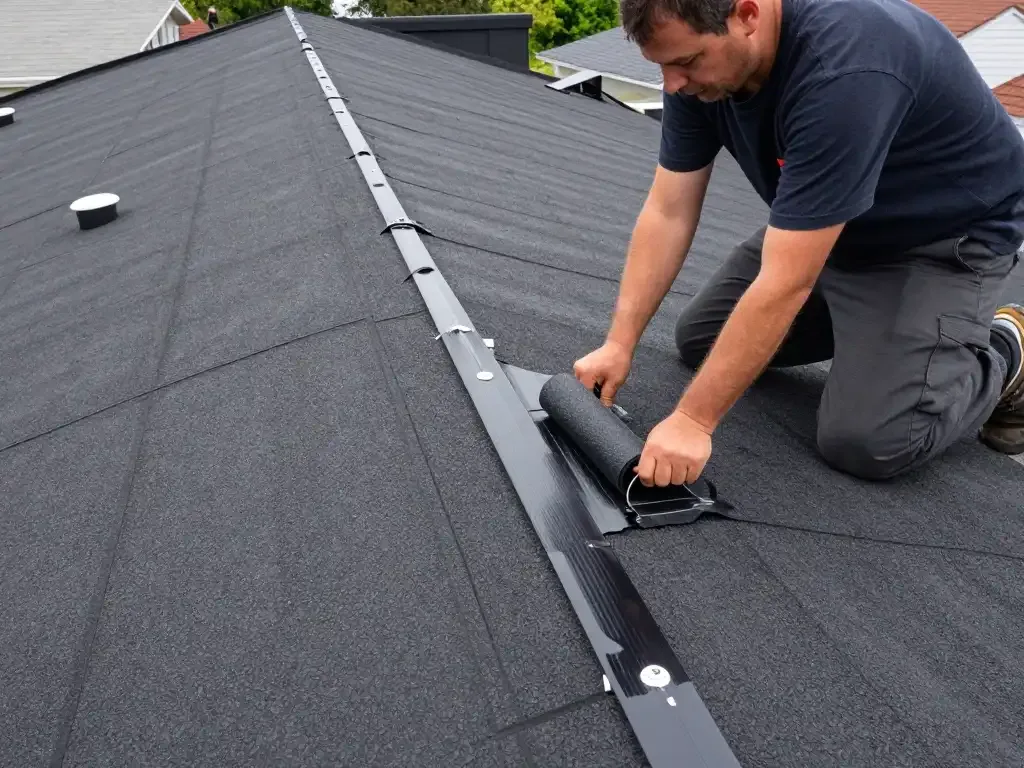
Water can travel along framing, deck flutes or insulation before it appears on a ceiling tile. We inspect above and around the reported mark, including seams, curb corners, parapets, fasteners and wall transitions. A slow drain differs from a split lap and calls for another correction. The condition report identifies the observed defect and whether its location aligns with the interior evidence, giving the owner a repair boundary instead of a guess based on a ceiling stain. A confirmed entry path can receive leak repair with materials compatible with the existing roof.
On a low-slope assembly, the path into an outlet matters as much as the visible membrane. We trace each drain, check strainers and overflows and look for a depression that keeps water near a seam. If the roof looks sound but the assembly may hold moisture, the report explains whether mapping or a selective opening could settle that question. An immediate patch stays distinct from a test boundary until new evidence connects the two.
Public Routes Need Protection
A library or school may have public arrivals, deliveries and scheduled programs during roof work. We confirm open hours, entrances and spaces requiring protection, then place barriers so material movement does not cross an active public route. If a hatch opens above an occupied space, interior protection and notice timing are included in the work plan. These requirements come from the building representative, not from the institution's name alone. To compare capital paths, we review a recover review beside replacement planning.
Mechanical work can create dependencies of its own. A rooftop unit may require an HVAC trade before curb flashing is replaced; electrical equipment can affect where a lift lands. We identify that sequence before membrane removal reaches the detail. The plan states what remains operational, which trade needs to be present and how the roof will close at day's end. If conditions shift, the owner sees a change in the access plan before it changes the work boundary.
Scope Follows the Assembly
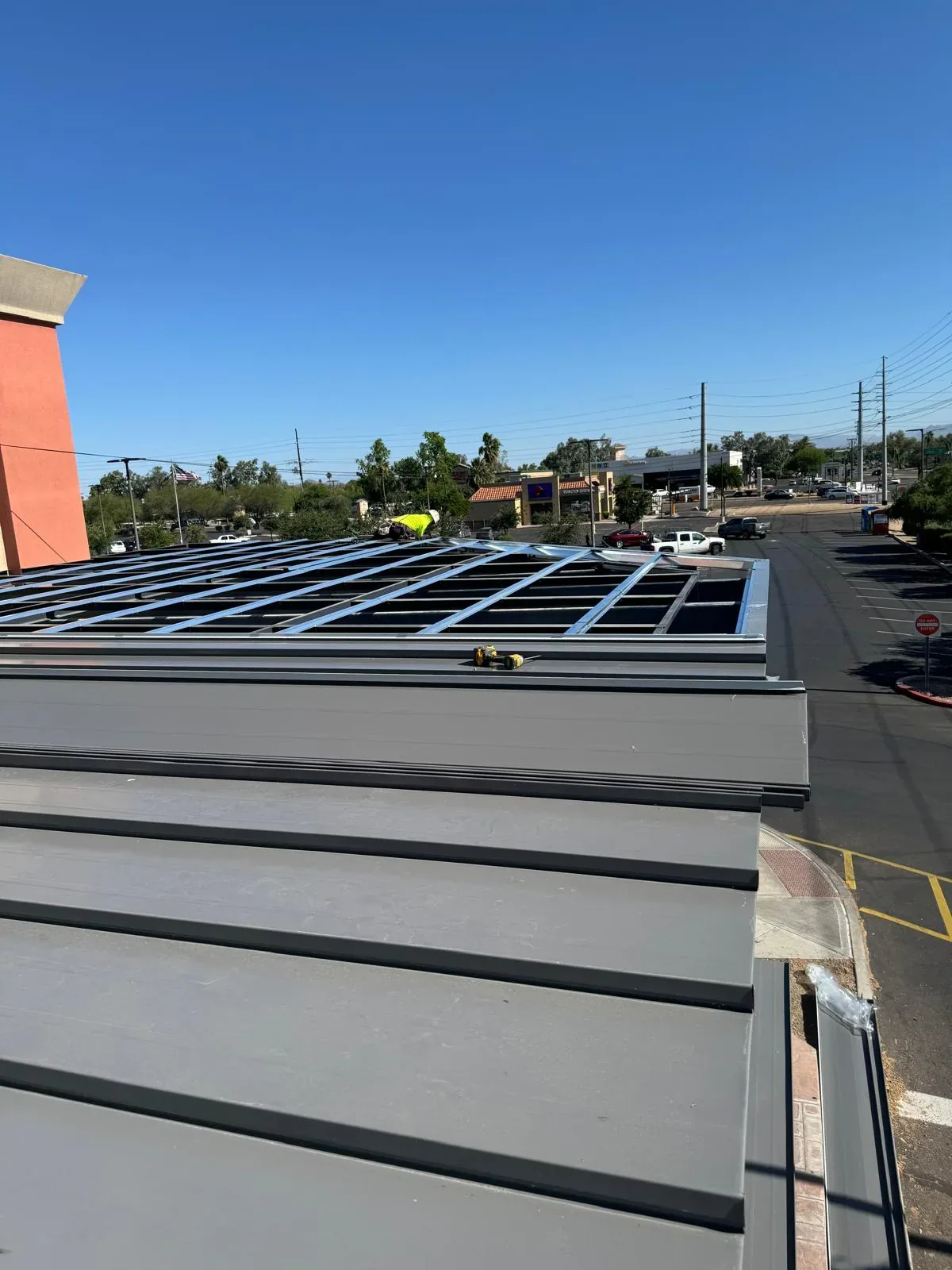
One puncture on a stable field can justify localized repair. Several failed terminations, recurring leaks or moisture found across zones can support a broader review. The recommendation does not follow the type of institution or road frontage. We use material, substrate, water path and service horizon to explain which corrections are immediate, which need testing and which may belong in the renewal plan. Open questions remain marked as open until a survey or opening confirms them. If design calls for a metal roof, standing-seam metal is considered against the building's needs.
An overlay needs suitable layers, drainage and a substrate that can accept another system. Replacement exposes the deck and allows insulation work, but increases removal, protection and coordination. If a metal alternative belongs in the design, we compare its details to the building and existing assembly rather than assuming it fits every low-slope roof. This keeps the owner's budget review connected to the documented roof condition, not a system preference or the building's function.
Reports Guide the Next Decision
A report should let a future reviewer locate the same seam, drain or penetration. We label roof zones, pair images with findings, record supplied leak dates and rank actions by service priority. An unresolved insulation question remains separate until a survey or opening provides evidence. That distinction helps a property manager authorize urgent work while keeping future renewal quantities grounded in what was actually found. A phased sequence can be organized through capital planning after service priority is set.
The same format can cover properties near the station and buildings along separate highway corridors without implying the same access plan or roof condition. Stoughton and Braintree reports in a broader property group can be compared by date, priority and system type. The owner can use that view to coordinate inspections and capital planning, while each site's remaining service remains independent. A later visit can compare the repair with its original photograph and note whether the condition changed. The review can include Stoughton and Braintree while retaining separate access details. A follow-up after a correction should revisit the same roof zone and photograph the repaired detail from a useful angle. We note whether the adjacent membrane, edge or outlet has changed and whether water entry has stopped according to the building contact. A dry day does not prove a concealed assembly is dry; if the original concern involved insulation, the report records whether a separate test remains open. This gives a facilities peer a clean handoff between the initial repair, a later condition review and the next budget decision.
Commercial Roofing Questions
Does rail access change the roofing recommendation?
It can affect parking, delivery or arrival timing, but the roof assembly sets the recommendation. We confirm the property entrance and approved staging area, then trace the reported water path above the affected space. Access coordination is recorded separately from the inspection evidence.
How do you keep a school entrance open?
We confirm school schedules, public entrances, delivery hours and interior areas that need protection. Those details guide barriers and material movement. The roof is opened only when the crew can secure it against weather, with HVAC or electrical dependencies coordinated before work reaches a related curb or penetration.
When is moisture mapping useful?
Mapping is useful when visible conditions or temperature readings suggest moisture may extend beyond an obvious defect. We describe the area that needs confirmation and whether a selective opening is warranted. The confirmed repair and unresolved test boundary remain separate in the scope.
What belongs in the repair-versus-replacement review?
We compare layers, substrate, drainage, moisture, edge height and disruption. A localized defect may be repaired; an overlay may fit where conditions permit, while replacement provides broader access to the deck. The report identifies which evidence supports the choice and which question still needs a test.