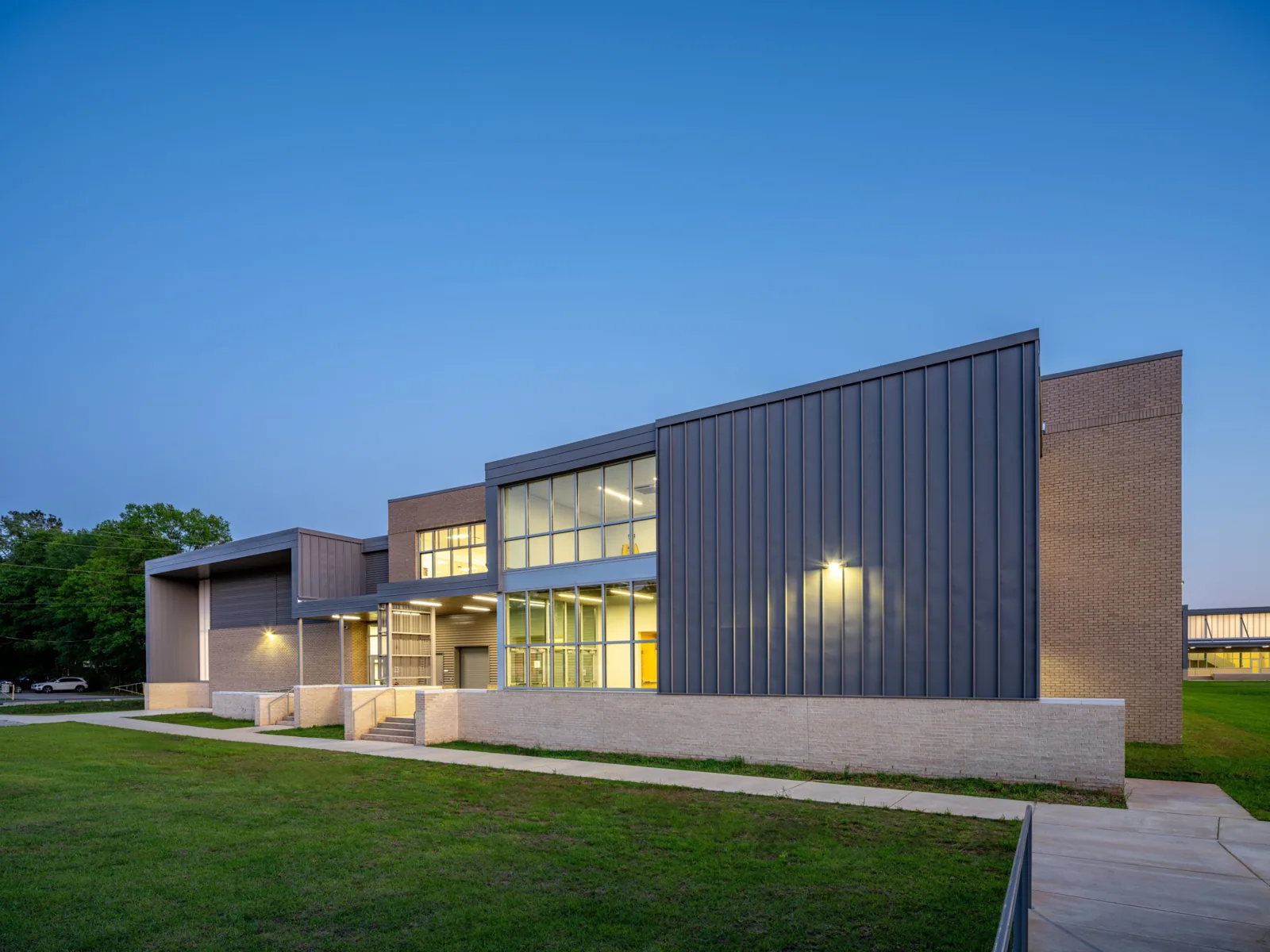
Skylight and Roof Penetration Flashing in Quincy, MA
Snowmelt held against a low curb can expose a flashing defect that a brief summer shower barely wets. For a commercial roof in Quincy, MA, the repair decision needs to compare flashing height, water movement and the connection around the penetration. We inspect those relationships before prescribing a sealant or patch. A sound roof field can still admit water where its covering turns up a curb, meets a pipe or terminates beneath a skylight frame.
Commercial Roofing Quincy repairs skylight curb flashing and commercial roof penetration details. We identify the material, movement and termination responsible for the opening, then define a compatible repair. The asset manager receives a boundary that distinguishes roofing work from a skylight-unit or equipment problem, which may require another trade. That distinction helps avoid rebuilding a roof connection while leaving a failed component above it unchanged.
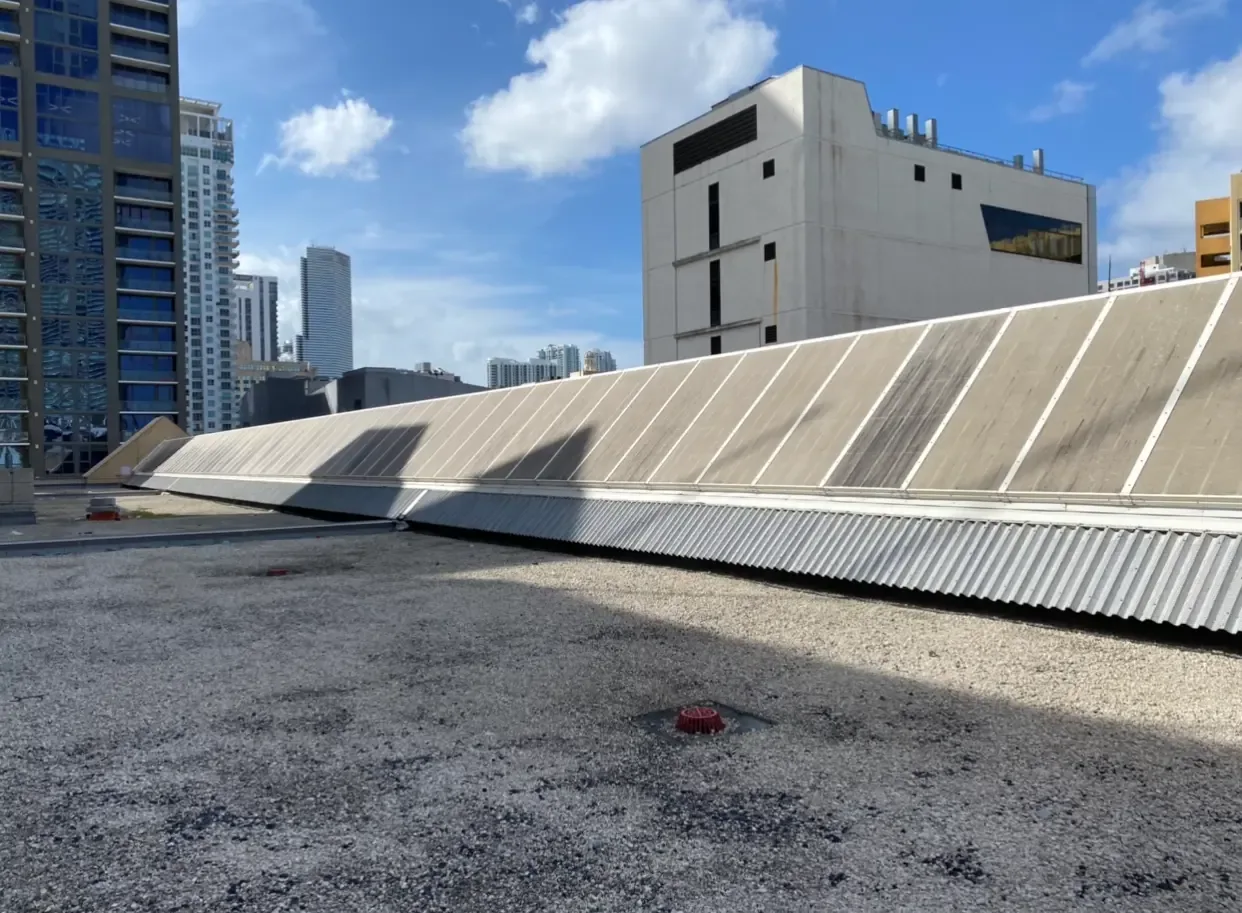
Separate the frame from the curb
A skylight leak can originate at glazing, frame joints, seals or the flashing where the roof meets its curb. We compare the visible condition and wetting pattern before setting the roofing scope. Condensation can also affect a skylight interior under some building conditions. Examining the curb alone may not resolve water associated with the unit or the indoor environment. The assessment should identify the component needing action.
At the curb, we inspect corners, membrane attachment and available flashing height. Earlier repairs may conceal an opening or leave incompatible material across the connection. We remove unsuitable treatment where necessary and establish a tie-in to sound roofing. Tracing recurring water entry can help identify the relevant detail when the symptom is intermittent. Glazing or frame work is coordinated with the appropriate specialist so roof and unit repairs meet at a clear responsibility boundary.
Accommodate the penetration
Pipes, ducts and equipment supports can move differently from the roof field. A tight membrane fold or poorly supported penetration can transfer that movement into the flashing, opening a split that repeatedly returns. We examine support, attachment and the detail geometry. The repair may need a new boot, rebuilt curb or other compatible connection rather than another surface treatment at the crack.
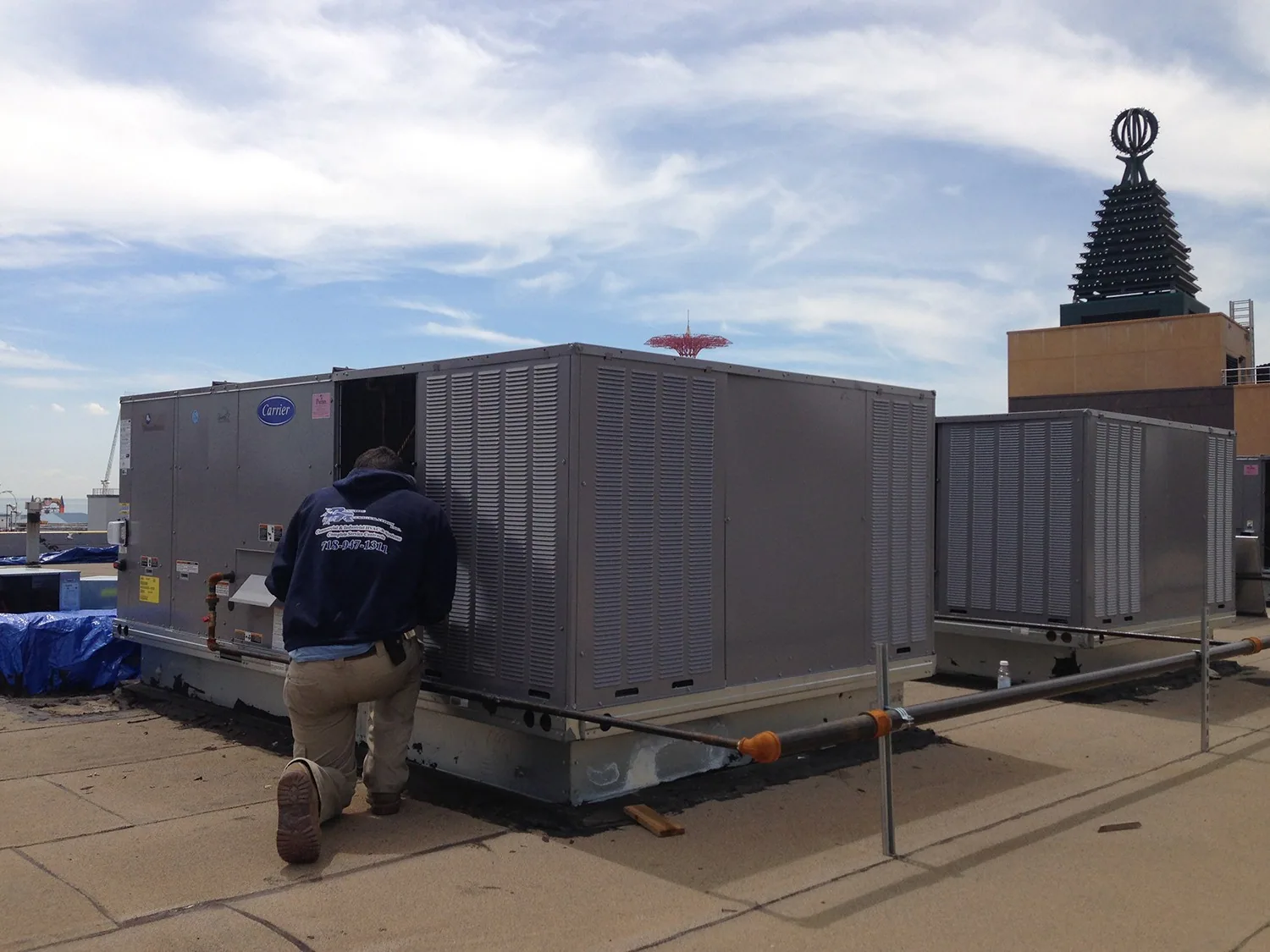
Equipment curb and support assessment is relevant where a shifting unit or service line contributes to the failure. Mechanical work may need to precede the flashing repair so the new material is not subjected to the same load. We identify the installation sequence and suitable separation between moving components. Roof penetrations should also remain accessible for future inspection; enclosing a questionable connection beneath added service equipment can make the next leak harder to diagnose.
Provide a clear uphill route
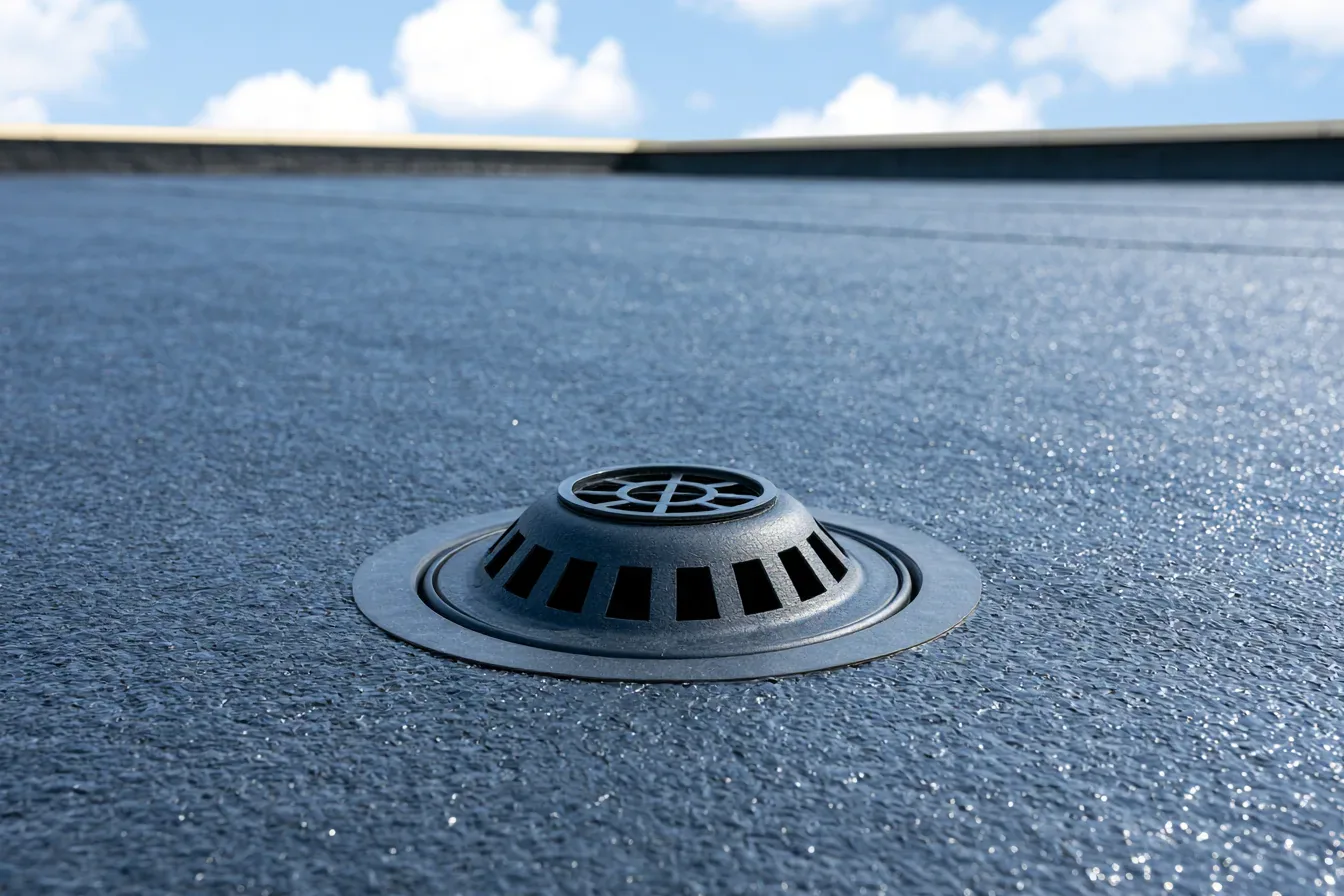
Water approaching the uphill side of a broad curb can collect if the surrounding geometry does not direct it toward an outlet. We inspect the flow path and signs of persistent contact with the flashing. A cricket or tapered transition may be appropriate where it sends water usefully past the obstruction. Its shape must be coordinated with the outlet layout and adjoining roof elevations rather than added as an isolated ridge.
Drainage corrections at curbs and outlets can reduce repeated wetting of the rebuilt detail. Increasing insulation during renewal can also reduce available curb height, so we measure that relationship before choosing the final build-up. Quincy prepares for blizzards and nor'easters; snowmelt exposure makes that height and water-path assessment practical. The membrane termination needs to remain above the water conditions the assembly is designed to manage, with the project’s applicable details established before installation.
Match the repair connection
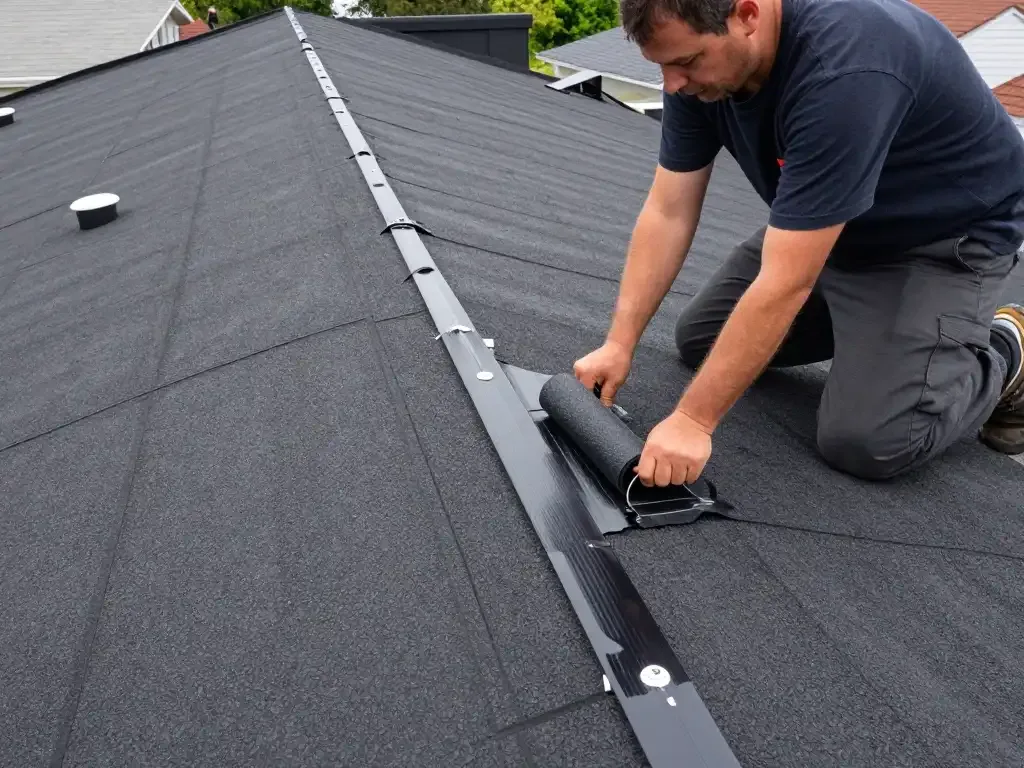
Different membranes require different penetration repairs. A thermoplastic connection depends on suitable welded material and proper preparation, while rubber systems use compatible boots, primers and joining materials. Bituminous assemblies need their own reinforcement and termination methods. We identify the existing construction before selecting a repair product. A flexible material that looks similar can still be unsuitable for the membrane or adjoining component.
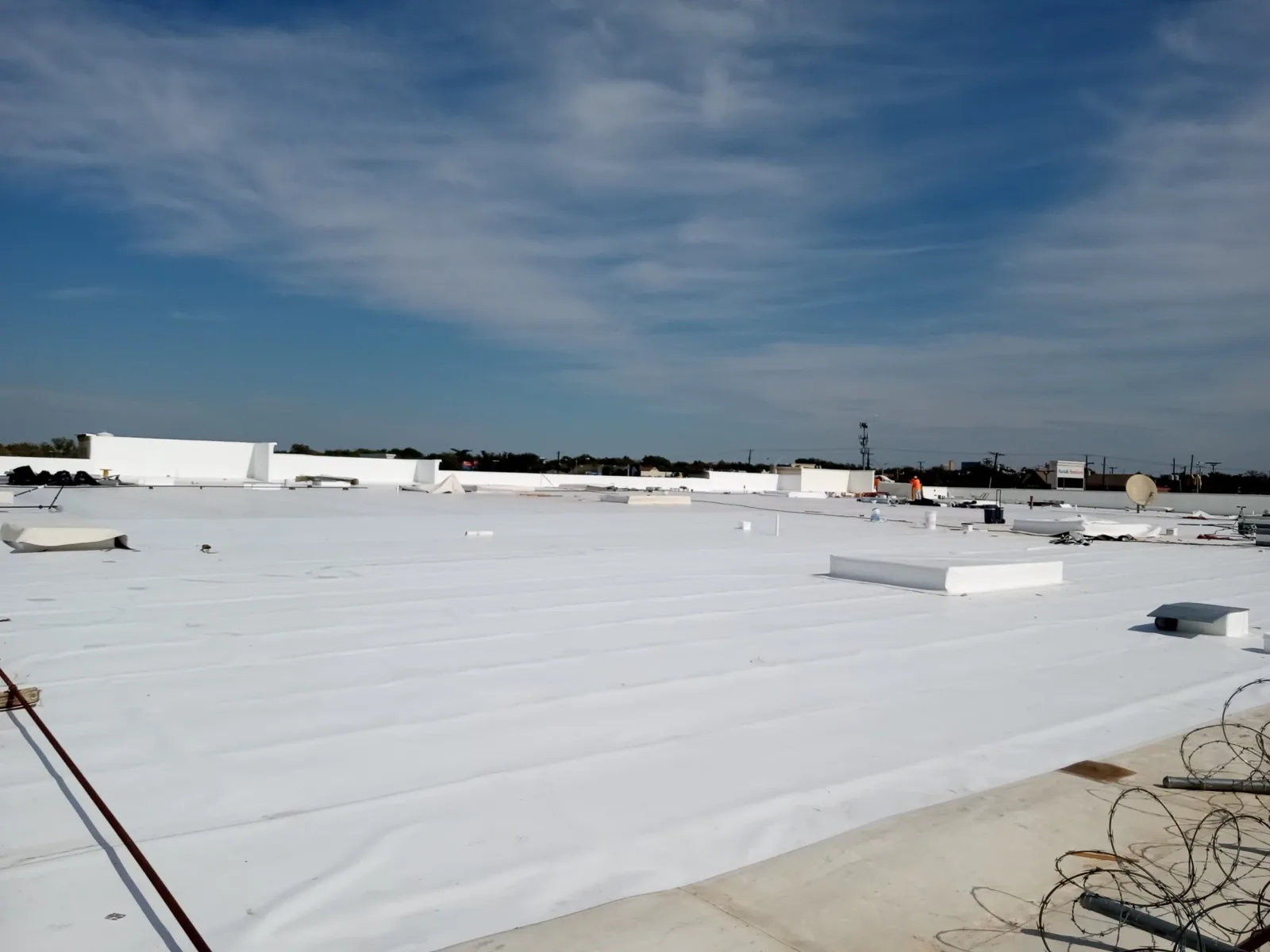
PVC roof flashing can provide a welded connection where the assembly and detail support it. Liquid-applied treatments may be suitable for some difficult shapes, subject to substrate and product requirements. We evaluate the whole detail rather than choose a material solely for its ability to cover an awkward surface. Contamination, moisture beneath the membrane or deteriorated curb support can require preparation and reconstruction before the new connection can hold useful service.
Jointed clusters of small penetrations deserve particular attention. Each pipe needs a suitable seal and support, and the group should leave room for drainage and repair access. A crowded improvised assembly may be better reorganized with the responsible trade than buried beneath successive layers of repair material that make the original connections inaccessible.
Sequence the detail above occupancy
North Quincy includes North Quincy High School near Hancock Street and West Squantum Street. At an educational property, penetration repairs can need interior protection and ventilation coordination even where only a small roof area is opened. We arrange the examination and closure with the building contact. The size of the patch should not determine whether dust, debris or an intake interruption is considered.
South Hingham’s office and manufacturing properties create other service and scheduling demands. We identify which equipment must remain active and which connection can be safely worked on during the planned window. Phasing roof work over occupied rooms also applies during larger curb reconstruction, where equipment lifting or insulation removal expands the opening. Temporary termination and weather protection need to remain suitable until the permanent flashing can be completed.
After repair, the manager should know which component was rebuilt and what equipment or skylight work remains. Subsequent service activity must avoid disturbing the new connection. A follow-up observation during the relevant rain or thaw can then compare the repaired detail with its earlier symptom instead of leaving an unexplained repeat leak assigned to the same general area.
Commercial Roofing Questions
Can roof flashing repairs stop a leaking skylight frame?
Flashing work addresses the roof-to-curb connection, while glazing, frame seals or joints may need a skylight specialist. We inspect the pattern and accessible components to identify that boundary. Coordinated work may be appropriate where both are damaged. The proposal should state which connection is being repaired so the owner does not expect a curb treatment to resolve a separate unit failure.
Why does a pipe boot split repeatedly after patching?
Movement, inadequate support or unsuitable material can keep loading the same connection. We inspect the pipe and surrounding detail before selecting the new boot or repair method. Mechanical correction may be needed first. Covering the split again without addressing the repeated movement can leave the new material subject to the earlier failure mechanism.
Should curbs be raised during an insulation upgrade?
Compare the planned finished roof height with the curb’s available flashing height and equipment arrangement. We identify where extension or reconstruction is needed and coordinate it before installing the new build-up. Some details may remain suitable, while others become too low. The decision should be measured at each relevant connection rather than assumed from the overall insulation specification.
What makes a clustered penetration repair difficult?
Closely spaced pipes can limit preparation, sealing and future access, while supports or adjoining materials introduce different movement. We evaluate each connection and the group’s drainage arrangement. A redesigned cluster may be more workable than adding another treatment over inaccessible joints. The roofing and equipment scopes should establish how the finished detail will remain inspectable and maintainable.