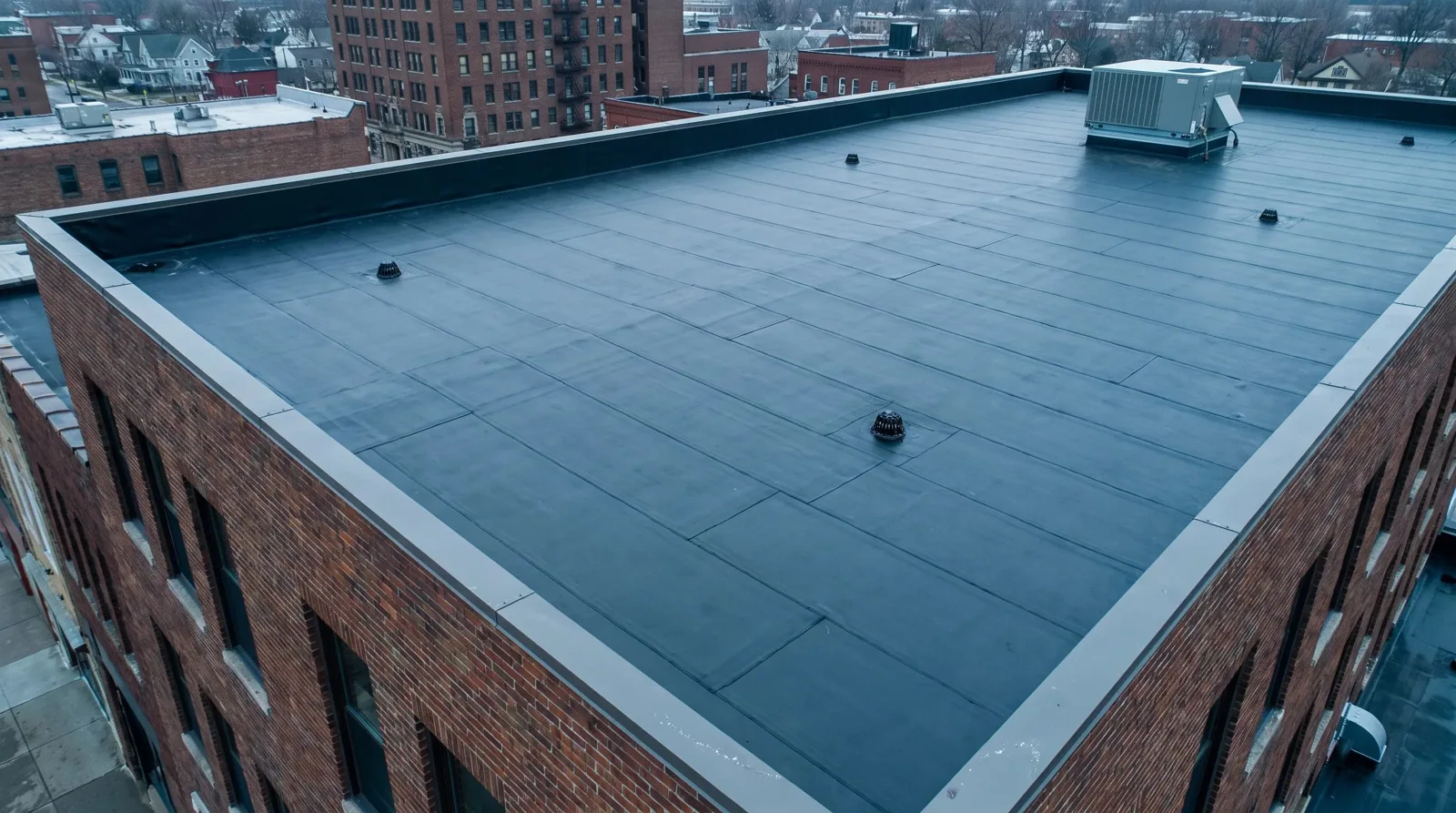
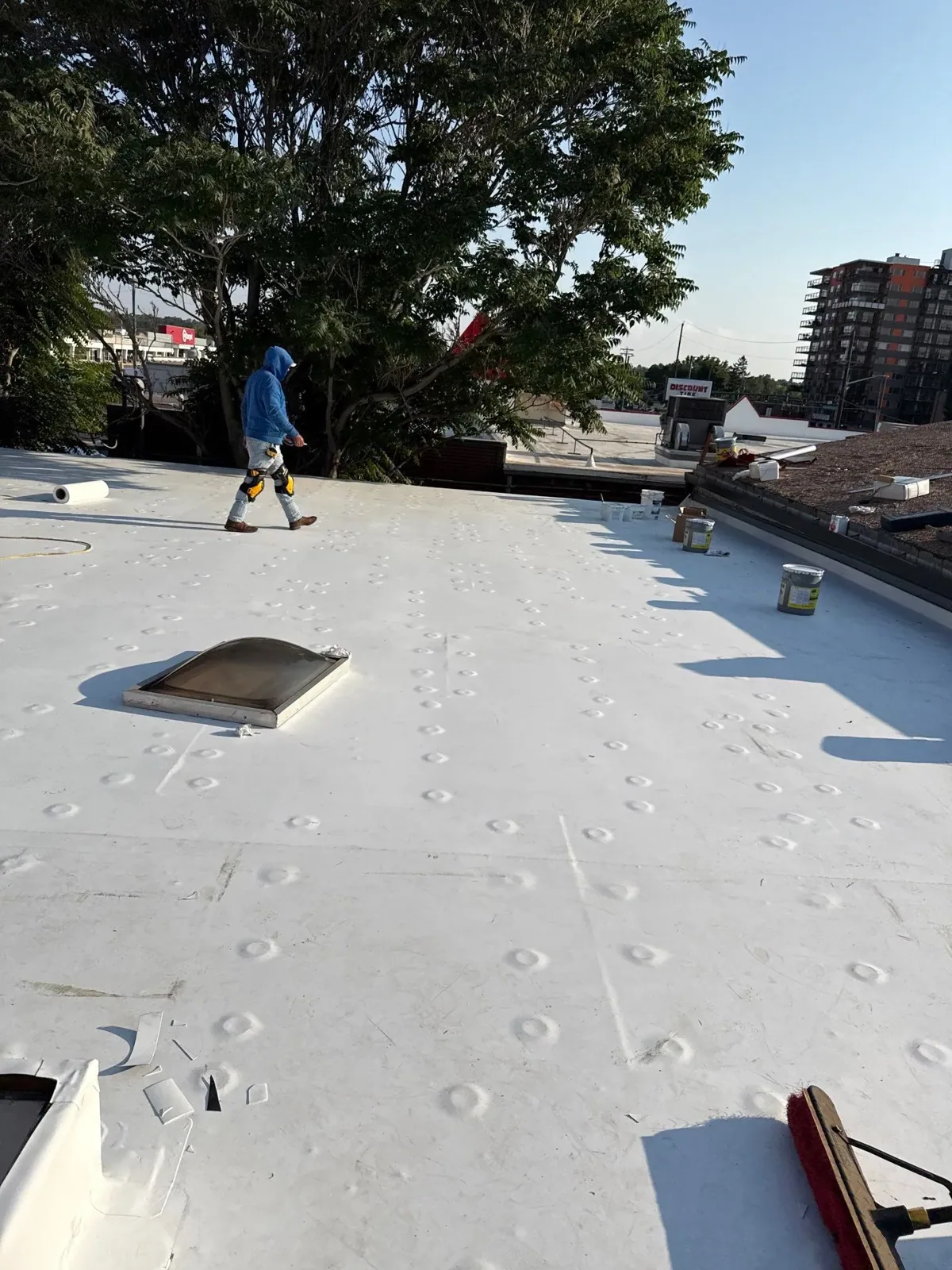
Commercial Roof Membrane Puncture Repair in Quincy, MA
A small opening where a loose support corner presses into roofing can admit water while the surrounding sheet remains apparently sound. Commercial membrane-puncture repair in Quincy, MA, should examine that contact before closing the hole. If the sharp edge stays in position, another patch can be damaged by the same pressure. We inspect the receiving membrane and affected layers, then identify compatible closure with the contact correction needed to preserve it. The repair boundary should follow actual material condition rather than the visible opening alone.
Quincy's winter-storm and flood preparedness makes secure roofing and usable drainage relevant to the requested property's weather exposure. We assess the roof itself, not only the interior symptom associated with the puncture. A bounded opening on sound construction can support a local repair, while admitted water can require additional layer restoration. The owner's service interval should cover both the permanent connection and any supporting task identified by examination.
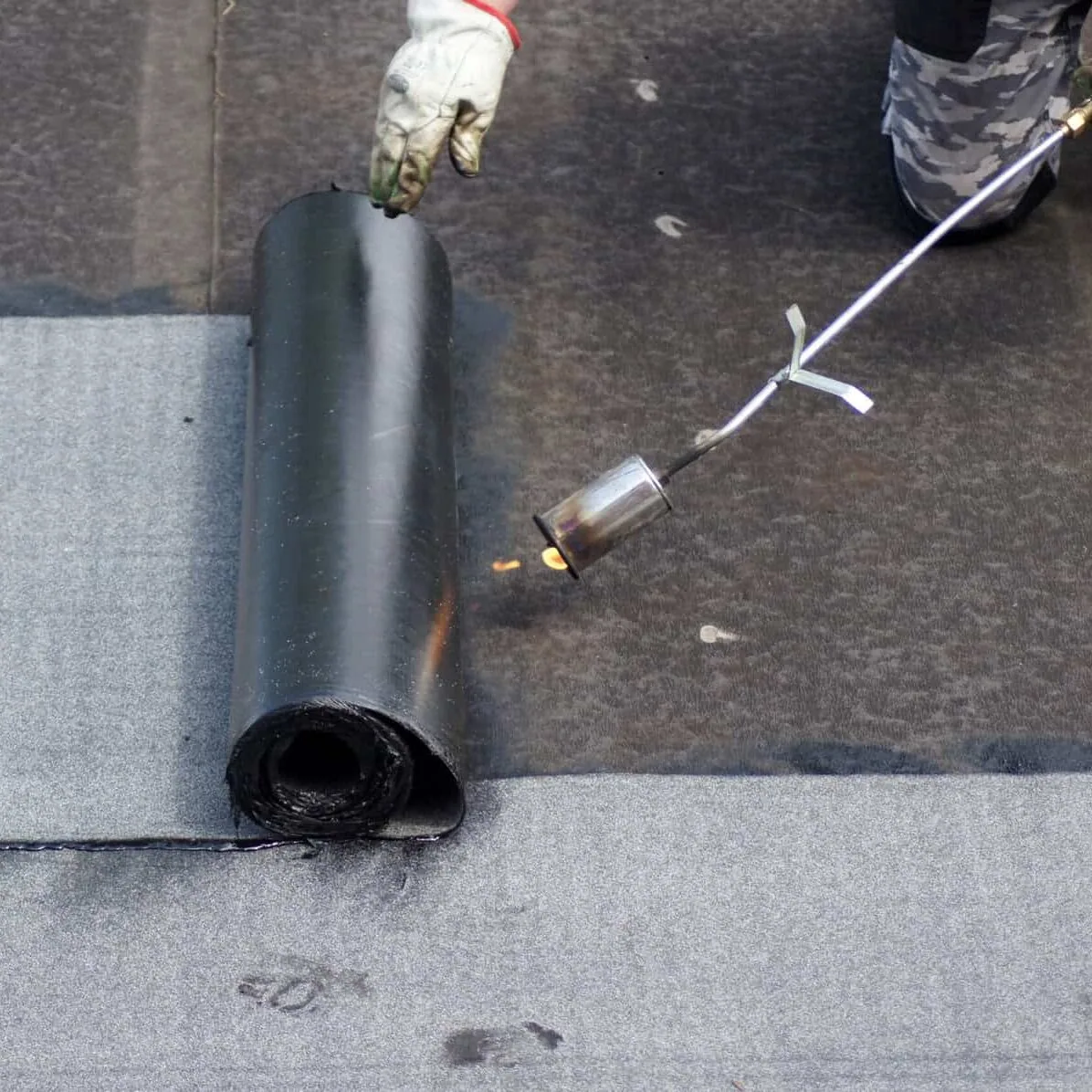
Locate the point contact before placing new material
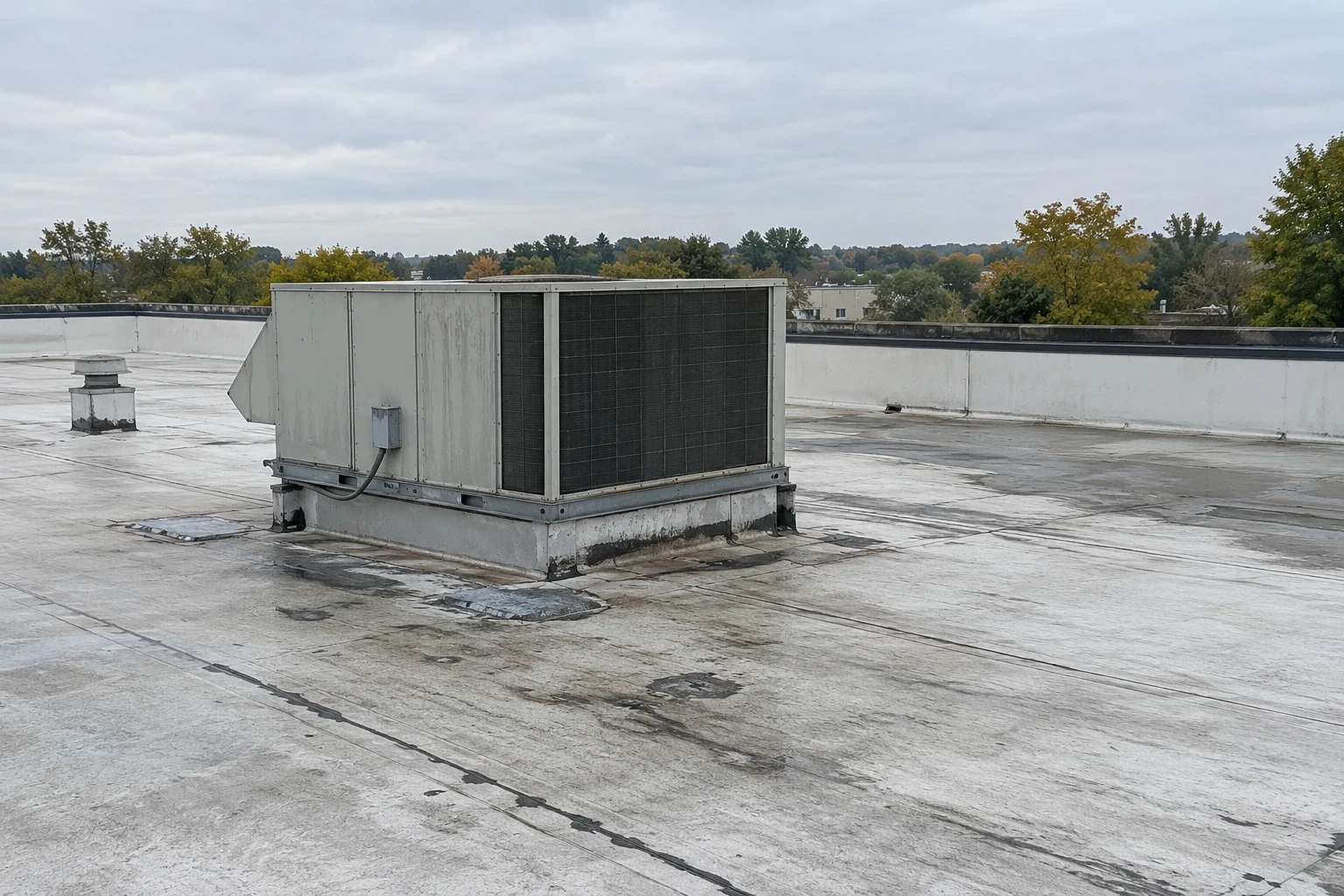
Sharp equipment edges, dropped objects and concentrated contact can create different damage patterns. We examine the defect and nearby use to identify the likely contact requiring correction. A discarded item can be removed, while a fixed support may need a coordinated receiving arrangement. The new detail should not be expected to tolerate an unresolved sharp edge simply because another layer has been installed over the hole. Suitable reconstruction addresses the membrane and the physical contact together.
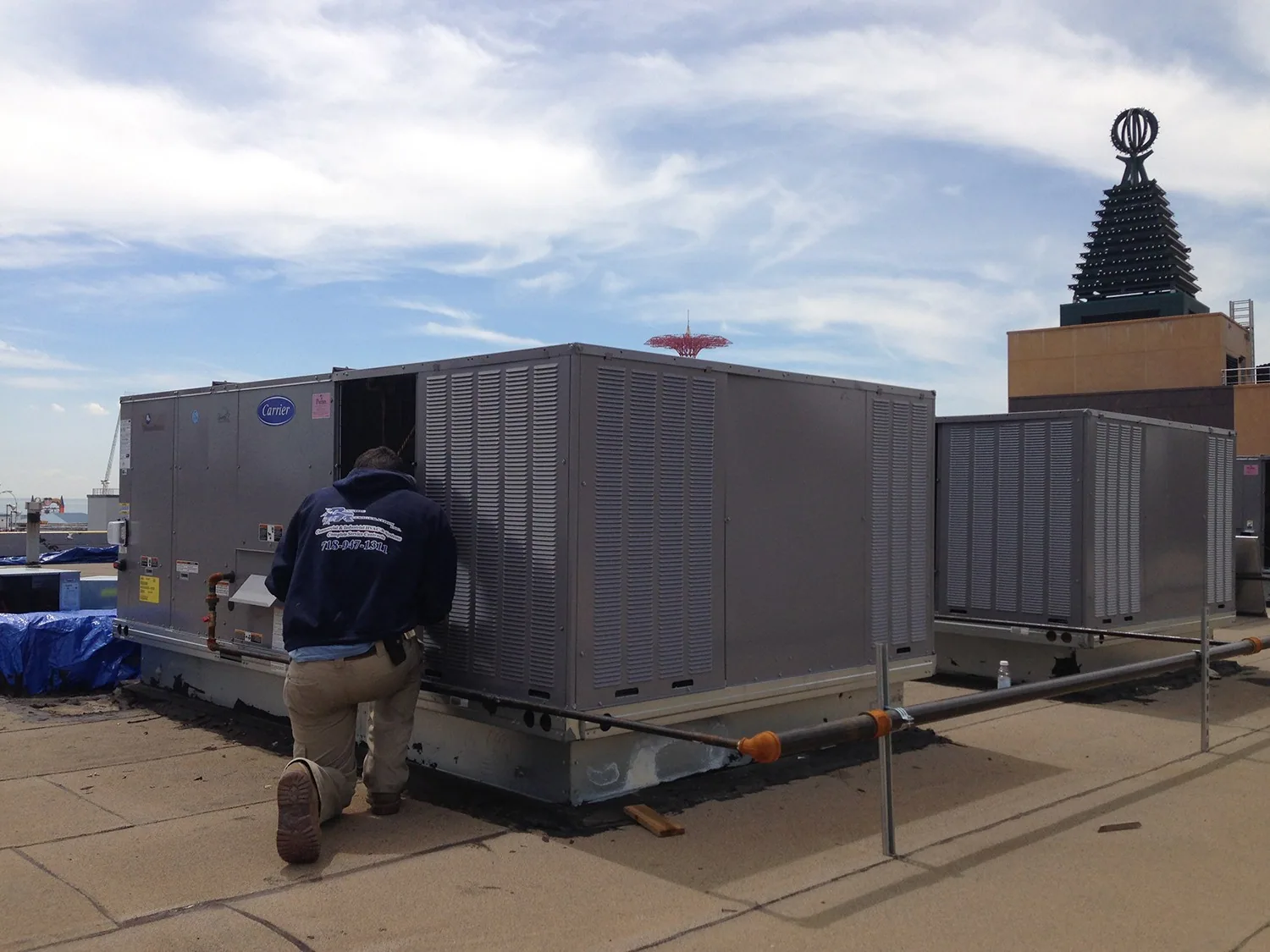
Equipment support assessment can establish the task around a support whose position or bearing affects roofing. Waterproofing should follow the relevant correction where it changes the interface. We also assess drainage and service access at the relocated support. Moving contact away from one opening is incomplete if the new position obstructs runoff or stresses another vulnerable connection.
Circuit Street, Winslow's Crossing and King Street Industrial Park are among Hanover's industrial areas. For a requested property in Hanover, we trace the approach from roof access to the equipment and inspect contact near the damaged membrane. The repair stage can need a support corrected before closure or a service route protected around vulnerable joints. We identify that component task with the useful receiving boundary around the puncture.
Protect the actual approach to the unit
Repeated technician travel can concentrate wear where a hatch, ladder landing or equipment position directs each trip through the same area. We assess the route and damaged material rather than distribute protection arbitrarily across the roof. A useful arrangement guides contact over suitable receiving construction and leaves vulnerable details accessible. The approach to a unit should not require stepping against a flashing edge or repeatedly crossing an unprotected localized repair.
Compatible traffic protection needs to suit the installed roof system and its intended use. We examine attachment or receiving requirements for the selected construction, with drainage remaining usable. Protection placed across a low water route can create another maintenance problem. The final arrangement should preserve outlet access and avoid sharp new edges against roofing. Traffic pads are one component of the decision, not a substitute for restoring material already punctured or damaged.
Our preventive roof maintenance distinguishes inspection and removal of loose objects from permanent reconstruction. Finding repeated contact at the same location should prompt a review of the route or support, not only another surface repair. The owner receives a specific component task so later service activity can use the roof without immediately recreating the mechanism that damaged it.
Prepare a compatible boundary around the opening
A puncture can leave torn, stretched or contaminated material around its visible center. We examine the receiving area before selecting closure. The installed membrane and any previous treatment affect compatible repair methods and suitable preparation. A patch that covers the opening geometrically is not necessarily a sound connection to the surface beneath it. The work should establish useful material at the repair boundary rather than bond new roofing onto unsuitable receiving construction.
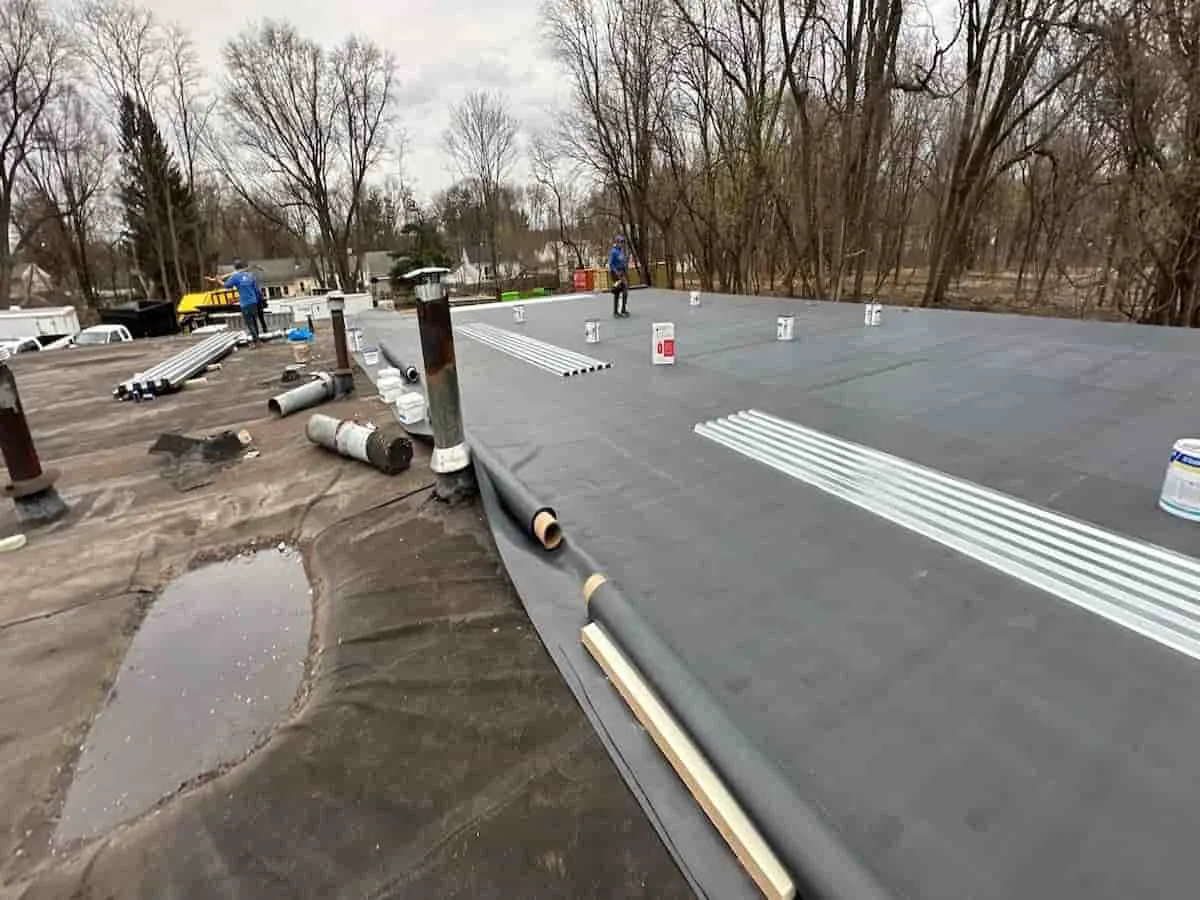
Commercial membrane repair identifies the material, receiving preparation and final continuity required. A bounded opening can suit compatible local reconstruction when the assembly supports that approach. Multiple defects or wider deterioration can require a different comparison. We explain that extent without assuming every puncture means whole-roof renewal or that every visible small hole can be resolved with an equally small treatment.
If contact damage reaches a joint, seam reconstruction may be part of the scope. We assess the joining method and surrounding restraint before closing the area. Damage at an equipment transition can also involve flashing repair. The recommendation identifies each affected boundary, so one visible puncture does not conceal an adjoining joint or detail requiring compatible restoration.
Establish what remains under the closed surface
Water entering through a small opening can affect insulation beyond the exposed membrane defect. We examine indications of moisture and select closer checks where concealed condition changes retention. The visible hole's size does not establish the damaged-layer boundary. Wet boards, deteriorated support or unsuitable attachment can require additional construction. Closing the surface and restoring those layers should be described as distinct tasks even when performed in one coordinated intervention.
Hingham's Route 3 access serves commercial and industrial settings, including South Hingham businesses. For requested roof work in that broader area, the operating equipment interval and occupied-room exposure need assessment at the individual property. A support correction or insulation opening can require more arrangement than the visible puncture suggests. We connect that interval to the receiving work established, so the property can protect the actual space affected by removal and closure.
Sound surrounding construction can support a narrower scope where the defect is bounded. We identify the retained components and why they are useful for the proposed repair. Where examination establishes distributed damage, wider reconstruction receives a physical reason instead of a general old-roof label. The owner can compare those approaches through what remains in the assembly and what each intervention restores.
Finish contact correction and waterproofing coherently
The repair stage should include receiving preparation, any support task and the final water boundary. We assess suitable application conditions and the protection needed below before opening affected layers. A temporary measure can limit entry while the full scope is established, but it should remain distinguishable from permanent restoration. The daily task needs a secured endpoint and drainage that remains functional around the repair.
After completion, the repaired connection should remain inspectable and suitable for later compatible work. Technician routes and loose-object control can reduce repeated damage where relevant, while regular outlet access preserves the water path. The component description identifies the surface restored, supporting work completed and layers retained. That information makes a later symptom easier to investigate without assuming that the same contact, joint or entry pathway has returned.
Commercial Roofing Questions
Can a small puncture affect layers beyond the visible hole?
Admitted water can extend into insulation outside the exposed membrane opening. We examine concealed condition where it affects the repair boundary. The receiving material and extent established guide removal, with the entry closure described separately from damaged-layer restoration. A small surface defect should not automatically become either a minimal patch or a whole-roof scope without that assessment.
What changes if a support edge keeps damaging the same area?
The contact needs examination before permanent closure. We identify the support task and suitable receiving arrangement, then coordinate waterproofing around the corrected interface. Another patch can remain vulnerable if the sharp point or movement persists. The final repair should address both the damaged membrane and the condition likely to recreate the opening.
Where should traffic protection be considered?
Assess the route technicians actually use from access points to equipment. Concentrated crossings and landings can need protection suited to the installed assembly. We preserve drainage and inspectable details while identifying suitable receiving construction. Protection should guide contact away from vulnerable connections without becoming a new obstruction or concealing damage already requiring repair.
Does any membrane patch provide a compatible repair?
Identify the installed system, surface condition and previous treatments first. Preparation and joining methods need to suit that receiving material. We establish a useful repair boundary around torn or damaged construction rather than assume coverage of the visible hole forms a sound bond. The completed connection should remain compatible with the retained assembly and intended roof use.