Commercial Roofing for Manufacturing Companies in Quincy, MA
Snow melt diverted around a process-exhaust support can reach a weakened roof connection while the production line below continues operating. Manufacturing companies working around Quincy, MA, need a recommendation that follows that connection into the assembly and explains how it can be rebuilt. An exterior patch may close an opening without addressing unstable support or moisture in retained insulation. We assess those separate components before choosing the intervention. The production requirement then determines how the physical work is protected and sequenced.
Quincy's flood and winter-storm preparedness provides a practical reason to examine drainage and construction exposure. We inspect, repair and renew commercial roofs with the manufacturer's actual equipment and operating arrangements in view. A line that must remain available can constrain access beneath an opening, but it does not change the condition needed for sound attachment or compatible flashing. The recommendation should resolve both questions without confusing a scheduling constraint with a suitable roof repair.
Check what reaches the roof surface
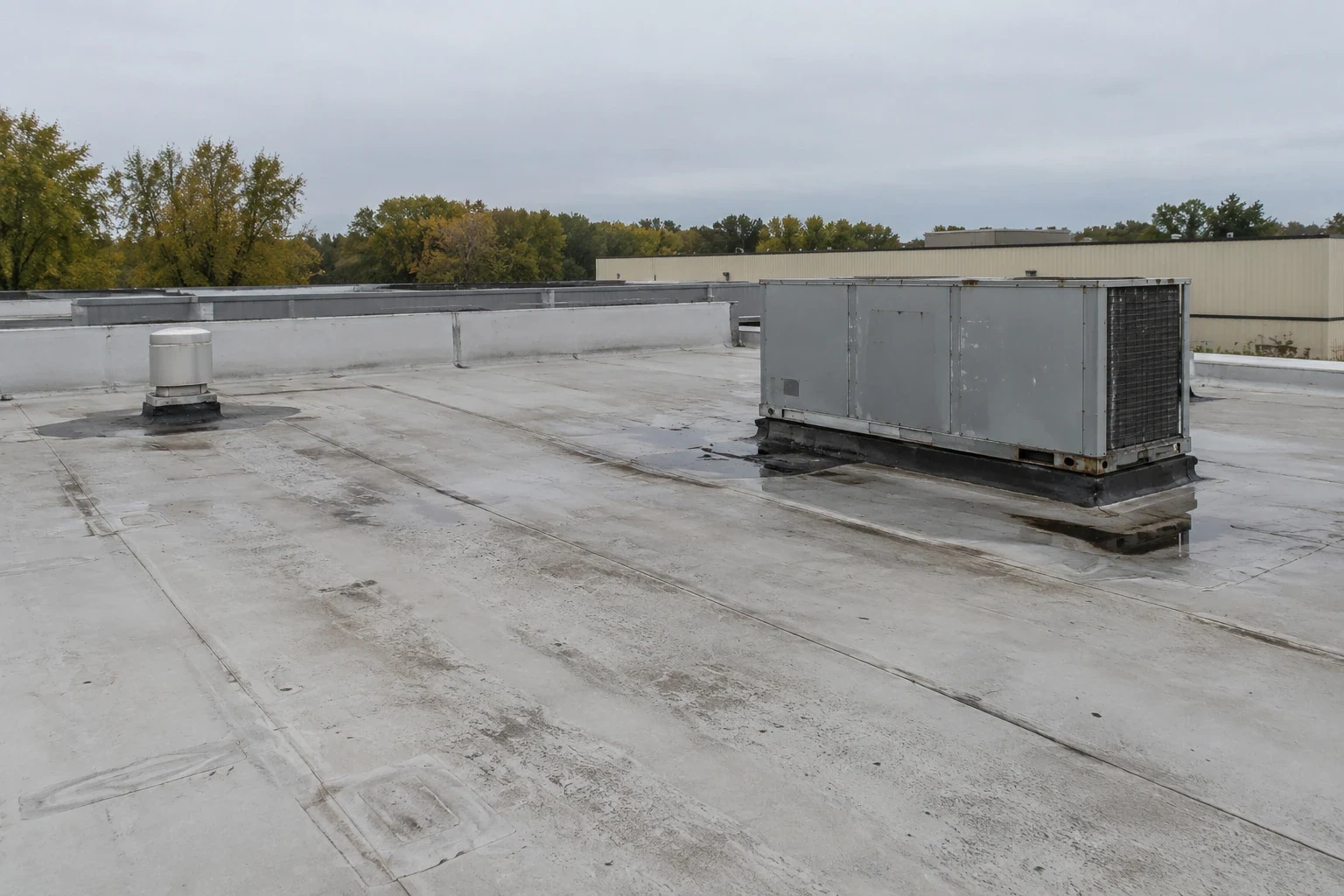
Exhaust discharge and material handling can expose roofing to substances beyond ordinary rain and sun. We ask what reaches the surface, where it accumulates and whether equipment arrangements are changing. The installed membrane and proposed repair materials need to suit that contact. A recognizable material name does not establish suitability for every manufacturing process. Concentrated exposure at a vent may need a different response from the wider field, particularly where residue affects preparation or the receiving connection.
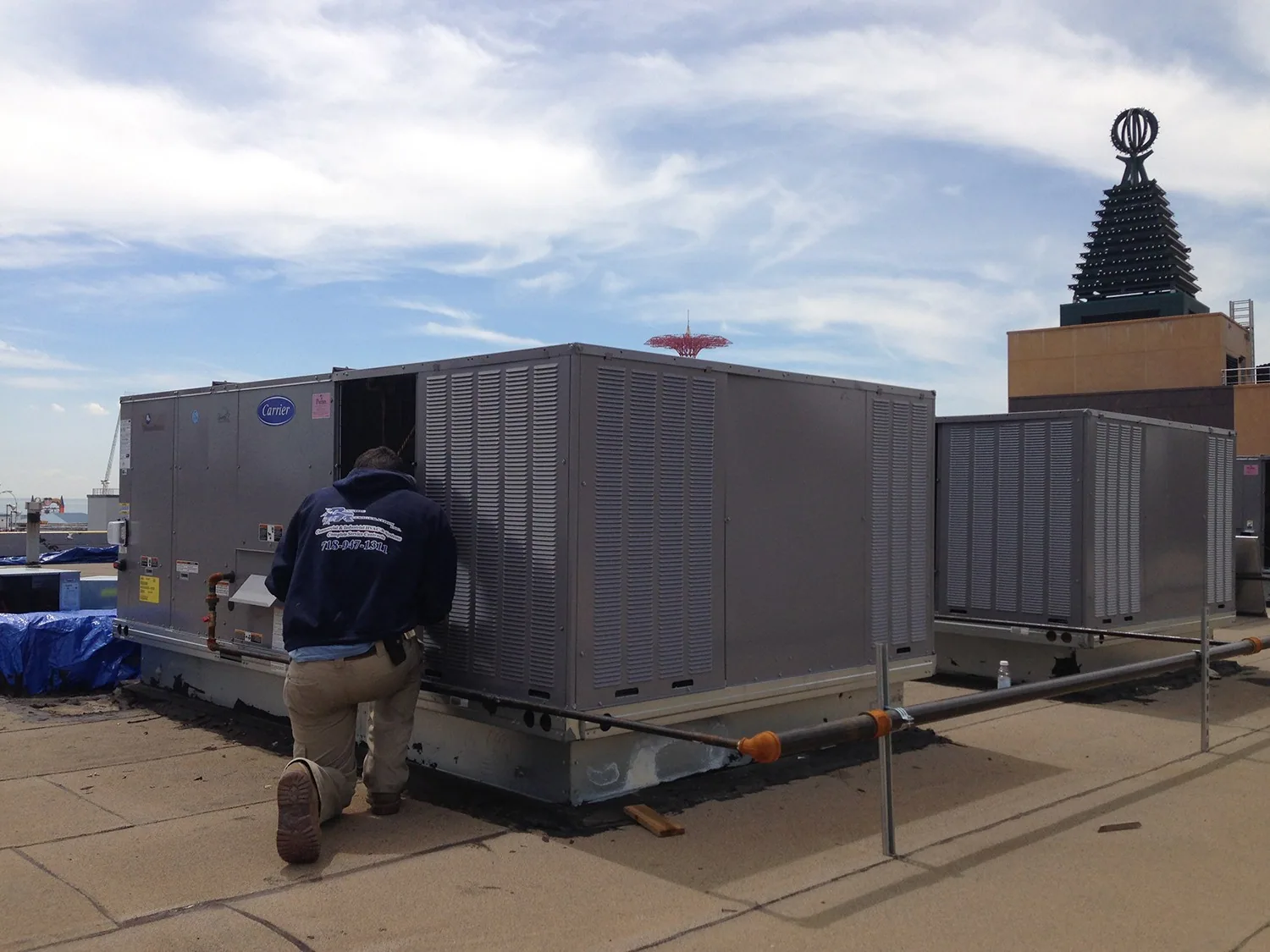
For manufacturing-plant roof work, we examine process equipment alongside membrane condition rather than select a system from the building category. A proposed exhaust change should include its penetration geometry and final discharge relationship to roofing. If equipment work will disturb the roof after renewal, we coordinate that task before closing the field. The finished connection needs to match the equipment that will actually remain in operation.
South Hingham includes power-control manufacturing and food businesses. Those distinct activities illustrate why a manufacturer's roof assessment should begin with the individual process, not an assumption shared across an industrial district. We evaluate the requested building's material contact and operating dependencies. The local business mix helps frame questions, while the examined assembly establishes the repair and renewal requirements.
Rebuild the support before the flashing
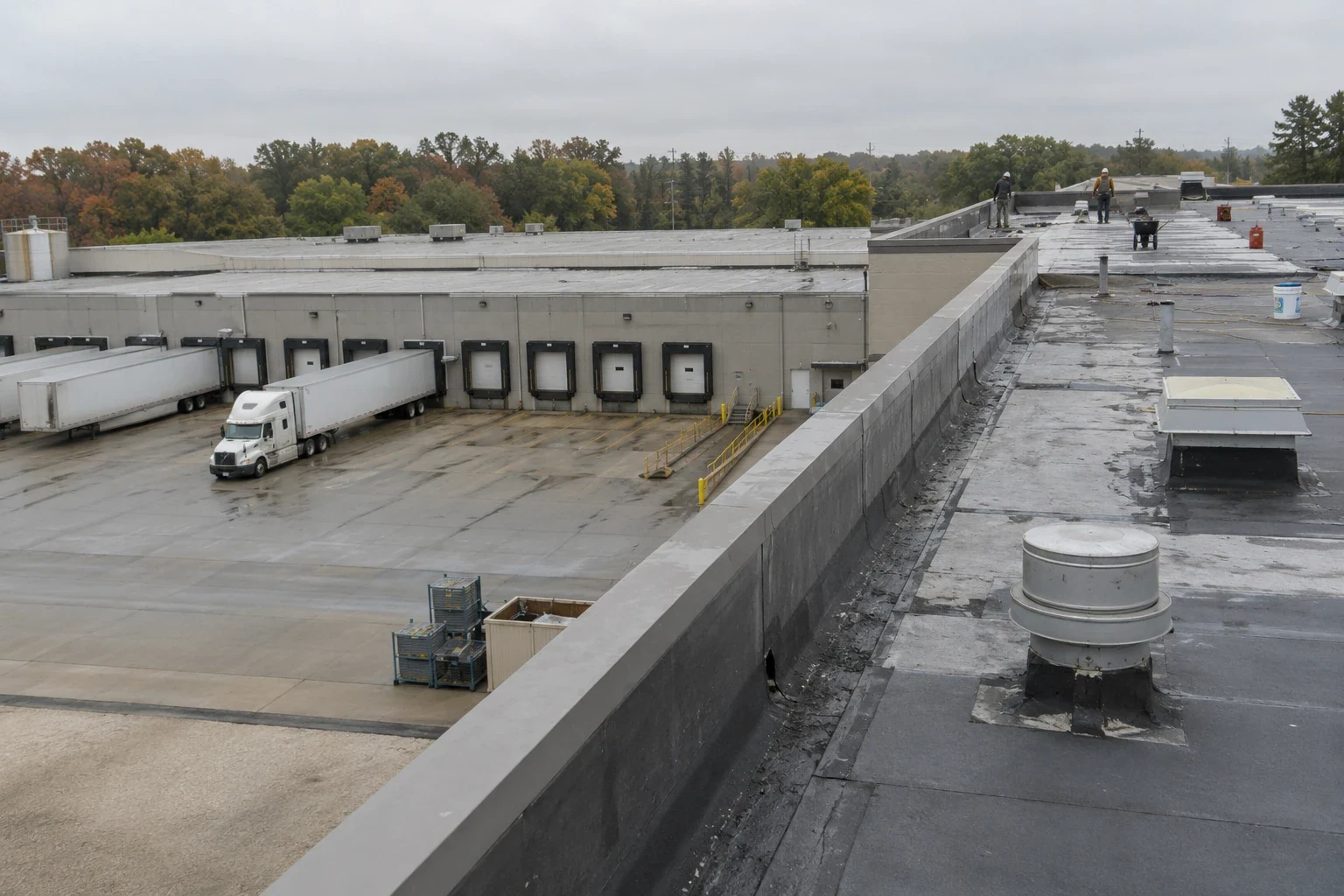
A flashing stretched by movement around a pipe or equipment base can reopen if the underlying support remains unstable. We examine the source of movement and the receiving construction before proposing another treatment at the surface. Support correction may require a coordinated equipment interval with the renovation contractor. The roof closure follows that work, using suitable materials and detailing for the revised geometry. Installing waterproofing before the relevant structural or mechanical task can leave the new connection needing immediate alteration.
Equipment curb and support repairs can also affect insulation height and drain clearances. We establish those relationships before a wider renewal changes the roof elevation. A low flashing margin can become less useful when additional construction is installed around it. The proposal should identify which supports remain, which connections are raised or rebuilt and how service access reaches them without concentrated damage to the finished roof.
Trace moisture through the full construction
Manufacturing areas can have different interior temperatures and humidity levels within one building. Where those conditions affect the roof, we examine the air and thermal control arrangements as well as exterior entry. Repeated moisture near a construction transition may need investigation of both pathways. Treating every interior symptom as a membrane hole can leave the actual mechanism unresolved. The recommended assembly should suit the operating conditions that will continue below it.
Our manufacturing roof examinations identify field condition, interfaces and areas needing closer investigation. Selective opening may be appropriate when concealed layers determine whether construction can remain. We describe the component established by that examination and the removal needed to restore it. Wet insulation, deteriorated receiving material and a bounded flashing defect can require different tasks. Their relationship matters more than a broad label describing the roof as old.
A manufacturer evaluating several properties needs those findings presented on a comparable basis. The assessment should distinguish observed defects from confirmed concealed damage and identify the investigation still needed for a decision. That comparison allows the owner to prioritize a vulnerable connection above production differently from wider renewal supported by distributed deterioration. The reason for each recommendation remains tied to the roof and its exposure.
Place the opening around the production task
A roof removal zone should account for the activity below, the equipment connections within it and the closure effort available that day. Open field can be simpler to complete than a smaller area around several process lines. We define the stage using those physical tasks and suitable installation conditions. Interior protection, intake arrangements and access restrictions should be established before work creates exposure. A proposed interval is useful only if the final connections can be secured within it.
Manufacturers comparing logistics roof requirements with production properties should distinguish stock protection from active process dependencies. A receiving area may need debris control above stored goods and a usable loading route; an operating process may also need specific equipment isolation before a penetration is rebuilt. Those differences affect the stage boundary. They do not justify carrying damaged roof components into the finished assembly simply because operations are busy.
Avon Industrial Park is separated from nearby residential neighborhoods and lies close to Route 24. For requested work in Avon Industrial Park, we assess the individual delivery, disposal and lifting positions with the site's active circulation. The industrial setting does not provide unrestricted access automatically. A practical roof stage leaves necessary traffic usable while locating removal and closure tasks where they can be completed safely and coherently.
Choose construction that remains serviceable
The roof covering should be selected with receiving support, attachment, exposure and detail geometry considered together. Where PVC roofing is under consideration, we evaluate the specific material and project requirements rather than assume every product suits the process. Compatible preparation and transitions remain necessary. A dry sound assembly presents a different retention decision from construction containing damaged boards or unsuitable attachment. The new surface should be supported by useful layers below it.
A manufacturer can also need repair access after installation. We consider technician routes, removable equipment arrangements and the ability to inspect vulnerable connections. Suitable traffic protection should preserve drainage instead of becoming another obstacle in a low area. The completed roof needs to tolerate its intended use within the selected system's requirements, with maintenance directed to the components exposed by that use.
Commercial Roofing Questions
Should production exhaust determine the membrane selection?
The actual discharge and material contact belong in the selection alongside attachment, support and geometry. We assess the installed or proposed system against those conditions. A localized exposure may need a specific detail or equipment correction, while broader construction can require another comparison. The recommendation should identify the contact being addressed rather than rely on a general industrial-use label.
Can a moving equipment connection be repaired with another surface treatment?
Examine the movement first. An unstable support can continue stressing flashing after a patch is applied. We identify the support task, receiving material and suitable final connection, with equipment coordination where needed. The roof work should close after the relevant correction so the rebuilt detail is not immediately subjected to the same unresolved movement.
What changes when different production areas have unlike indoor conditions?
Air and thermal control can need assessment at the boundary between those areas. We examine exterior waterproofing and concealed construction where moisture findings warrant it. The appropriate repair follows the established pathway and damaged component. A repeated symptom should not prompt another membrane treatment without examining the interior condition and assembly relationship that may contribute to it.
How do we define a workable removal stage above production?
Start with the connections requiring reconstruction and the activity needing protection below. We determine equipment intervals, interior arrangements and the detail work that must finish before weather exposure resumes. Daily area follows that closure effort. A smaller stage can be more practical around process penetrations than a large field opening whose boundary cannot be completed in the available interval.