Commercial Roofing for Logistics and 3PL Operators in Quincy, MA
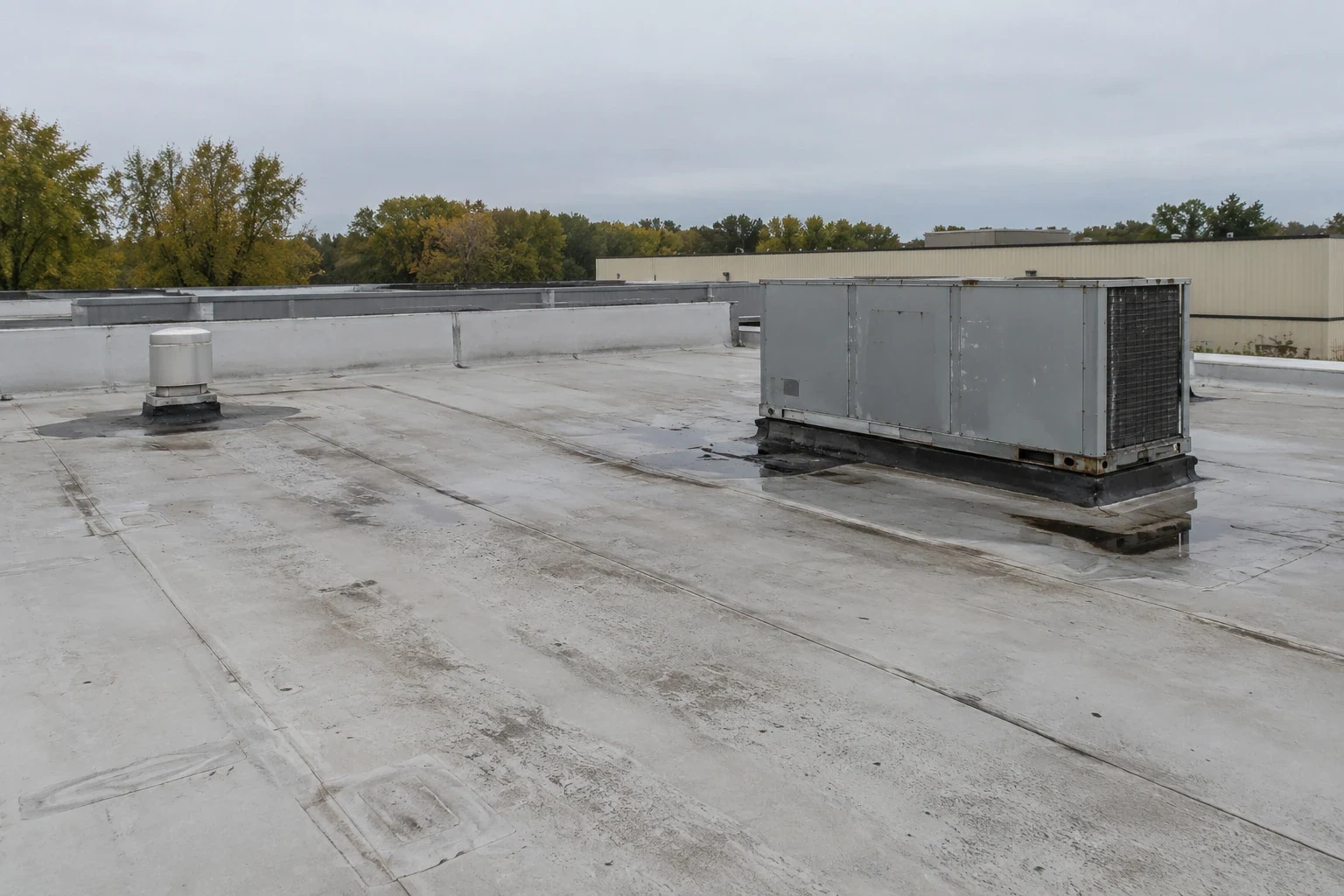
Thaw runoff collecting over a dispatch area can turn a roof defect into a receiving and shipping problem before the wider field appears distressed. For logistics and third-party logistics operators near Quincy, MA, we assess the outlet, construction height and damaged components before recommending work. Removing debris may restore flow where the outlet and receiving detail remain sound. It will not repair deteriorated low-point construction or correct an unsuitable slope. The operating plan needs to reflect the intervention actually required.
Winter storms and flooding form part of Quincy's preparedness concerns. We connect those conditions to the requested facility's water routes and construction stages, then assess how stock movement and vehicle circulation interact with the work. A roof zone above dispatch can need a different protection interval from a zone above reserve storage. We establish that difference through actual occupancy and roof findings, avoiding a uniform treatment based solely on the logistics label.
Follow the runoff past the loading edge
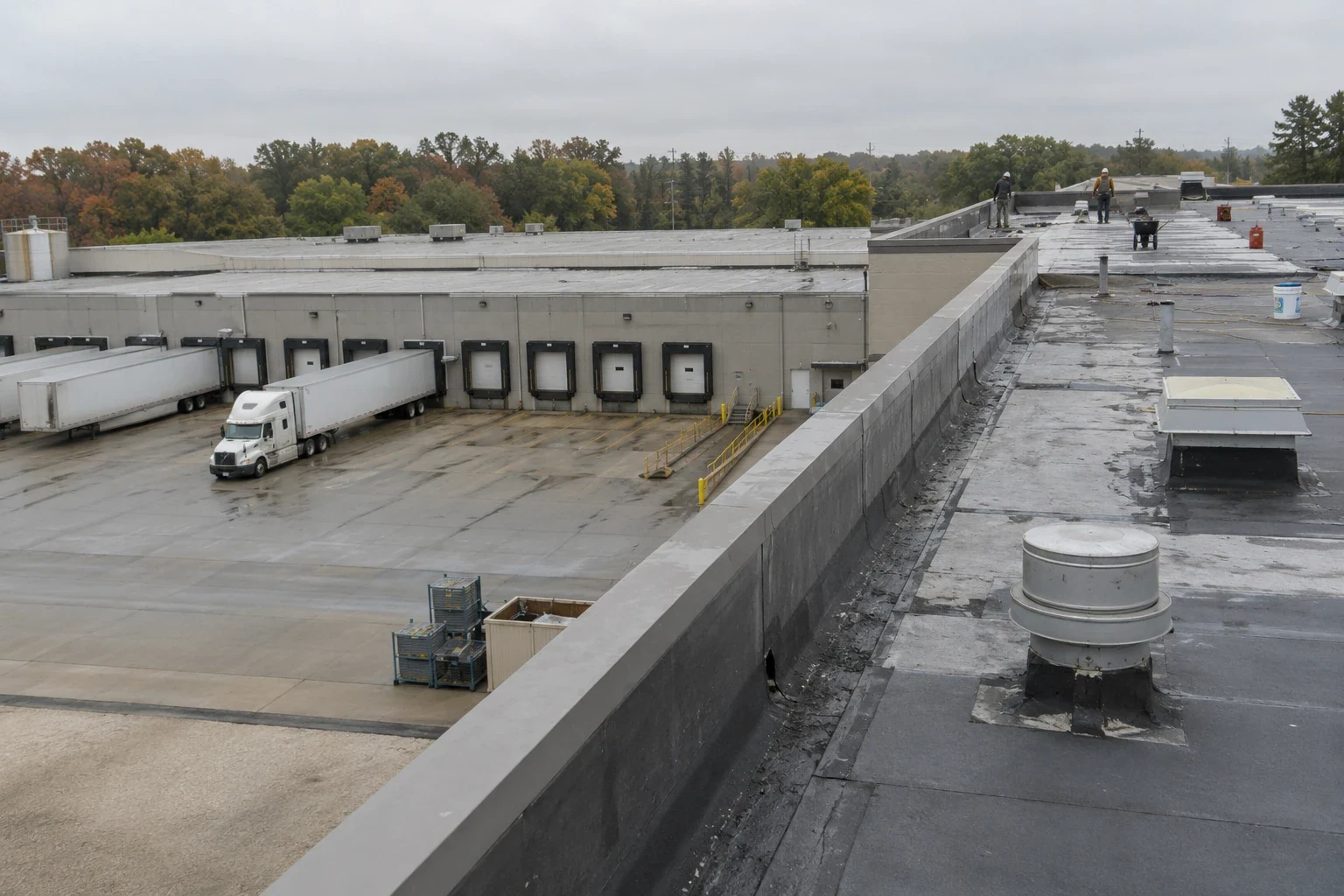
Roof water leaving an edge can affect loading access as well as the assembly itself. We examine the roof's discharge arrangement and damaged connections, including any obstruction caused by supports or changed construction height. A gutter repair should identify the receiving edge and attachment, not simply replace the visible channel while deterioration remains behind it. Where the outlet connects to drainage beyond our work, we establish the relevant interface with the property team before proposing an isolated fix.
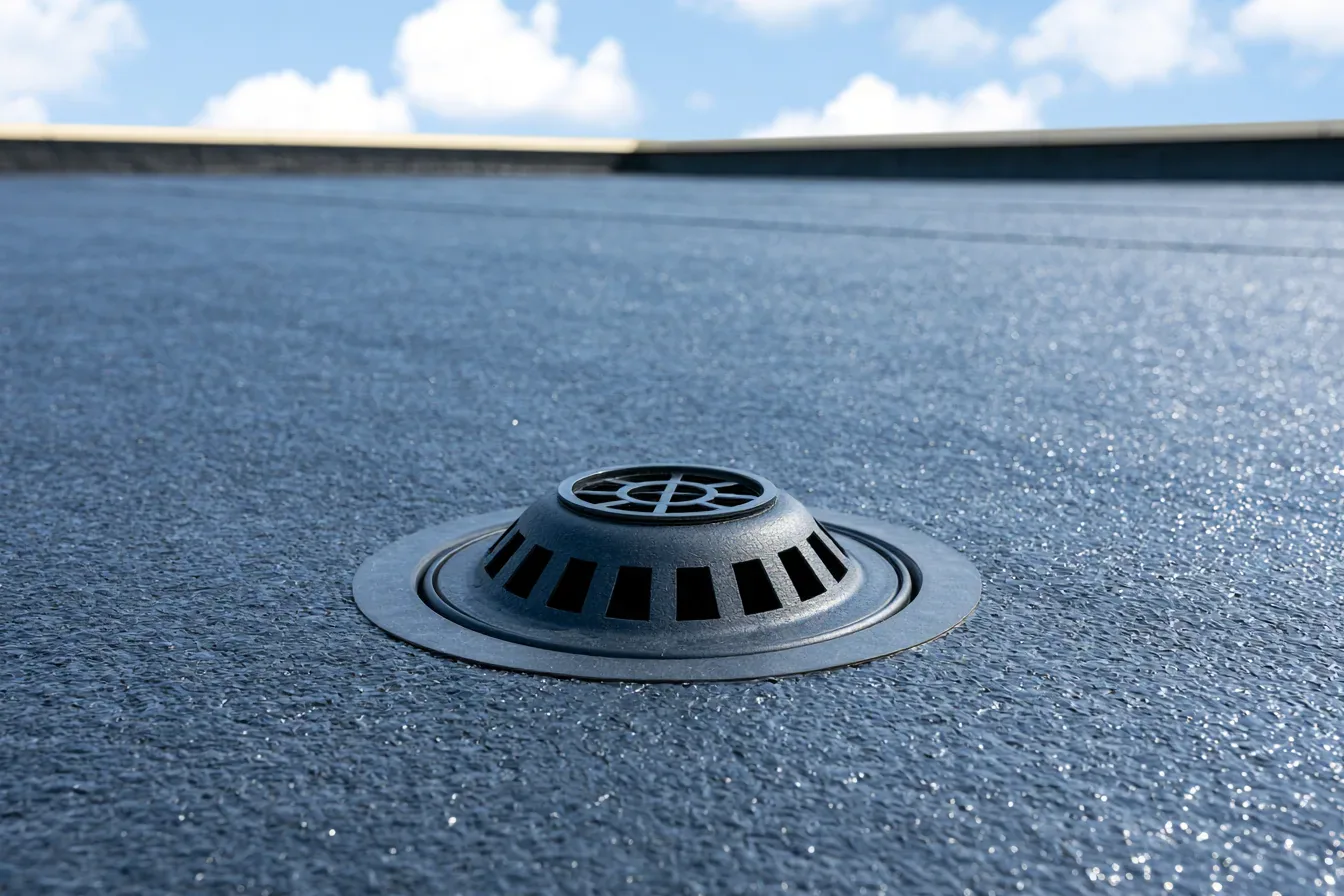
Drain and scupper work can involve clearing an obstruction, rebuilding an opening or correcting the surrounding roof geometry. Those are distinct tasks. We assess which one follows from the condition found and how it can proceed while required loading routes remain usable. A renewal that raises the field without resolving its relationship to an outlet can preserve a troublesome low area beside new material.
Bridgewater's industrial setting includes the area from Elm Street toward Raynham and development along Scotland Boulevard, with Route 24 and Route 104 access. For requested work in Bridgewater, delivery and disposal positions need to be checked against the particular property's active circulation. Regional road access does not identify the safe lifting location or the doors that can be temporarily restricted. Those decisions belong in the roof work arrangement.
Define the protected inventory zone
The area beneath a removal stage can include racked goods, packing operations and circulation used by more than one customer. We identify the occupied zone and suitable protection before disturbing roofing. An exterior opening can create exposure from water, debris or the construction task itself. The plan should state where goods need to move and where operations can continue with appropriate controls. A broad promise to keep the facility operational leaves those physical arrangements unresolved.
Our warehouse roof assessments connect the assembly condition with storage protection during removal and closure. For distribution-center roof work, active transfer and dispatch positions can further constrain the stage. We examine the available operating interval and the connection work within it. Daily area should follow what can be completed, including vulnerable perimeter or equipment details, rather than the area of stock floor cleared for access alone.
A third-party operator may have multiple customers using adjacent storage areas. That arrangement can influence relocation and access coordination without changing the receiving construction needed for a durable repair. We keep those decisions connected but distinct. Wet boards require a supported material scope; customer stock movements determine the interior interval in which that scope can proceed. The proposal should make both understandable before installation begins.
Examine the boundary between operating zones
A logistics property can combine conditioned offices, unconditioned storage and temperature-controlled areas. Where those conditions occur, we examine the air and thermal control relationships through the roof and at transitions. Exterior entry and condensation can require different remedies. A surface treatment selected without establishing the moisture mechanism may leave damaged construction or an interior pathway unresolved. We assess the relevant assembly rather than assign the same solution to every area under a continuous roof covering.
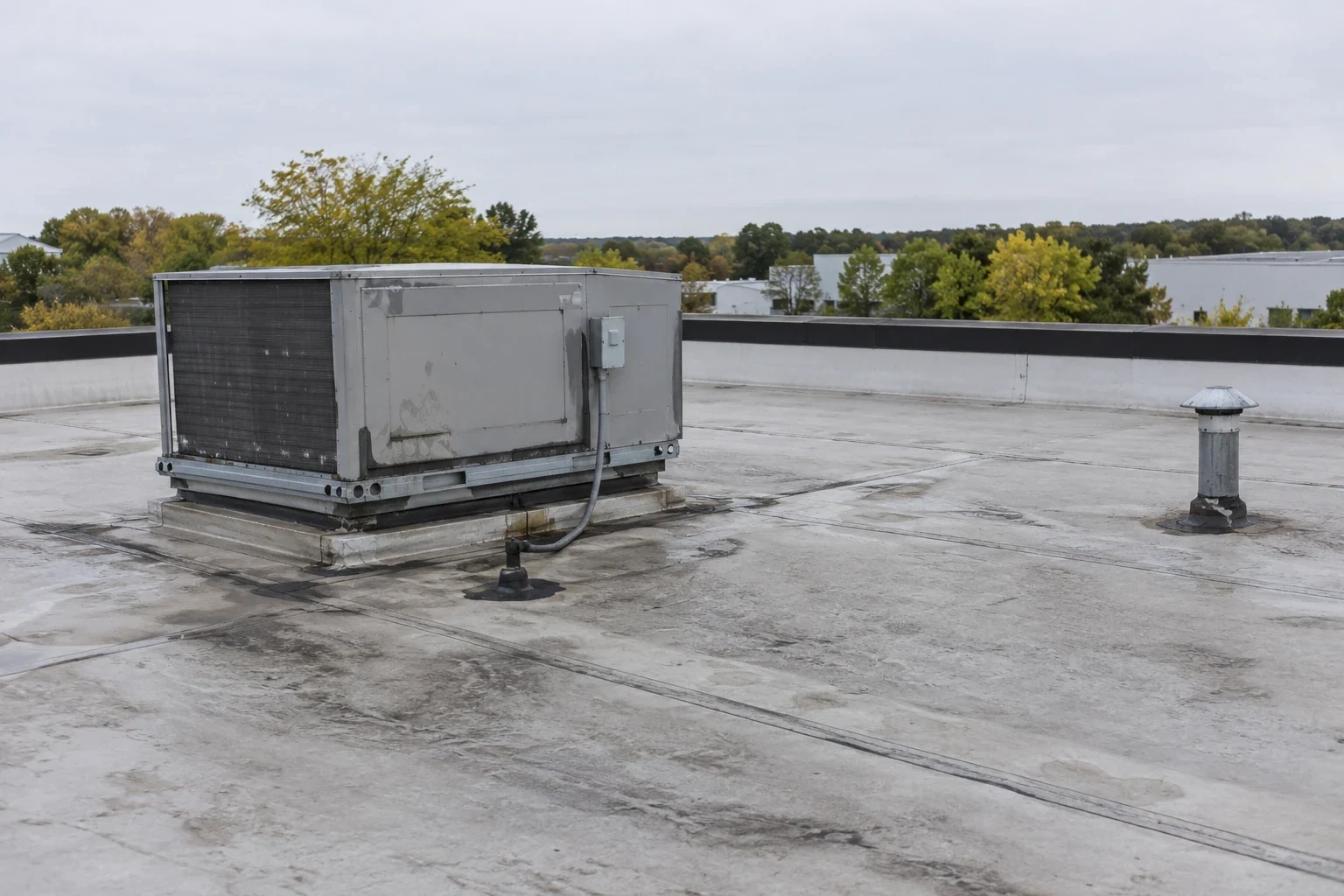
Rooftop equipment can add penetrations and service traffic at those boundaries. We evaluate movement, receiving support and material compatibility before repairing flashing. The final roof connection should follow any support or mechanical work that changes it. Technician routes need appropriate protection without blocking the path to drains. Changed equipment height or added insulation can also alter flashing clearance, so the renewal decision must include the revised geometry.
For operators comparing manufacturing roof interfaces with logistics sites, process discharge requires a separate material-contact assessment from ordinary storage exposure. That comparison is useful when production and fulfillment share a property. The roof scope should identify the vent or support involved and the construction around it. A common company name does not make unlike equipment connections interchangeable.
Establish the damaged component before assigning removal
A leak above a rack can originate at a seam, curb or other connection beyond the observed interior position. We examine the roof geometry and plausible pathways before defining a repair boundary. The water admitted can also damage layers beneath otherwise continuous roofing. Surface appearance alone does not establish whether those layers remain useful. Selective investigation can be needed to determine moisture, support and the extent of unsuitable construction.
We describe the entry connection and affected materials separately. A bounded defect on a sound assembly can support a local intervention, whereas deteriorated receiving material can require wider reconstruction. The operator should understand which condition establishes each task. A generic leak-repair allowance is less useful if it leaves damaged insulation, unstable support or incomplete detailing unaddressed. The completed scope should restore the actual water boundary and the construction supporting it.
Compare workable stages across the operation
Property-management coordination can identify which door, roof hatch and interior aisle remain available at each facility. We combine those arrangements with roof condition rather than assume a shared operating schedule establishes the same construction interval. A detailed equipment zone can take longer to secure than an open field of equal size. The chosen stage needs suitable closure at the boundary with retained roofing and drainage that continues to function during work.
Avon Industrial Park is separated from Avon's residential area by Route 24. Its industrial setting provides another local context for logistics operators evaluating roof access and circulation. We check each requested property's loading positions and receiving assembly directly. A multi-site comparison should then identify the damaged components, required reconstruction and occupied protection at each roof. The owner can prioritize meaningful interventions without substituting building size or highway proximity for physical condition.
Commercial Roofing Questions
Can clearing a drain resolve recurring water above dispatch?
It can address an obstruction where the outlet and surrounding construction are serviceable. We also examine geometry, receiving material and the flashing at the low point. Deterioration or an unsuitable elevation can require reconstruction beyond cleaning. The recommendation should distinguish the flow restriction from damaged roof components so the operator can arrange the appropriate work and loading protection.
How should customer stock affect a removal stage?
Identify the goods and circulation below the opening before setting the work boundary. Relocation and suitable interior protection can define the available interval, but daily removal also depends on completing the roof's connections. We assess both constraints together. An area cleared below should not automatically become the day's entire roof opening if details cannot be secured within it.
Do temperature-controlled and ordinary storage areas need identical roofing?
Their operating conditions require an assembly-specific assessment. We examine air and thermal control where those differences affect moisture, alongside exterior waterproofing and attachment. The roof covering is only part of that construction. Repair or renewal should address the established pathway and damaged material, with suitable transitions between areas that operate under different indoor conditions.
What makes a logistics roof comparison useful across several facilities?
Describe the defective connection, retained layers and construction that each intervention restores. Then connect the scope to loading access, stock protection and equipment intervals at that property. Similar roof areas can require unlike closure effort. Those component and operating differences give the owner a practical basis for priorities without assuming one common treatment will serve the entire portfolio.