Distribution Center Roofing in Quincy, MA
A storm arriving during a dispatch window can turn a roof opening above a conveyor route into an operating interruption. For a Quincy, MA, distribution asset, we assess that interior exposure alongside the damaged connection and the weather closure needed above it. The work boundary should follow what can be secured, not simply an area measured across the roof. Equipment-dense sections and open field require different completion time. The roof decision needs to reflect that difference before material is removed.
Distribution work can involve concentrated shipping activity, occupied processing zones and equipment that must remain available. We investigate the roof's actual use rather than assume a standard operating schedule. Quincy's preparedness concerns include hurricanes and nor'easters, making secure temporary closure and drainage useful planning priorities. Comparisons with warehouse roof renewal help distinguish storage protection from the dispatch interfaces that can shape an active distribution project.
Interior Routes Define Protection
Sorting equipment, control panels and order movement can create an interior zone where water or falling debris is difficult to accommodate. We examine the roof above those areas and coordinate suitable protection before investigation or removal exposes the deck. Some tasks may need a planned operating interval. Others can proceed while the activity remains protected. The construction sequence should identify that distinction instead of relying on a general statement that the building stays open.
Loading doors and yard movement can also conflict with roof access. We assess lift positions, disposal routes and material deliveries against the active site arrangement. A staging area should not create an unmanaged obstruction in a required vehicle path. Roof work may be distant from the dispatch equipment yet still affect its operation through access or material handling. Those connections belong in the practical scope.
Industrial Settings Need Individual Assessment
Pembroke includes North River Commerce Park and industrial development associated with Corporate Park and Pembroke Woods. Regional road connections help support commercial uses in those broad areas. For a distribution property, we examine the actual loading arrangement, roof geometry and tenant activity rather than infer them from the park name. A delivery-intensive asset can require a different construction sequence from a nearby office or light-industrial building.
Plymouth's Camelot Industrial Park and the Long Pond and South Meadow industrial areas provide another setting for commercial roof decisions. Access and operations need to be assessed at the property itself. For work in Pembroke, the proposal should connect the roof's repair boundary with the loading and protection arrangement. The comparison becomes useful when it identifies which activities can continue and which require a defined work interval.
Outlets Need a Secure Connection
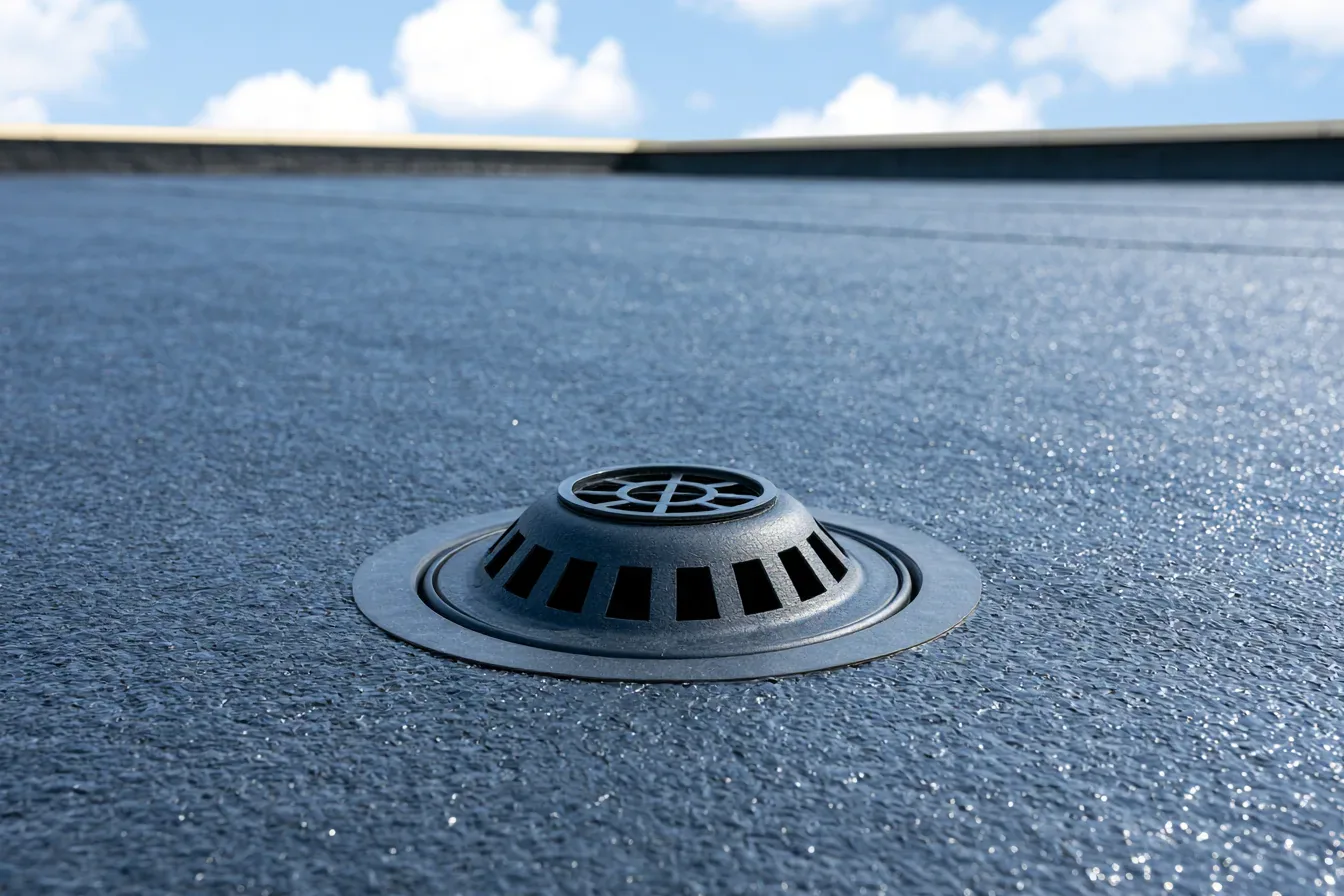
A roof drain close to a busy rooftop service route can suffer both debris obstruction and physical damage. We inspect the strainer, bowl flashing and the surrounding elevations. Cleaning can restore flow where the outlet is obstructed. Damaged membrane or an unsuitable connection needs a separate repair. A water-holding area with sound outlets may require a slope correction rather than another cleaning visit.
We connect drain and scupper repairs with the actual roof plane and overflow arrangement. Meltwater or sustained rain can place extended exposure on low-point details. During replacement, tapered insulation or outlet changes may be appropriate where the existing geometry is the problem. Raising the roof surface without accounting for drain elevation can preserve or worsen the held-water condition. Those dimensions should be assessed before the new assembly is installed.
Moving Equipment Stresses Flashing
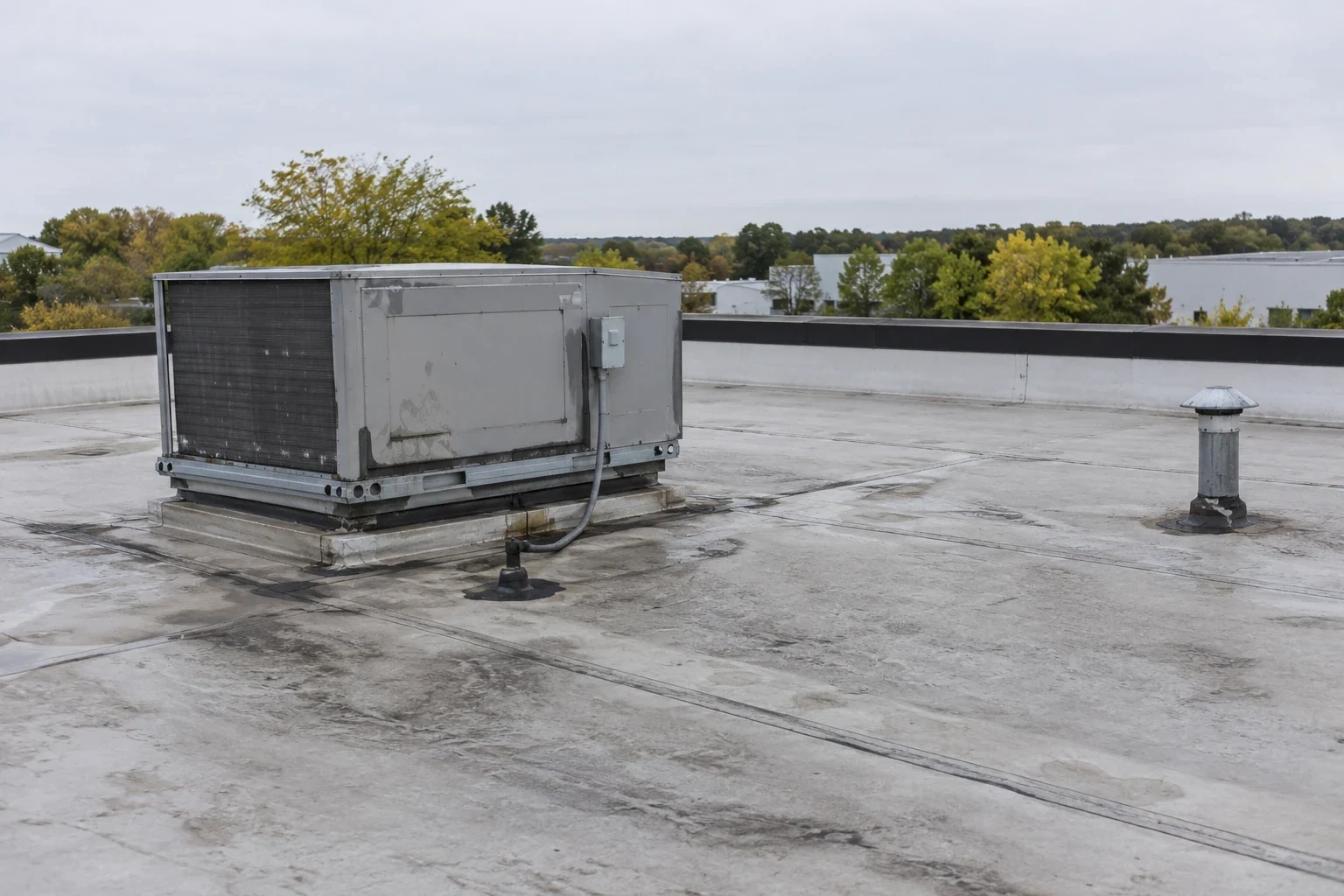
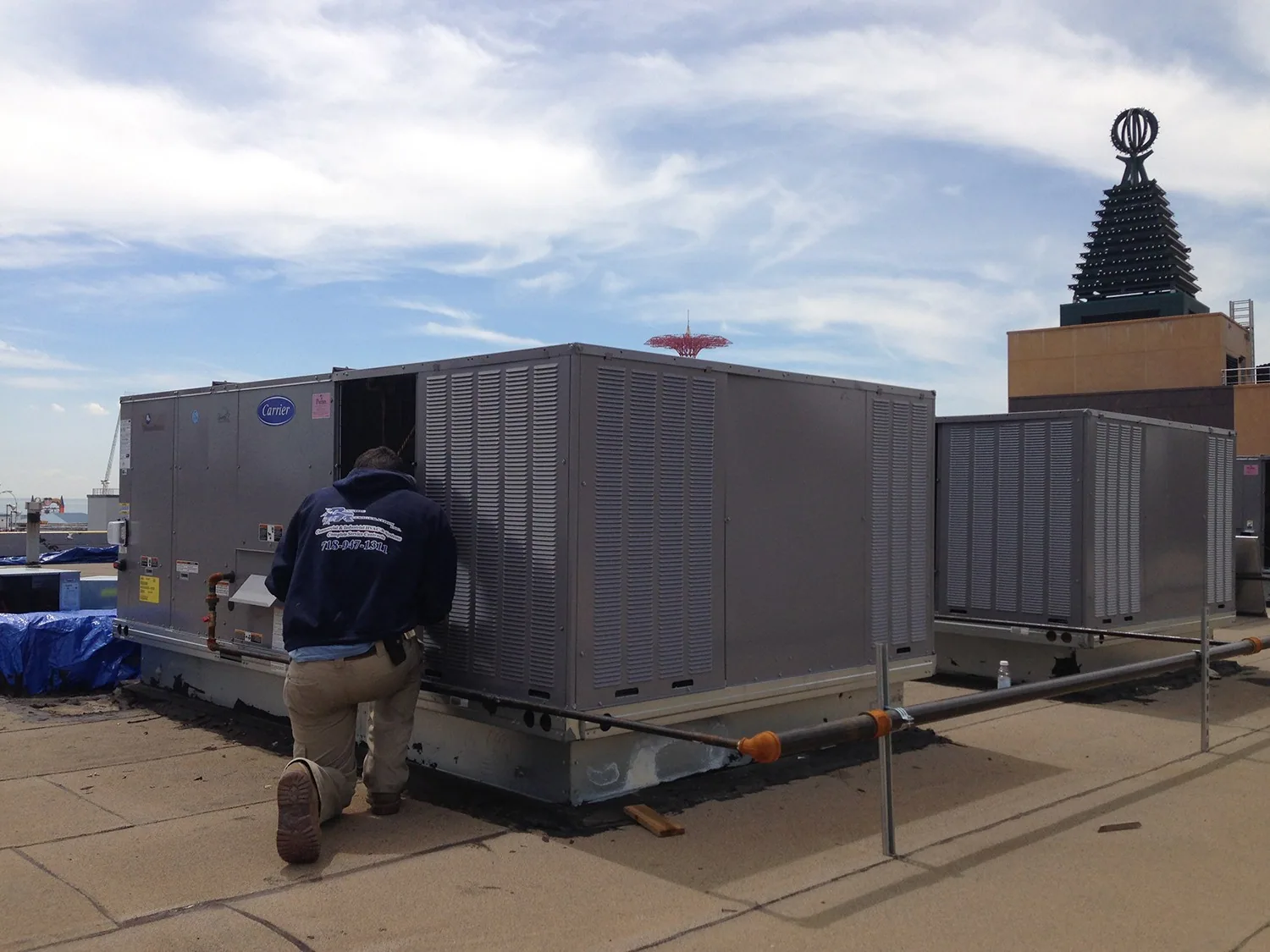
A rooftop fan or support that moves during service can repeatedly stress the membrane connection around it. We examine the support and flashing together. The repair may involve equipment-interface correction as well as waterproofing. A patch that leaves the source of movement in place can fail again for the same reason. Equipment trades and roofing work need a clear connection where one task affects the other.
Our curb and support repairs address the receiving geometry and accessible water boundary. We also examine technician routes, sharp contacts and concentrated abrasion. Compatible walk protection can reduce wear where it suits the assembly and does not obstruct drainage. The installation should leave a practical way to service the equipment without stepping directly on a vulnerable flashing corner or damaged transition.
Retained Layers Need Examination
Wet insulation beneath an apparently serviceable sheet can change the repair threshold. We investigate suspicious areas and establish the extent of damaged material before choosing patching, recover or replacement. The deck's condition and the existing attachment matter as well. A new membrane over an unstable receiving layer does not provide the same construction as a replacement over sound support. Those differences should remain visible in the proposal.
We compare TPO construction and other suitable assemblies against the actual roof's geometry, equipment and exposure. Material selection follows the condition assessment. Where processing includes temperature-sensitive storage, cold-storage roof requirements may introduce additional insulation and vapor-control questions. That mixed use needs a specific assessment instead of a specification carried over from a dry distribution area.
Defined Zones Keep Closure Predictable
Daily removal limits should leave enough time for field installation and detailed closure around equipment, walls and outlets. A wide open area can be quicker to complete than a smaller penetration cluster. We sequence the roof by those conditions and the operating needs below. Temporary divisions require appropriate construction so water does not enter at the edge of the active work area. Weather closure remains necessary even where the next stage is scheduled soon.
We separate urgent entry-point repairs from renewal work supported by wider deterioration. A bounded defect on dry stable construction can be addressed differently from recurring failures across the assembly. The owner can compare what remains in service, what is removed and what operations require protection. Delivery access, concealed damage and complex equipment details are meaningful scope drivers. The decision should identify those drivers rather than reduce the work to a surface area alone.
Completed zones also need protection from subsequent trade activity. We assess how equipment servicing and material handling will cross the new roof, then identify suitable routes and protection. A project can leave an installed field vulnerable if later access repeatedly abrades the same connection. The renewal plan should carry through to the way the roof will be used once dispatch activity and routine maintenance return to their normal pattern.
Commercial Roofing Questions
Can roof removal proceed directly above active sorting equipment?
The interior protection and construction method need assessment first. We examine the equipment layout, deck condition and debris or water exposure before defining a work boundary. Some operations may require isolation or a scheduled interval. Others may continue under suitable protection. The proposal should identify those arrangements rather than rely on an unrestricted claim that all activity can remain unchanged.
What should we address before a busy dispatch season?
Prioritize active leaks, vulnerable low-point connections and defects that could expose critical interior routes. We assess the remaining roof condition to distinguish immediate repairs from broader renewal. Drain clearing and equipment-interface corrections can accompany the repair where they address the failure mechanism. A busy operating period is a scheduling consideration, while the physical condition establishes the work needed.
Does a new roof require us to change every equipment curb?
Sound curbs may remain where their geometry and condition suit the new assembly. We check height, support, termination and clearance before recommending retention. Increased insulation or changed equipment can require modification. A curb that was usable on the old roof can become unsuitable if the new plane reduces flashing clearance or alters the surrounding water path.
How should we compare staged replacement with a single project?
Compare temporary boundaries, drainage, repeated access demands and protection of operations under each sequence. Staging can be useful where the roof assembly and building layout permit clear divisions. Distributed concealed damage or difficult transitions may limit that approach. We explain the construction and operating consequences so the owner can select a sequence based on the actual asset.