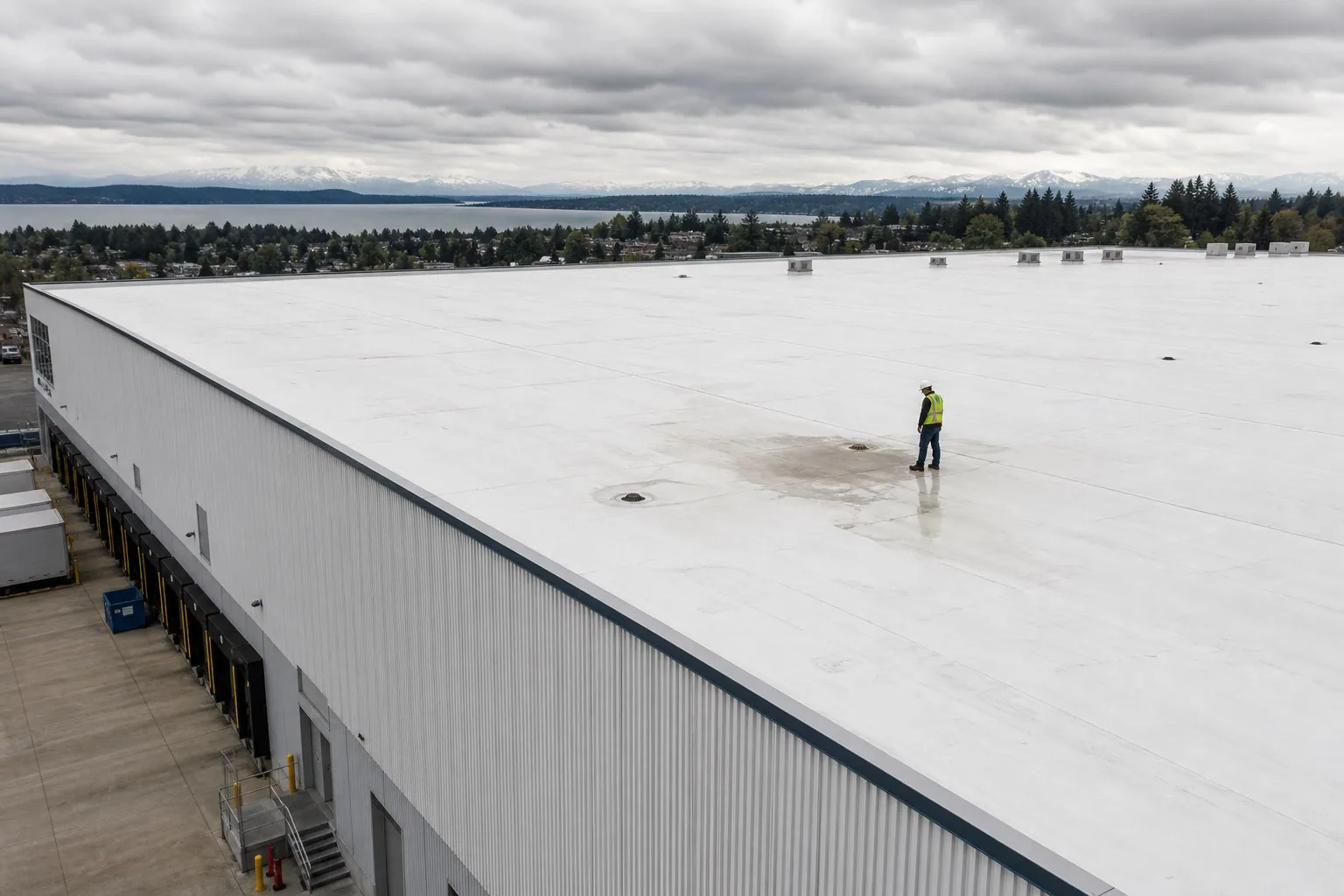
Commercial Roofing in Plymouth, MA
Plymouth's commercial employment areas include Camelot Industrial Park on Long Pond Road and another industrial area along South Meadow Road. Route 3 and Route 44 connect those districts with regional travel. The route map helps plan visits, but each roof needs an independent inspection. We record system type, water path, drain and edge conditions and any prior work, then connect those findings to the building's use and schedule. The result is a service priority and a clear distinction between repair, moisture investigation and long-range renewal.

Keep Park Conditions Separate
Camelot Industrial Park and the South Meadow Road employment area are distinct properties, not a single roof condition. We verify the entrance and staging area for the building under review, including how materials reach a roof hatch or approved ladder. A manager can group appointments by location while retaining separate images, assembly records and recommendations for each roof. A local defect may be handled through commercial roof repair when its boundary is supported.
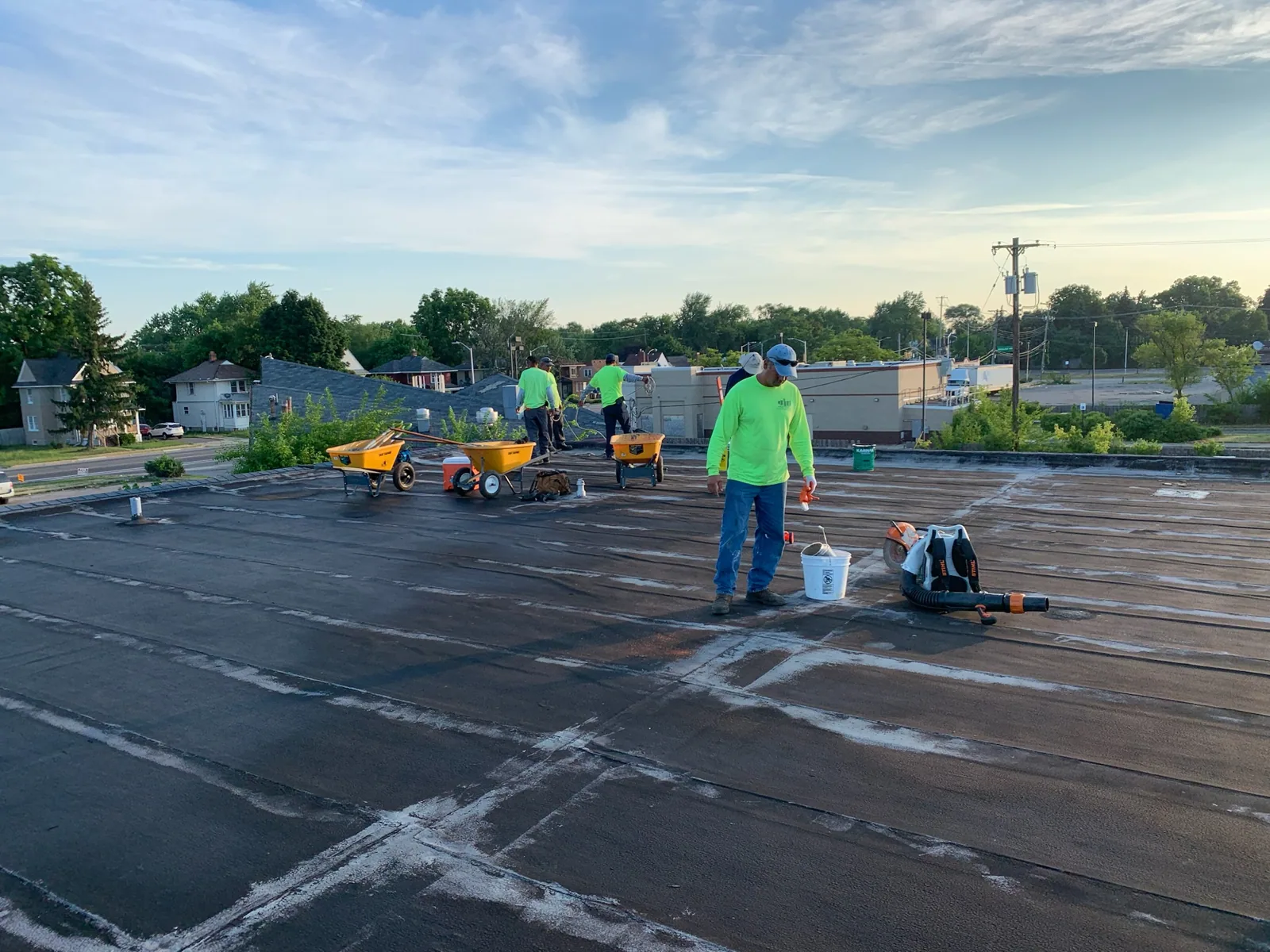
Industrial activity can bring deliveries, machinery and employee routes close to the work zone. We ask which operations continue during roofing, where temporary barriers are needed and whether an equipment shutdown is possible. A previous coating or patch is inspected for adhesion and substrate condition. The park name does not reveal those facts, so they remain part of the field review.
Trace Water Toward Discharge
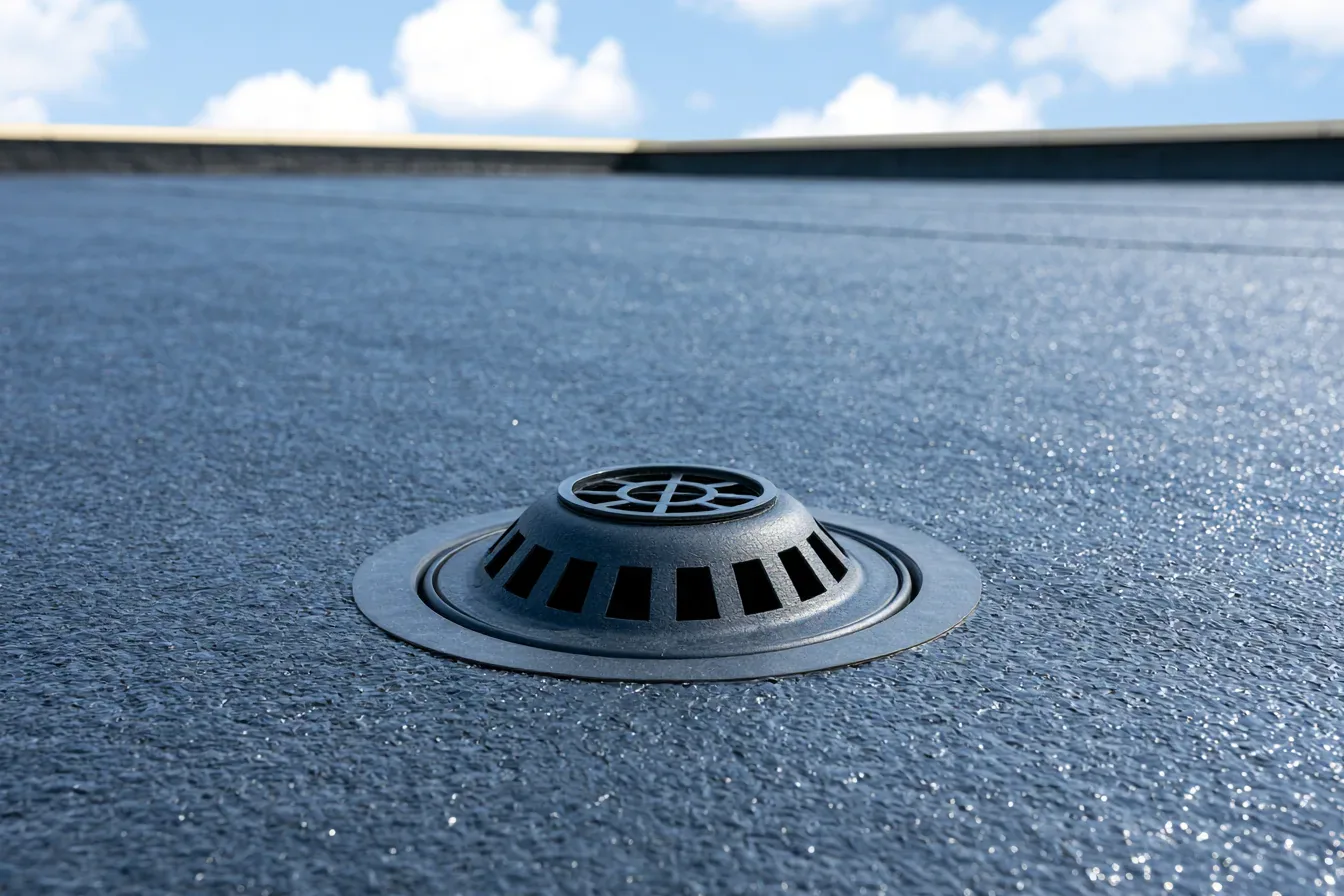
A slow outlet can keep water near a seam even if the membrane looks intact. We trace the surface slope, inspect the drain bowl and strainer, and check whether an overflow route is clear. The report identifies where standing water was observed and whether the deck may be holding moisture below. A drainage obstruction, failed lap and wet insulation are recorded as different conditions with different next steps. A separate drainage service can address outlet conditions.
A ceiling mark in an industrial building may be displaced from the roof defect by framing or deck geometry. We inspect curbs, penetrations, wall transitions and lap joints above the reported location, then compare them with the owner's timeline. Where the source cannot be confirmed visually, we explain whether infrared mapping or selective opening would resolve the question. The tested boundary should guide removal, not the area of the interior stain alone.
Plan Equipment Coordination
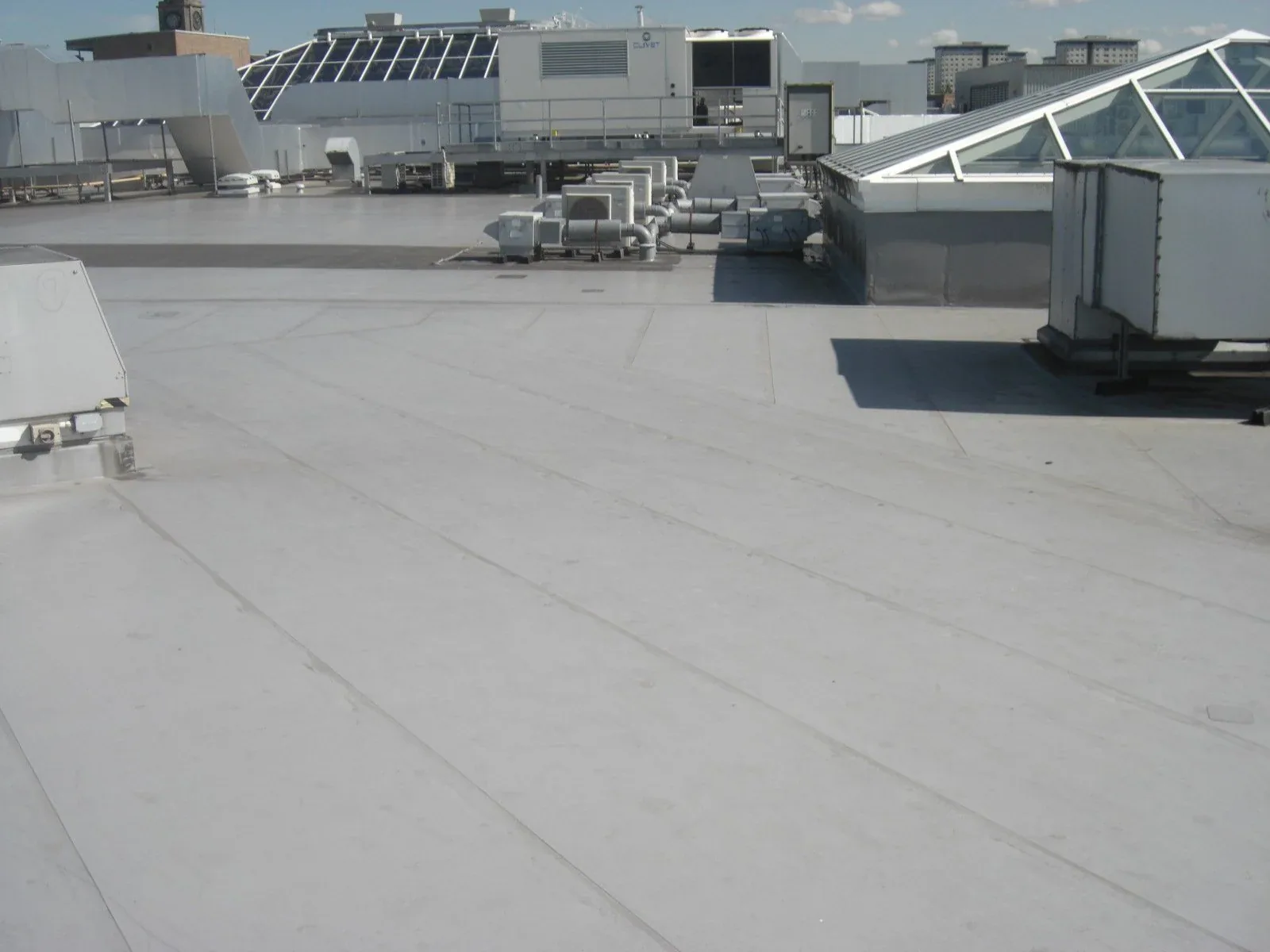
Plymouth buildings may have rooftop equipment that serves active production or warehouse space. Before a membrane detail is opened, we note what must stay powered, which trade controls the unit and whether a support or curb needs separate attention. That coordination can affect the order in which roof zones are completed and protected. The property representative receives those dependencies before materials are staged. If the suspected area is larger, infrared moisture survey may help set a test boundary.
Route 3 and Route 44 provide regional access, while the actual property determines truck entry, roof access and delivery hours. We identify where a lift can set and whether it affects a shared lane. For broader reroofing, sections are sized to the crew's ability to install temporary protection and close the roof at day's end. That protects operations below while keeping the sequence realistic for local conditions and forecast.
Compare Repair With Renewal
A localized split or puncture on a stable field may need a limited repair. Repeated failure across seams, wet insulation or a deteriorated substrate can shift the decision. We photograph each defect and note what supports its boundary. If the extent is unconfirmed, a survey or test cut can establish whether nearby zones belong in the scope. This avoids pricing a broad removal area before evidence supports it. After inspection, the owner can compare a replacement scope with recover feasibility.
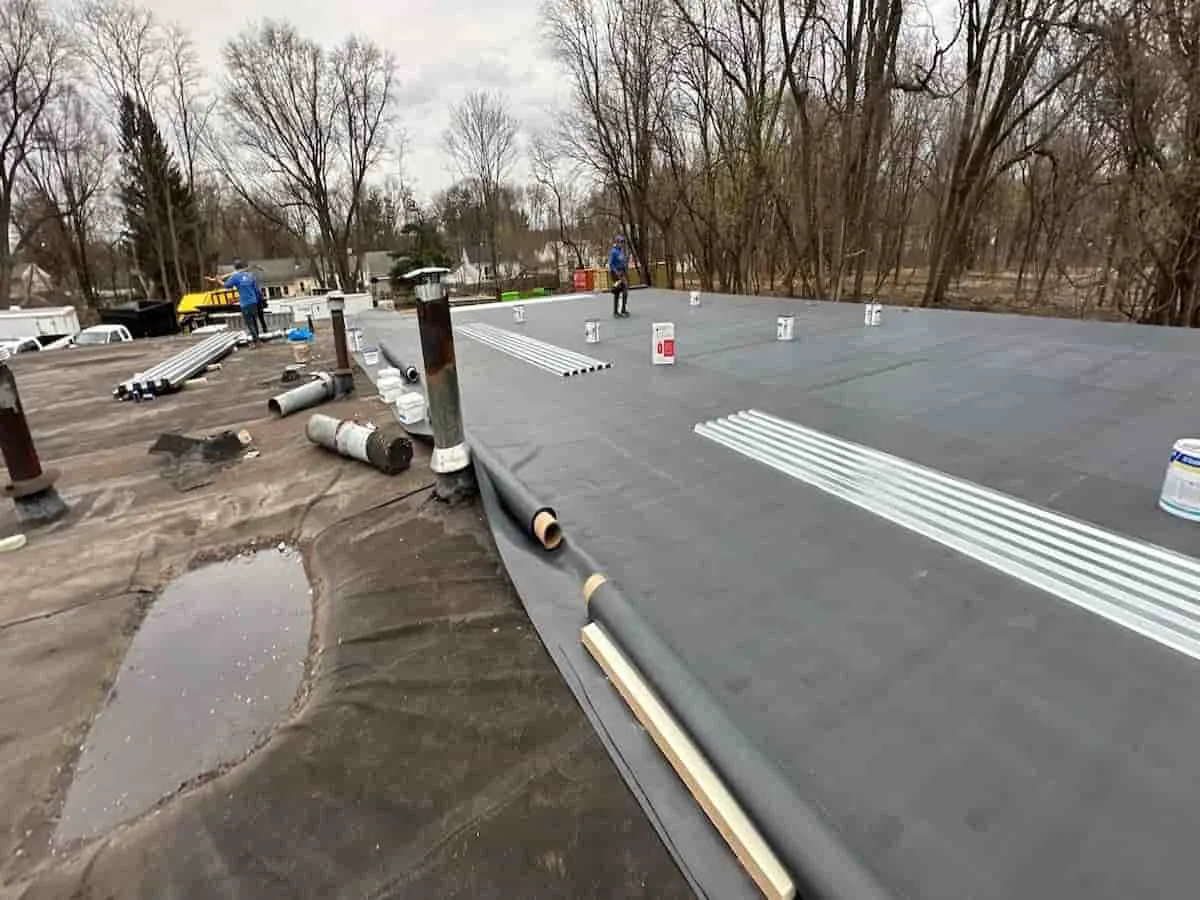
A recover can fit when layer count, moisture, drainage and final height allow another assembly. Replacement adds tear-off but opens the deck and insulation for review. A coating belongs only on a compatible and prepared surface; it will not correct a blocked drain. We compare the work method, trade coordination and operational effect after the existing roof is understood, giving the owner a practical option and a next step if one condition remains unresolved.
Document the Work for Operations
For a multi-building owner, the report needs to identify the specific location and action. We label roof zones, connect photographs to a finding, record any supplied leak date and separate active water control from future renewal. The property team can then see which items need immediate service, which call for confirmation and which remain a capital planning matter. A later manager can consult roof condition reports for dated findings.
A later inspection can return to the same outlet, seam or curb to check whether the repair remains intact. We compare the new condition with the dated image and record a change only when it is visible. Plymouth's different industrial districts can share reporting fields, but their access routes and roof systems stay separate. That is how a portfolio view remains useful without overgeneralizing from one property to another. A regional review may include Bridgewater and Hanover, with separate access records.
The owner can ask that each recommendation state what would happen if the work is deferred. An active opening that admits water calls for prompt control; an area with an uncertain moisture signature may require testing before removal is sized. A sound detail that can be watched belongs on a different schedule. We keep those categories visible so operations can secure the immediate concern while finance reviews the longer renewal choice.
A dated baseline also helps when a property changes managers or operating use. The new contact can locate roof zones, review prior repairs and see which conditions were confirmed, instead of relying on an old summary. We update the record when a new inspection or repair creates evidence. If the roof was not opened or surveyed, the report says so by keeping the concealed area unresolved. That makes the next scope easier to review and avoids treating a planning assumption as a measured condition.
Before closing the work order, we confirm that the owner has the repair photographs and the location label used in the report. That makes a future comparison more reliable and preserves the difference between a completed correction and an open inspection question.
Commercial Roofing Questions
Does Route 3 or Route 44 affect the roofing scope?
The highway connections help organize travel. The building's assembly, drainage, staging and operating schedule determine the work. We verify each property's delivery route and roof access, then inspect the actual defect rather than infer condition from its district.
What if machinery cannot be shut down?
We identify equipment dependencies with the facility contact before the work reaches a curb or penetration. The plan records which trade needs to be present and whether a roof section can be phased while operations continue. The assembly and weather window control how much removal can be safely closed each day.
How do you know how far moisture extends?
Visible damage and survey readings help define the question, but a selective opening may be needed to confirm insulation condition. We distinguish the proven defect from an untested area and explain how the test result would change repair limits or renewal quantities.
Can a coating address standing water?
A compatible coating may protect a prepared surface, but it does not correct deck slope or a blocked outlet and should not cover wet insulation. We inspect drainage and adhesion first, then compare coating with repair, recover or replacement based on the actual assembly.