Self-Storage Roofing in Quincy, MA
A cold night followed by warmer moist air can produce underside dripping on a self-storage roof without a new rain event. For a Quincy, MA, asset, we investigate that timing alongside panel joints and interior conditions before choosing repairs. Condensation and exterior entry require different corrections, and both can occur within the same property. The roof decision should identify the mechanism rather than assume every report from a storage unit points to a hole directly overhead.
Self-storage properties can have conditioned rooms, unconditioned units and different roof assemblies across their buildings. We examine what is actually present before recommending repair or renewal. Quincy identifies blizzards and flooding among its preparedness concerns, adding drainage and thaw exposure to the assessment. Unit contents and access affect protection during work, while moisture, attachment and material condition establish what the roof can retain.
Compare weather timing with interior conditions
Dripping that appears during a temperature change deserves examination of the roof's thermal and moisture-control arrangement. We assess insulation, air movement and surfaces where condensation can form, together with the exterior water boundary. Rain-related symptoms may point toward a failed seam or penetration, while recurring moisture without recent precipitation can suggest another mechanism. The investigation should not force all findings into one repair method.
A new coating or sheet can close exterior defects without changing the internal moisture path. We identify whether the proposed work addresses insulation or control-layer continuity as well as waterproofing. The correct arrangement depends on the actual interior use and temperatures. Conditioned storage may need a different evaluation from an unheated unit. The owner should see those differences before selecting a common surface treatment across unlike building areas.
Examine fasteners with their receiving support
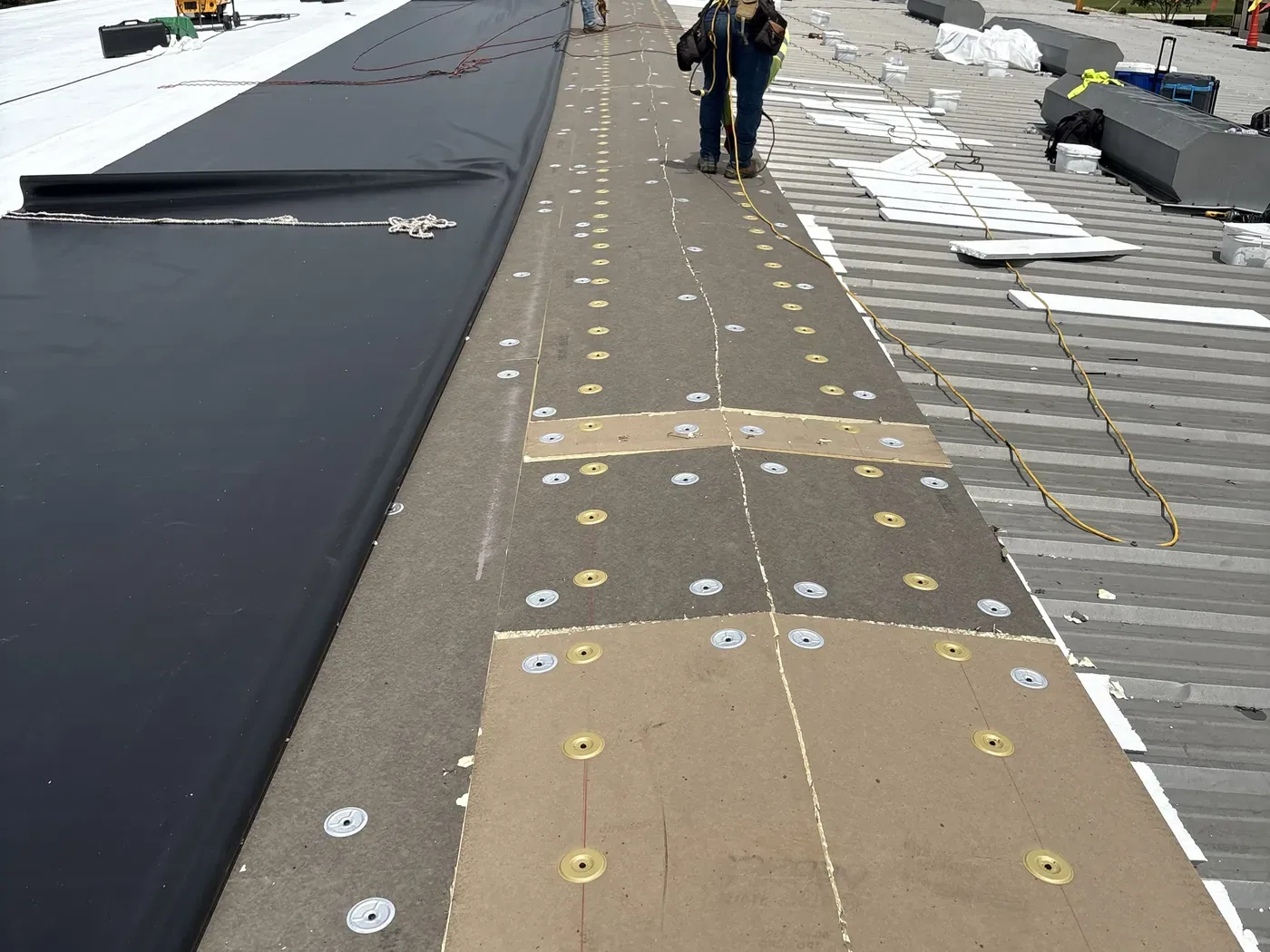
An exposed fastener can loosen or lose a useful seal where movement or a damaged receiving hole affects it. We inspect the washer, panel and support before choosing a repair. Driving a screw deeper into an enlarged or deteriorated hole may not restore holding. Overtightening can damage the sealing component and distort the metal. A suitable correction needs both mechanical stability and a dependable water boundary.
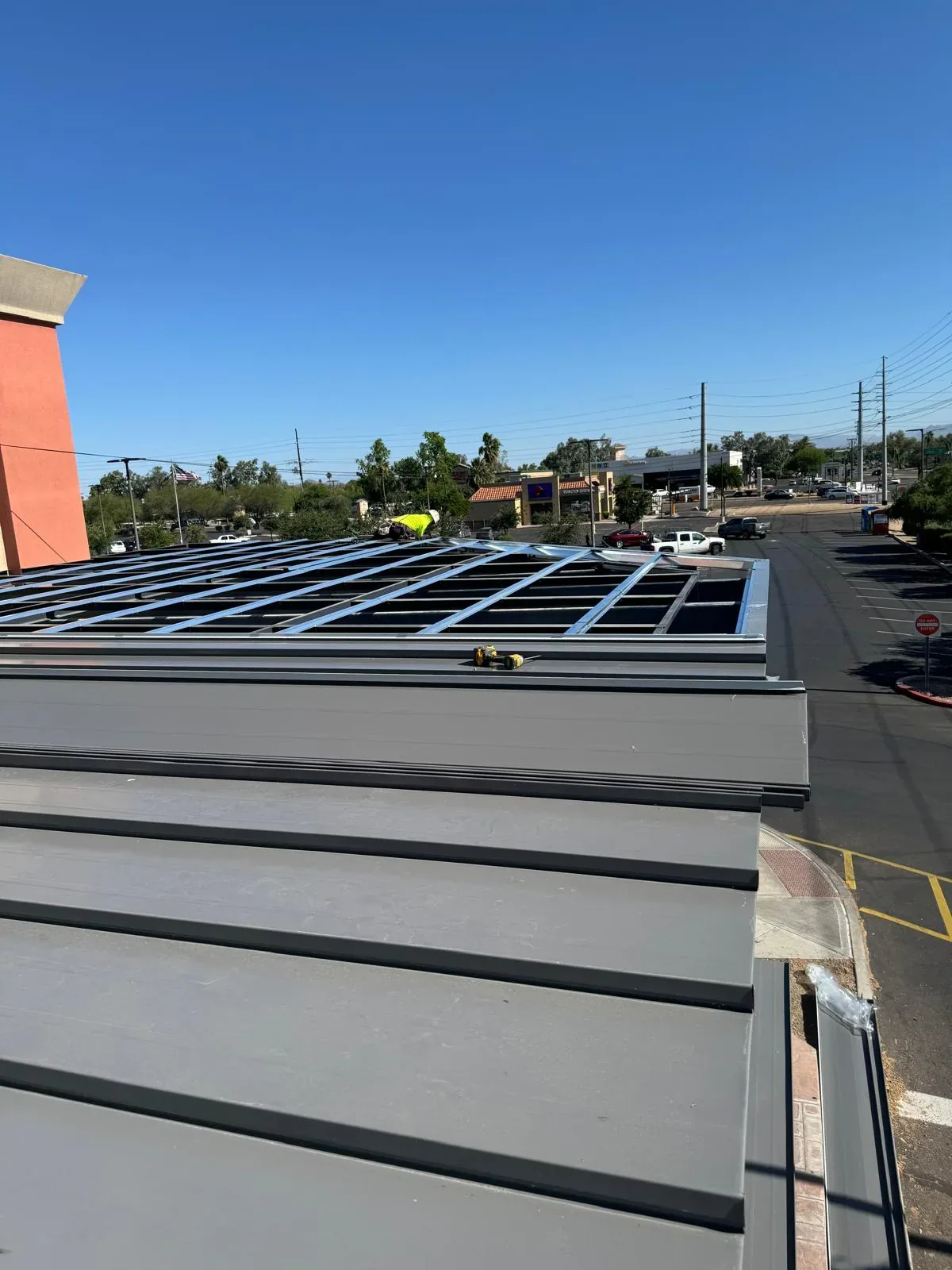
For a property with metal roofing, metal retrofit assessments also examine laps, corrosion and previous repairs. Coating can be considered after suitable preparation and detail work where the receiving surface remains serviceable. It does not repair structural deterioration. Standing seam construction presents different joint and movement questions, so the installed system should be identified before a specification is selected.
Define access below the work
Roof removal can expose stored contents to water or debris. We assess the assembly and task while the property team establishes the units requiring access, isolation or suitable protection. Occupancy and contents can restrict underside investigation even where the roof is readily accessible above. Those constraints need to be identified before material is opened. The roofing boundary follows the defect and supporting condition; the interior arrangement follows the exposure created by the work.
Our repairs to self-storage roof defects distinguish temporary intervention from permanent construction. A contained drip is not a completed exterior repair. We examine nearby connections and concealed moisture where indicated, then define removal and reconstruction supported by the findings. The owner receives a clear account of affected components rather than a patch boundary based solely on the unit with the visible symptom.
Assess the commercial access routes
Rockland's Hingham Street and Reservoir Park Drive corridor supports commercial activity near regional road connections. A storage roof project in a broader commercial setting needs an individual assessment of vehicle access, exterior activity and material staging. We examine the property arrangement before placing lifts or disposal equipment. A position convenient for the roofing task can still conflict with unit access or circulation below. That conflict should be resolved in the work plan.
Kingston's industrial stock includes Bassett Brook Park and Independence, with development at Marion Drive and Royson Road. For work in Rockland, unit access and protection should correspond to the construction actually opened. Warehouse roof work can require movement or isolation of stored contents where deck removal creates water or debris exposure. In flex-industrial roofing, adjoining conditioned offices and unheated work areas can also require examination of insulation and air-control continuity. We assess those layer connections before selecting a surface repair, so a new water boundary does not leave a condensation mechanism active below it.
Keep discharge away from vulnerable connections
A blocked gutter or outlet can hold water at an edge connection or redirect it toward a joint. We inspect the flow route and receiving details together. A debris-filled gutter can need clearing before the receiving edge is examined. If the channel has perforated or its connection admits water, removing the debris leaves a component repair still outstanding. We identify that distinction so a unit-access closure for maintenance is not mistaken for completion of the waterproofing work.
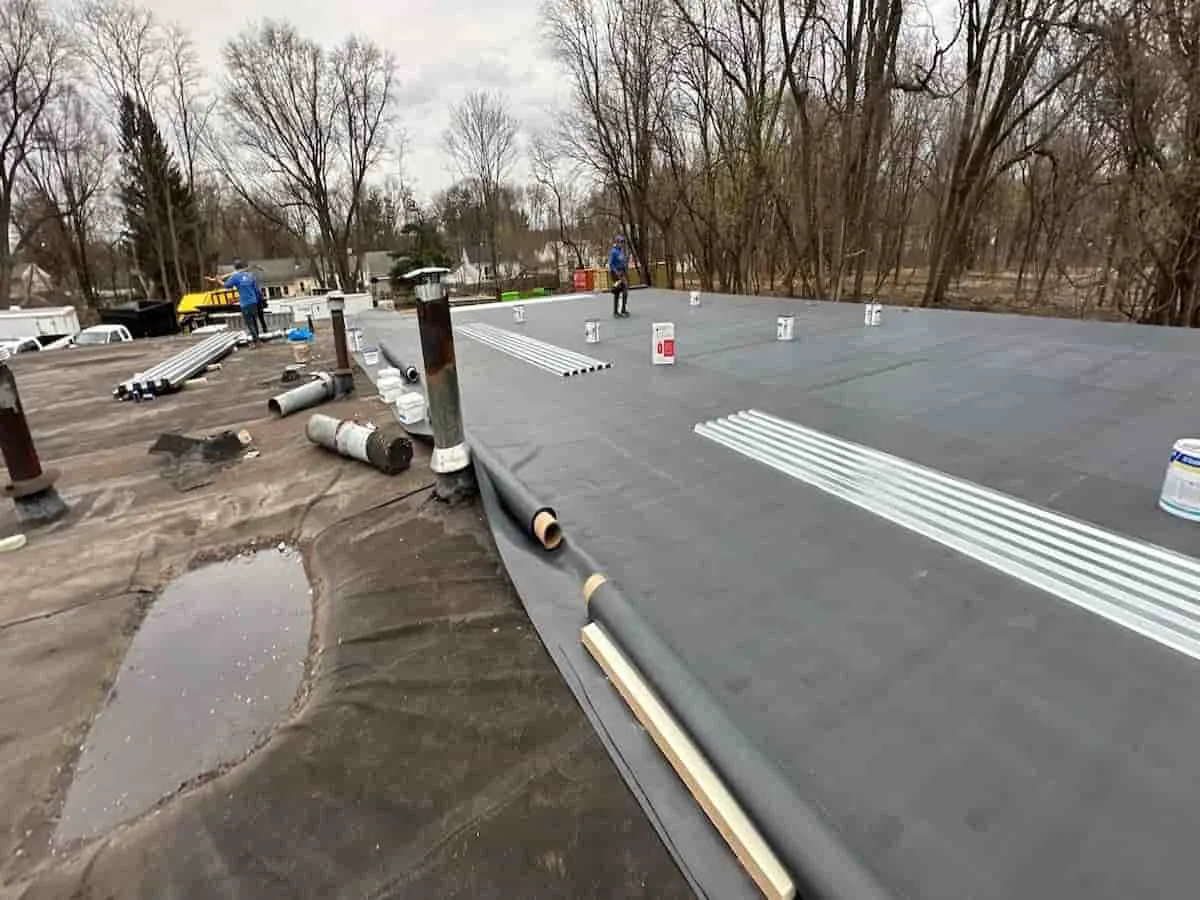
We assess edge and gutter corrections with the roof's slope and intended discharge in view. On a low-slope membrane area, the outlet and overflow arrangements require their own checks. Winter accumulation can prolong water exposure during thaw. A renewal should preserve workable drainage and access for maintenance rather than create new pockets with supports, protective material or poorly positioned repair build-up.
Separate sound areas from damaged construction
Several buildings within a storage property can have different moisture and attachment conditions. We assess them separately before recommending a uniform renewal approach. Dry stable construction may support local repairs or suitable retention. Wet insulation, deteriorated panels or deficient support can require removal. The condition comparison should explain those physical differences, with no service-life forecast based only on the apparent age or color of the roof.
Daily stages need dependable closure at the boundary between new and retained construction. Equipment or penetration zones may take longer to complete than open field. We assess that work and the interior protection required before defining removal limits. A row or unit division may be convenient administratively without providing a suitable roof transition. The proposed sequence should therefore follow the assembly and drainage relationships as well as the access arrangements.
Future maintenance should preserve the completed roof. We identify service routes, sharp contacts and outlets requiring accessible examination. Compatible protective materials can reduce concentrated damage where they suit the assembly and leave water flow clear. Later repairs need the appropriate method for the installed material. The finished scope should leave a useful, inspectable water boundary rather than a new surface over components that remain unsuitable to retain.
Commercial Roofing Questions
How can we distinguish condensation from rain leakage in a storage unit?
We compare symptom timing with exterior weather and interior temperature or moisture conditions, then inspect the roof joints and assembly. Both mechanisms can be present. Condensation may require thermal or air-control corrections, while exterior entry needs a waterproofing repair. The proposal should explain which mechanism each task addresses rather than assume a surface patch resolves every drip.
Can loose fasteners be coated instead of replaced or corrected?
The mechanical connection needs assessment before coating. We examine the washer, receiving hole and support, then define a suitable correction. Detail treatment can accompany a restoration system but does not replace holding or sealing at a damaged connection. Leaving movement active beneath new coating can preserve the original failure mechanism.
Do tenants need to empty every unit before roof work?
Access and protection requirements depend on the task and the construction exposure below it. We assess the affected area and identify which units need suitable arrangements before opening the roof. Some bounded surface work may have different requirements from deck removal. The work plan should identify those boundaries specifically rather than apply a single emptying rule across the property.
Should all storage buildings receive the same renewal treatment?
Their assemblies and condition should be compared first. A dry serviceable building can support a different intervention from one with corroded panels, wet layers or deficient attachment. We also examine drainage and temporary project boundaries. The recommended sequence should identify components retained and defects corrected in each area, rather than force unlike roofs into a uniform surface application.